
Rhyming skills Normal Worksheets for Ages 4-8
4 filtered results
Difficulty Level
Grade
Age
-
From - To
Subject
Activity
Standards
Boost your child's phonics foundation with our "Rhyming Skills Normal Worksheets for Ages 4-8" designed by Kids Academy. Our engaging worksheets make learning fun by helping young learners recognize rhyming patterns, enhancing their vocabulary and pronunciation. Perfect for preschool and early elementary students, these printables feature colorful and interactive activities that develop essential reading readiness skills. Each worksheet is thoughtfully created to captivate and challenge kids as they identify, compare, and contrast different rhyming words. Give your child the tools to succeed in literacy today with our expertly curated rhyming worksheets!
Favorites
With answer key
Interactive
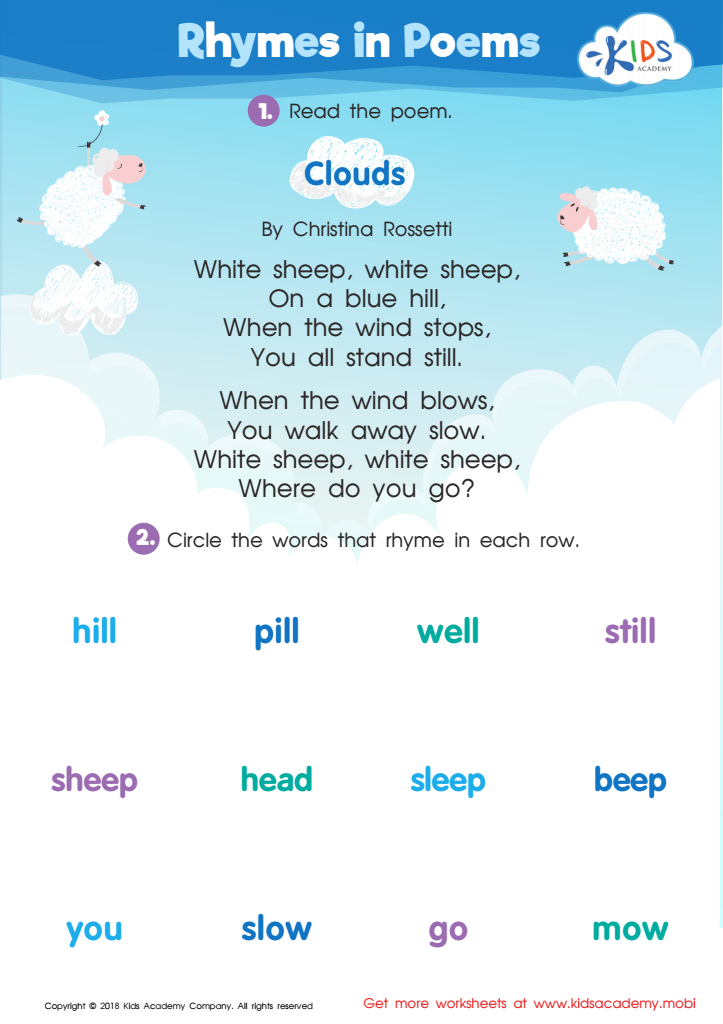
Rhymes in Poems Worksheet
Poems are lovely works of literature; some with rhymes, and some without. This poem for kids is full of rhymes and tells the tale of a sheep. Read it aloud to your kids, then help them circle the rhyming words.
 Assign to My Students
Rhymes in Poems Worksheet
Worksheet
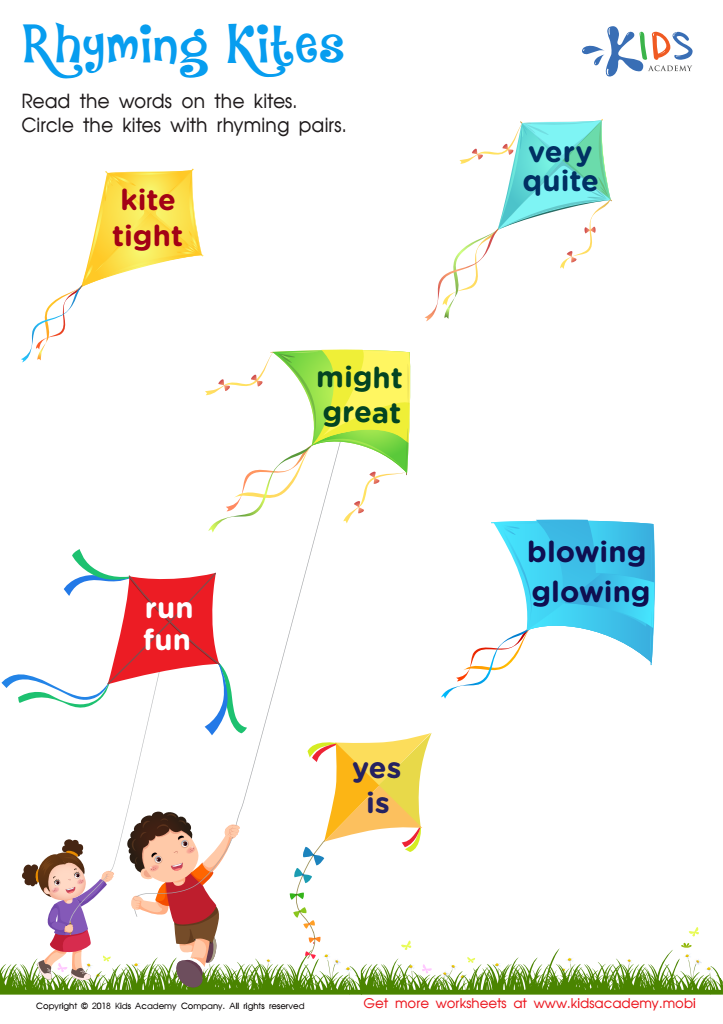
Rhyming Kites Worksheet
On a spring day, fly a kite! Kids Academy has a rhyming worksheet to boost your child's skills. Read the pairs of words aloud. Circle the kites if they rhyme, leave them blank if they don't. Listen carefully and find all the rhyming word pairs to complete this sheet!
Rhyming Kites Worksheet
Worksheet
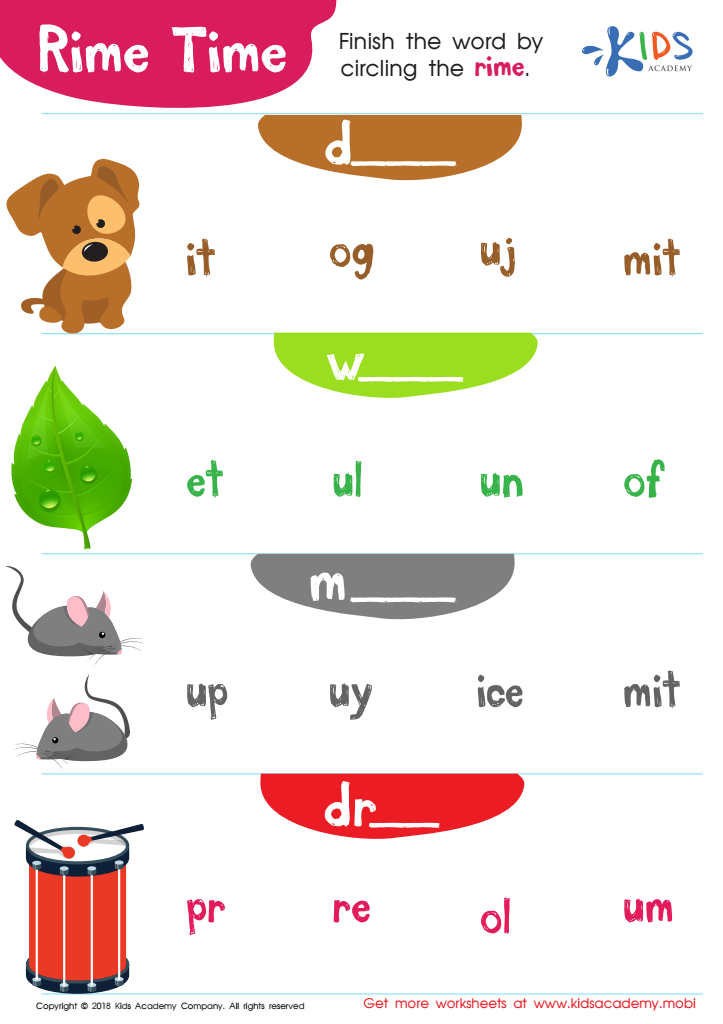
Rime Time Worksheet
This free PDF worksheet helps new and emerging readers identify rimes (the letters after initial consonants) and practice fine motor skills. Kids trace the correct rimes for each picture and increase their fluency and decoding skills with each one!
Rime Time Worksheet
Worksheet
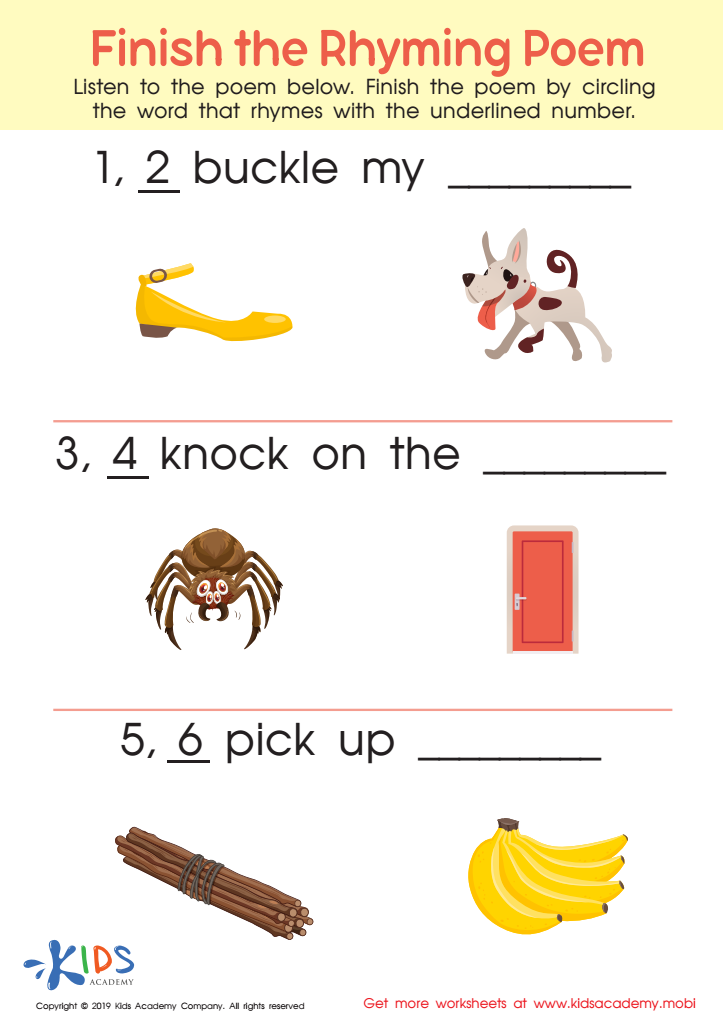
Finish Rhyming Poem Worksheet
Poems are a great way to express emotions and spark imagination. Does your child enjoy poetry and even have their own creations? If so, they'll love this worksheet. It's a great way to develop their rhyming skills. Challenge them to find and circle the words that rhyme with the ones underlined.
Finish Rhyming Poem Worksheet
Worksheet
Join Kids Academy for Free
Who is primarily going to use this learning content?








Rhyming skills are crucial for children aged 4-8, primarily because they play a fundamental role in the development of early literacy skills. For parents and teachers, understanding the importance of rhyming can help tailor effective educational strategies, making learning enjoyable and impactful.
Rhyming increases phonemic awareness, which is vital for reading readiness. When children recognize rhyming patterns, they start to identify sounds within words, improving their ability to decode new terms. This sound pattern recognition is a foundational skill for phonics, spelling, and even vocabulary development. For instance, a child who knows the rhyme pattern "-at" can decipher "cat," "bat," and "hat," expanding their reading capabilities effortlessly.
Moreover, rhyming engages children's attention and memory. Rhymes and songs make learning fun and memorable, encouraging repetition, which reinforces learning. The rhythmic flow can enhance children’s ability to memorize verses, aiding in language retention and recall. Engaging with rhymes also nurtures a child's ability to predict and anticipate language structures, aiding comprehension.
Additionally, rhyming activities foster creativity and emotional expression, as children begin to experiment with language and sounds. Ultimately, rhyming is not just an academic skill; it's a playway avenue that enriches overall linguistic development, laying a strong concrete foundation for successful future educational experiences. Thus, focusing on rhyming skills helps holistically prepare children for their academic journey ahead.








