Spelling skills improvement Normal Worksheets for Ages 4-8
3 filtered results
-
From - To
Welcome to our Spelling Skills Improvement Worksheets page, specially designed for children ages 4-8! Our engaging and interactive worksheets promote essential spelling skills, helping young learners build a strong foundation in language arts. These printable activities target various spelling concepts, including phonics, word recognition, and vocabulary development, while fostering creativity and critical thinking. Suitable for both classroom and home practice, our worksheets align with educational standards, ensuring each child enjoys a fun and productive learning experience. Explore our collection today to inspire excitement and confidence in your child's spelling journey! Perfect for handcrafted learning adventures.
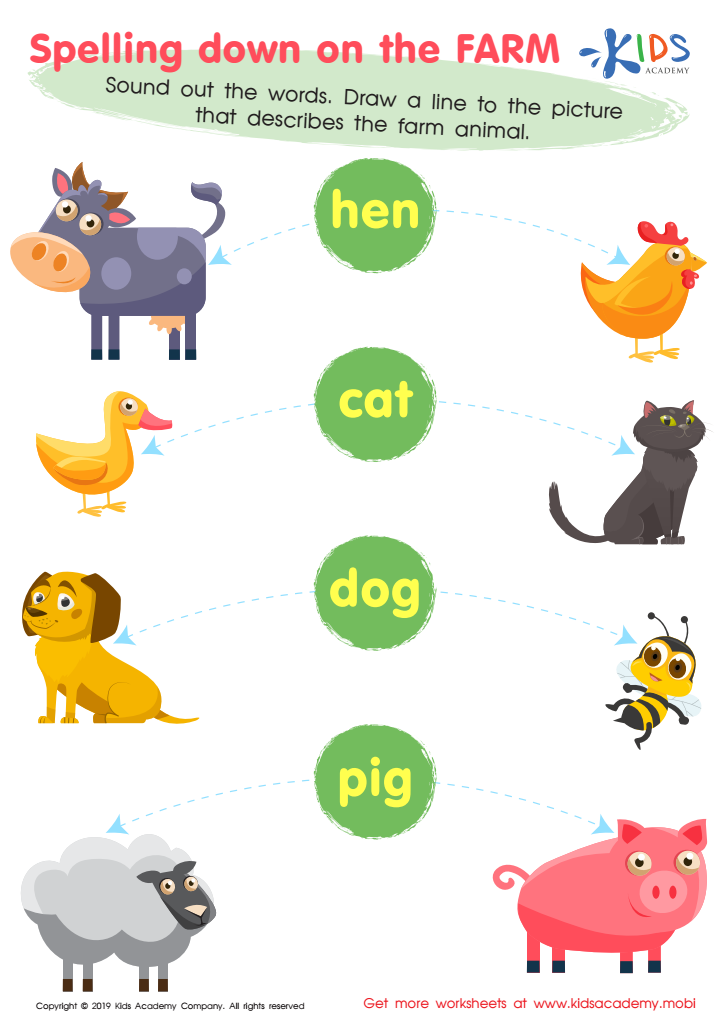
Spelling Down on the Farm Worksheet
 Assign to My Students
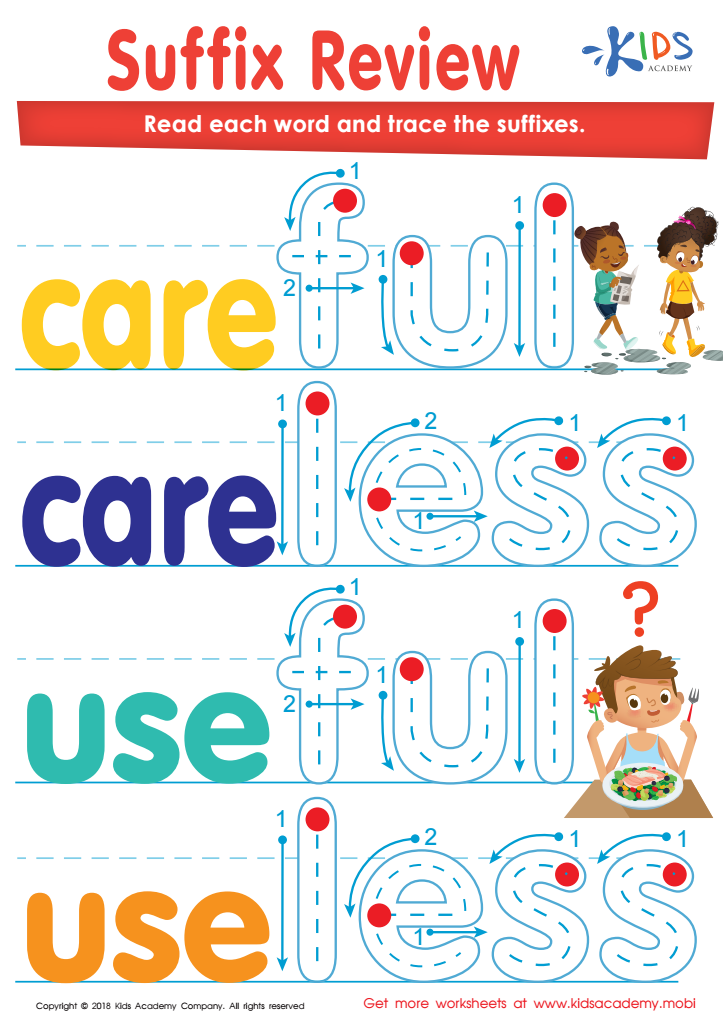
Suffix Review Worksheet
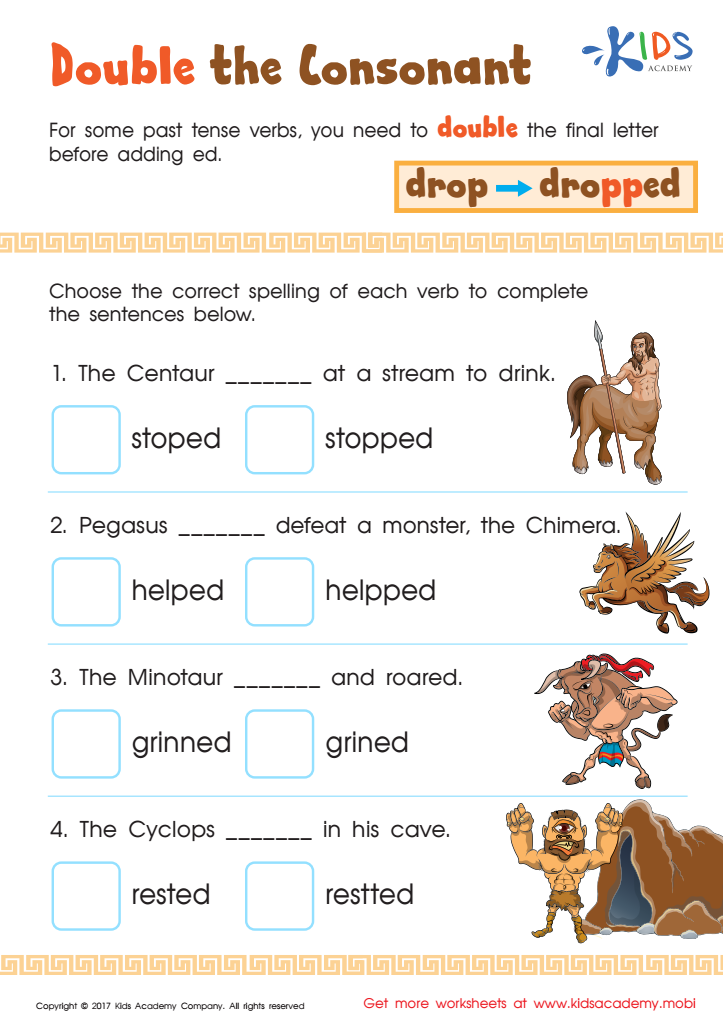
Double Consonant Spelling Worksheet






.jpg)
Spelling skills are fundamental to early literacy development, making their improvement vital for children aged 4-8. At this stage, children are not only learning to read but also developing the foundational skills necessary for writing and effective communication. Mastering spelling helps children recognize patterns in language, which enhances their reading fluency and comprehension.
Additionally, proficient spelling builds confidence. When children take pride in their written work, they are more likely to engage with texts and express their thoughts creatively. This confidence extends beyond academics, influencing social interactions and self-esteem.
Furthermore, strong spelling skills contribute to academic success. Many standardized tests and assessments in later grades incorporate spelling and writing proficiency, making early investment crucial. Parents and teachers can support spelling improvement through playful activities, phonics-based games, and reading together, making learning enjoyable.
Finally, as technology plays an increasing role in communication, developing spelling skills remains essential, even with predictive text and spell-check features. Teaching children the importance of correct spelling nurtures attention to detail and communication clarity, skills valuable in adulthood. By actively fostering these abilities, parents and teachers help set the foundation for lifelong learning and success.








