Understanding communities Normal Worksheets for Ages 4-8
6 filtered results
-
From - To
Explore "Understanding Communities" worksheets tailored for children aged 4-8! Designed to foster an appreciation for diverse communities, these worksheets make learning engaging and fun. Young explorers will dive into activities that enhance critical learning skills, such as problem-solving, critical thinking, and social awareness. Each worksheet is crafted to introduce important community roles, cultural diversity, and the concept of shared responsibility. Perfect for homeschooling or classroom use, these resources help kids understand how communities work together, promoting empathy and understanding from an early age. Download today to start an educational journey celebrating community connectivity.
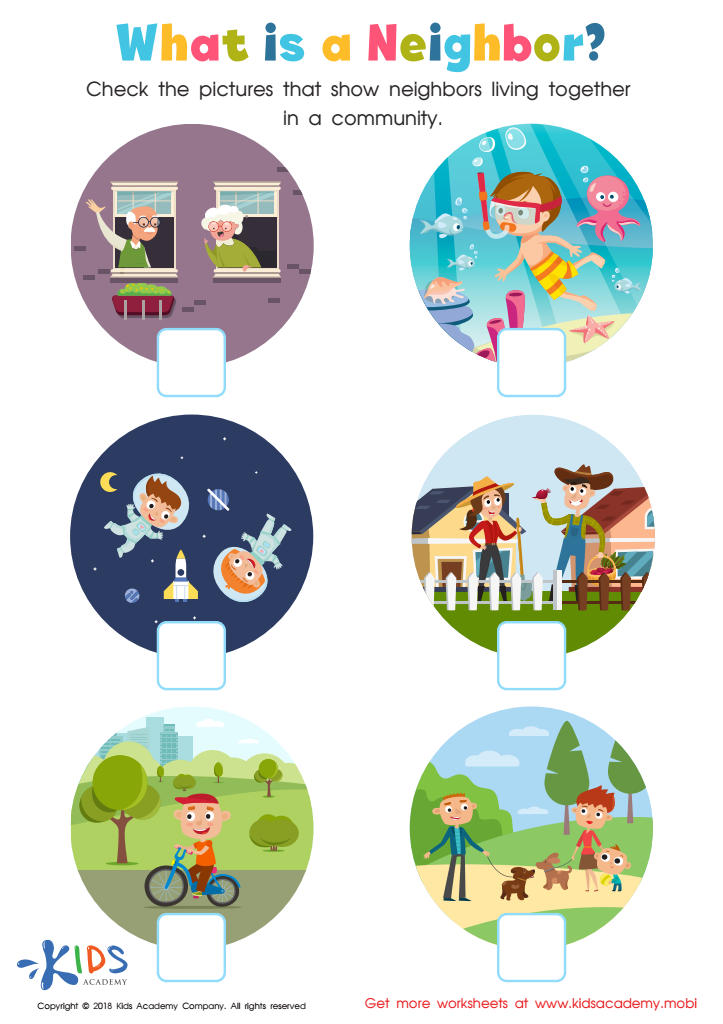
What is a neighbor Worksheet
 Assign to My Students
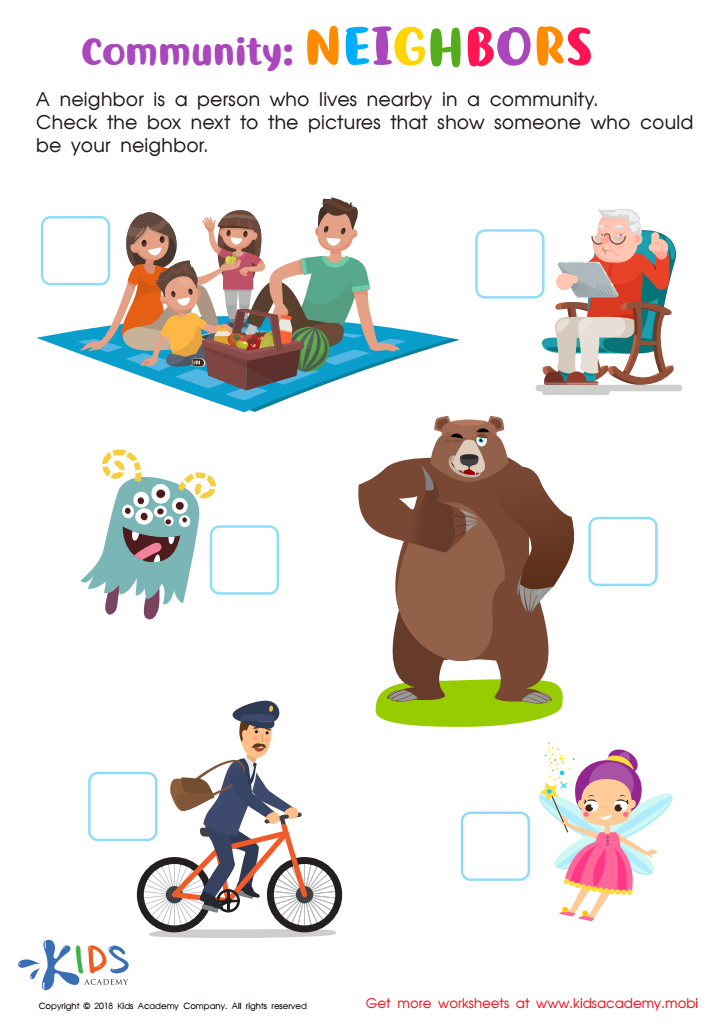
Community: Neighbors Worksheet
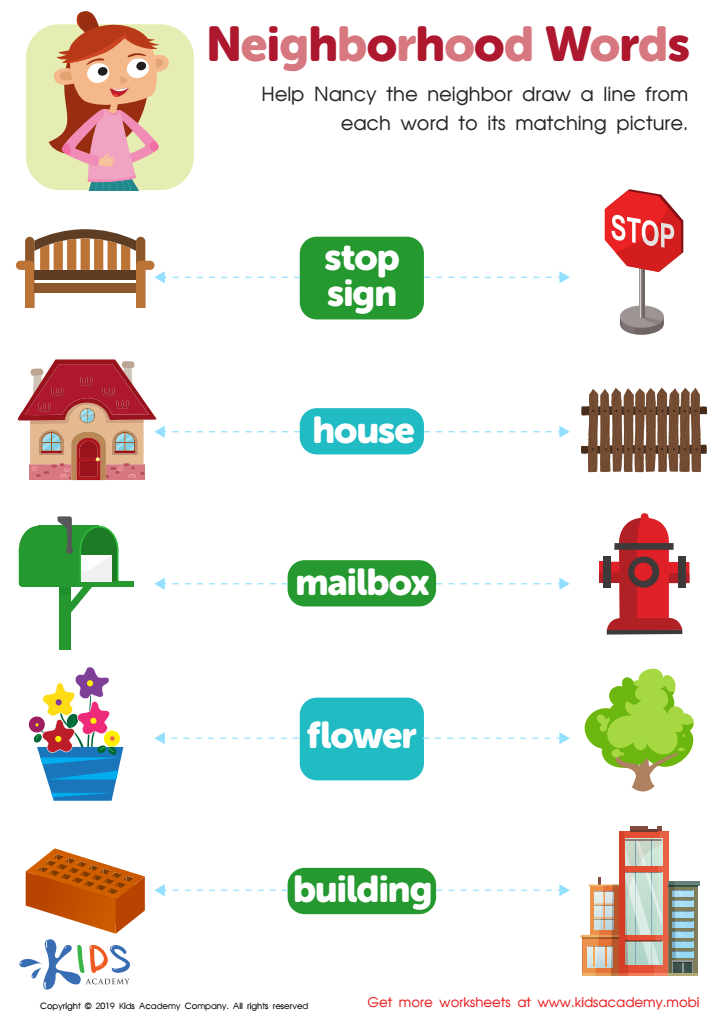
Neighborhood Words Worksheet
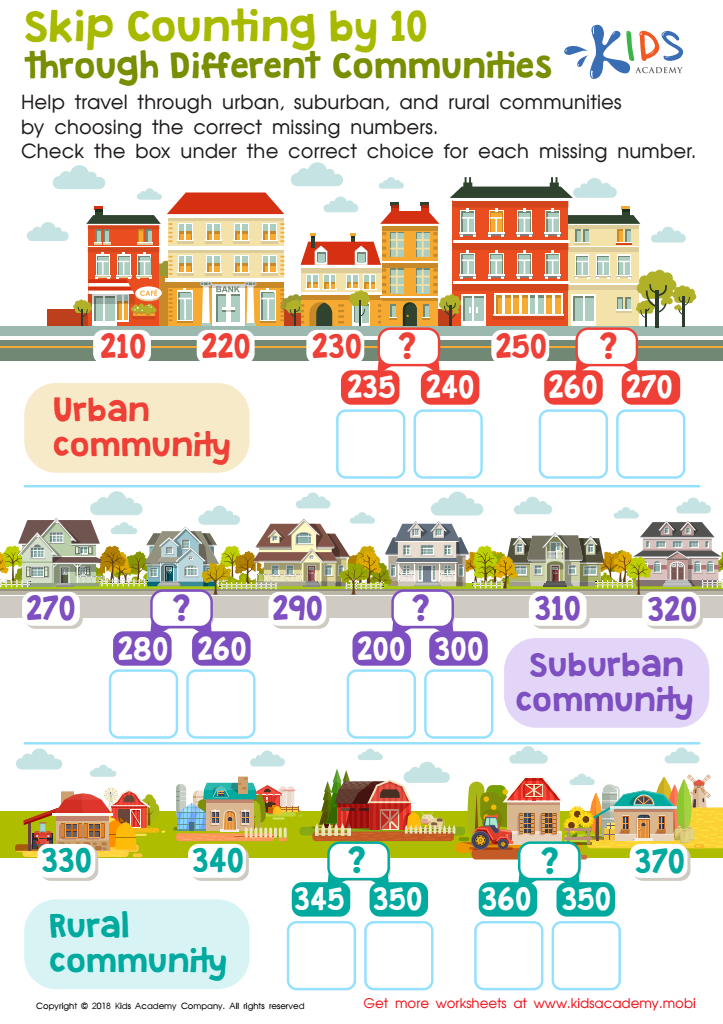
Skip Counting by 10 through Different Communities Worksheet
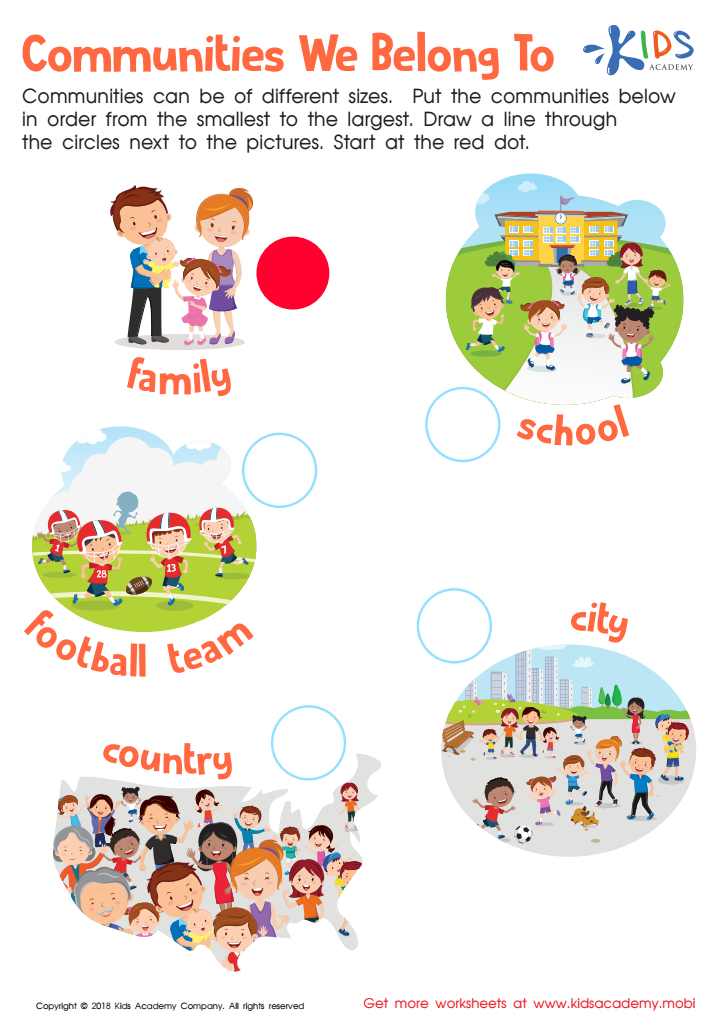
Communities We Belong to Worksheet
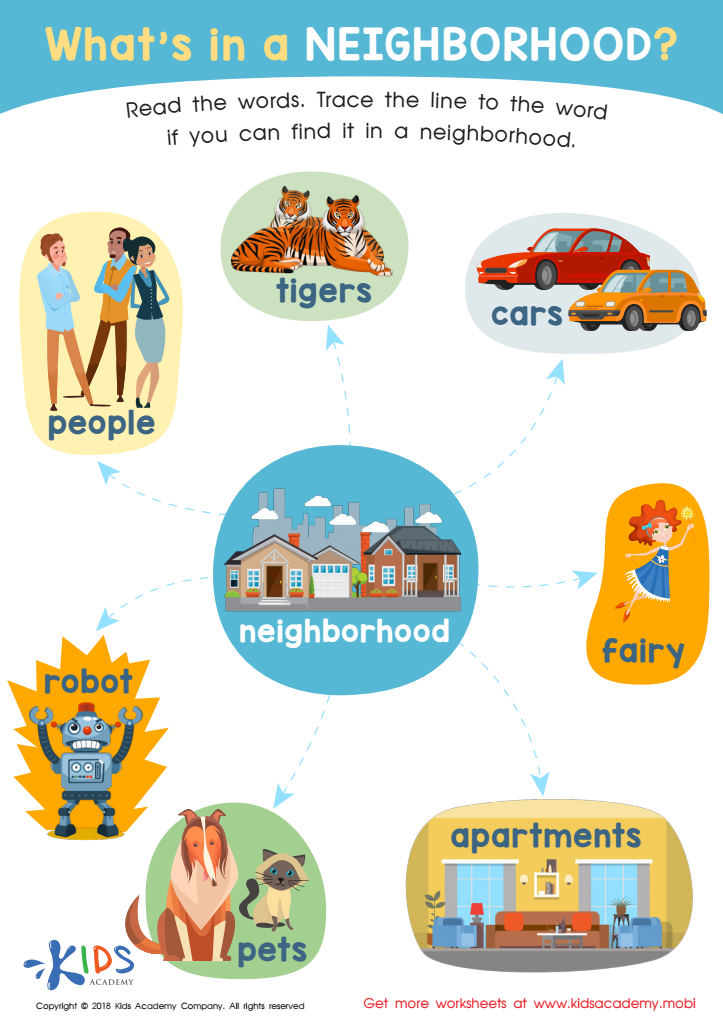
What's in a Neighborhood? Worksheet


.jpg)





Understanding communities is crucial for young children as it helps shape their social, emotional, and cognitive development. At ages 4-8, kids are naturally curious about the world around them and are forming their first understandings of how society functions. Teaching kids about communities assists them in realizing their roles as active participants within their own surroundings, fostering a sense of belonging and responsibility.
Firstly, it helps children appreciate the diversity in people, languages, and cultures. Early exposure to community concepts teaches about inclusion and respect, instilling empathy and reducing prejudices. Secondly, understanding the basic functions and roles within a community, such as those of firefighters, teachers, doctors, and police officers, helps kids grasp important social responsibilities and services, promoting cooperation and interdependence.
By understanding how communities function, kids learn critical social skills like sharing, taking turns, and working together—skills that are fundamental in school settings and for lifelong success. Additionally, teaching them about community problems and solutions encourages problem-solving and critical thinking at an early age.
For parents and teachers, nurturing this understanding prepares children to grow into informed, conscientious adults, ready to contribute positively to their communities. This foundational learning has lasting impacts on their overall development and societal contributions.








