Understanding plant growth Normal Worksheets for Ages 4-8
3 filtered results
-
From - To
Explore our engaging "Understanding Plant Growth Normal Worksheets" designed for children ages 4-8! These interactive worksheets introduce young learners to the fascinating world of plants, covering essential topics like the life cycle, photosynthesis, and the importance of sunlight and water. Tailored to develop critical thinking and observational skills, these resources combine fun activities with educational content to inspire a love for nature. Each worksheet encourages creativity through illustrations and hands-on learning experiences, making it an ideal tool for parents and educators alike. Watch your child's curiosity blossom as they discover the science behind plant growth in a playful, friendly format!
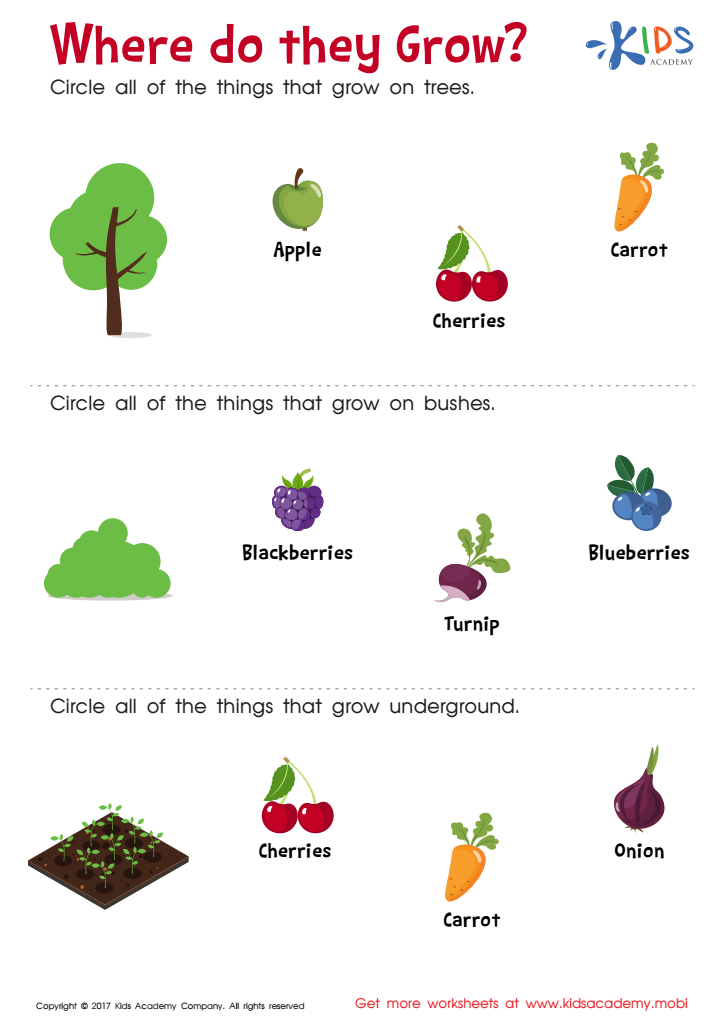
Where Do They Grow Worksheet
 Assign to My Students
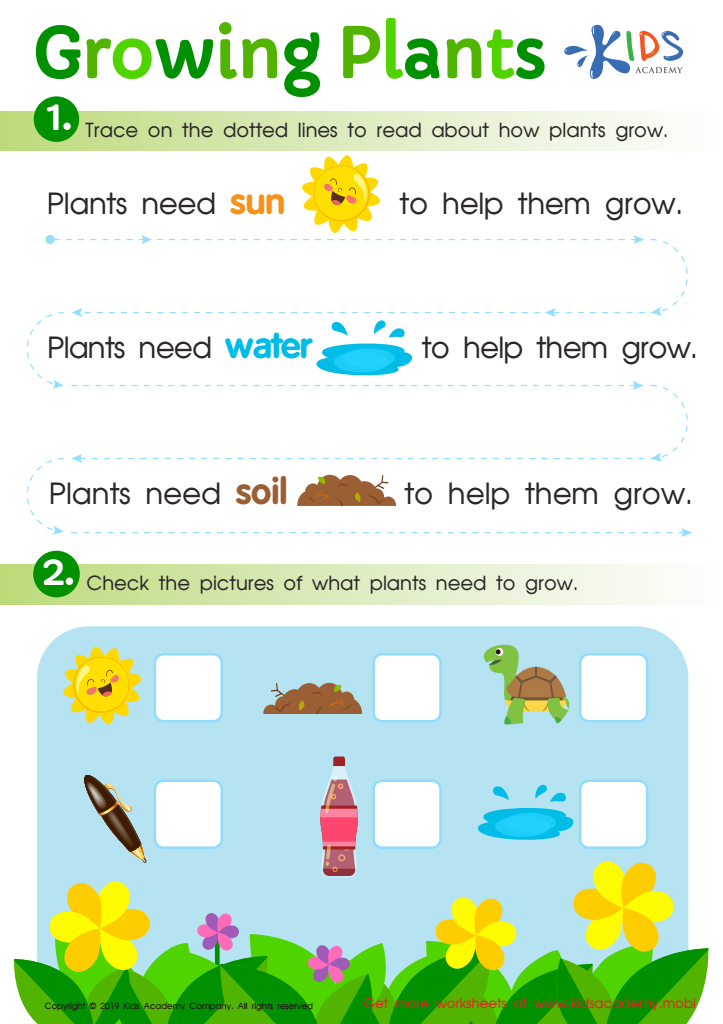
Growing Plants Worksheet
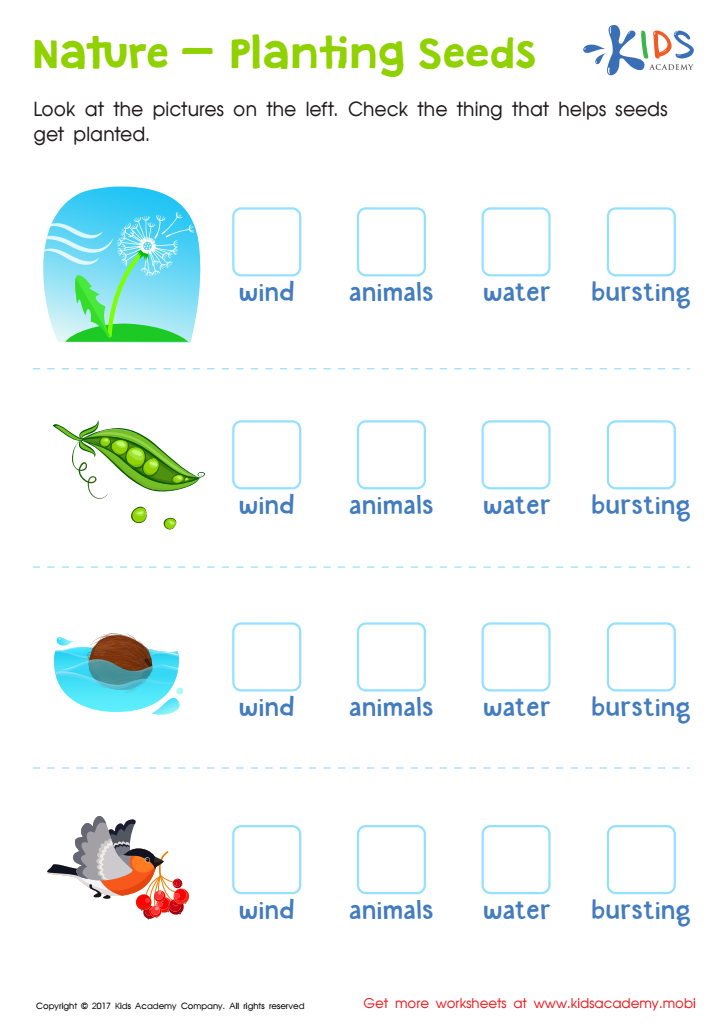
Nature Planting Seeds Worksheet


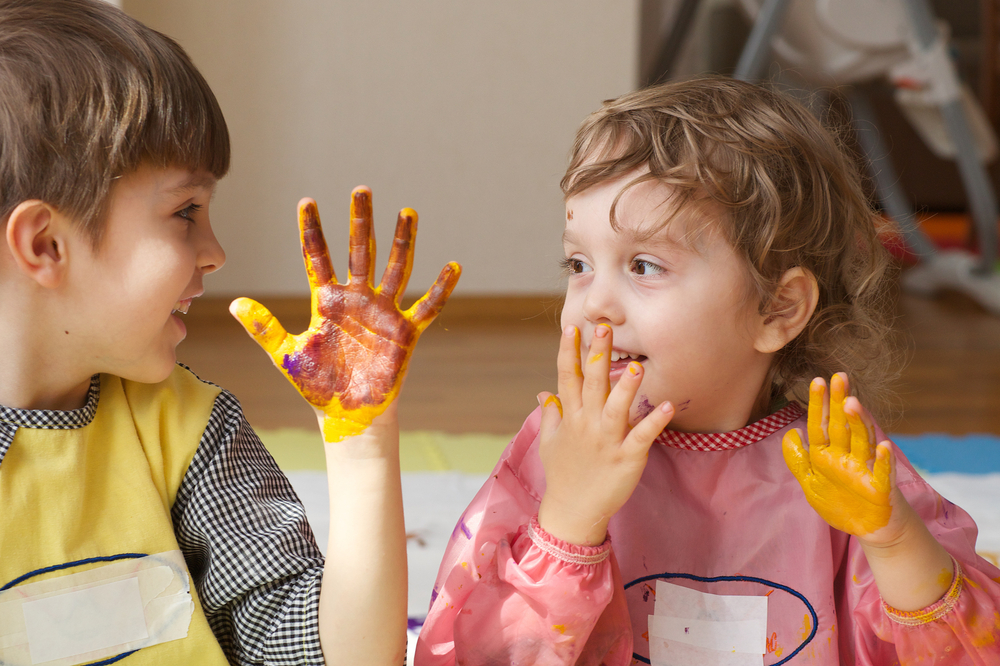


Understanding plant growth is essential for children ages 4-8 as it fosters a deep connection with nature, promotes curiosity, and supports STEM (Science, Technology, Engineering, Mathematics) learning. By observing plants, young children develop skills in observation and critical thinking, learning the basic needs of living organisms—sunlight, water, air, and nutrients.
This foundational knowledge nurtures environmental awareness, teaching children to respect and appreciate the ecosystems around them. Engaging them in hands-on activities, such as planting seeds or tending to a garden, promotes responsibility and encourages them to explore the cycle of life.
Moreover, engaging with plant growth provides opportunities for cross-curricular connections. Children can enhance their literacy skills by reading about plants and their importance, while math skills can be developed through measuring growth and discussing patterns.
Additionally, discussions surrounding plant life can enhance social skills as children work in teams during planting activities, promoting collaboration and communication.
In summary, by exploring plant growth, parents and teachers support a child’s physical, emotional, and cognitive development, igniting a lifelong interest in science and the natural world while laying a foundation for responsible global citizenship.








