Visual discrimination skills Normal Worksheets for Ages 4-8
5 filtered results
-
From - To
Enhance your child's visual discrimination skills with our expertly designed worksheets for ages 4-8. At Kids Academy, we offer a variety of engaging activities that help young learners identify similarities and differences, improve attention to detail, and boost cognitive development. Our worksheets feature colorful images, fun puzzles, and age-appropriate challenges that make learning enjoyable and effective. Ideal for home or classroom use, these resources support foundational skills essential for reading, writing, and overall academic success. Visit Kids Academy today to empower your child's visual acuity and cognitive growth in a playful, engaging way!
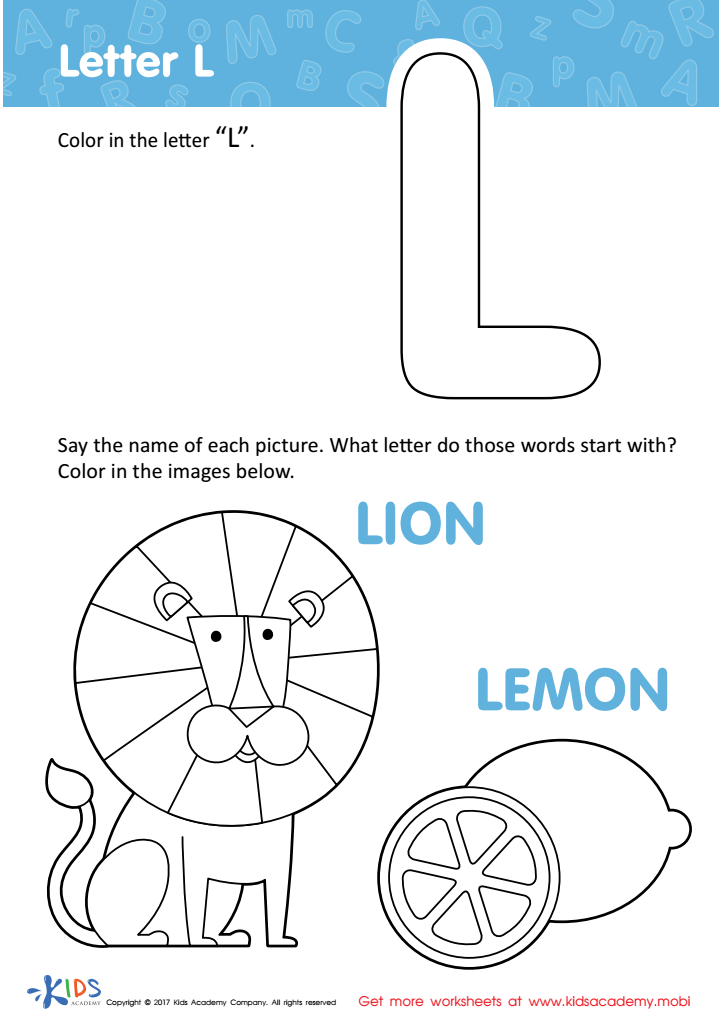
Letter L Coloring Sheet
 Assign to My Students
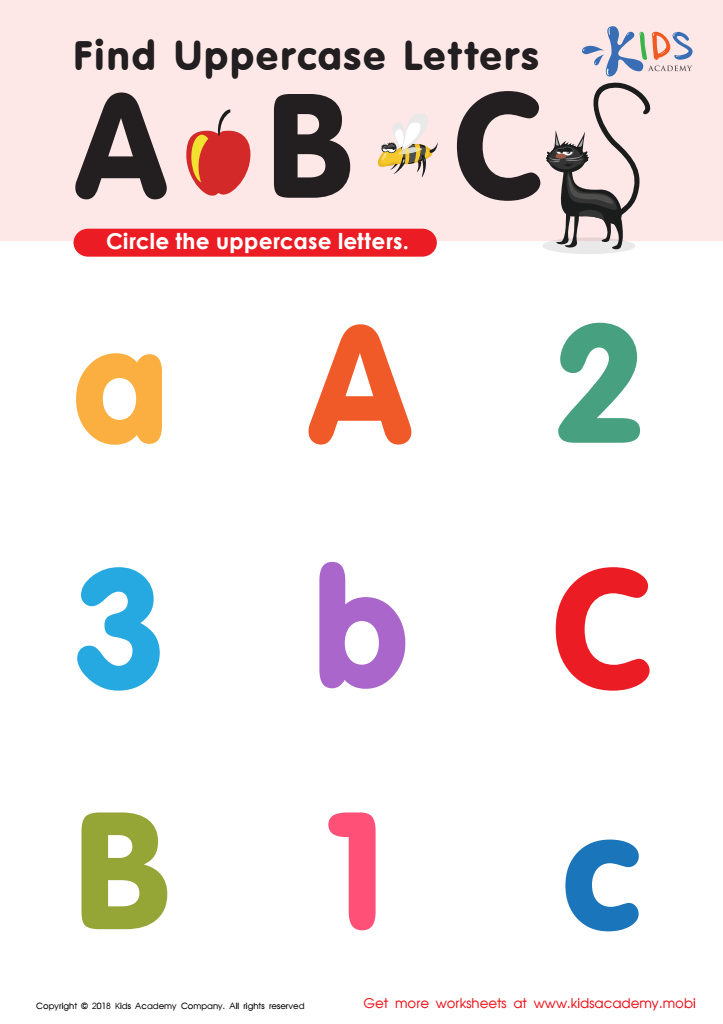
Find Uppercase Letters A, B, and C Worksheet
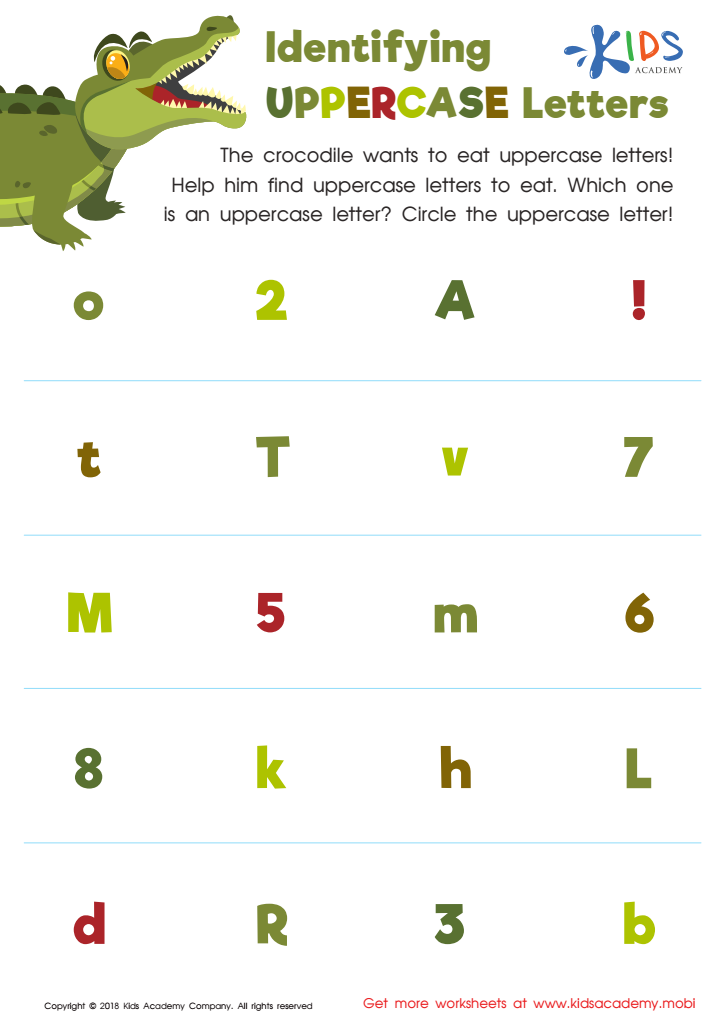
Identifying Uppercase Letters Worksheet

Find lowercase letters a b c Worksheet
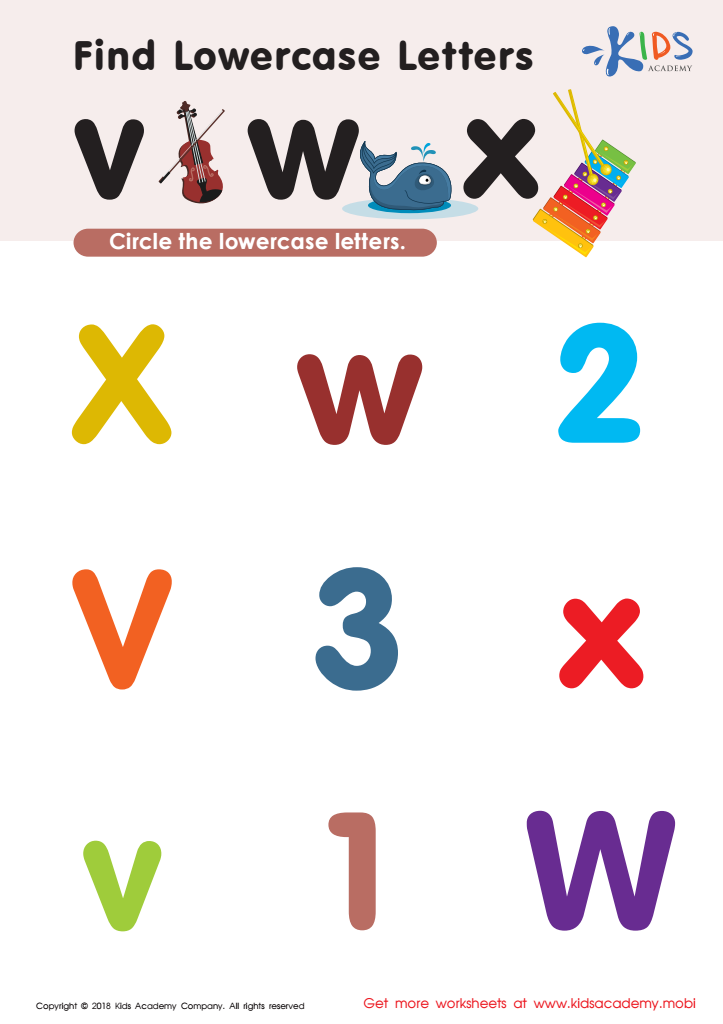
Find Lowercase Letters v w x Worksheet







Visual discrimination skills are critical for children aged 4-8 as they form the foundation for various academic and everyday activities. Parents and teachers should pay attention to nurturing these skills for several reasons. First, visual discrimination is fundamental for reading; it allows children to recognize differences in letters and words swiftly, helping them decode text accurately. For instance, distinguishing between letters like "b" and "d" or identifying small differences in words such as "cat" and "bat" is essential for reading fluency and comprehension.
Secondly, these skills impact early math learning. Tasks like distinguishing shapes, identifying patterns, and understanding spatial relationships rely heavily on visual discrimination. These foundational mathematical concepts are integral to more complex problem-solving skills later on.
Moreover, strong visual discrimination skills enhance a child's ability to follow instructions, complete puzzles, and engage in peer-play activities, which are crucial for their cognitive and social development. For example, when playing matching games, children must identify similarities and differences, fostering their attention to detail and concentration.
Early detection and support for visual discrimination challenges can prevent future academic struggles. Simple activities, such as sorting objects, playing "spot the difference" puzzles, and practicing letter recognition, can effectively bolster these skills, supporting a child's overall educational journey.








