
Mental math practice Normal Addition & Subtraction Worksheets for Ages 4-8
5 filtered results
Difficulty Level
Grade
Age
-
From - To
Subject
Activity
Standards
Enhance your child's math abilities with our engaging Mental Math Practice worksheets, designed specifically for children aged 4 to 8. These worksheets focus on normal addition and subtraction, fostering essential arithmetic skills in a fun and accessible way. Perfect for both home and classroom settings, our printable resources promote mental calculations that help young learners gain confidence and agility in math. With a variety of exercises suitable for different learning levels, children will enjoy practicing their math skills while developing a strong foundation for future learning. Start your journey towards mastering addition and subtraction today!
Favorites
With answer key
Interactive
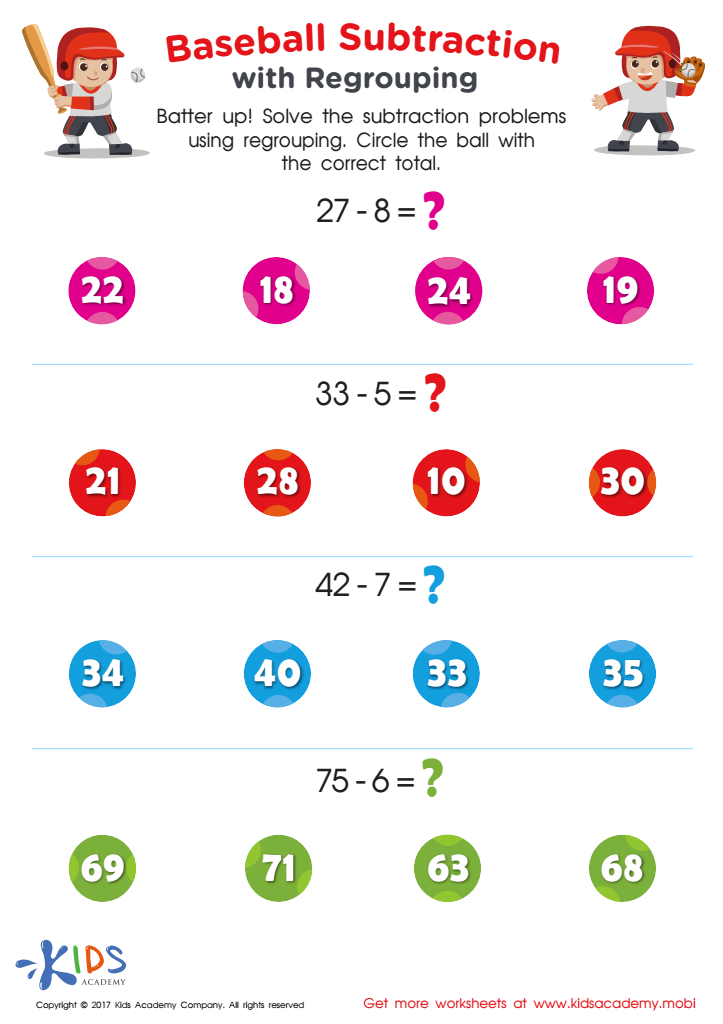
Subtraction With Regrouping for 2nd Grade Worksheet
Kids solve two-digit subtraction problems using regrouping and color in the baseballs.
2nd graders may find regrouping for subtraction tricky, so give them a helping hand with this fun worksheet! They practice two-digit subtraction and regrouping by coloring in baseballs as they solve the problems. Let them practice the skill and enjoy the game at the same time.
 Assign to My Students
Subtraction With Regrouping for 2nd Grade Worksheet
Worksheet
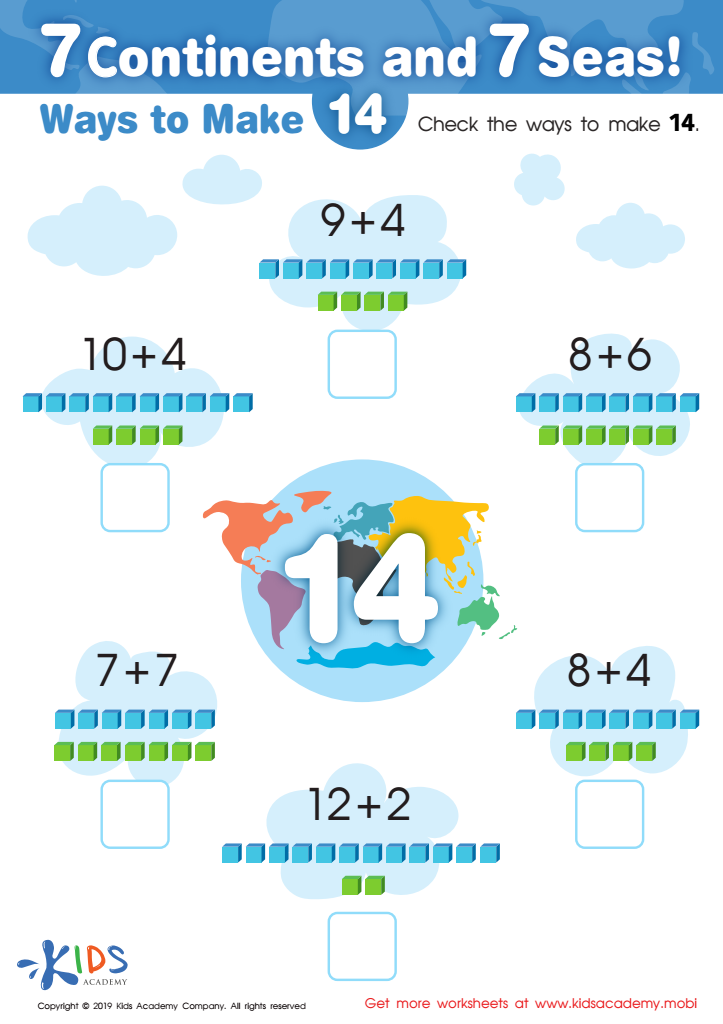
7 Continents and 7 Seas Worksheet
Remind kids of the continents and show them how different numbers can add up to the same figure. Give examples, like 2+2 =4, and 3+1 =4. Ask if they can provide other examples, then work through the simple additions in this worksheet with them. Ask them to circle all equations that make 14.
7 Continents and 7 Seas Worksheet
Worksheet
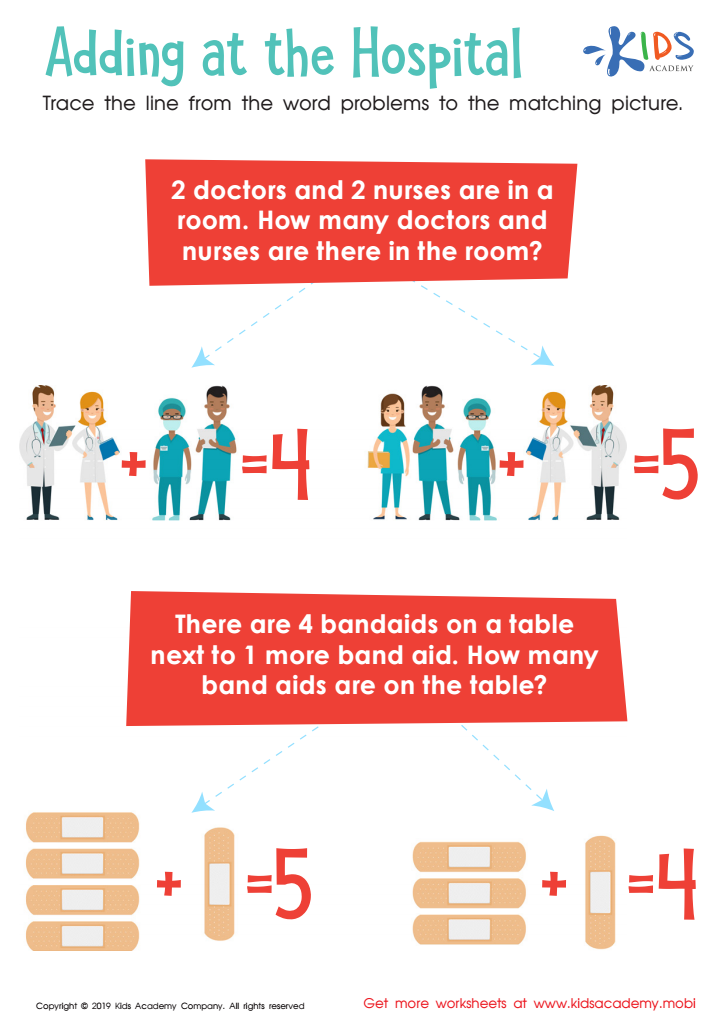
Adding at the Hospital Worksheet
A hospital visit doesn't have to be scary for kids. With this worksheet, they can count along with doctors and nurses, by reading the word problems and tracing lines to the corresponding picture. Guide them through it and you'll help them have a fun experience.
Adding at the Hospital Worksheet
Worksheet
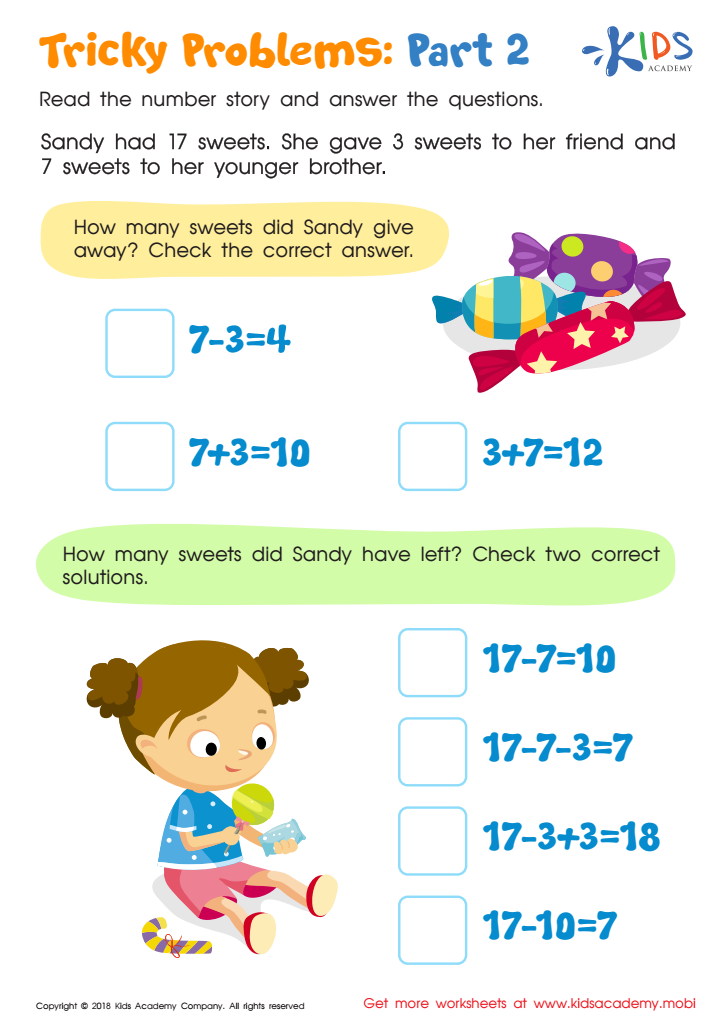
Tricky Problems Worksheet: Part 2
Help your little math learner visualize number stories with this engaging worksheet. They'll connect pictures to the story and use math facts to find the sums. After that, they'll be able to identify the correct number sentences to match. Let them practice and get better at problem solving!
Tricky Problems Worksheet: Part 2
Worksheet
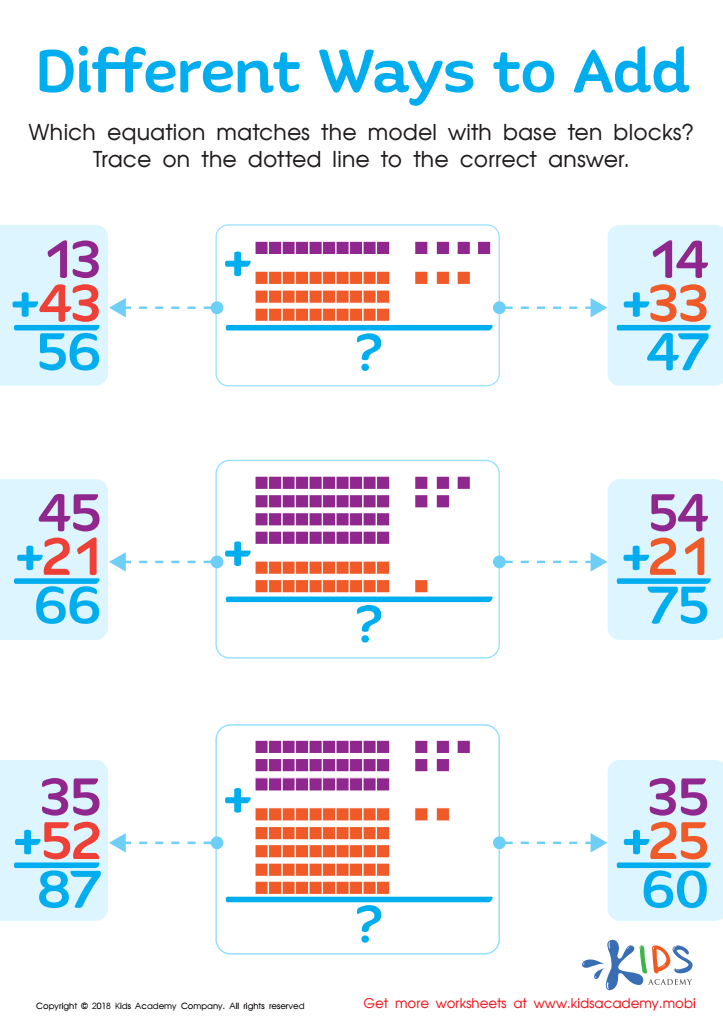
Different Ways to Add Worksheet
This worksheet enhances math skills by having students match equations to base ten pictures and tracing lines. It not only helps with fine motor skills, but also encourages number sense, with various ways to add and build upon existing math knowledge.
Different Ways to Add Worksheet
Worksheet
Join Kids Academy for Free
Who is primarily going to use this learning content?








Mental math practice, particularly in addition and subtraction, is crucial for children aged 4-8 as it lays the foundation for their overall math skills and cognitive development. Engaging in mental math helps young learners develop number sense, which enhances their ability to understand mathematical concepts and relationships. By practicing these skills, children learn to perform calculations quickly and accurately, fostering confidence in their abilities.
Moreover, mental math encourages critical thinking and problem-solving skills. Children learn to visualize numbers and develop strategies for arithmetic, which translates to better performance in more complex math as they progress in their education.
Additionally, early math skills have a significant impact on later academic success. Research shows that a strong foundation in basic math concepts correlates with achievement in various subjects. Teachers and parents play a vital role in this development; they can create engaging, playful environments that make mental math practice enjoyable. Simple games and everyday math discussions can instill a love for numbers, making children more inclined to practice and engage with mathematics.
Investing time in mental math practice not only enhances math proficiency but also builds critical life skills, setting the stage for a lifetime of learning.








