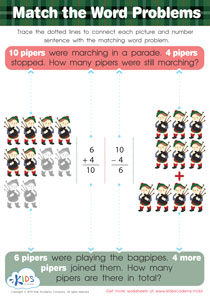
Understanding subtraction Normal Addition Worksheets for Ages 4-8
4 filtered results
-
From - To
Discover the fun and engaging "Understanding Subtraction Normal Addition Worksheets" designed especially for children aged 4-8. These worksheets help young learners master the concept of subtraction through relatable and interactive activities. By integrating colorful visuals and relatable scenarios, kids will develop a solid grasp of subtraction while reinforcing their addition skills. Our thoughtfully crafted exercises cater to varying skill levels, ensuring every child finds the right challenge. Perfect for classroom or home use, these worksheets encourage independent learning and boost confidence in mathematics. Start your child’s exciting math journey today and watch them flourish in understanding subtraction!
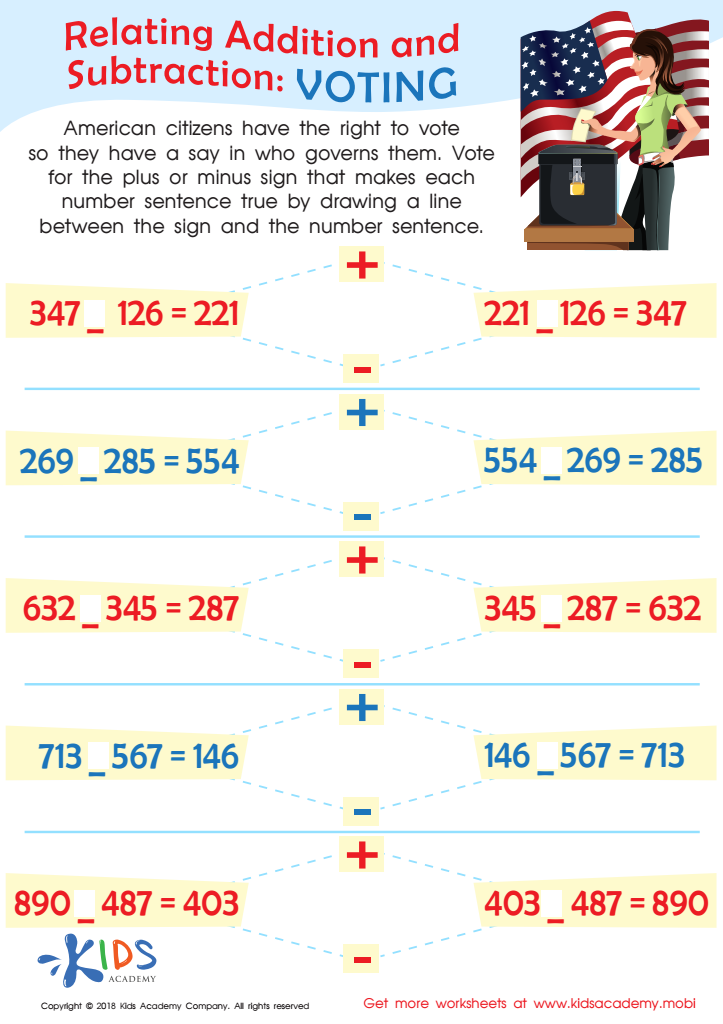
Voting Worksheet
 Assign to My Students
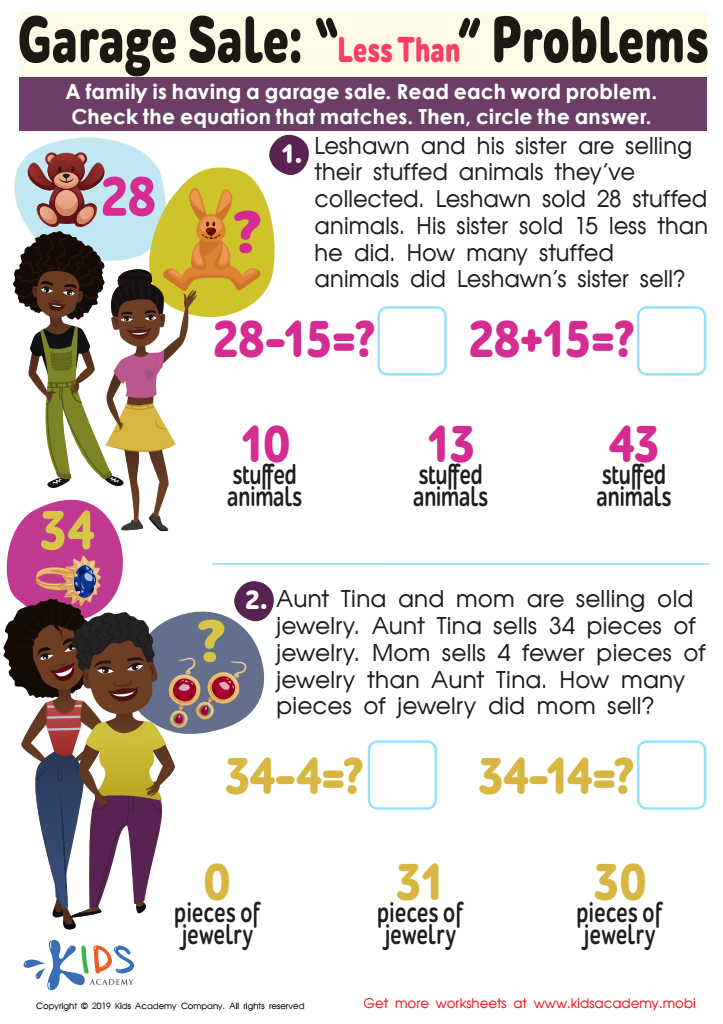
Garage Sale Less Than Worksheet
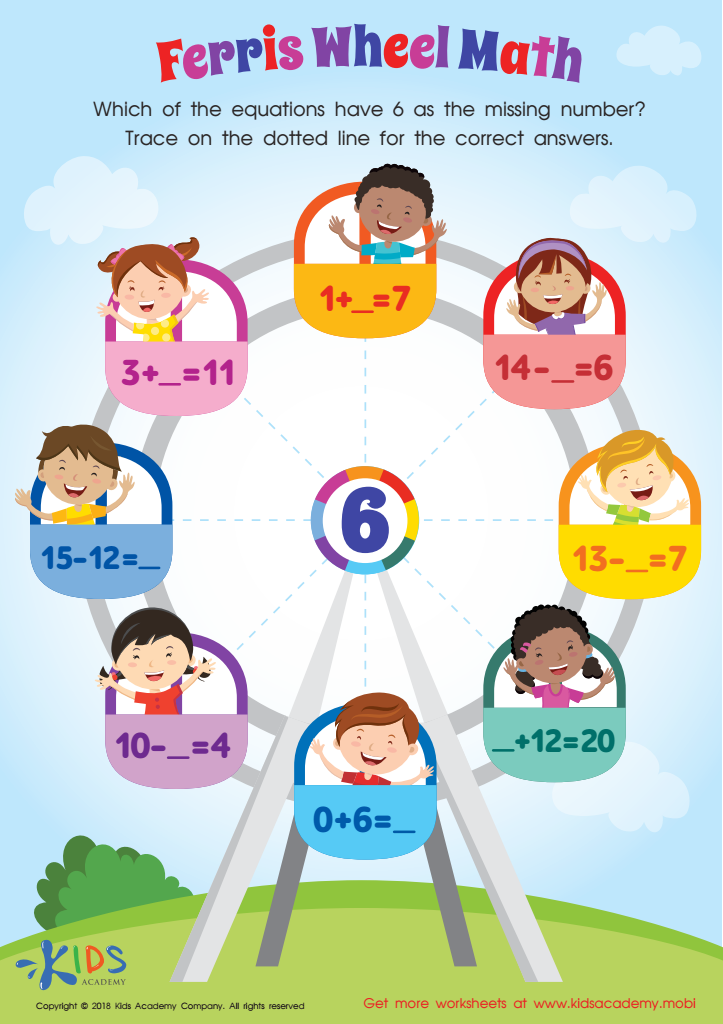
Missing Number: Ferris Wheel Math Worksheet
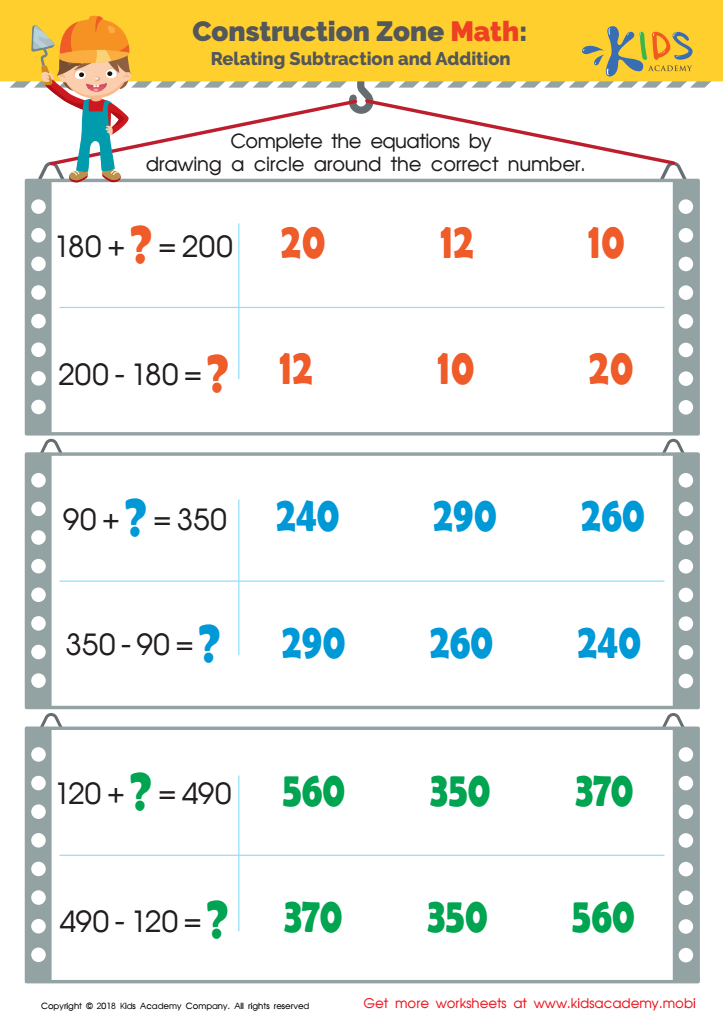
Construction Zone Math: Relating Subtraction and Addition Worksheet



.jpg)




Understanding subtraction and normal addition is essential for children aged 4-8 as these skills form the foundation for their mathematical learning and cognitive development. During these formative years, children are not just learning numbers; they are developing critical thinking and problem-solving abilities. Subtraction, often viewed as the opposite of addition, helps kids understand the concept of taking away and can lead to greater comprehension of number relationships.
Parents and teachers play a crucial role in fostering a positive attitude toward math during this stage. When children grasp these fundamental concepts, they build confidence, enhancing their willingness to engage with more complex mathematical ideas in later grades. Engaged parents and teachers can use everyday experiences, such as sharing snacks or counting toys, to make learning interactive and enjoyable.
Moreover, early proficiency in addition and subtraction sets the stage for future success in higher mathematics, where these skills are constantly in use. When children understand these operations, they are better equipped for real-world Problem-Solving scenarios, critical for academic achievement and everyday life. By emphasizing these concepts early, parents and teachers are essentially laying the groundwork for a lifelong appreciation of mathematics.