Mathematical reasoning Normal Division Worksheets for Ages 4-8
3 filtered results
-
From - To
Unlock your child's potential with our Mathematical Reasoning Normal Division Worksheets, designed for ages 4-8. These engaging worksheets help young minds master basic division while developing critical thinking and problem-solving skills. Each activity is crafted to be fun and educational, providing a strong foundation in mathematics. Perfect for early learners, our worksheets build confidence and enhance understanding through a variety of captivating exercises. Ideal for both classroom and home use, these resources ensure that learning division becomes an enjoyable adventure, setting the stage for future math success. Explore our collection to support and enrich your child's mathematical journey!
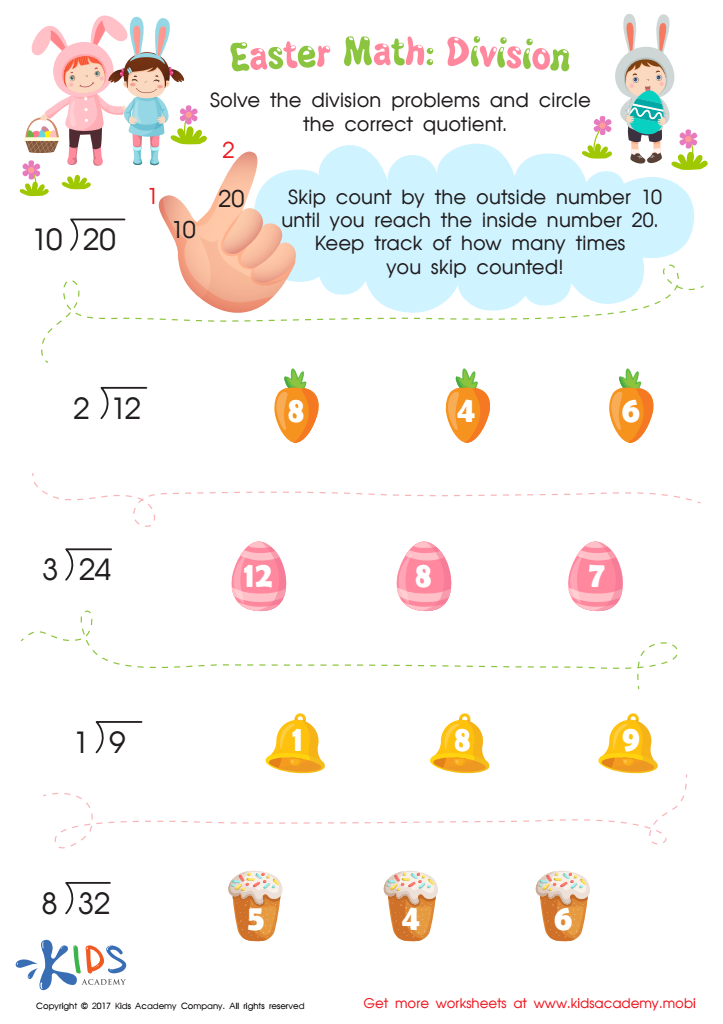
Division Worksheet
 Assign to My Students
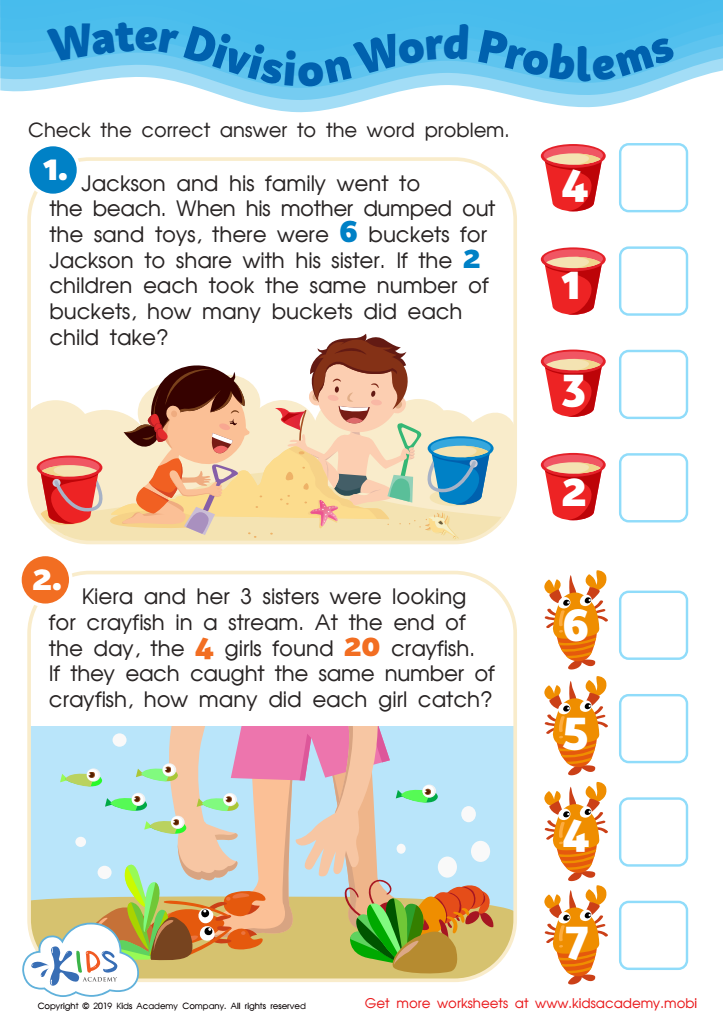
Water Division Word Problems Worksheet
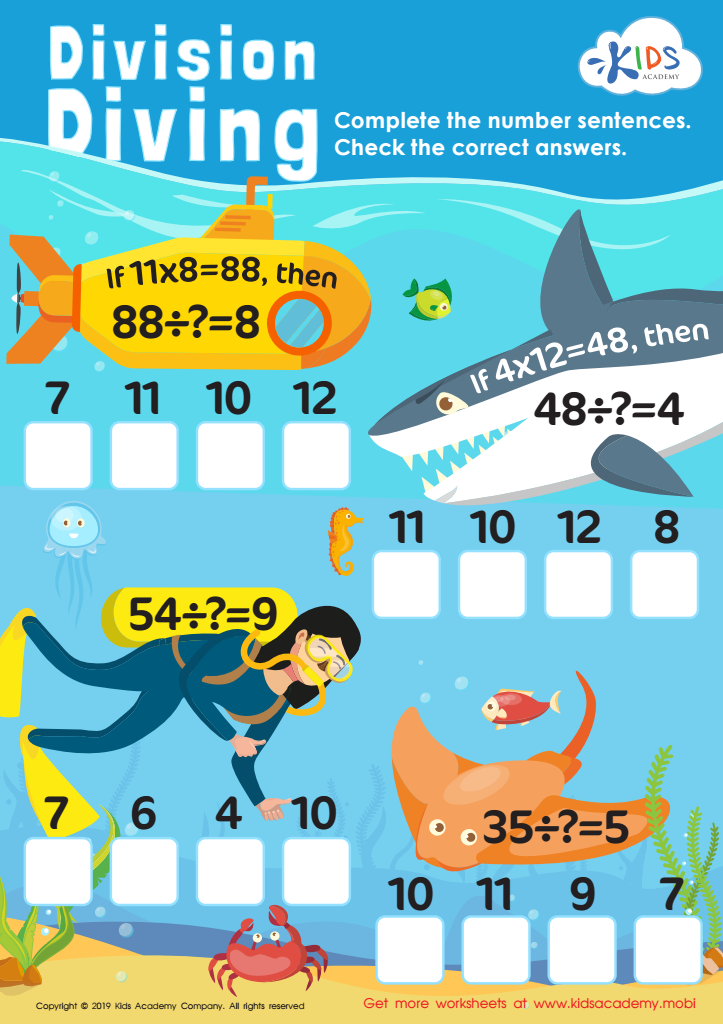
Division Diving Worksheet







Mathematical reasoning, especially normal division, plays a crucial role in early childhood education because it lays the foundation for a child's future success in mathematics and overall cognitive development. Introducing division concepts to children ages 4-8 provides a tangible way for them to understand how larger quantities can be broken down into equal parts, which is fundamental to various real-world applications.
First, normal division enhances problem-solving skills. When children learn to divide, they are not just memorizing steps; they are developing logical reasoning by figuring out how to distribute items evenly. This practical application sharpens their analytical abilities and helps them tackle complex mathematical problems with confidence in later grades.
Second, understanding division at an early age promotes numeracy, an essential life skill. This understanding will be critical when children encounter real-life situations that require them to divide objects, such as sharing toys or splitting a snack evenly with friends. Such practical applications make abstract mathematical concepts more relatable and less intimidating.
Lastly, early mastery of division supports academic achievement across subjects. It boosts children's self-confidence as they realize they can handle challenging concepts. Teachers and parents who prioritize mathematical reasoning set a strong groundwork for academic curiosity and lifelong learning, emphasizing the value of mathematics in various aspects of life.








