Differentiating shapes Normal Geometry Worksheets for Ages 4-8
3 filtered results
-
From - To
Enhance your child's understanding of geometry with our "Differentiating Shapes" Normal Geometry Worksheets designed specifically for ages 4-8. These engaging, age-appropriate activities help young learners identify, compare, and differentiate various shapes, fostering essential math skills in a fun and interactive way. Our worksheets are perfect for both home and classroom use, promoting cognitive development and critical thinking. With colorful illustrations and clear instructions, children will enjoy exploring shapes while building a strong foundation in geometry. Help your little ones master shape recognition and classification with our thoughtfully crafted resources, making learning a joyful experience! Download your worksheets today and watch them thrive!
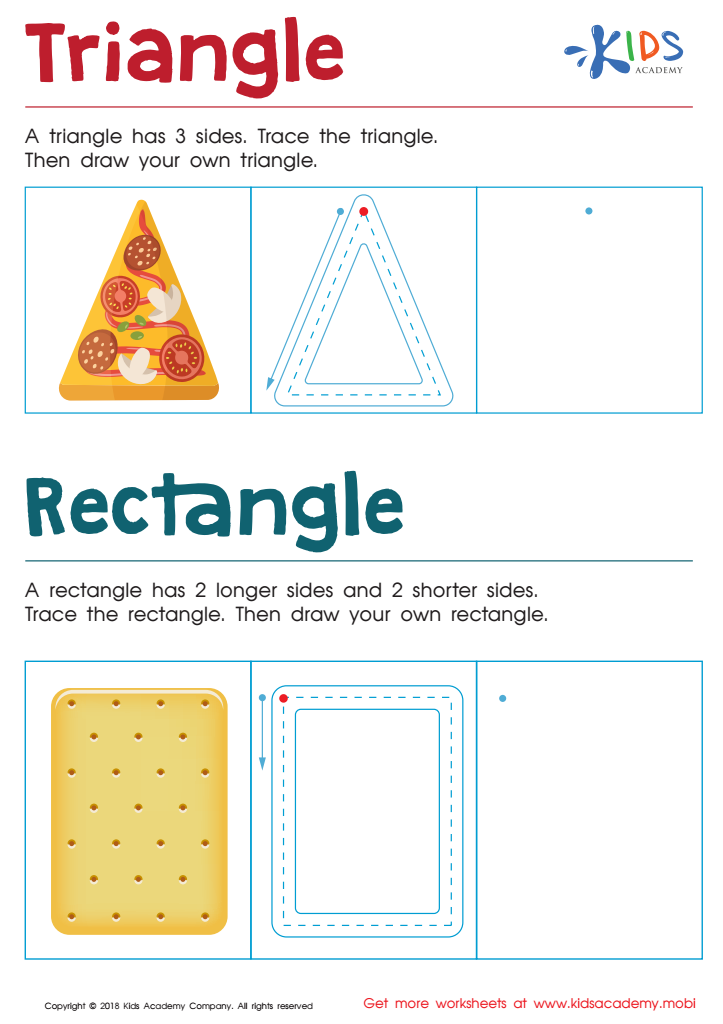
Triangle Rectangle Worksheet
 Assign to My Students











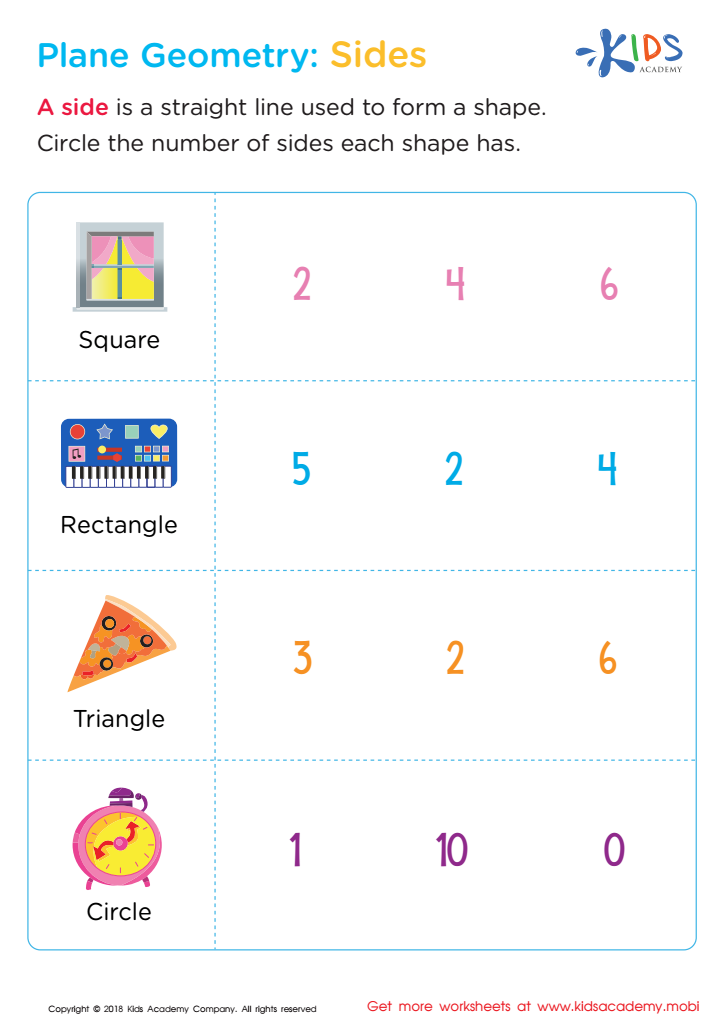
Plane Geometry: Sides Worksheet
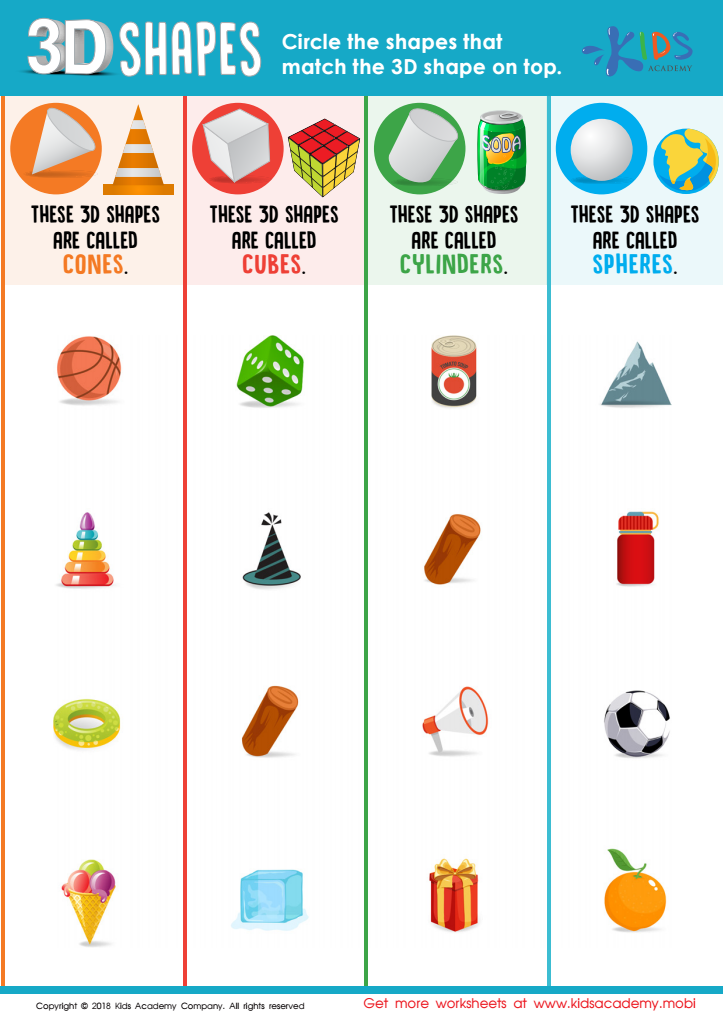
3D Shapes Worksheet








Differentiating shapes in early geometry is crucial for children aged 4-8 as it lays the foundation for their mathematical understanding and cognitive development. At this age, children are naturally curious and eager to explore their world, making it an ideal time to introduce diverse shapes and their properties.
Implementing differentiated shape activities caters to various learning styles and abilities. Some children may benefit from hands-on experiences, such as building shapes with blocks, while others might thrive through visual aids like shape flashcards. By providing varied approaches, educators and parents can ensure that every child engages with the material in a way that resonates with them.
Additionally, understanding shapes promotes essential skills beyond basic geometry. It enhances spatial awareness, logical reasoning, and problem-solving abilities, which are fundamental for later math concepts. Engaging in shape differentiation helps children recognize patterns and relationships, fostering critical thinking.
Ultimately, when parents and teachers prioritize differentiated shape learning, they contribute to creating an inclusive and stimulating educational environment, helping all children succeed academically and develop a passion for learning. Shaping positive attitudes towards mathematics at a young age encourages lifelong learners and confident problem solvers.








