Differentiating shapes Normal Math Worksheets for Ages 4-8
3 filtered results
-
From - To
Discover the magic of early math learning with our Differentiating Shapes Normal Math Worksheets for Ages 4-8. Tailored to the developmental needs of young children, these worksheets foster foundational geometry skills by helping kids identify, compare, and contrast various shapes. Engaging exercises and playful illustrations make learning fun and effective, promoting visual discrimination and critical thinking. Perfect for both classroom settings and at-home practice, our worksheets are designed to build confidence and lay the groundwork for future math success. Equip your little learners with essential shape differentiation skills and watch their love for math grow!
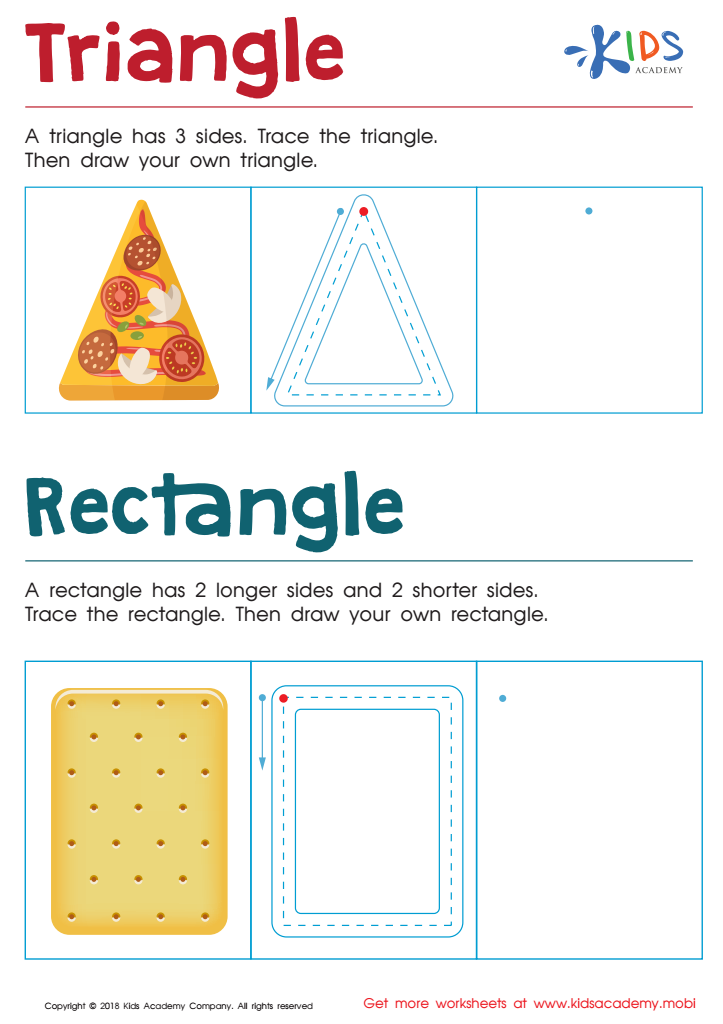
Triangle Rectangle Worksheet
 Assign to My Students
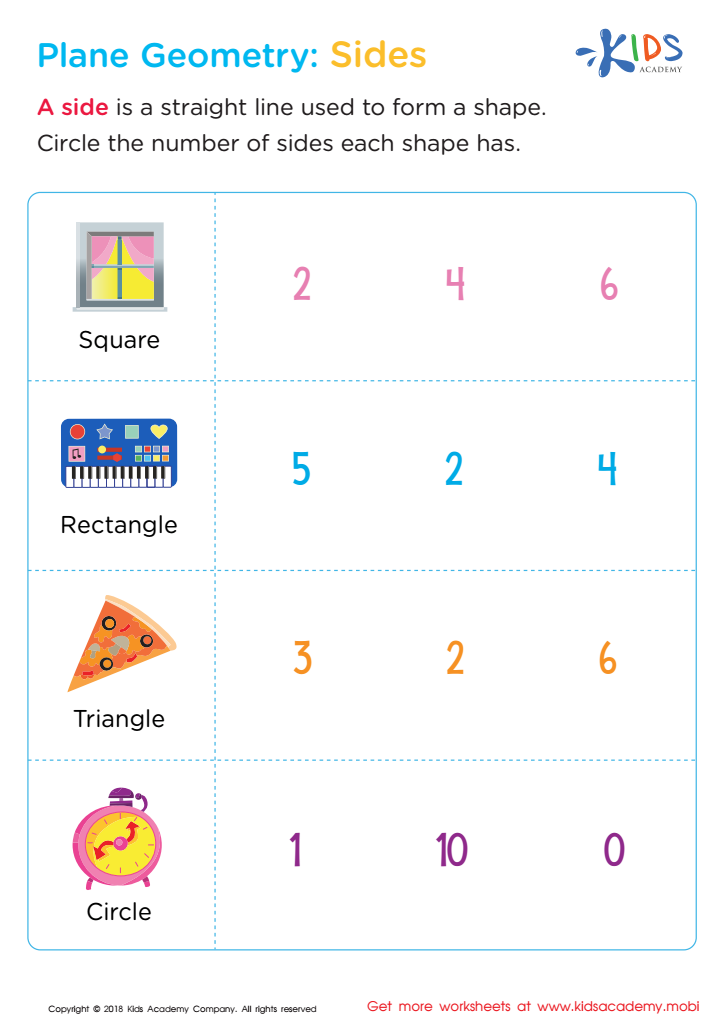
Plane Geometry: Sides Worksheet
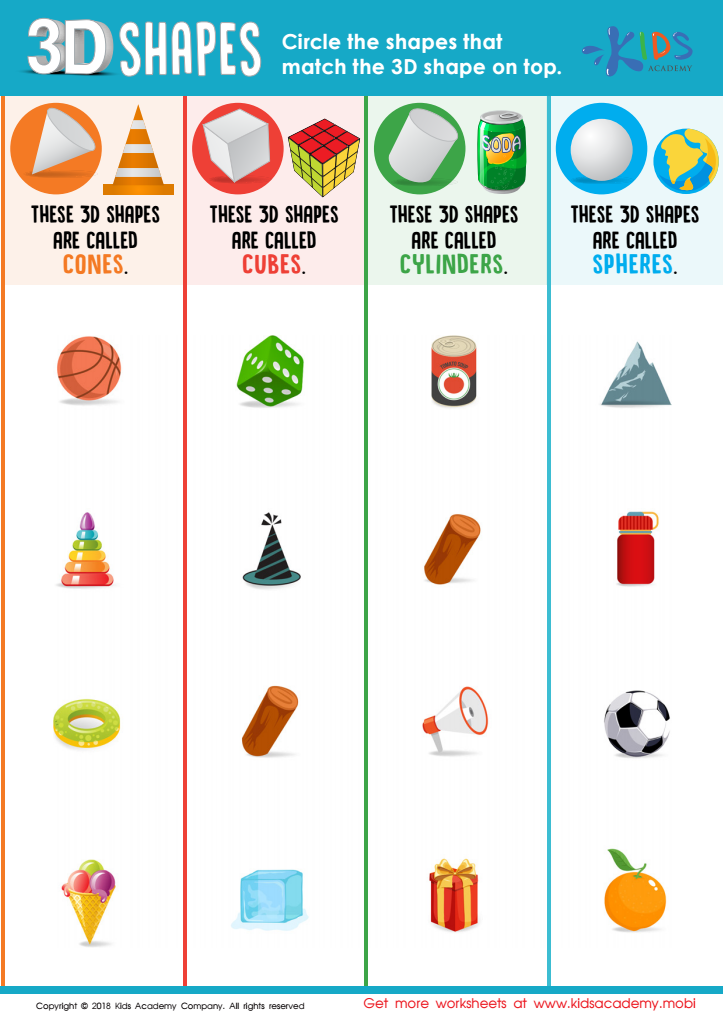
3D Shapes Worksheet







Differentiating shapes is a key aspect of early childhood education and is important for both parents and teachers to focus on for several reasons. First, understanding shapes forms the building blocks of more complex mathematical concepts. By learning to identify and distinguish between different shapes (e.g., circles, squares, triangles), children develop critical thinking and analytical skills that are foundational for geometry and spatial awareness. Recognizing shapes also improves their ability to classify objects, a skill that is essential in both math and science.
Secondly, differentiating shapes enhances fine motor skills and hand-eye coordination. Activities like tracing or cutting out shapes require precise movements and control, helping children develop the muscle memory they will need for writing later on.
Additionally, understanding shapes contributes to language development. When children learn shape names and attributes, their vocabulary expands. They can use these terms to describe and communicate more effectively, aiding social and cognitive development.
Lastly, learning about shapes can be a fun and engaging way for young children to explore their environment. Shapes are everywhere, from the toys they play with to the foods they eat. Engaging them with shapes in a variety of activities can foster a love for learning and curiosity about the world around them.








