Improving counting skills Normal Math Worksheets for Ages 4-8
4 filtered results
-
From - To
Enhance your child's counting skills with our engaging Normal Math Worksheets for ages 4-8! Perfect for young learners, these worksheets are designed to make counting fun and interactive. Each activity focuses on developing essential number recognition and counting proficiency through vibrant illustrations and relatable scenarios. Kids will enjoy practicing their counting abilities while building a strong math foundation. These worksheets not only promote cognitive growth but also boost confidence in math. Tailored to meet the developmental needs of early learners, our resources will ignite a love for numbers. Start nurturing your child's mathematical journey today with our captivating counting worksheets!
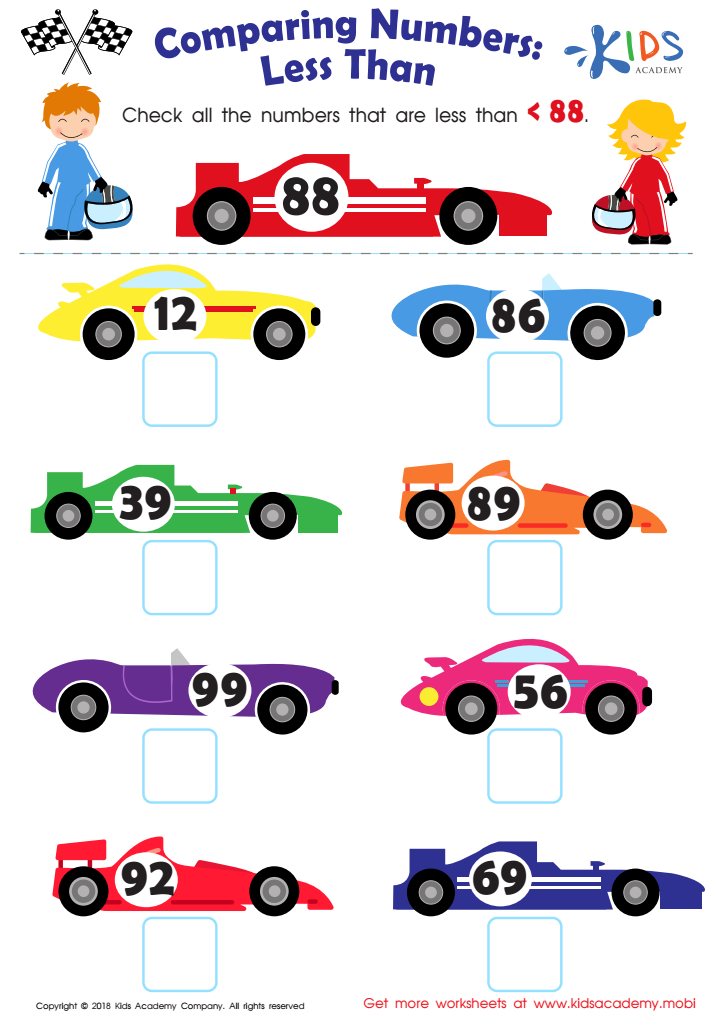
Less Than Worksheet
 Assign to My Students
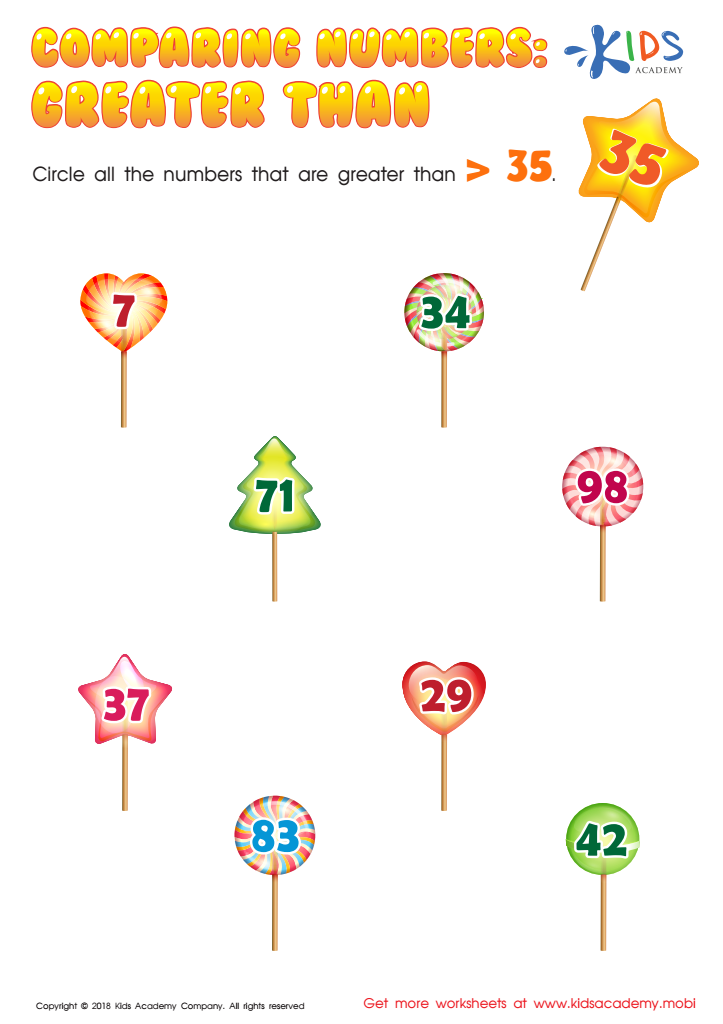
Greater Than Worksheet
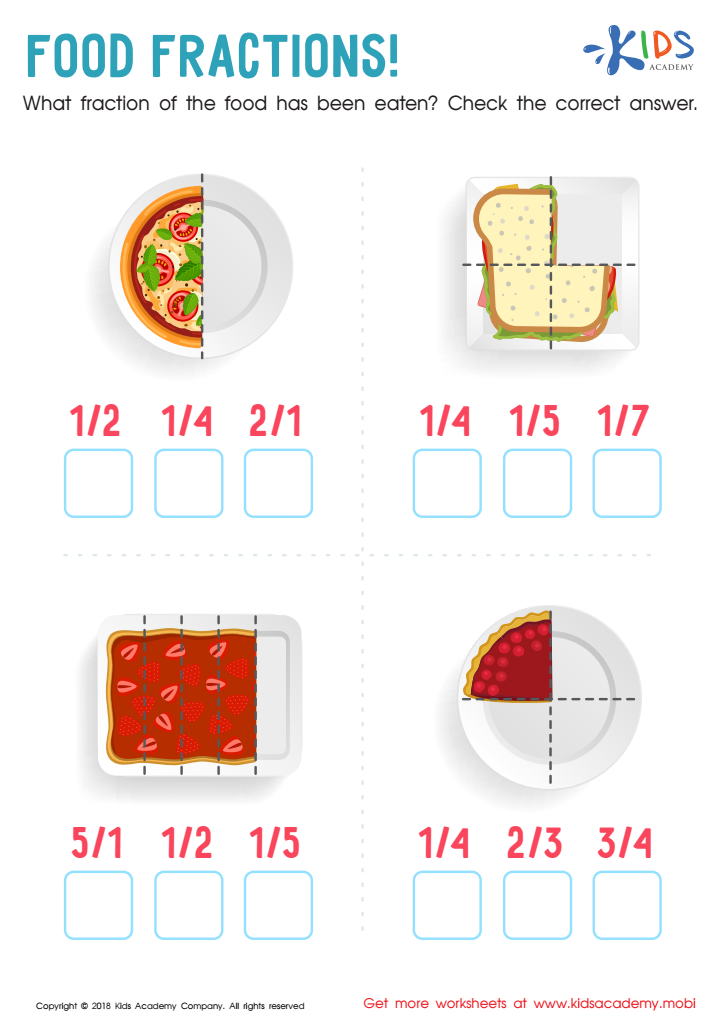
Food Fractions Worksheet
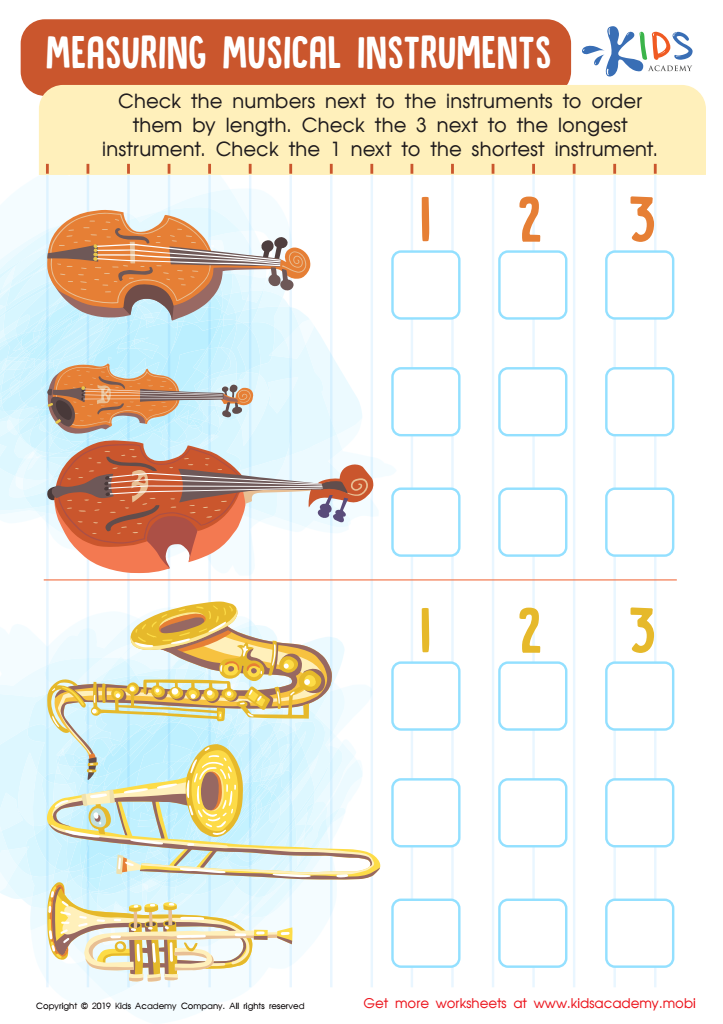
Measuring Musical Instruments Worksheet








Improving counting skills in early childhood is crucial because it lays the foundation for all future mathematical concepts. For children aged 4-8, counting is more than just a fundamental math skill; it is intertwined with cognitive development, problem-solving abilities, and critical thinking. Proficiency in counting helps children recognize patterns, understand quantities, and engage with concepts of addition and subtraction later on.
Parents and teachers should care about developing these skills early because early math literacy is linked to later academic success. When children are confident in their counting abilities, they are more likely to excel in math-related subjects in school. Moreover, strong counting skills can enhance children’s self-esteem and encourage their participation in more complex problem-solving.
Additionally, early counting skills foster social interaction and collaborative learning. Activities that involve counting, such as games and hands-on projects, promote teamwork and communication among peers. By emphasizing counting from a young age, parents and teachers cultivate a love for math and instill an appreciation for its applications in everyday life, thereby setting children up for long-term success both in school and beyond.








