Learning addition Normal Math Worksheets for Ages 4-8
4 filtered results
-
From - To
Introduce young learners to the exciting world of addition with our fun and engaging math worksheets designed for children ages 4-8. Our worksheets start with simple problems, gradually increasing in complexity to help kids build a strong foundation in basic math skills. Featuring colorful illustrations and easy-to-follow instructions, these worksheets make learning addition enjoyable and accessible. Perfect for use at home or in the classroom, they provide ample practice opportunities for young minds to develop confidence and proficiency in math. Help your child master the fundamentals of addition and foster a lifelong love of learning with our expertly crafted resources.
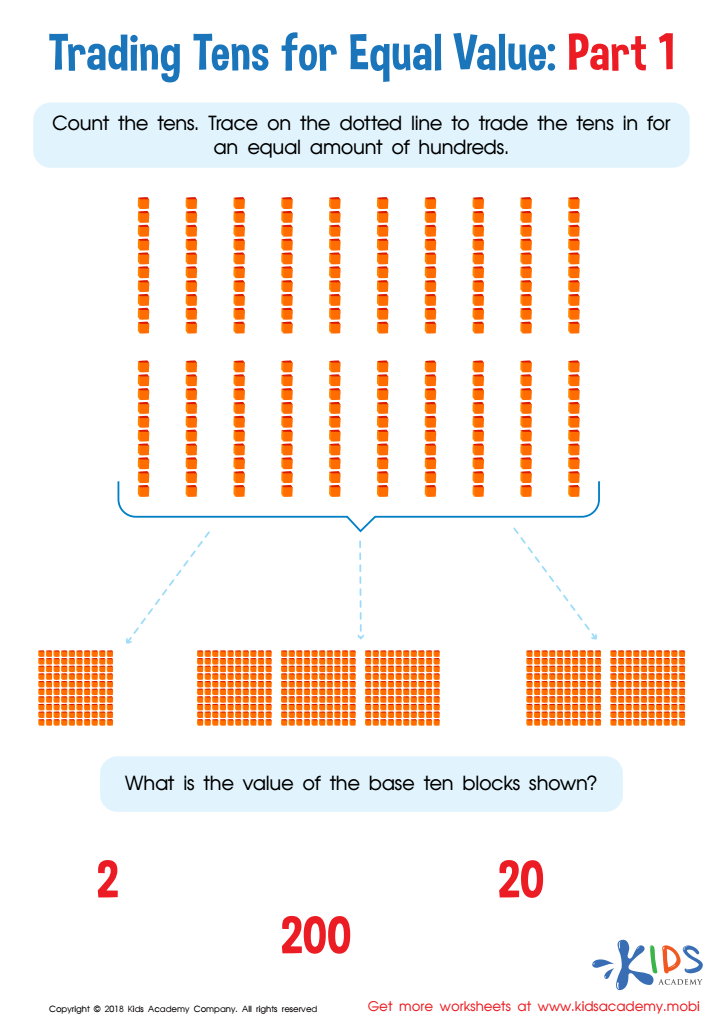
Trading Tens for Equal Value Worksheet: Part 1
 Assign to My Students
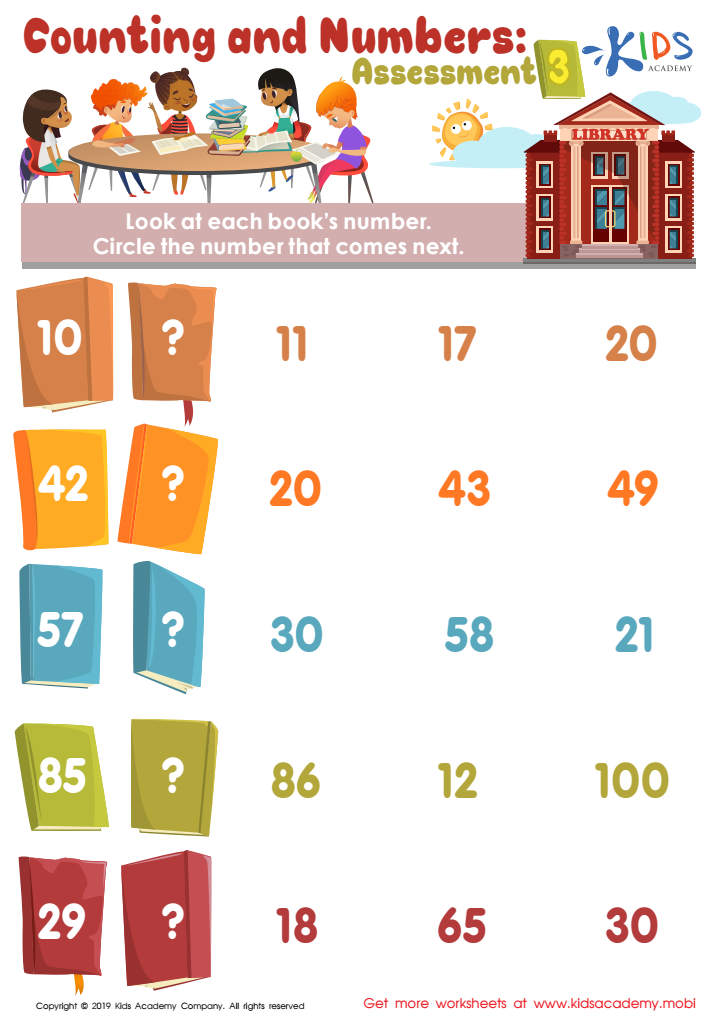
Counting and Numbers: Assessment Worksheet
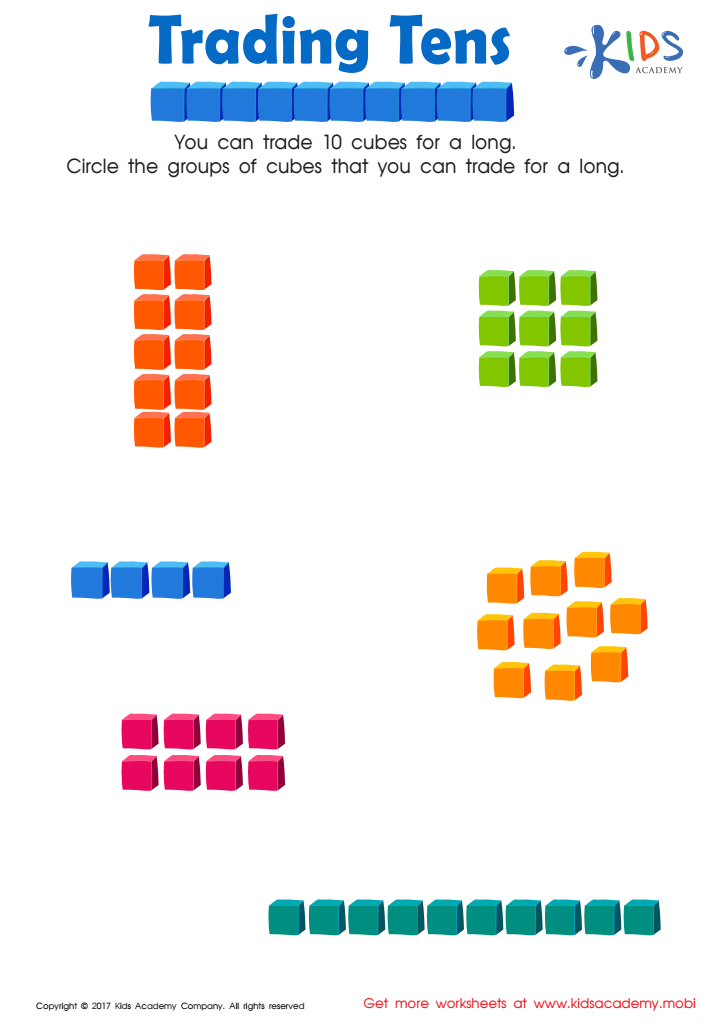
Trading Tens Worksheet
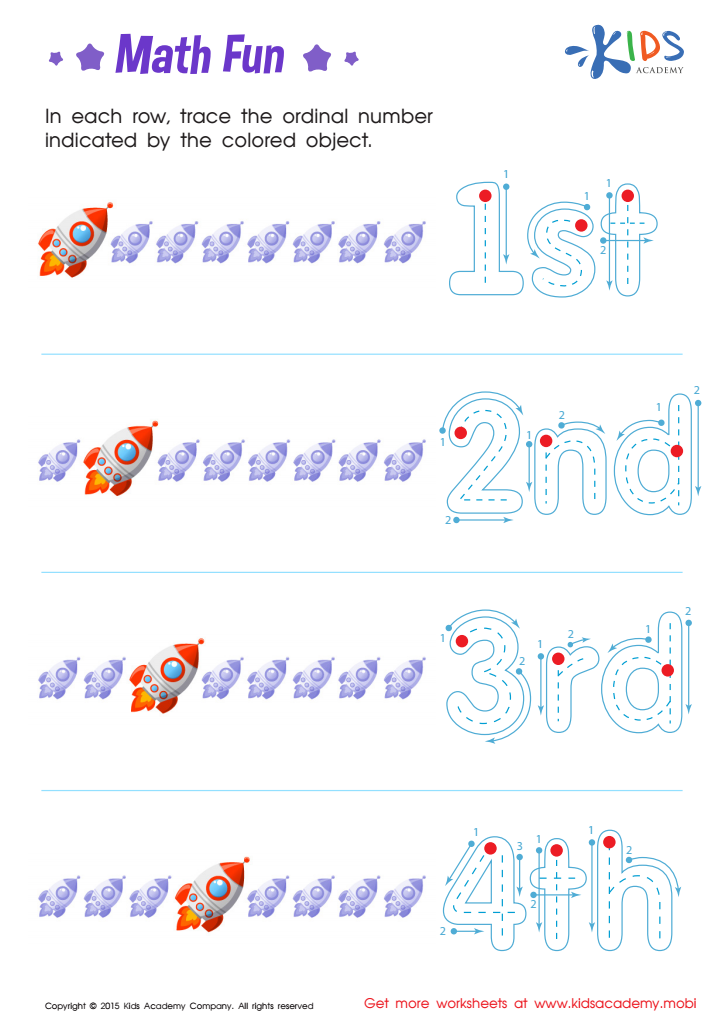
Ordinal Numbers: Math Fun Worksheet








Parents and teachers should care about children learning addition at an early age because it lays the foundation for future mathematical understanding and cognitive development. During the ages of 4-8, children are in a critical period of cognitive growth when their brains are highly flexible and receptive to new information. Learning addition during this time promotes logical thinking, problem-solving skills, and number sense, which are essential for tackling more complex mathematical concepts later on.
Moreover, early exposure to addition can boost confidence and interest in mathematics. When children master basic operations like addition, they gain a sense of accomplishment that encourages a positive attitude towards learning. This can translate to better performance not only in math but also in other academic areas, as many subjects such as science and economics rely on mathematical principles.
Additionally, early math skills are predictive of later academic success. Research shows that early proficiency in math is a strong indicator of later achievements in both math and literacy. Understanding addition also has practical life applications, such as handling money, telling time, and measuring, equipping children with essential life skills they will use every day. Therefore, early math education is a critical step in fostering both academic achievement and essential life competencies.








