Number comparison Normal Math Worksheets for Ages 4-8
5 filtered results
-
From - To
Discover our engaging Number Comparison Math Worksheets designed for children ages 4-8 at Kids Academy! These fun and educational resources help young learners develop critical math skills by comparing numbers through visually appealing activities. Our worksheets are crafted to cater to different learning styles, offering a variety of exercises, from identifying greater and lesser values to arranging numbers in order. Perfect for use at home or in the classroom, our number comparison worksheets will keep children entertained while inspiring their love for math. Empower your child’s learning journey today with our expertly designed math worksheets!
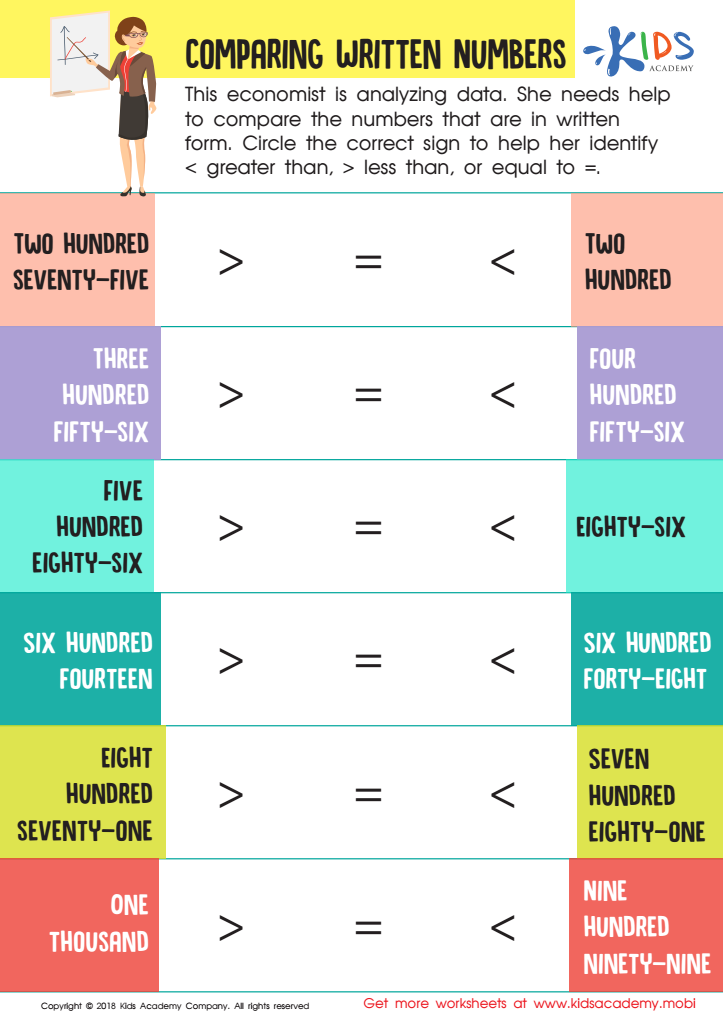
Comparing Written Numbers Worksheet
 Assign to My Students
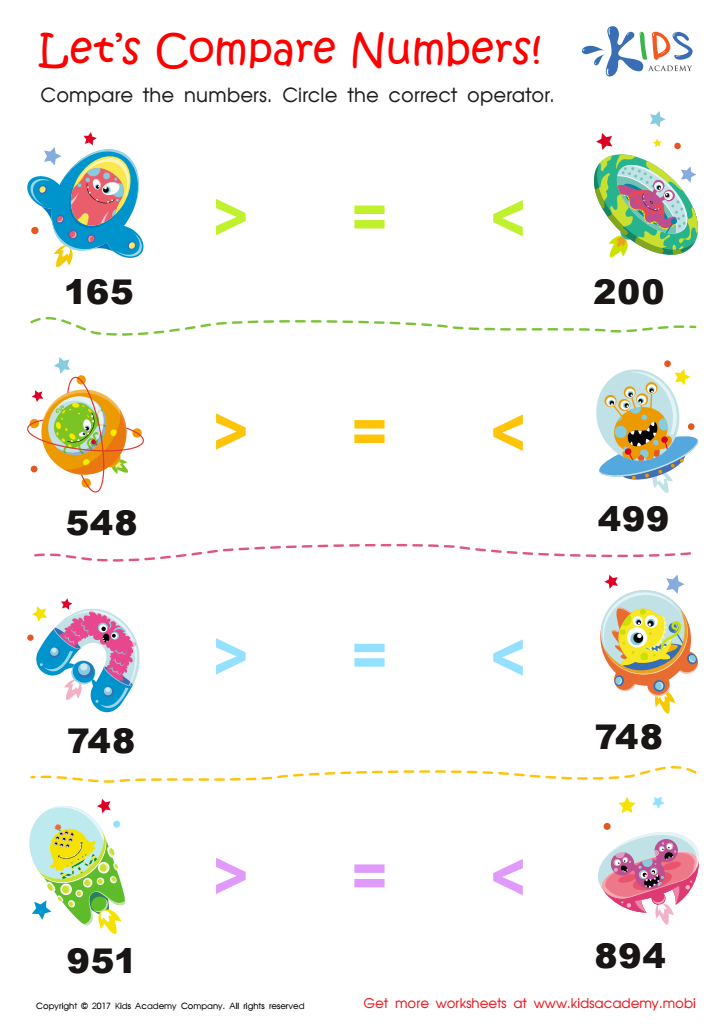
Comparing Numbers Worksheet for 2nd Grade
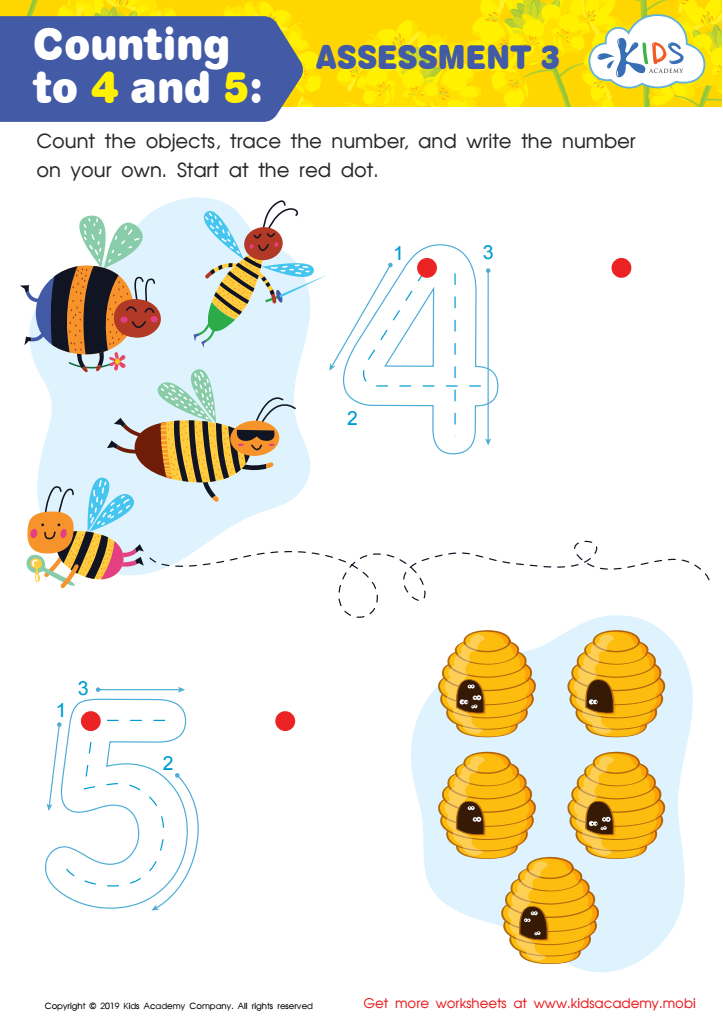
Counting to 4 and 5: Assessment 3 Worksheet
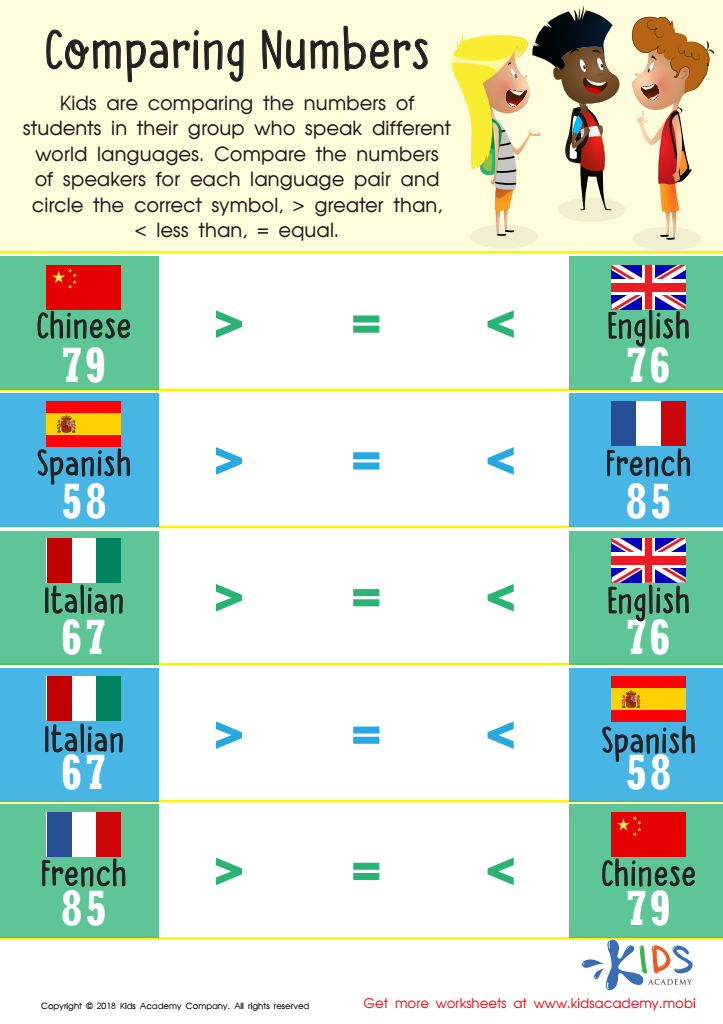
Comparing Numbers Worksheet for 1st Grade
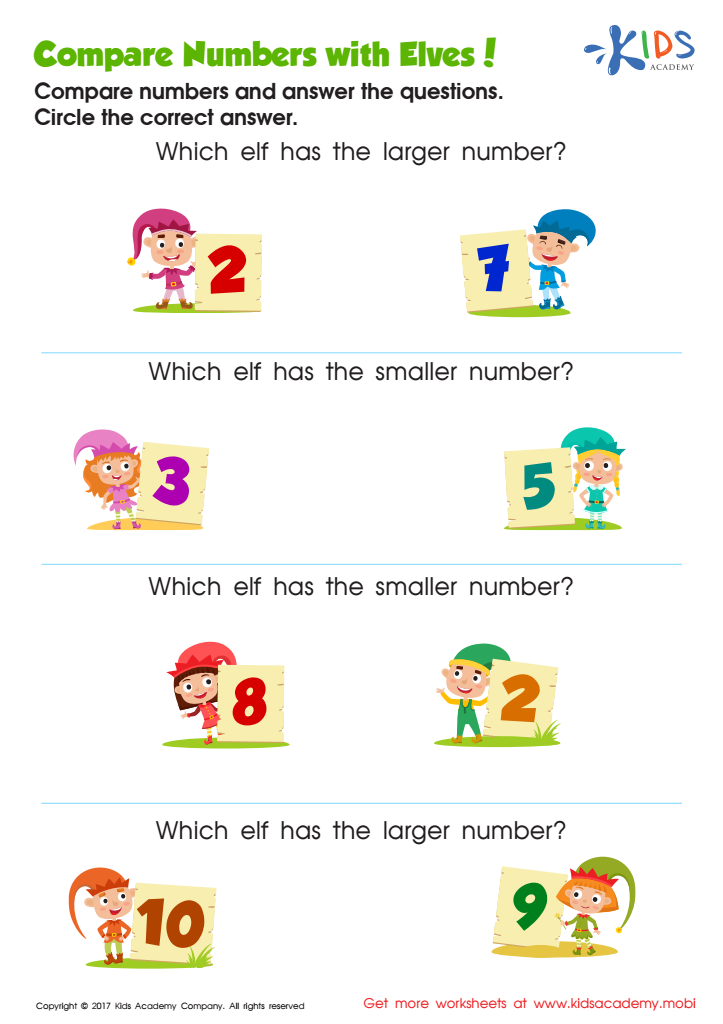
Comparing Numbers Worksheet for Kindergarten



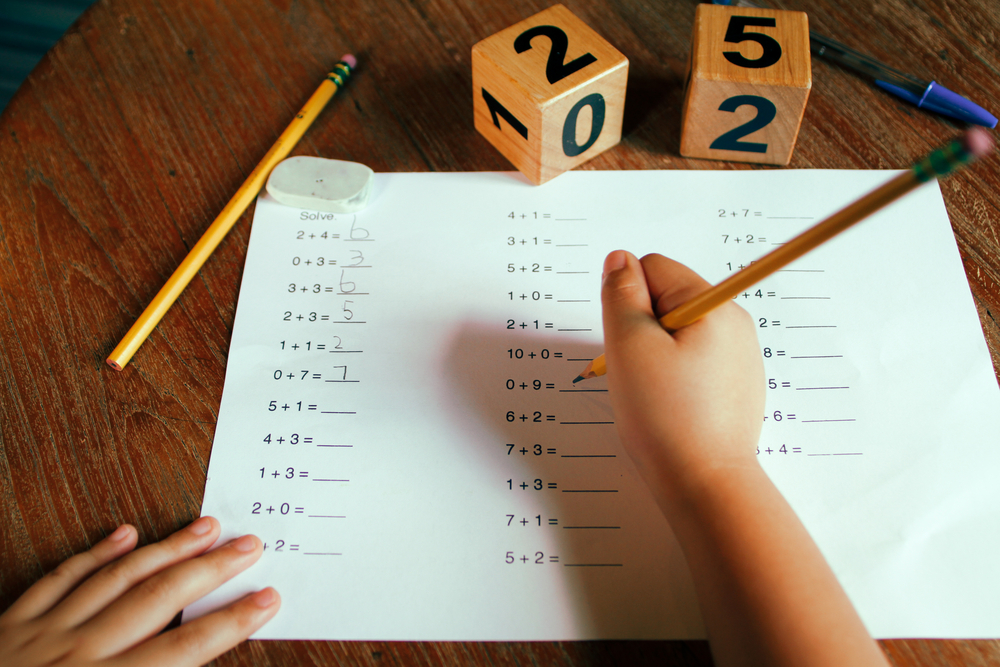



Number comparison is a fundamental math skill that serves as a building block for more complex mathematical concepts. For children ages 4-8, learning to compare numbers lays the groundwork for effective problem-solving and logical thinking. Parents and teachers should care about fostering this skill because it promotes numerical literacy. When children analyze and distinguish the relative values of numbers, they develop a better understanding of quantity, magnitude, and order.
Mastering number comparison helps young learners engage in everyday activities, such as measuring distances, understanding time, and identifying the more/less concept which is vital for activities like shopping or sharing. It also prepares them for academic success; concepts like addition, subtraction, and even algebra rely on an understanding of number relationships.
In classrooms, using activities such as sorting, counting games, or interactive digital tools can make the learning process enjoyable and embedded in play. Homework that involves comparison tasks or story-problems requires thoughtful intervention from parents to guide children through critical thinking.
In sum, number comparison is a core ingredient of early childhood math education, nurturing the coherent mathematical reasoning and cognitive skills children need as they transition to more intricate mathematical concepts. Therefore, providing proper support and practice in number comparison is essential for children's comprehensive educational development.








