Recognizing number patterns Normal Math Worksheets for Ages 4-8
4 filtered results
-
From - To
Explore our engaging "Recognizing Number Patterns" Normal Math Worksheets designed specifically for children ages 4-8. These worksheets provide a fun and interactive way for young learners to identify and understand number sequences, helping to build essential mathematical skills. With a variety of activities, including colorful visuals and hands-on exercises, children will delight in discovering patterns while enhancing their cognitive abilities. Perfect for at-home learning or classroom activities, these resources support early math education and improve critical thinking. Encourage your child's numerical confidence and foundational knowledge with our thoughtfully crafted worksheets tailored to their developmental needs. Start their learning journey today!
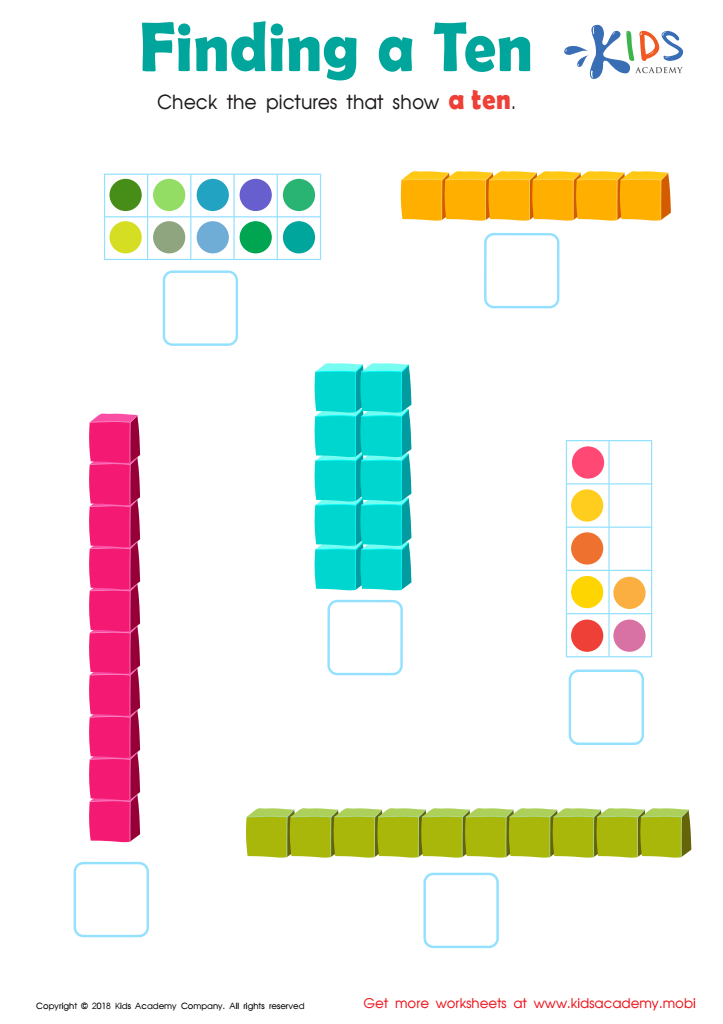
Finding a Ten Worksheet
 Assign to My Students
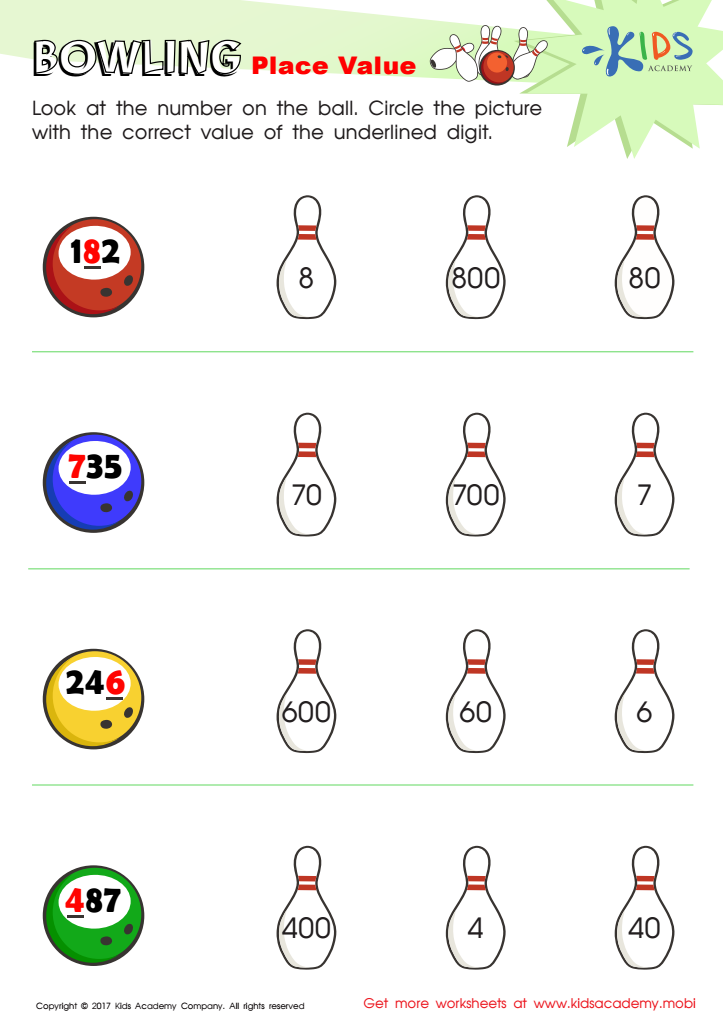
Place Value Worksheet
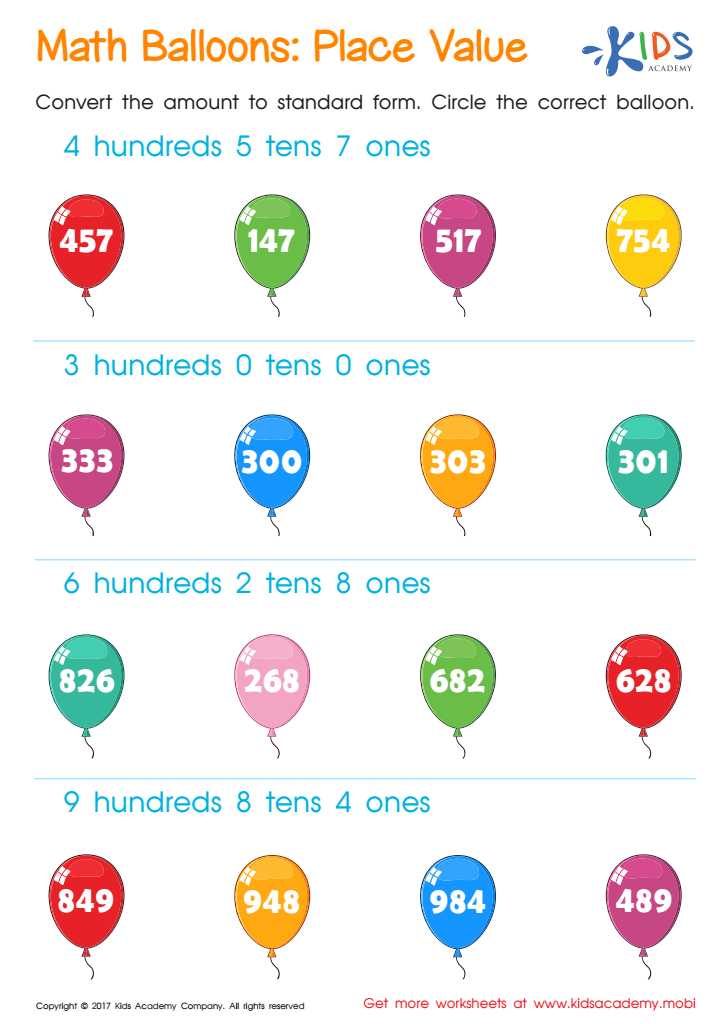
Place Value Printable Worksheet
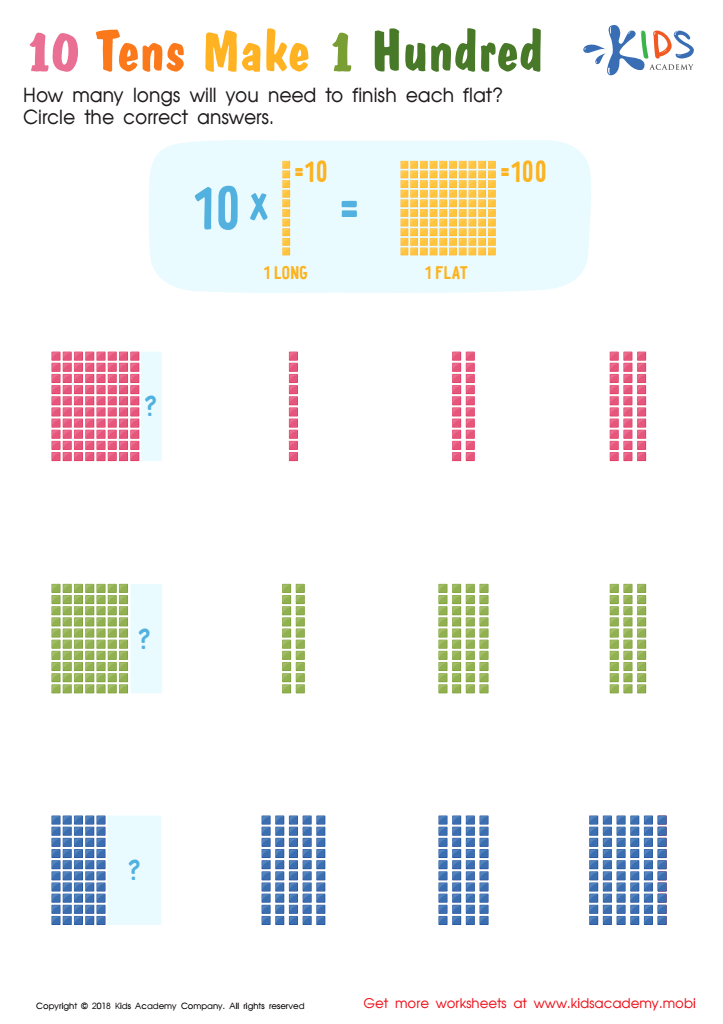
10 Tens Make 1 Hundred Worksheet








Recognizing number patterns is critical for children aged 4-8 as it lays the foundation for their mathematical understanding and cognitive development. During these formative years, children begin to grasp basic numeracy concepts, which include number recognition and sequencing. By learning to identify patterns, children enhance their critical thinking skills, develop problem-solving abilities, and pave the way for more advanced math concepts, such as addition, subtraction, multiplication, and division.
Parents and teachers play a crucial role in facilitating this learning process. Engaging with children in recognizing patterns can make math enjoyable and relatable, using everyday objects or activities, such as counting stickers or identifying patterns in nature. This interactive approach helps children develop a positive attitude toward math, reducing anxiety associated with the subject.
Furthermore, recognizing number patterns supports a child's ability to make predictions and understand relationships between numbers, fostering deeper mathematical reasoning. By prioritizing pattern recognition, parents and teachers not only strengthen a child's current understanding but also set them up for future success in math, setting a strong educational groundwork that will benefit them throughout their schooling and beyond. Ultimately, cultivating these early math skills is essential for a child’s overall cognitive growth and lifelong learning.








