Shape identification Normal Math Worksheets for Ages 4-8
6 filtered results
-
From - To
Discover our Shape Identification Normal Math Worksheets tailored for children aged 4-8! These engaging and interactive worksheets are designed to help young learners recognize and understand various shapes, fostering essential spatial awareness and cognitive skills. Each worksheet features vibrant illustrations and age-appropriate activities that make learning fun and enjoyable. From circles and squares to triangles and rectangles, our resources encourage creativity while building a solid foundation in math. Perfect for either classroom use or home practice, these worksheets ensure that students develop confidence in identifying shapes through repeated practice and variegated problem-solving activities. Start nurturing your child’s math skills today!
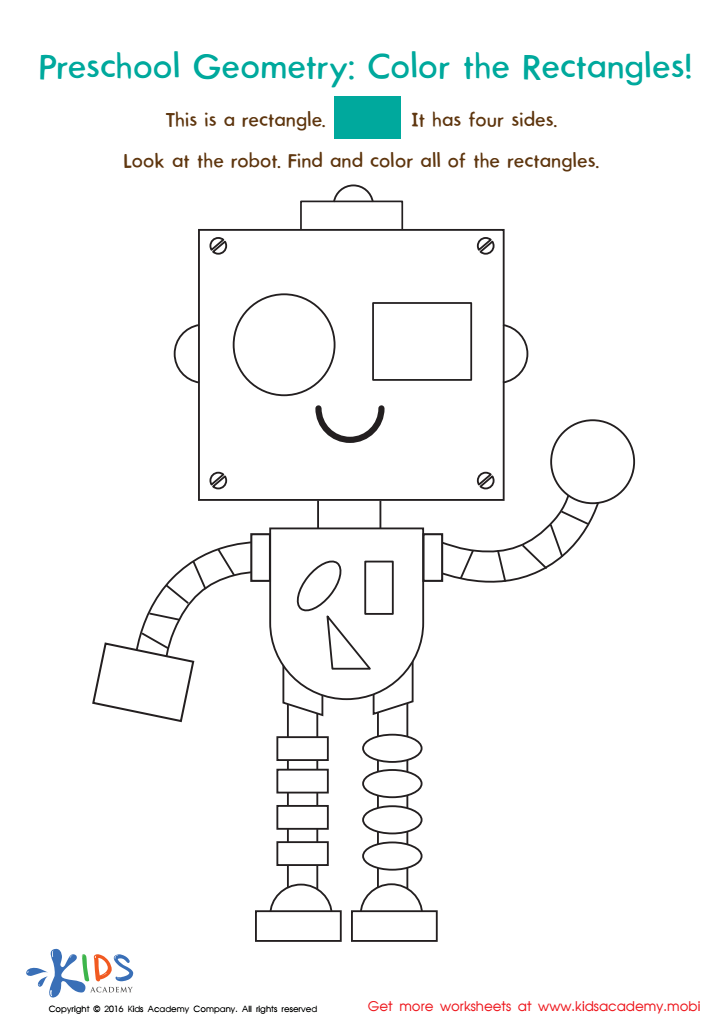
Geometry Worksheet
 Assign to My Students
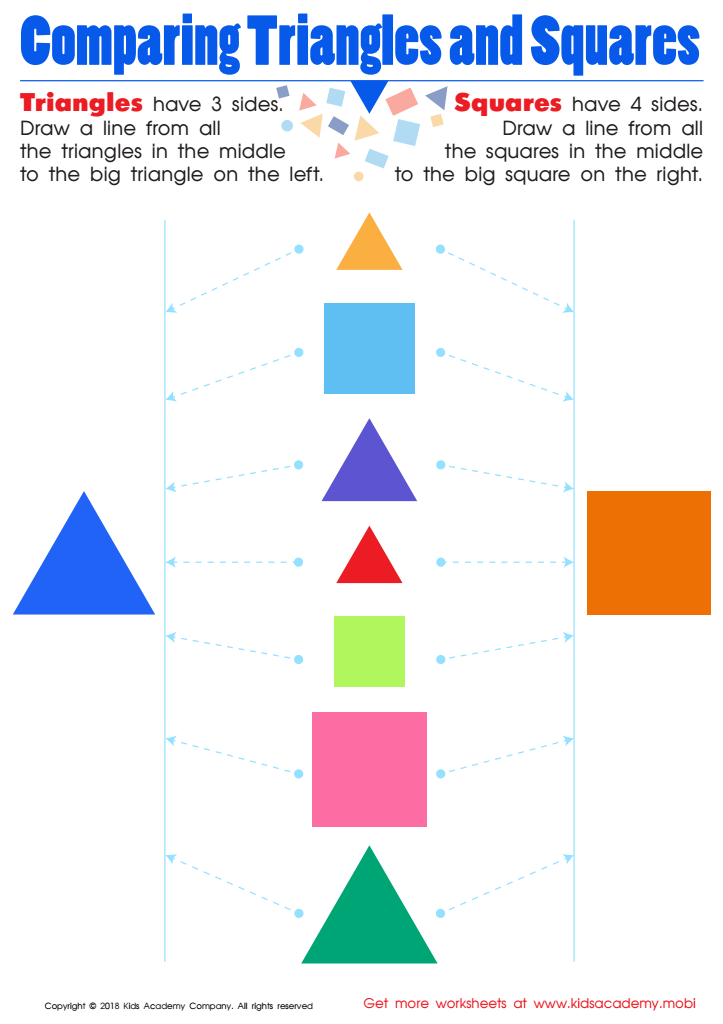
Comparing Triangles Squares Worksheet
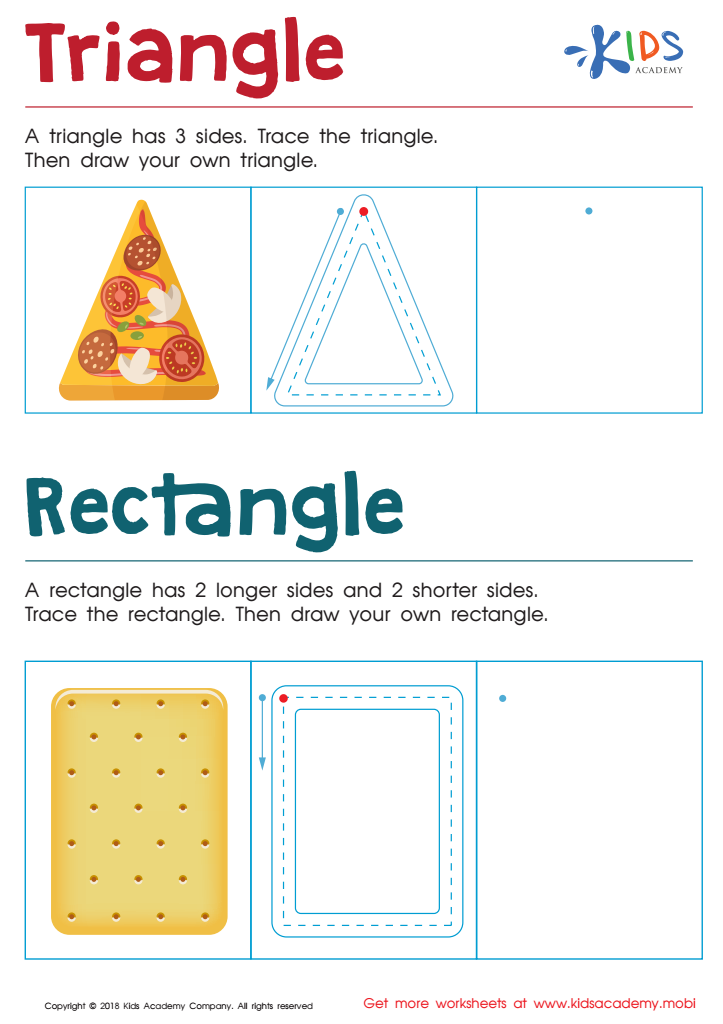
Triangle Rectangle Worksheet
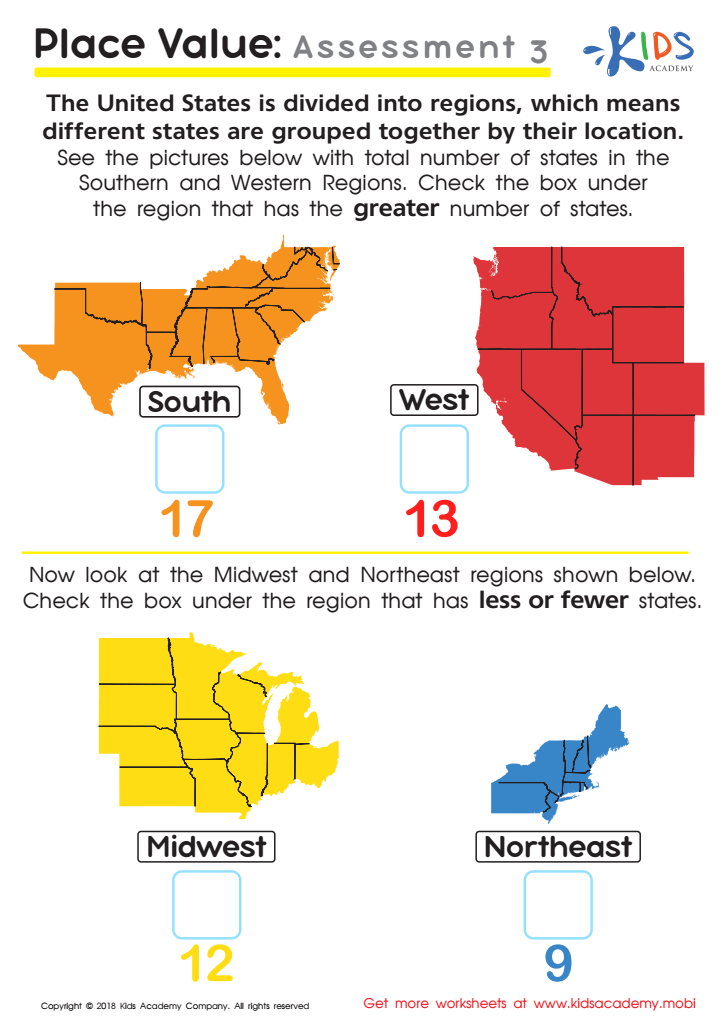
Place Value: Assessment 3 Worksheet
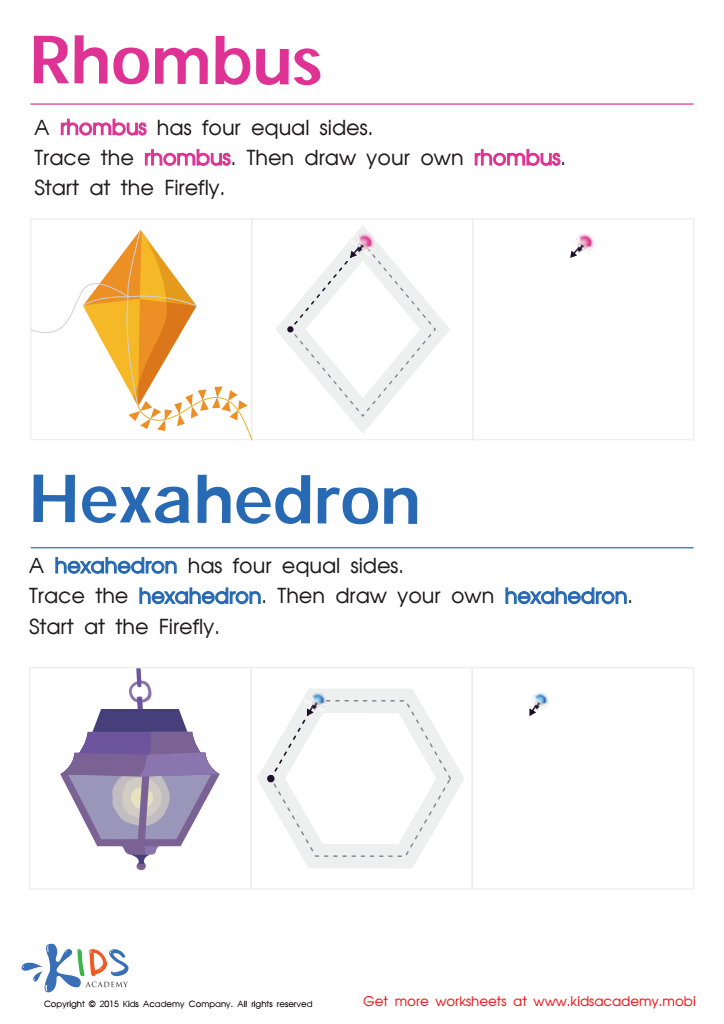
Draw a Rhombus And a Hexahedron Printable
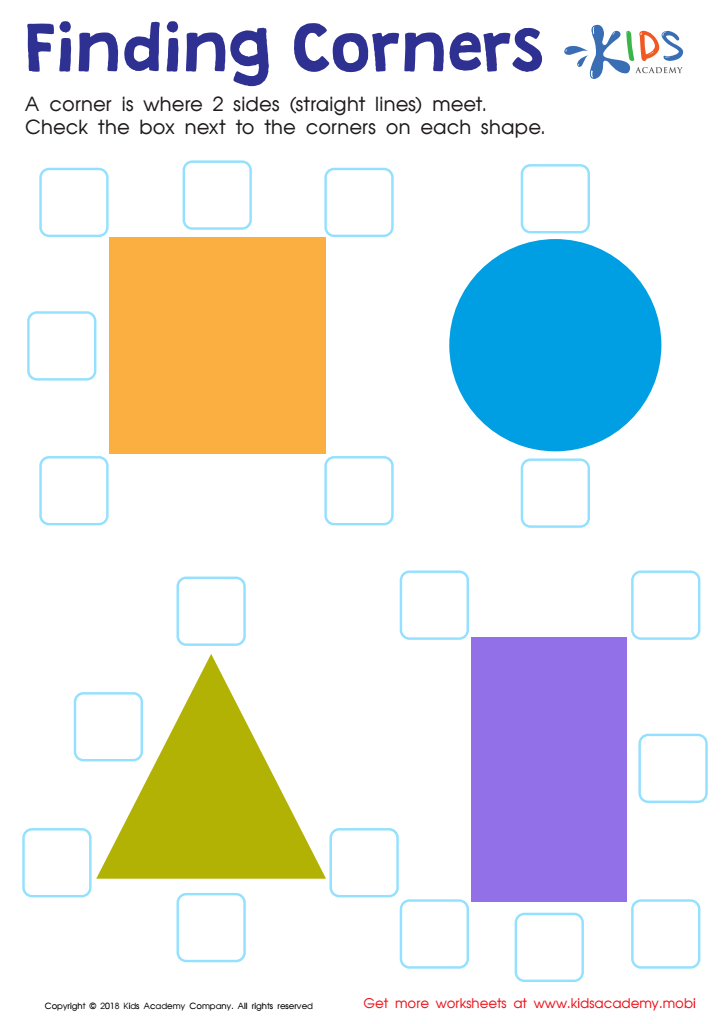
Finding Corners Worksheet







Shape identification is a fundamental skill in early mathematics education for children ages 4-8. Parents and teachers should care about this concept for several crucial reasons. First, shape recognition is a building block for mathematical understanding. Learning to identify different shapes helps children develop spatial awareness, which aids in problem-solving and reasoning skills later in life.
Second, shape identification is integral in various real-life applications. Children must recognize shapes in the world around them, from everyday objects to architecture. This understanding can enhance observational skills and promote curiosity about their environment.
Moreover, engaging with shapes can develop fine motor skills and cognitive abilities through hands-on activities such as sorting, drawing, and building. These activities spark creativity and can be woven into play, making learning enjoyable and interactive.
Lastly, shape identification lays the groundwork for more complex concepts, such as geometry and measurement encountered in later grades. By fostering shape recognition early on, parents and teachers effectively prepare children for agile thinking and problem-solving throughout their educational journey. Therefore, nurturing this skill is essential in setting young learners on a path to success in math and beyond.








