Understanding base ten Normal Math Worksheets for Ages 4-8
3 filtered results
-
From - To
Welcome to our "Understanding Base Ten Normal Math Worksheets" designed for children aged 4-8. These engaging worksheets introduce young learners to the foundational concepts of the base ten number system. Through fun and interactive activities, kids will explore place value, recognize patterns, and develop their counting skills. Perfect for both classrooms and home learning, our worksheets foster a strong mathematical understanding, encouraging students to visualize and manipulate numbers. Each worksheet is tailored to simplify complex ideas, making math enjoyable and accessible. Start your child's journey to confident math skills today with our carefully crafted resources!
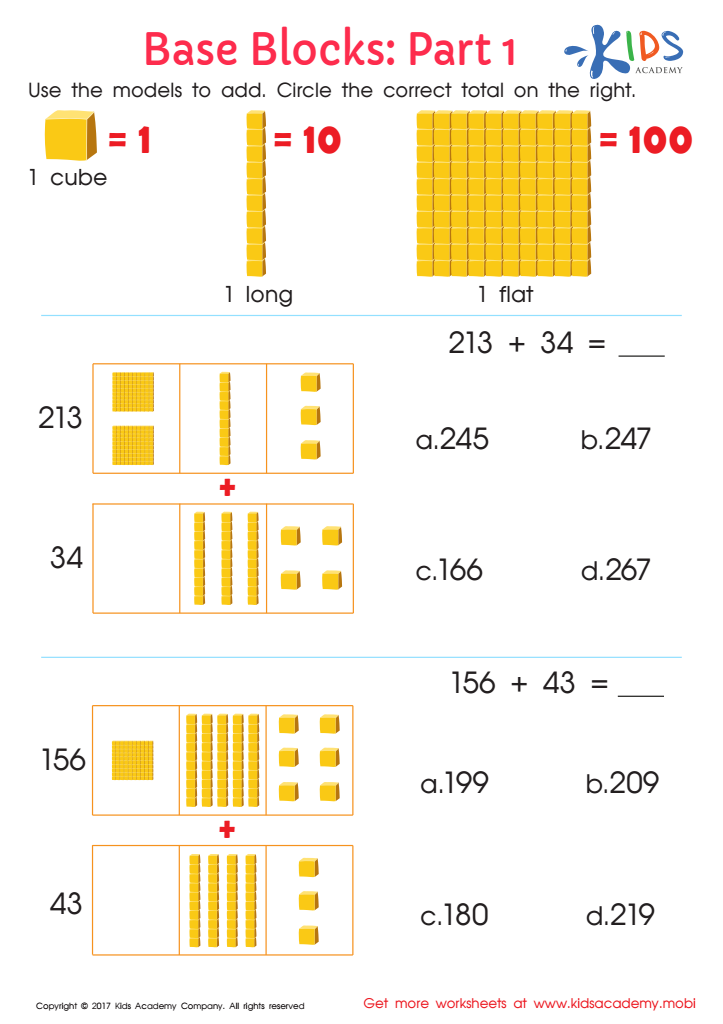
Base Ten Blocks Worksheet: Part 1
 Assign to My Students
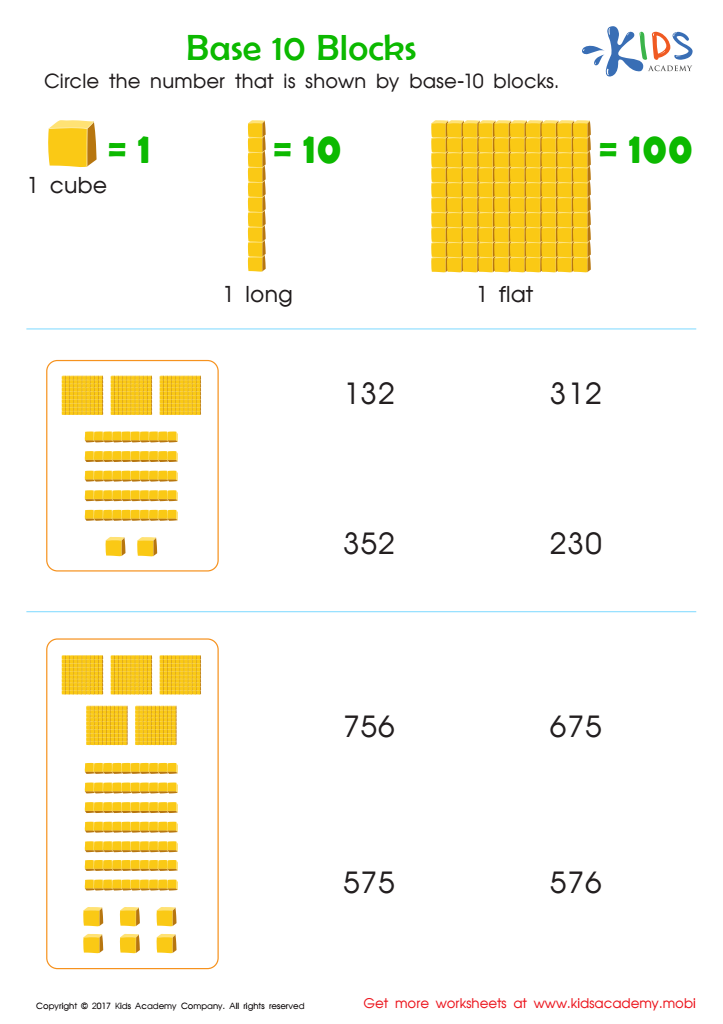
Base Ten Blocks Worksheet
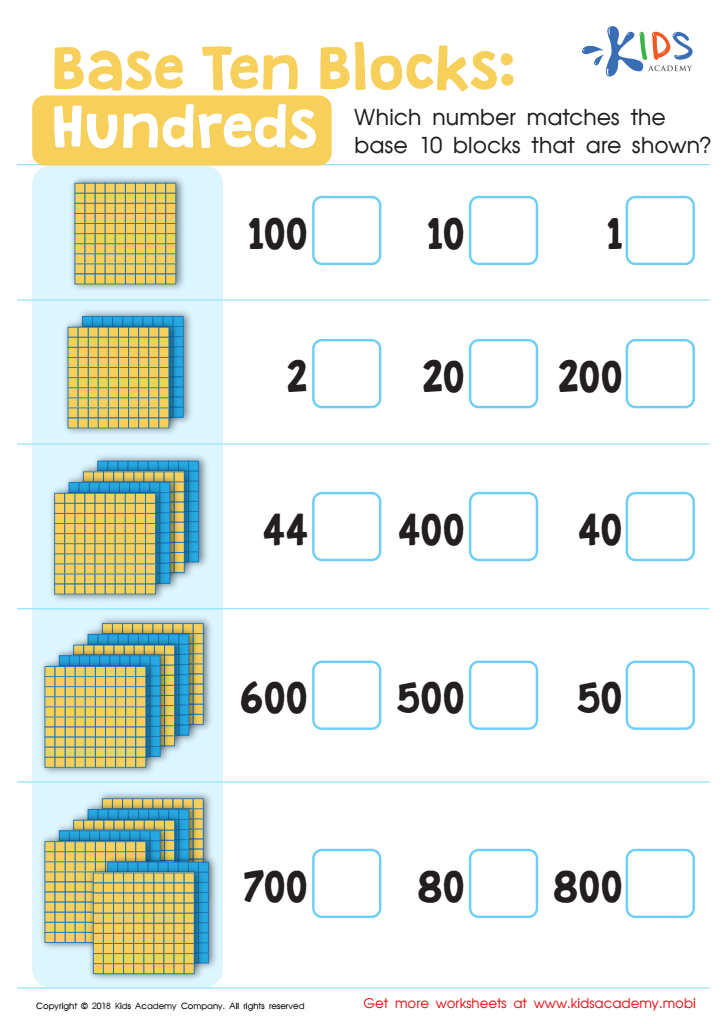
Base Ten Blocks: Hundreds Worksheet






.jpg)
Understanding base ten is crucial for children aged 4-8, as it lays the foundation for their mathematical abilities. This numeration system, which utilizes ten digits (0-9), is central to our understanding of numbers, place value, and arithmetic operations. By grasping the concept of base ten, children can efficiently relate numbers to their quantities, enabling them to perform addition and subtraction with ease.
Parents and teachers should prioritize base ten instruction because it fosters logical thinking and problem-solving skills. Engaging in base ten activities encourages students to visualize numbers, enhancing their understanding of larger quantities and introducing key concepts like grouping and decomposing numbers. For instance, knowing that ten ones make a ten helps young learners to understand how to manage larger numbers.
Moreover, a solid foundation in base ten aids in the transition to more complex mathematical concepts in later grades, such as multiplication, division, and fractions. When children grasp these fundamental ideas early on, it builds their confidence and enthusiasm for math.
Ultimately, investing time in understanding base ten prepares children for academic success and lifelong numeracy skills, instilling a love for mathematics that will serve them well in all areas of life.








