Fine Motor Skills Normal Numbers up to 100 Worksheets for Ages 4-8
3 filtered results
-
From - To
Enhance your child's fine motor skills with our engaging "Normal Numbers up to 100 Worksheets" designed for ages 4-8. These worksheets encourage young learners to practice number recognition and writing while honing essential motor skills. Each activity features colorful illustrations and fun exercises that combine learning with play. Engaging tasks allow children to trace, color, and connect numbers, promoting hand-eye coordination and dexterity. Perfect for both home and classroom settings, our worksheets follow early learning standards and are tailored to spark curiosity. Start your child's journey to success today by downloading our fine motor skills worksheets and watch them thrive!
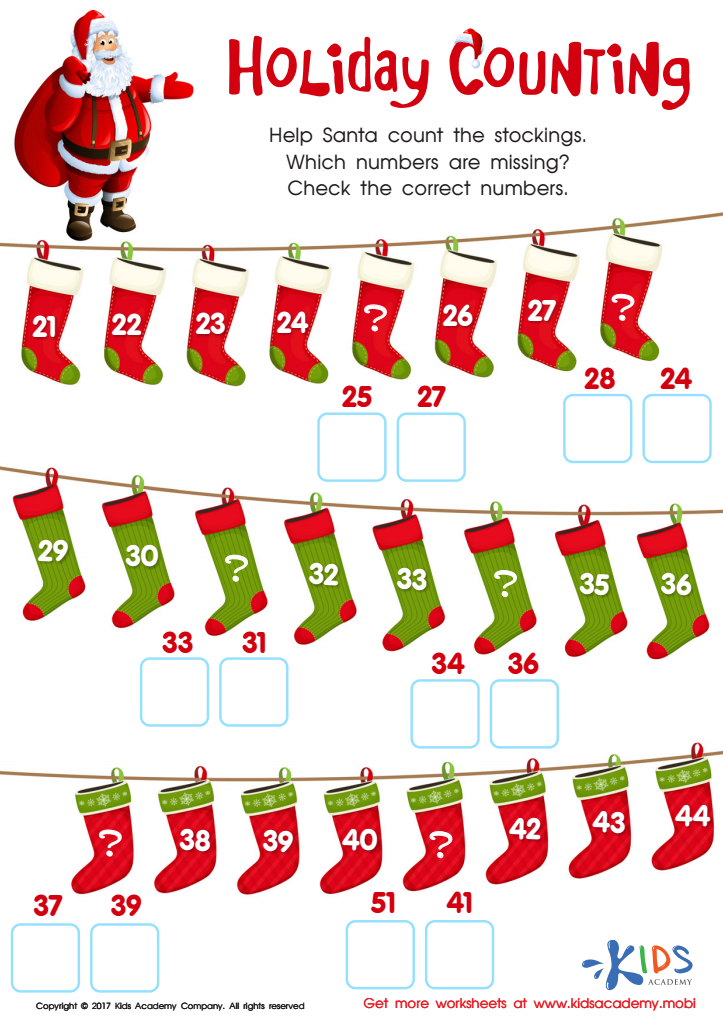
Holiday Counting Worksheet
 Assign to My Students
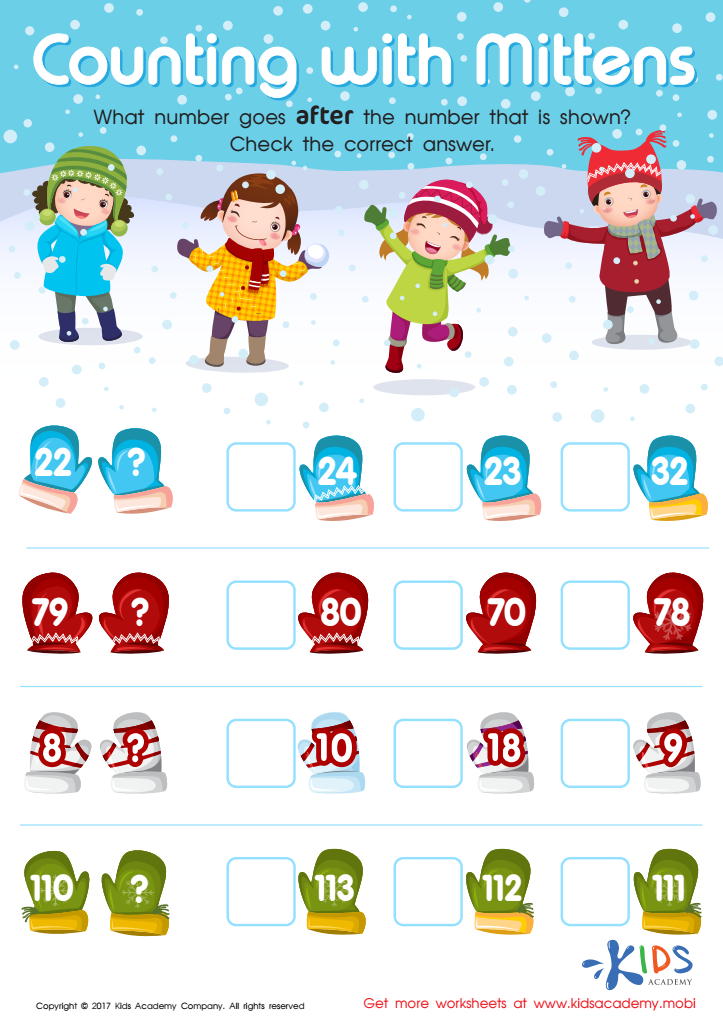
Counting with Mittens Worksheet
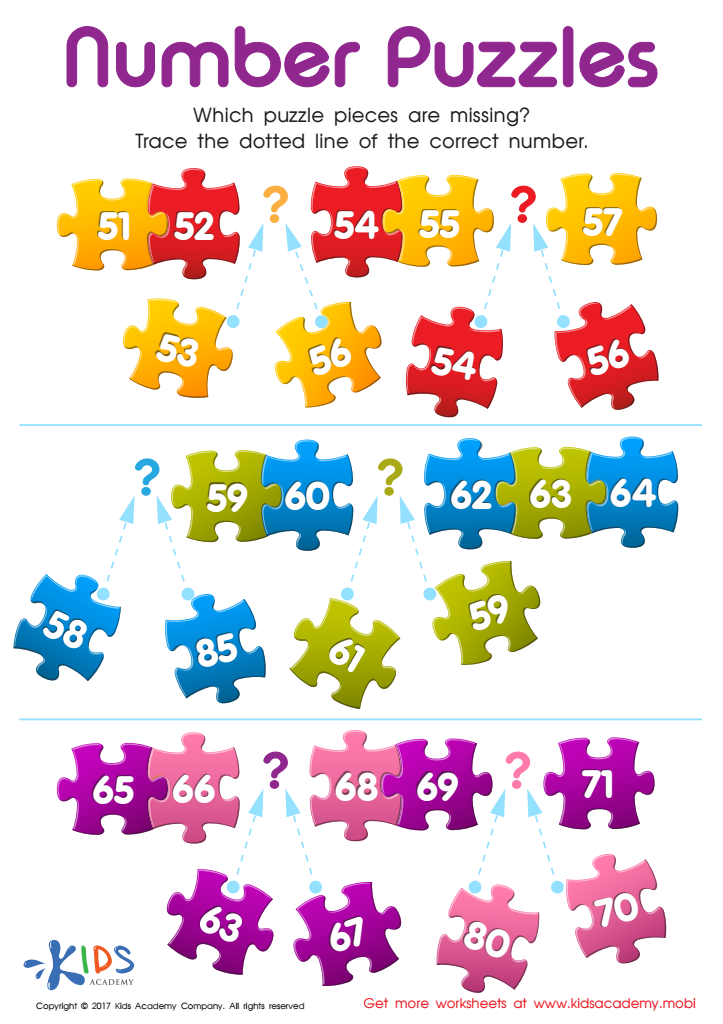
Number Puzzles Worksheet








Fine motor skills are crucial for children's overall development, particularly during the ages of 4 to 8, as they lay the foundation for many essential tasks and academic skills. Parents and teachers should care about this aspect of development, especially in conjunction with understanding numbers up to 100, for several reasons.
First, strong fine motor skills enable children to write, grasp objects, and cut with scissors, which are vital for their daily activities and educational progress. Practicing these skills enhances hand-eye coordination, dexterity, and confidence, making them more prepared for school tasks, such as writing numbers and engaging in arts and crafts.
Moreover, children in this age group typically start learning basic math concepts, including counting and writing numbers up to 100. Integrating fine motor skill activities—like threading beads, playing with building blocks, or engaging in drawing—while teaching numbers can make learning more engaging and fun. This kinesthetic approach caters to various learning styles and helps solidify numerical understanding.
Failed to develop these skills can lead to frustration and challenges in advanced tasks down the line. Thus, supporting fine motor development together with number practice ensures a holistic approach to early childhood education, promoting confidence and readiness for future learning.