Addition Practice Normal Place Value Worksheets for Ages 4-8
5 filtered results
Difficulty Level
Grade
Age
-
From - To
Subject
Activity
Standards
Enhance your child's math skills with our Addition Practice Normal Place Value Worksheets, designed specifically for ages 4-8. These engaging and interactive worksheets focus on addition while introducing key concepts of place value, ensuring a solid mathematical foundation. Each worksheet is crafted to make learning fun, allowing young learners to practice addition with ease. Instill confidence in your child as they develop essential problem-solving skills through colorful illustrations and approachable problems. Perfect for home or classroom use, our resources support comprehension and encourage independent learning. Discover the joy of learning math with Kids Academy's tailored worksheets today!
Favorites
With answer key
Interactive
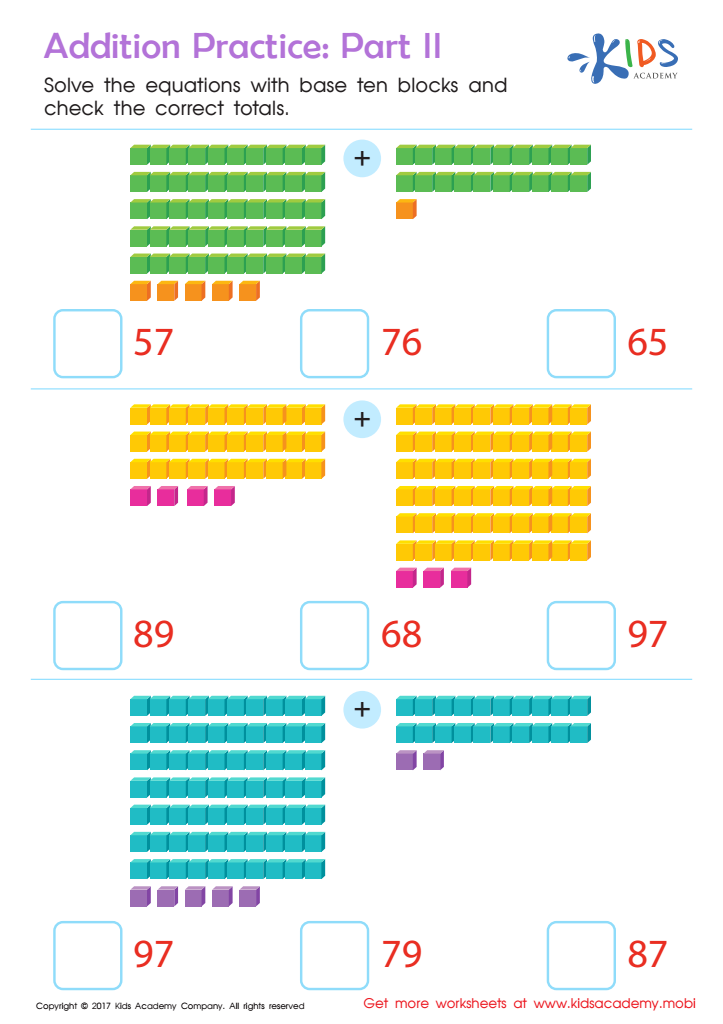
Addition Practice Sheet: Part 2
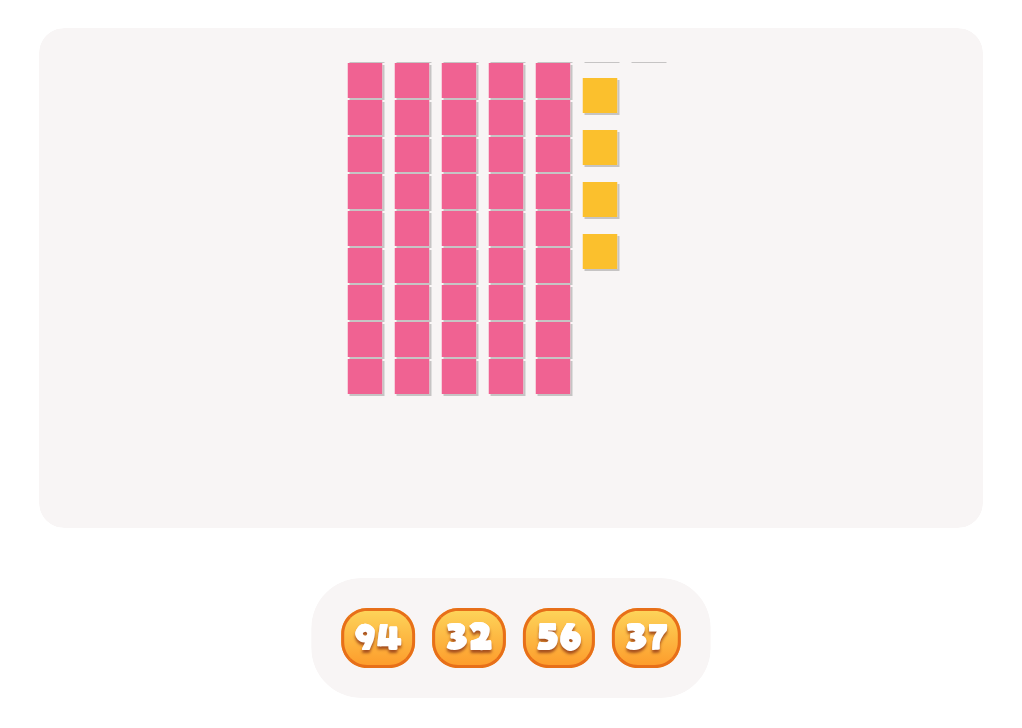
Make sure your kids understand place value before introducing two/three-digit addition. To help, use Kids Academy's colorful cube worksheet. It provides all the manipulatives needed to solve the problem and find totals. A great way to explain the concept behind the addition!
 Assign to My Students
Addition Practice Sheet: Part 2
Worksheet
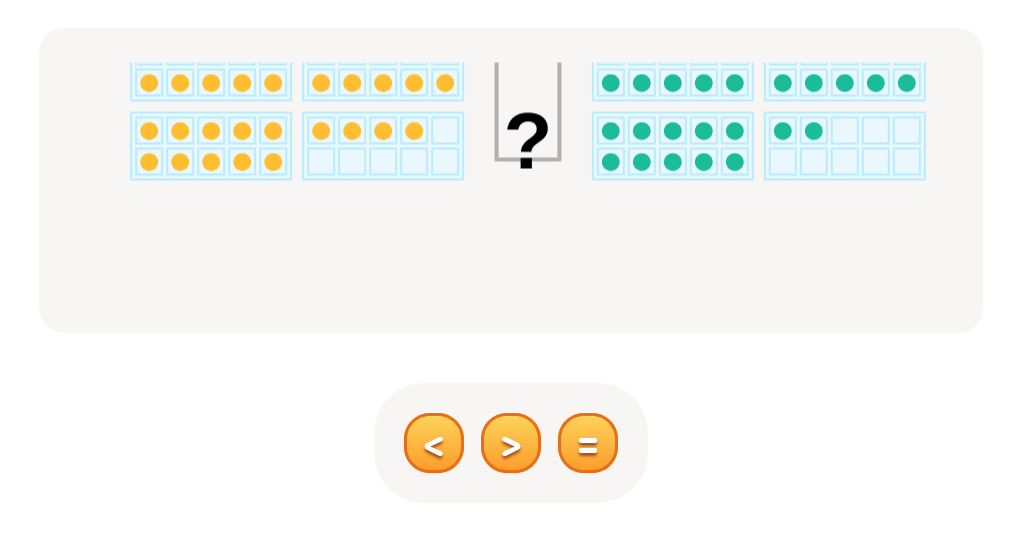

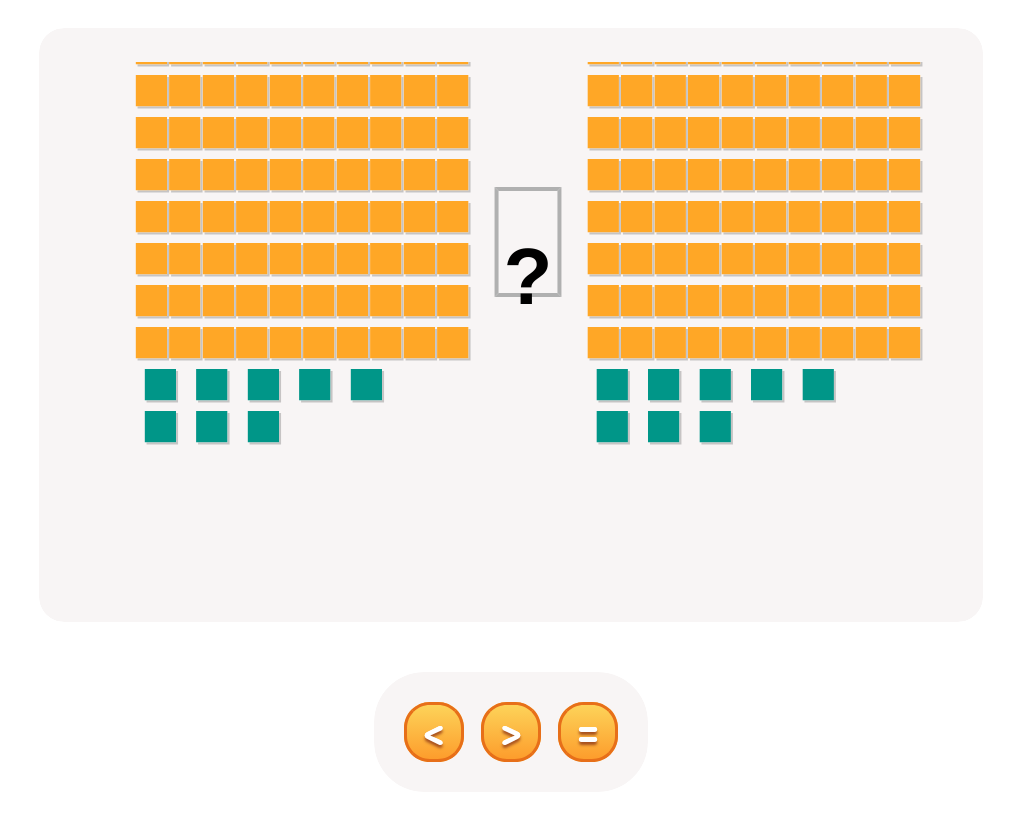
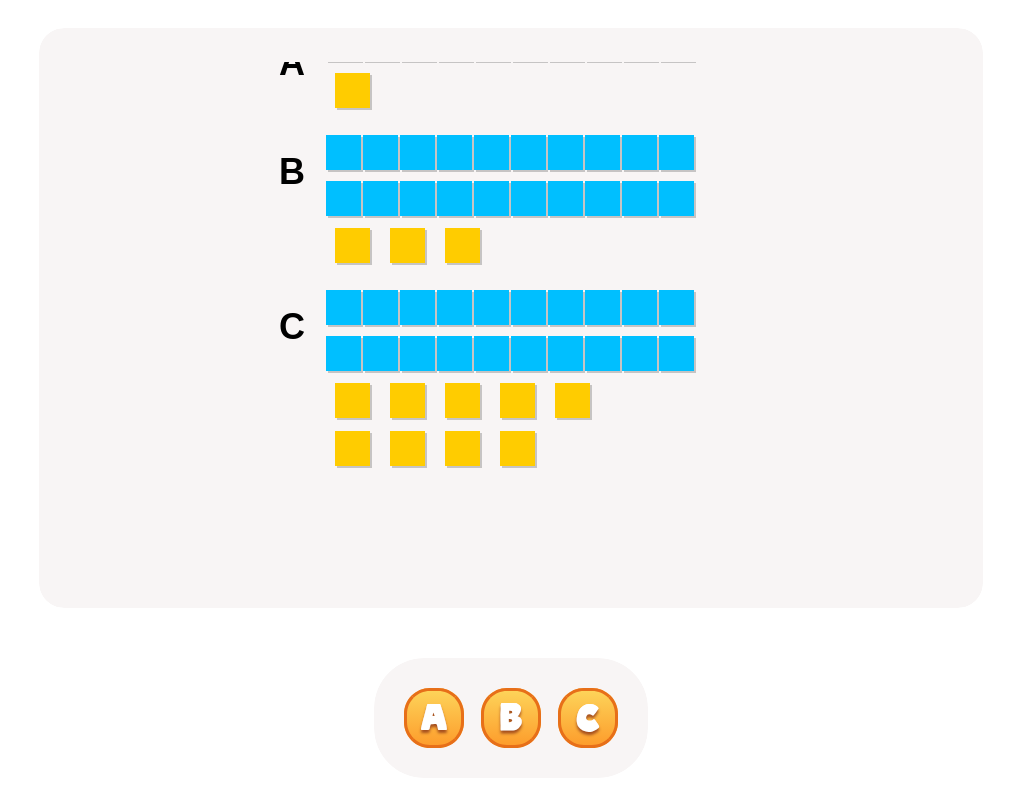
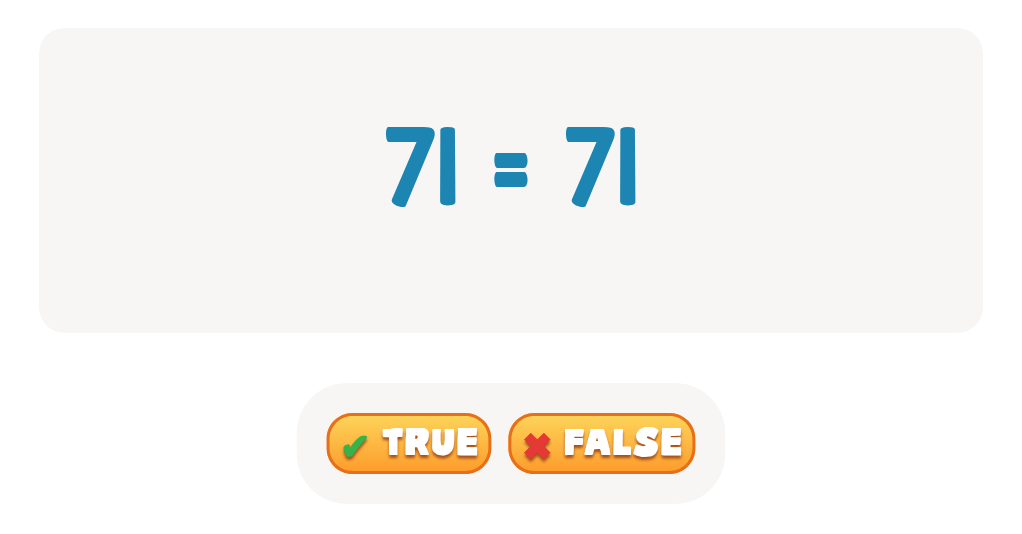
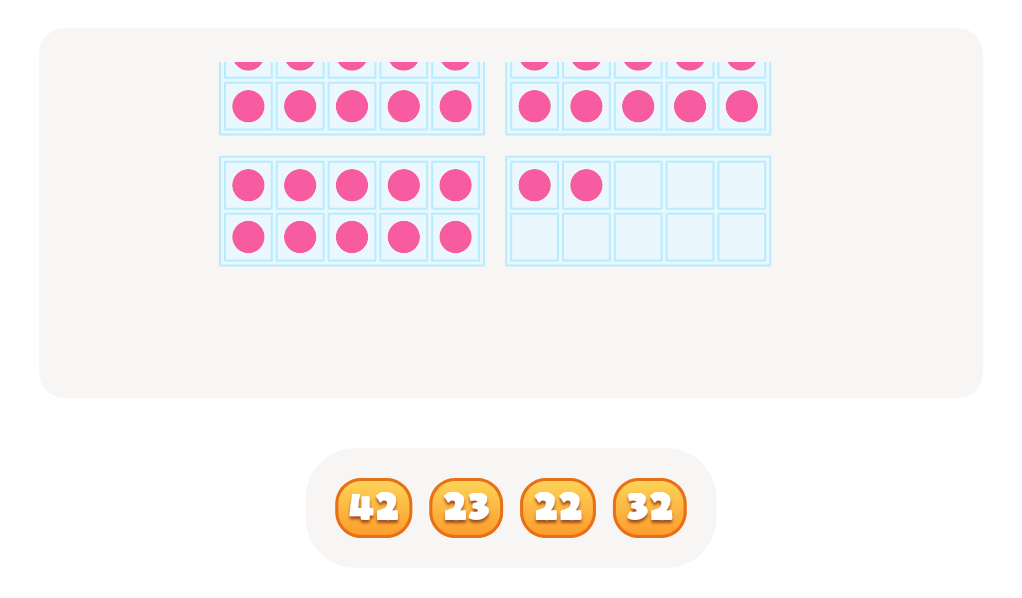
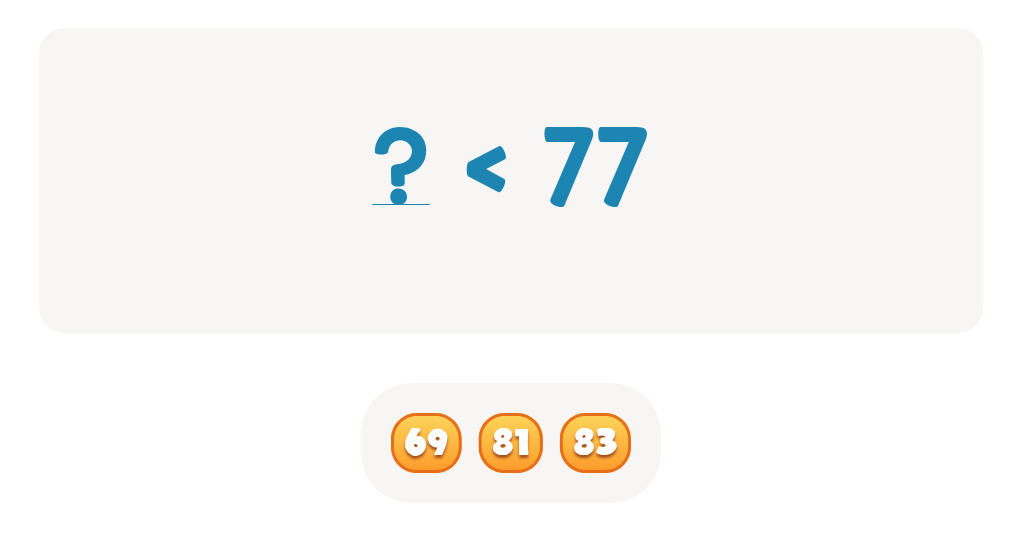
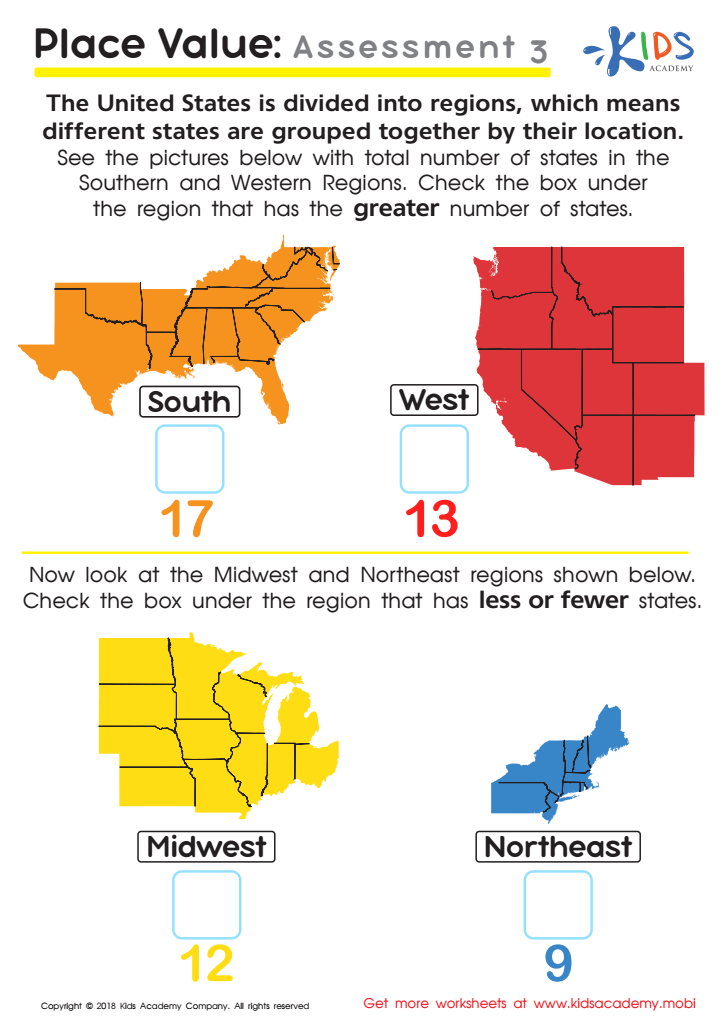
Place Value: Assessment 3 Worksheet
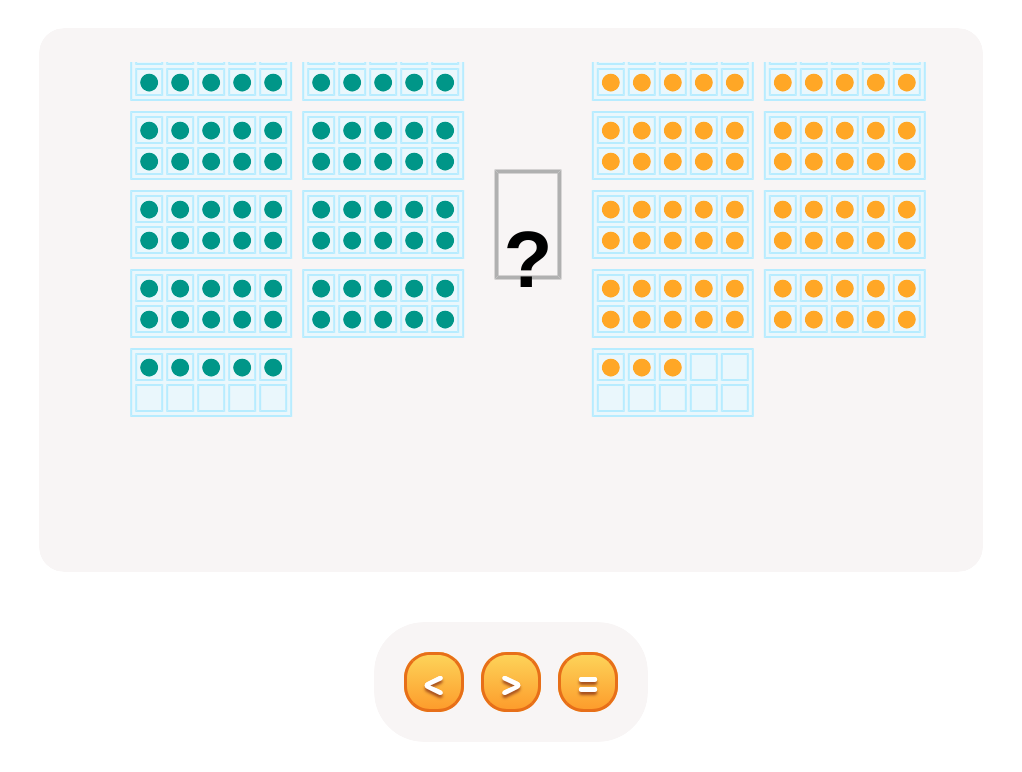
Test your child's math skills without them realizing it! This fun worksheet looks at the states and regions of the U.S. and your child can compare numbers greater or lesser than the other. It's the perfect way to assess your child's number sense without them knowing.
Place Value: Assessment 3 Worksheet
Worksheet
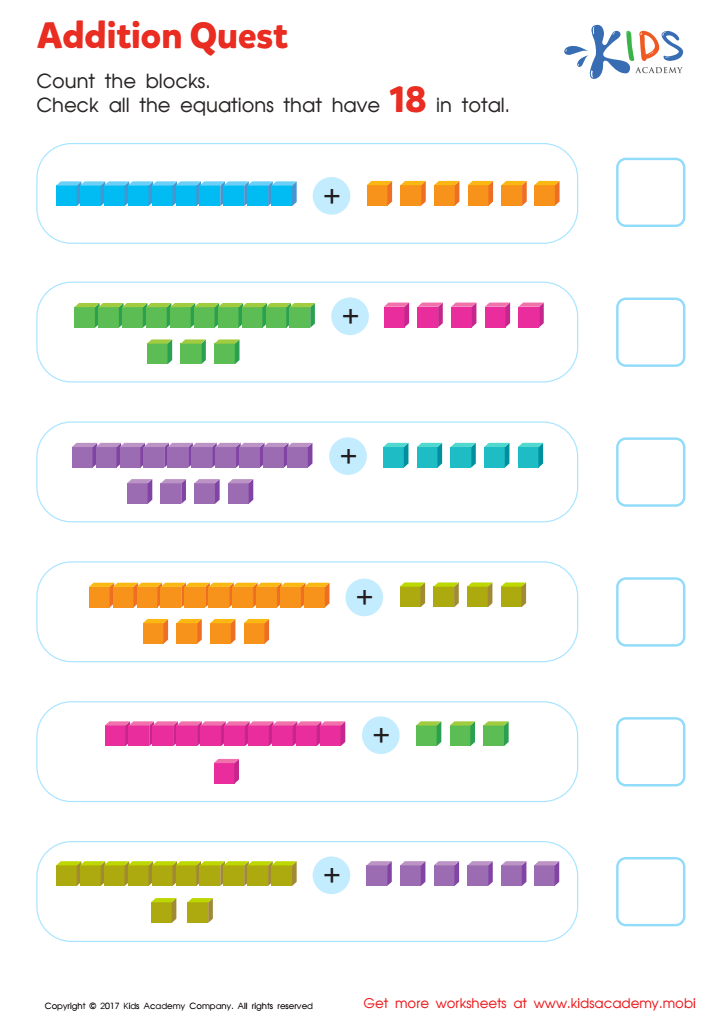
Addition Quest Worksheet: Part 2
Does your child or student struggle with math? Help them conquer their fears with this fun matching worksheet! It can help them learn to count and add numbers confidently. This colourful printout is sure to make math learning enjoyable, so they can easily work through the numbers and add up results with ease.
Addition Quest Worksheet: Part 2
Worksheet
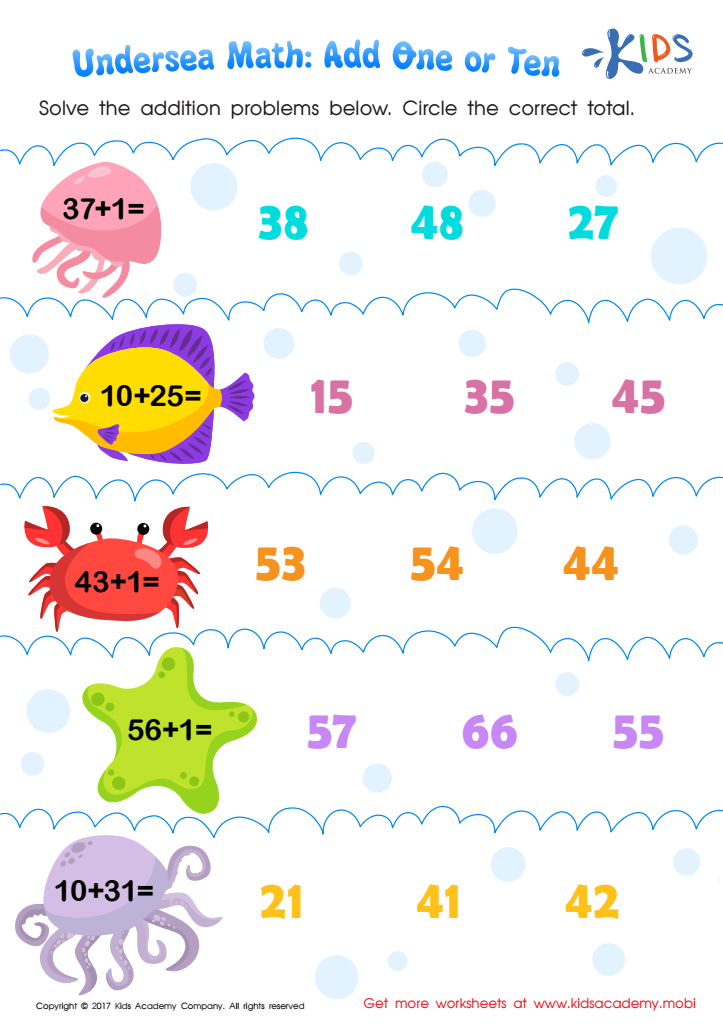
Undersea Math Worksheet
Dive under the sea and practice addition with place value! This fun sea-themed math worksheet will help your child add ones and tens to 2-digit numbers. Kids need to practice to gain an understanding of math processes and this worksheet uses vibrant tropical fish to entertain and build important skills.
Undersea Math Worksheet
Worksheet
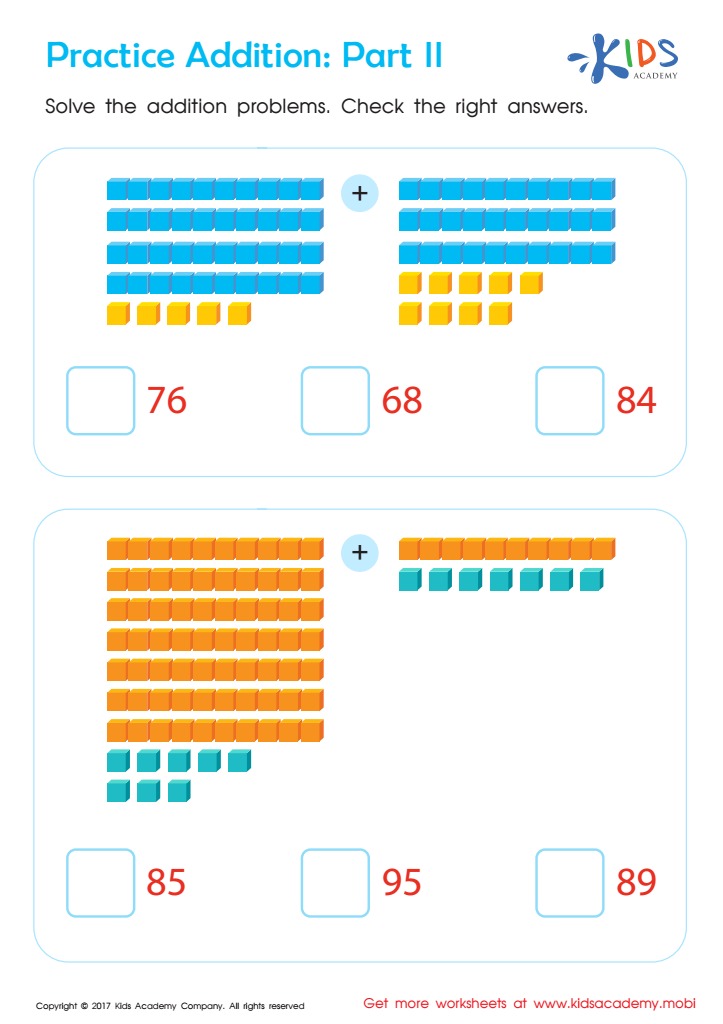
Practice Addition: Part 2 Worksheet
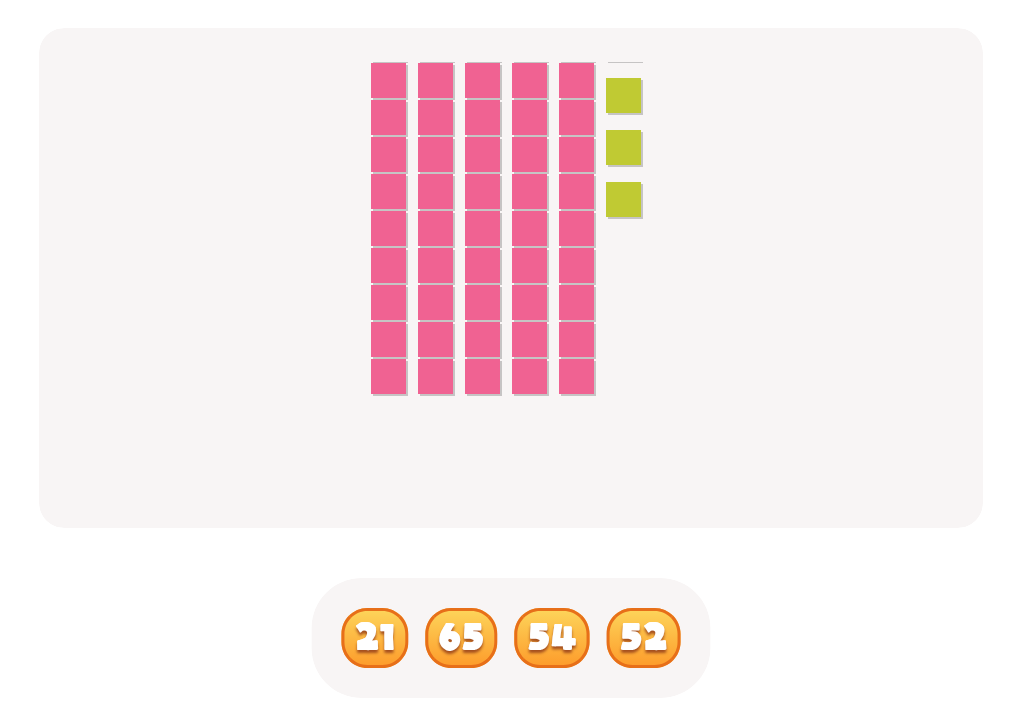
Try this printable worksheet to practice addition! It contains longer, tougher addition equations for 1st graders. Colorful blocks give kids the opportunity to visualize how big numbers are combined. Multiple choice answers help kids gain confidence in problem solving.
Practice Addition: Part 2 Worksheet
Worksheet
Join Kids Academy for Free
Who is primarily going to use this learning content?








Addition practice and understanding normal place value are foundational skills for young learners aged 4-8. First and foremost, these skills develop essential mathematical fluency that supports later academic success. Addition encourages critical thinking and problem-solving abilities, enabling children to become confident in their numerical understanding.
Understanding place value is crucial because it helps students grasp how numbers are structured, which is vital for performing calculations accurately. When children learn that the value of a digit depends on its position (e.g., tens vs. hundreds), they develop a clearer conception of numbers, paving the way for more advanced mathematics.
Teachers and parents should prioritize these practices as they foster resilience and perseverance in academic challenges. Engaging children with fun, interactive activities can enhance their motivation and enjoyment of learning. Moreover, these skills enable effective communication about mathematics, enhancing collaboration and participation in group settings.
Finally, establishing a solid foundation in addition and place value during these crucial developmental years can prevent long-term learning gaps, setting students on a trajectory toward higher-order math competencies and everyday practical life skills. Therefore, consistent reinforcement of these concepts is vital for holistic educational development.