Phonics recognition Normal Building Vocabulary Worksheets for Ages 4-8
3 filtered results
-
From - To
Boost your child's reading success with our "Phonics Recognition Normal Building Vocabulary Worksheets for Ages 4-8." Designed specifically for young learners, these engaging worksheets help children develop critical phonics skills, enhance their vocabulary, and foster a lifelong love for reading. Featuring fun activities and colorful illustrations, our worksheets make learning enjoyable while reinforcing essential reading foundations. Ideal for preschool to early elementary students, these resources support educators and parents in nurturing confident and proficient readers. Dive into a world of words and watch your child's literacy skills flourish with Kids Academy's expertly crafted phonics materials!
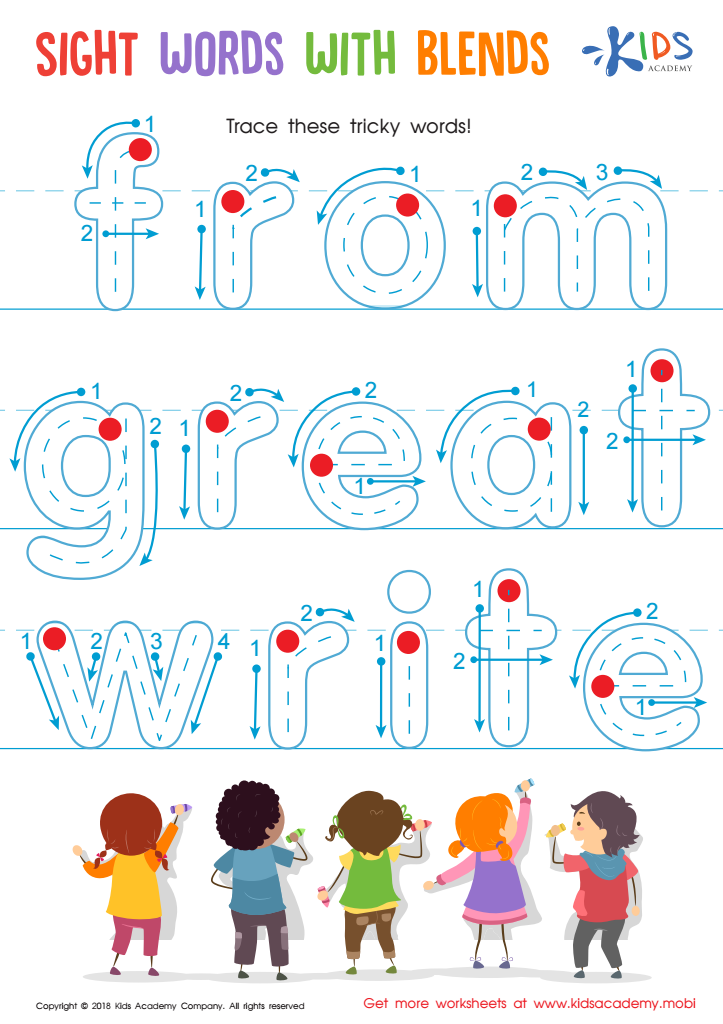
Sight Words with Blends Worksheet
 Assign to My Students











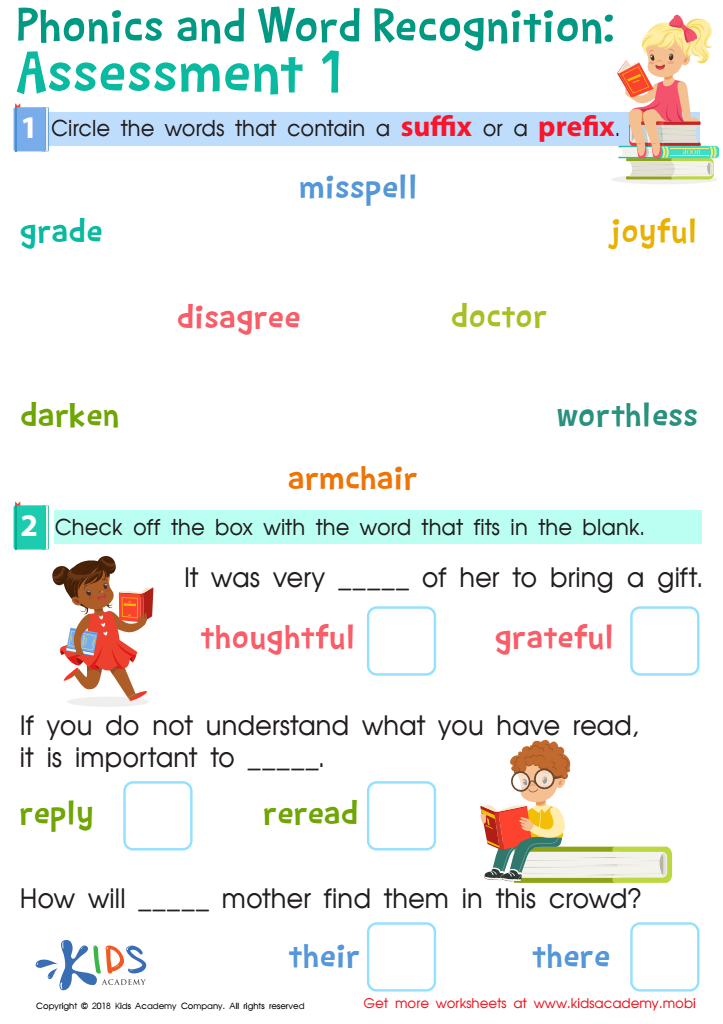
Phonics and Word Recognition: Assessment 1 Worksheet
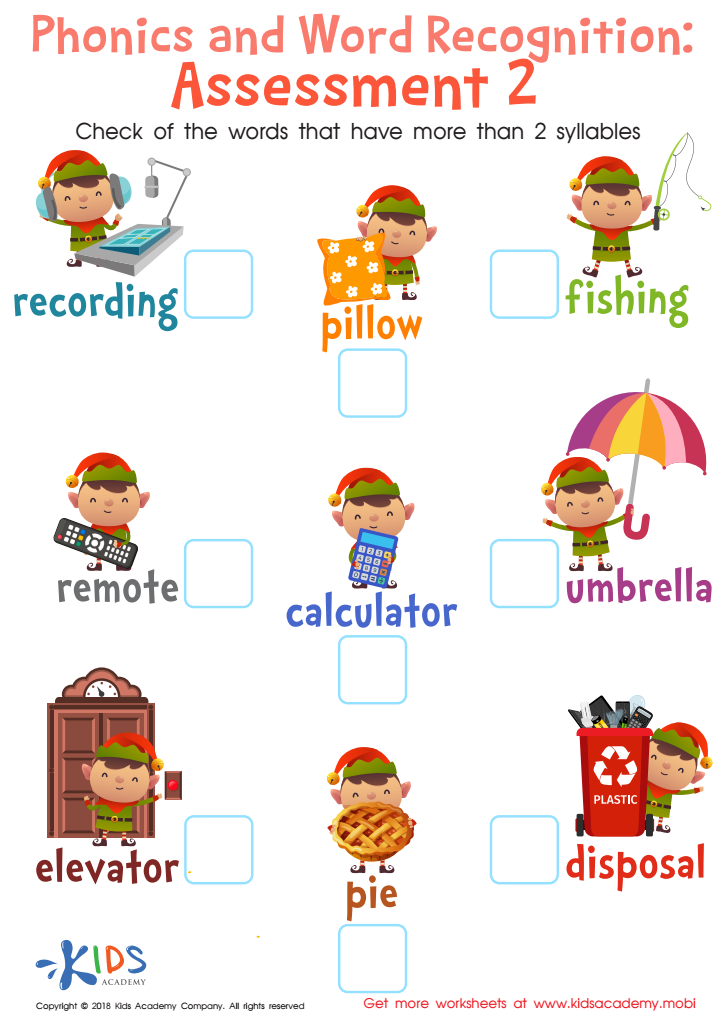
Phonics and Word Recognition: Assessment 2 Worksheet




.jpg)


Phonics recognition and vocabulary building are foundational pillars in early childhood education, crucial for the development of effective reading skills among children aged 4-8. For parents and teachers, understanding the importance of these elements is vital in fostering a child's long-term academic success.
Phonics recognition involves teaching children the relationships between letters and sounds, allowing them to decode words they read. This skill is fundamental because it enables children to read independently, boosting their confidence and fostering a love for reading. Early mastery of phonics helps children read more fluently, comprehend better, and ultimately perform well academically across different subjects.
Building vocabulary, on the other hand, expands a child’s understanding and use of words. A robust vocabulary allows children to express themselves more clearly, ask questions, and better understand what they read and hear. When children recognize more words, they are more likely to enjoy reading, leading to increased practice and improved literacy skills. This is particularly important in early grades when cognitive and linguistic abilities are rapidly developing.
Together, phonics recognition and a strong vocabulary establish a solid foundation for literacy, reasoning, and overall cognitive development. Parents and teachers play a crucial role in providing consistent exposure to phonics and a rich array of words, setting children up for educational success and lifelong learning.








