Verb identification Normal Building Vocabulary Worksheets for Ages 4-8
3 filtered results
-
From - To
Welcome to our Verb Identification Normal Building Vocabulary Worksheets for Ages 4-8! Designed to enhance early language skills, these engaging worksheets help young learners recognize and identify verbs in various contexts. Featuring fun illustrations and simple instructions, kids will enjoy working through a variety of exercises that build their vocabulary and strengthen their reading comprehension. Perfect for classroom or home use, these worksheets encourage active learning while promoting an understanding of action words. Help your child develop a strong foundation in language arts with our stimulating and educational verb identification activities today!
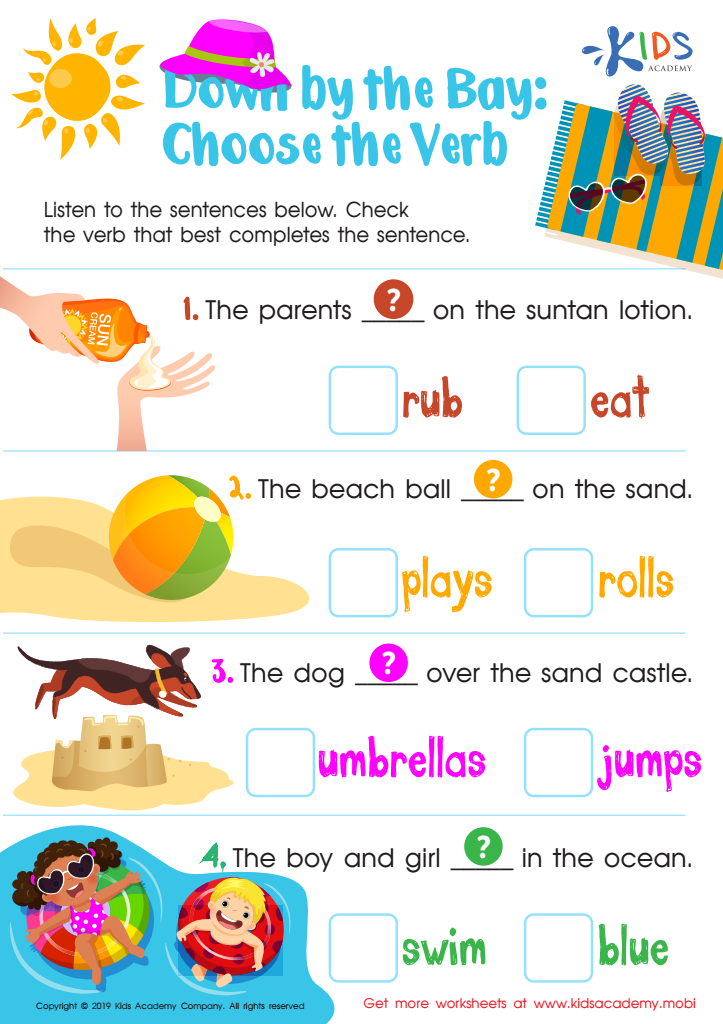
Down by the Bay: Choose the Verb Worksheet
 Assign to My Students











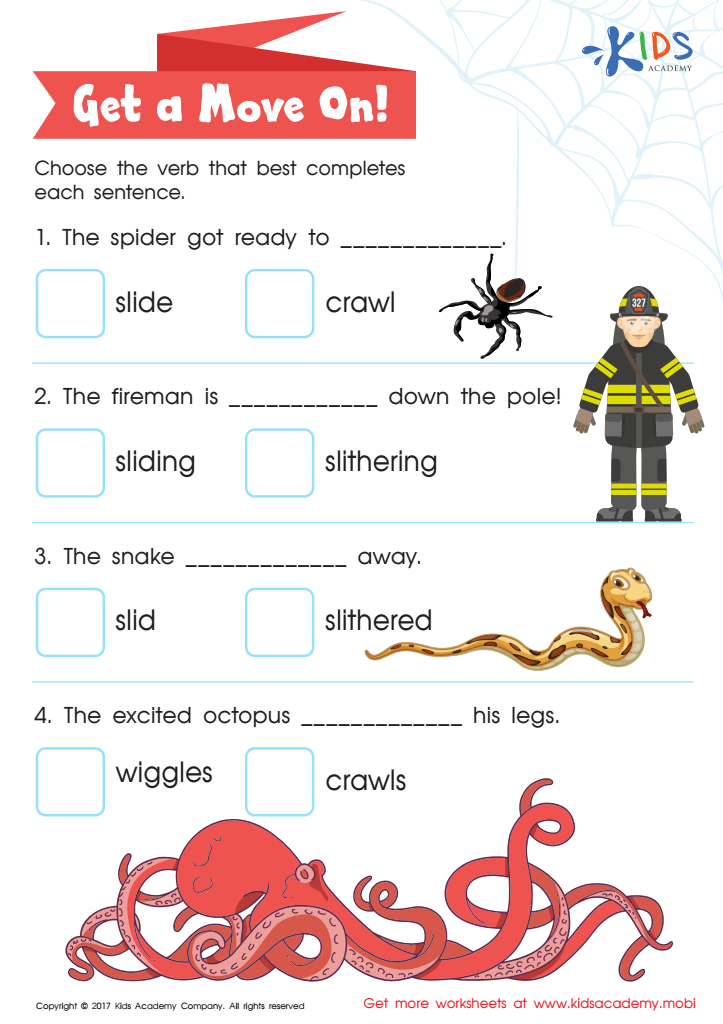
Verb Worksheet
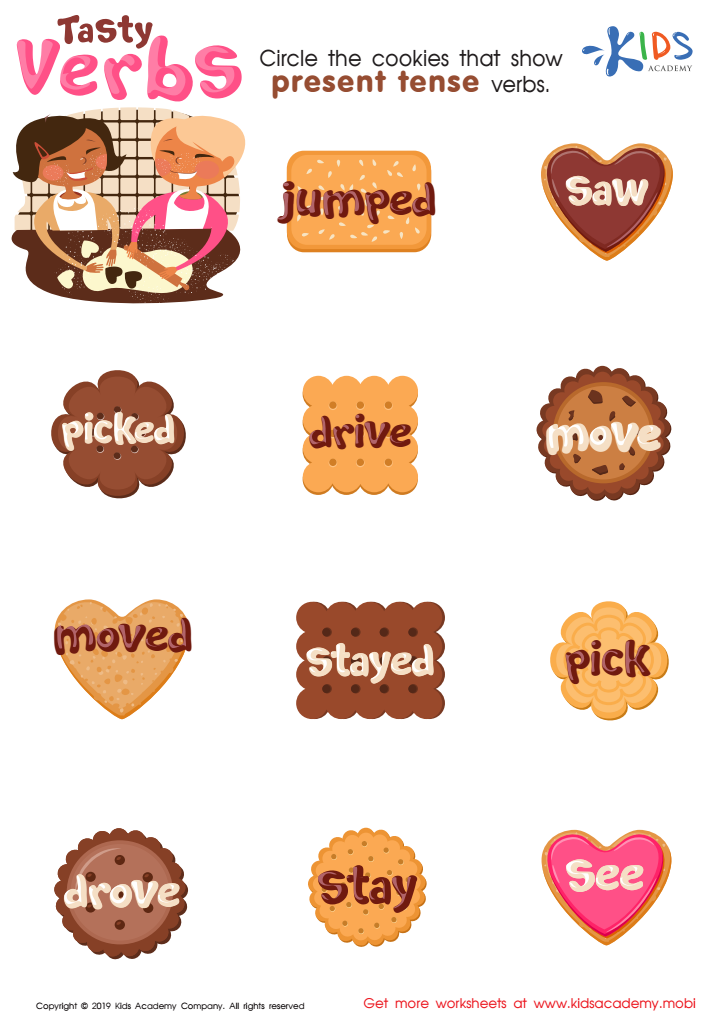
Tasty Verbs Worksheet







Verb identification and building vocabulary are crucial for children aged 4-8 as they serve as foundational skills for effective communication and literacy development. At this age, children are at a critical stage of language acquisition, and understanding verbs—the action words in sentences—enables them to describe their experiences and engage in meaningful conversations. When children can identify verbs, they become more proficient in constructing sentences, leading to improved reading comprehension and writing skills.
Moreover, a rich vocabulary enhances a child's ability to express their thoughts and emotions, fostering socio-emotional development. When parents and teachers prioritize verb identification and vocabulary building, they equip children with the language tools they need for academic success and interpersonal relationships.
Engaging in activities that promote verb recognition, such as storytelling, play, and word games, also makes learning fun and interactive, capturing children’s interest and imagination. In turn, this excitement for language encourages lifelong learning habits. Ultimately, by focusing on verb identification and vocabulary growth, adults help children develop essential communication skills that will serve them well throughout their educational journey and beyond, laying the groundwork for future literacy and comprehension success.








