Historical Knowledge Normal Reading Worksheets for Ages 4-8
6 filtered results
-
From - To
Explore our engaging Historical Knowledge Normal Reading Worksheets designed for children ages 4-8! These worksheets are perfect for young learners eager to discover fascinating historical facts and concepts. Each worksheet features age-appropriate texts that captivate children's imaginations while enhancing their reading skills. With interactive activities and colorful illustrations, your kids will not only improve their literacy but also develop a love for history. Perfect for classroom use or at-home learning, these worksheets align with educational standards and cater to diverse learning styles. Dive into the past and inspire curiosity in your little ones with our fun and informative reading resources!
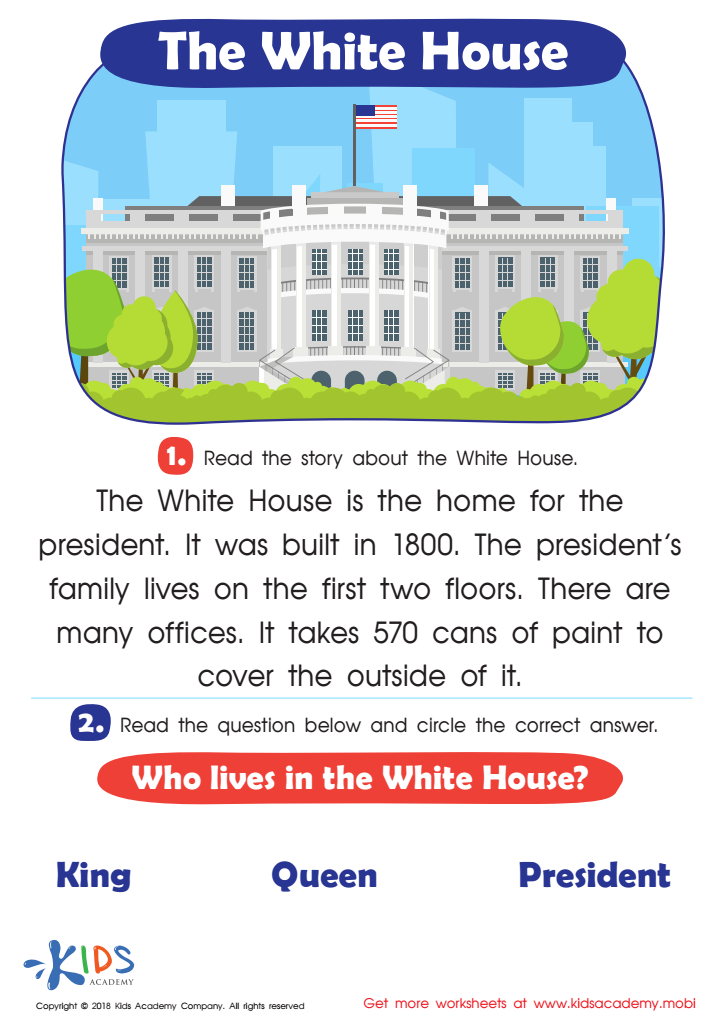
White House Worksheet
 Assign to My Students
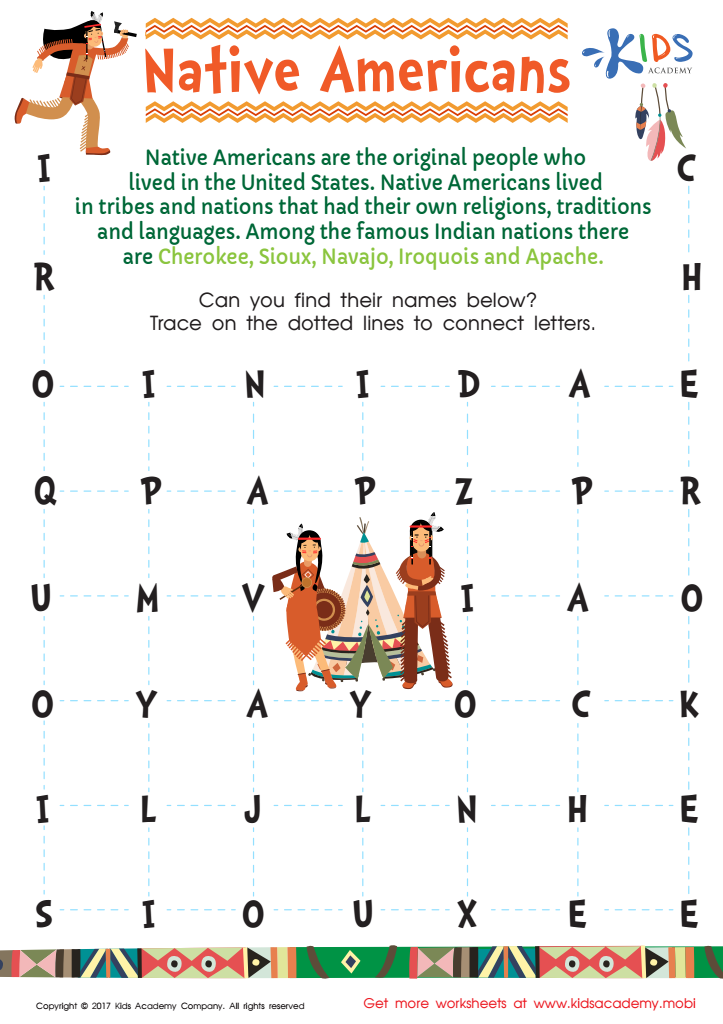
Native American Word Search Printable
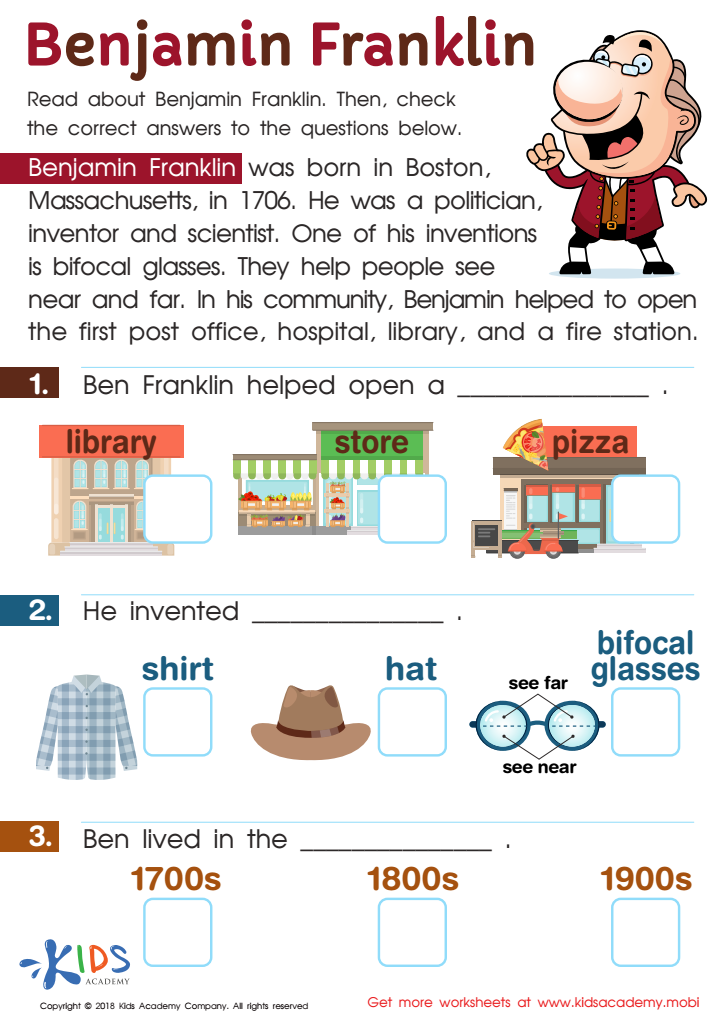
Benjamin Franklin Worksheet
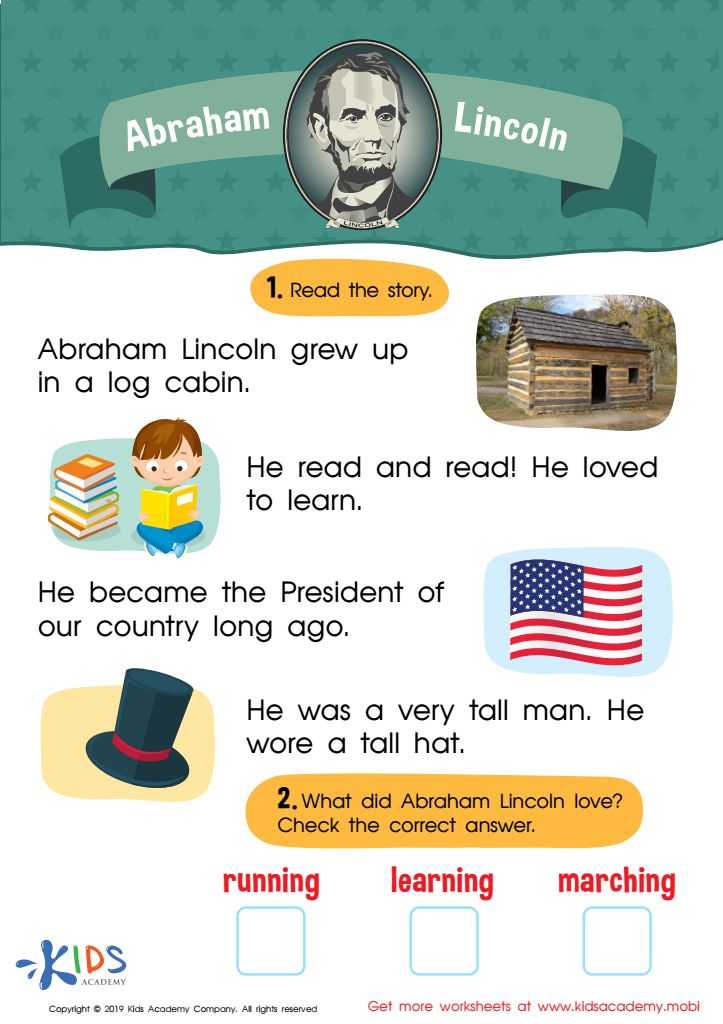
Abraham Lincoln Worksheet
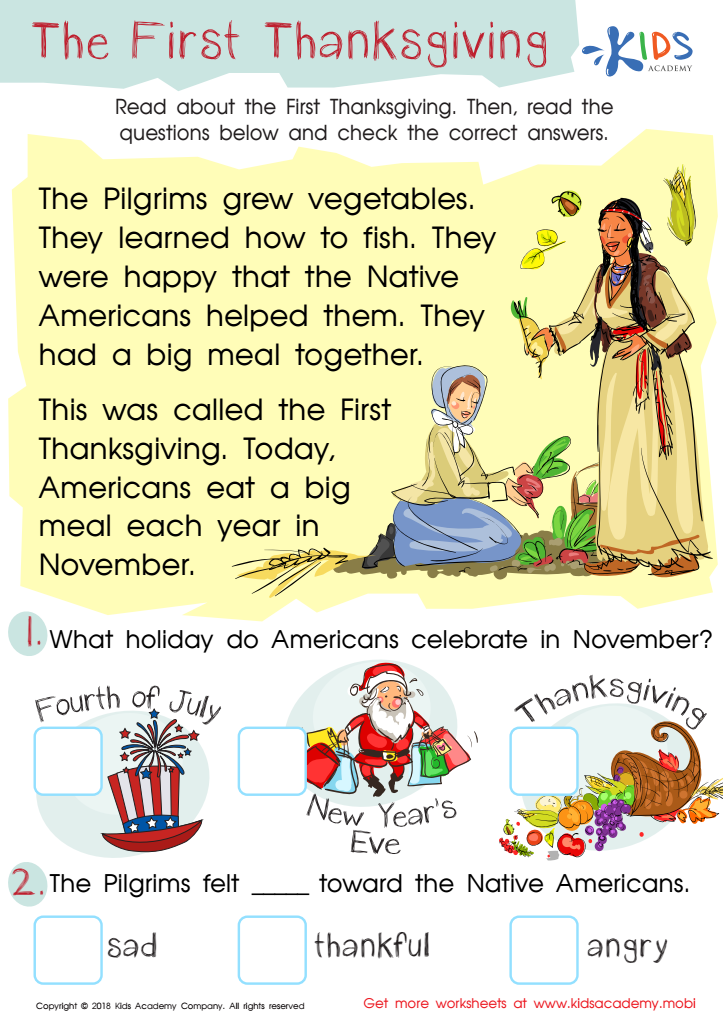
Assessment: First Thanksgiving Worksheet
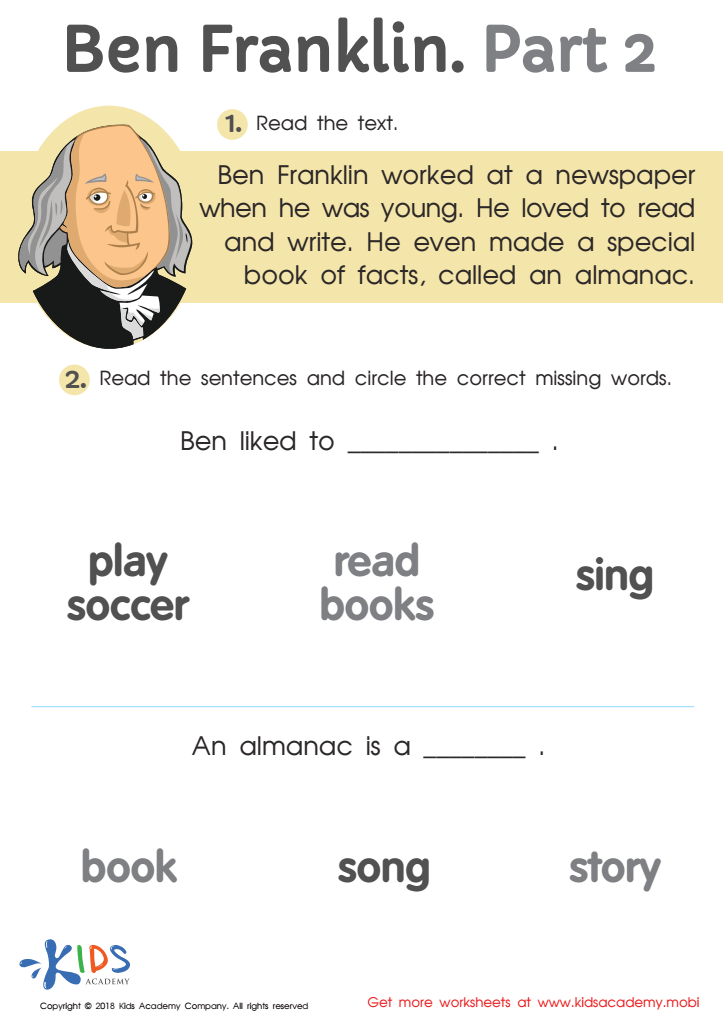
Ben Franklin Part 2 Worksheet







Parents and teachers should prioritize historical knowledge for children ages 4-8 because it lays a foundational understanding of the world they inhabit. At this developmental stage, children are naturally curious about their surroundings, and history can spark that curiosity while fostering critical thinking skills. Engaging young learners with stories of the past helps them recognize connections between historical events and their own lives, enhancing their sense of identity and community.
Moreover, historical knowledge cultivates essential literacy skills as children learn to navigate texts, analyze narratives, and comprehend cause and effect. This exploration not only enriches vocabulary and spelling but also encourages emotional intelligence as they relate personal experiences to those of others.
Additionally, instilling an appreciation of diversity, inclusion, and the complexities of different cultures contributes to social-emotional development. Well-rounded historical knowledge promotes tolerance and empathy, which are vital in fostering cooperative and harmonious communities. By integrating historical learning into reading and everyday conversations, parents and teachers can empower children to be informed and conscientious individuals ready to contribute positively to society. Ultimately, early exposure to history enriches education and shapes well-rounded, culturally-aware citizens of the future.








