Rhyming skills development Normal Reading Worksheets for Ages 4-8
3 filtered results
-
From - To
Enhance your child’s reading abilities with our engaging Rhyming Skills Development Worksheets, specifically designed for ages 4-8. These worksheets focus on cultivating essential early literacy skills through fun and interactive activities that promote phonemic awareness and rhyme recognition. By recognizing word patterns and sounds, children will build confidence in their reading abilities while enjoying the learning process. Perfect for both classroom use and at-home practice, our printable resources cater to various skill levels. Foster a love for reading and make learning enjoyable with our carefully curated worksheets! Start your child's journey in literacy today and watch their skills flourish!
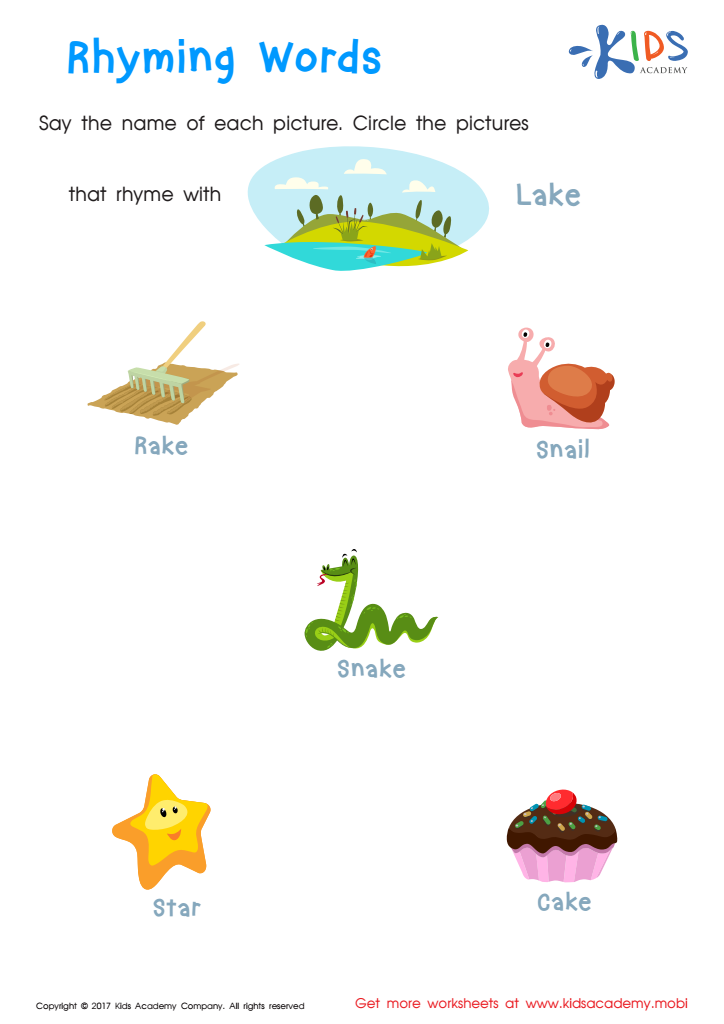
Rhyming Words Rhyming Worksheet
 Assign to My Students
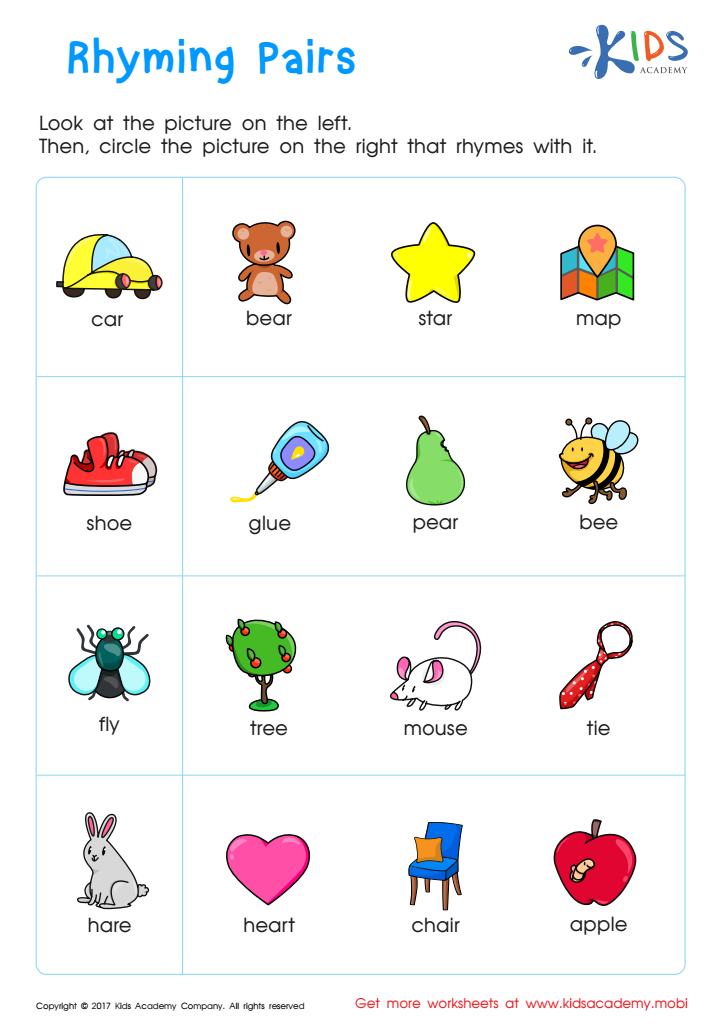
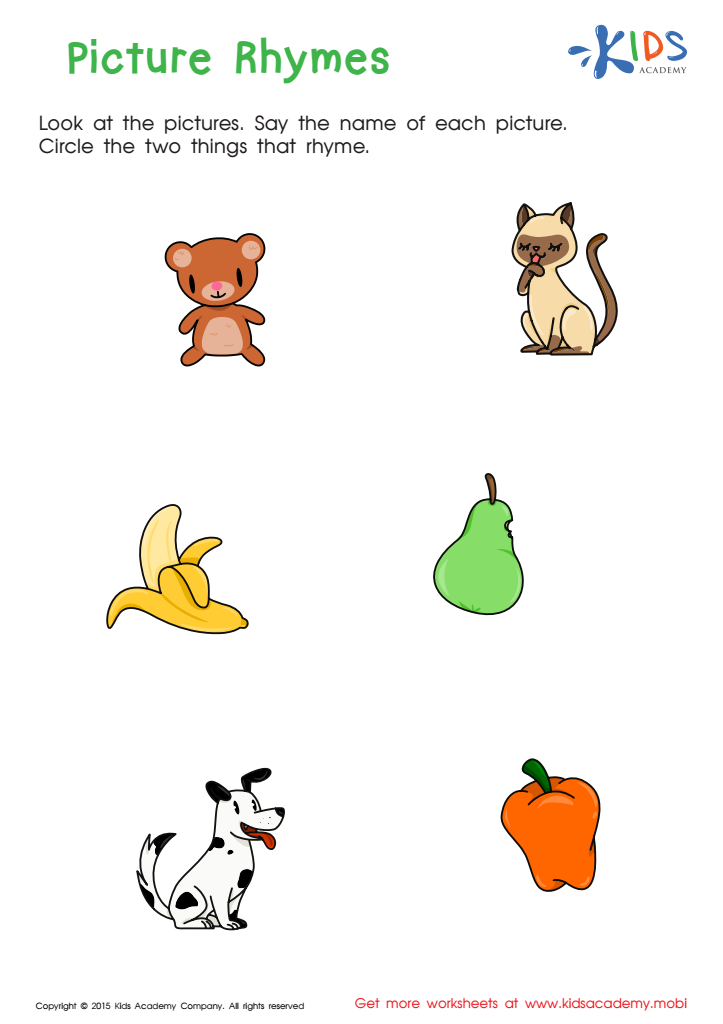
First Words: Picture Rhymes Worksheet







Rhyming skills are a foundational aspect of literacy that significantly contribute to early reading development for children aged 4-8. Understanding and identifying rhymes help children recognize sounds in words, fostering phonemic awareness. This ability is crucial as it prepares them for reading by enhancing their spelling and decoding skills.
Engaging with rhymes makes learning fun and immersive. Children are naturally drawn to the musicality of rhymes, encouraging a love for language and literature. Rhymes promote vocabulary expansion, as children encounter new words within familiar rhythms and patterns, facilitating comprehension.
Additionally, considering the cognitive development of young learners, rhyming helps strengthen memory and cognitive processing. When children participate in rhyming games, songs, or stories, they enhance their auditory discrimination skills—important for future reading fluency.
For parents and educators, nurturing rhyming skills is a vital investment in a child's educational journey. It lays the groundwork for proficient reading, critical thinking, and effective communication. By incorporating rhyming activities, educators and parents can create a supportive and enriching learning environment that fosters literacy development, ensuring children are well-equipped for future academic success.








