Understanding Sequences Normal Reading Worksheets for Ages 4-8
3 filtered results
-
From - To
Unlock the world of reading for your young learners with our "Understanding Sequences Normal Reading Worksheets for Ages 4-8"! These expertly designed worksheets help children grasp the foundational skill of sequencing, an essential component of reading comprehension. Through engaging activities and fun exercises, kids will learn to order events logically, enhancing their ability to follow narratives and understand story structure. Perfectly tailored for ages 4-8, these worksheets align with early learning standards, ensuring kids stay on track. Boost your child's reading confidence and critical thinking skills with our thoughtfully crafted sequencing exercises. Visit Kids Academy today!
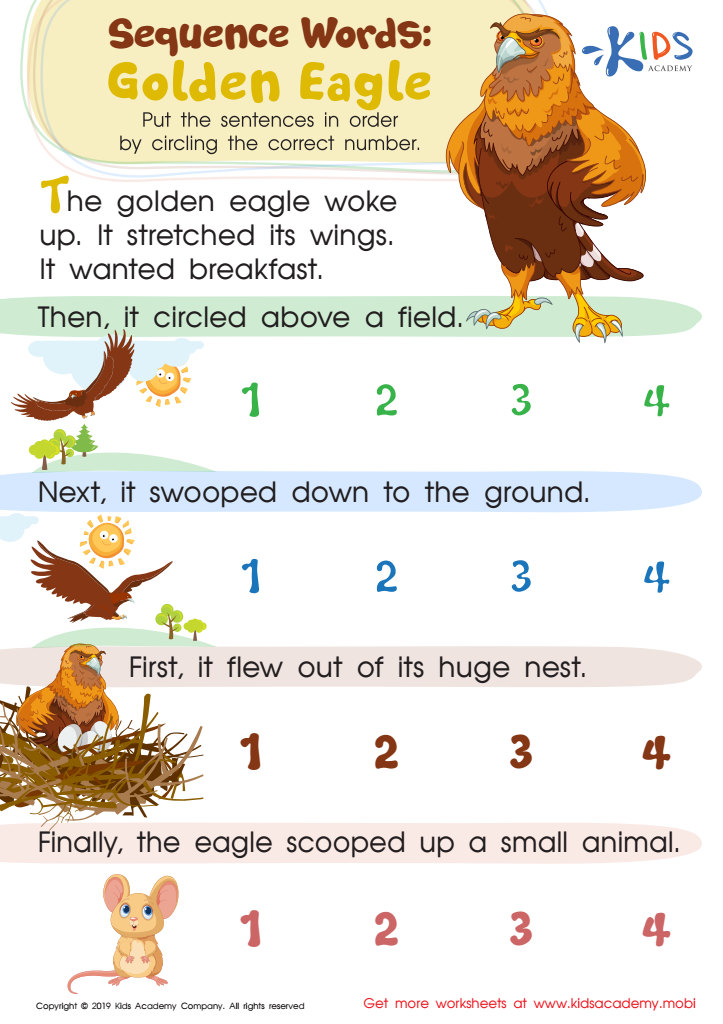
Sequence Word Eagle Worksheet
 Assign to My Students
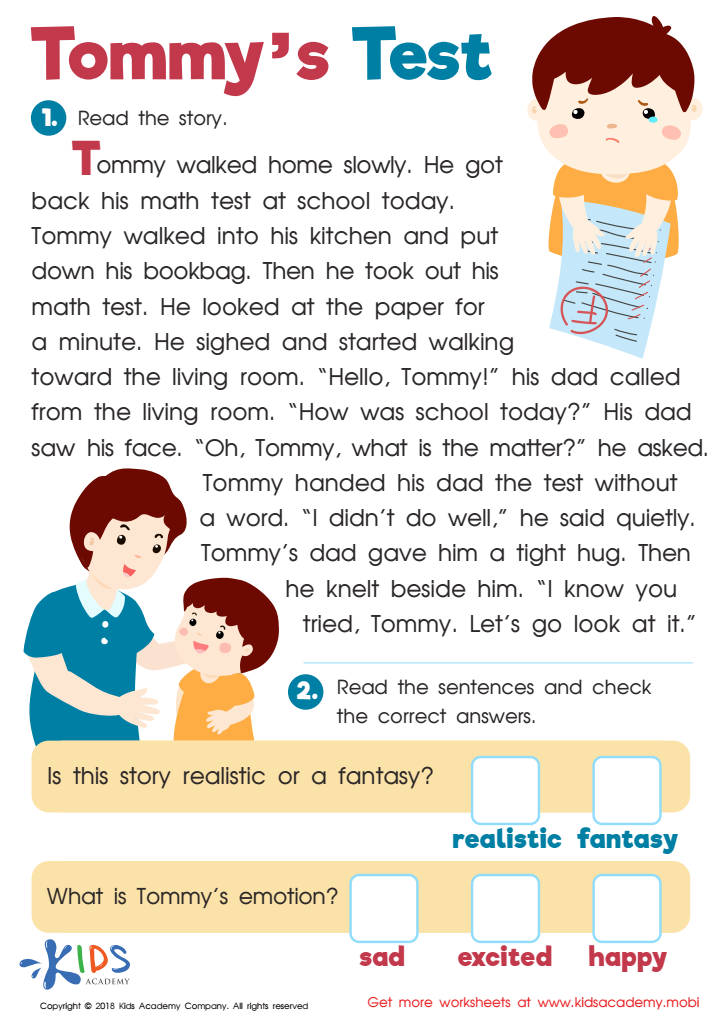
Tommys Test Worksheet
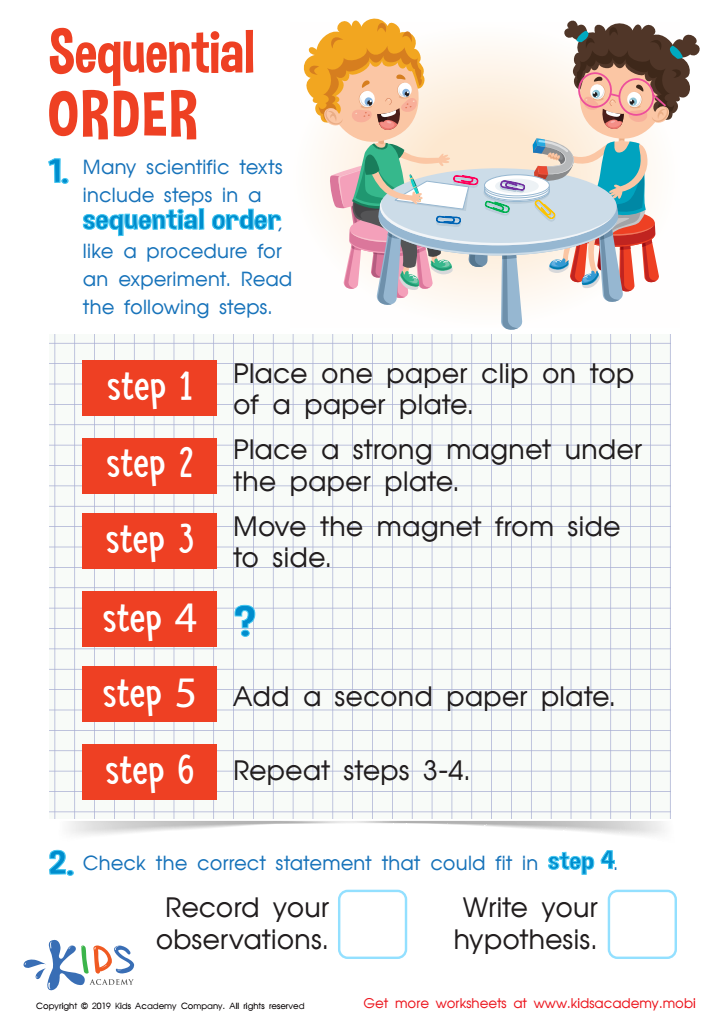
Sequencential Order Worksheet







Understanding sequences in normal reading for children ages 4-8 is crucial for their cognitive and linguistic development. At this age, kids are establishing foundational skills that will support lifelong learning. Sequences help children grasp the order of events, stories, and instructions, which is essential for comprehending and making sense of what they read.
When parents and teachers emphasize sequencing, they are fostering a child's ability to recognize patterns and narrative structures. This skill aids in predictability and memory, helping children predict what might happen next in a story, recall the main events, and interconnect ideas. Such comprehension enhances a child's critical thinking and analytical skills, necessary for problem-solving in everyday life.
Moreover, understanding sequences builds strong listening and communication skills. When children can recount stories or events in the correct order, they improve their oral skills and ability to interact meaningfully with others. It's also instrumental in writing; sequencing enables young writers to structure their thoughts and narratives coherently.
Investing time in developing these skills can pave the way for academic success across subjects. Essentially, nurturing sequencing capabilities in early reading not only enriches a child’s educational experience but also cultivates essential life skills that form the cornerstone of effective learning and communication.








