Visual interpretation Normal Reading Worksheets for Ages 4-8
5 filtered results
-
From - To
Welcome to our Visual Interpretation Normal Reading Worksheets for Ages 4-8! Designed to enhance the reading skills of young learners, these worksheets encourage children to analyze and interpret visual cues in texts. Engaging and interactive, they help develop critical thinking and comprehension by integrating images with narratives. Perfect for parents and educators, our worksheets offer a fun way to explore stories while improving vocabulary and understanding. With a variety of activities that accommodate different learning styles, children can build confidence in their reading abilities. Start your child's reading adventure today with our colorful and stimulating visual interpretation resources!
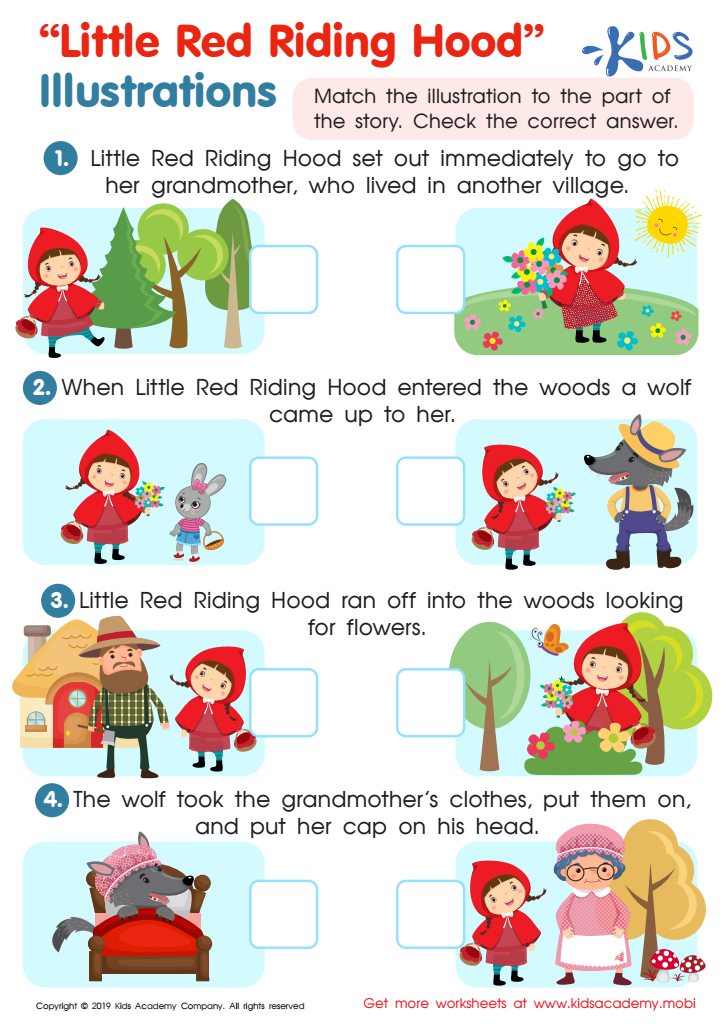
Little Red Riding Hood: Illustrations Worksheet
 Assign to My Students
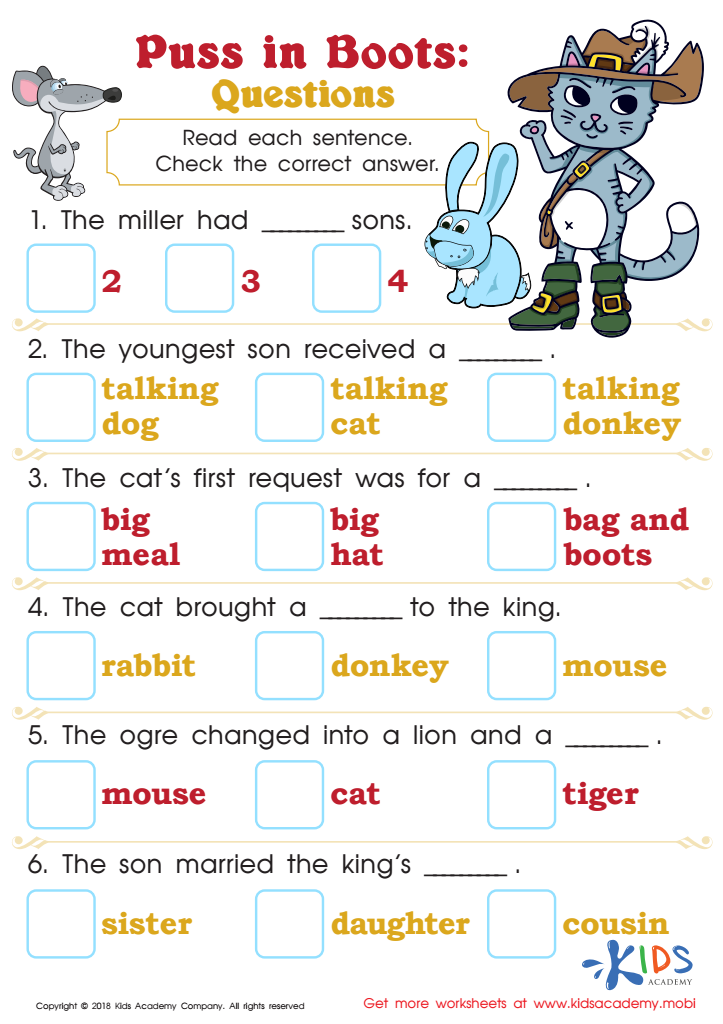
Puss in Boots: Questions Worksheet
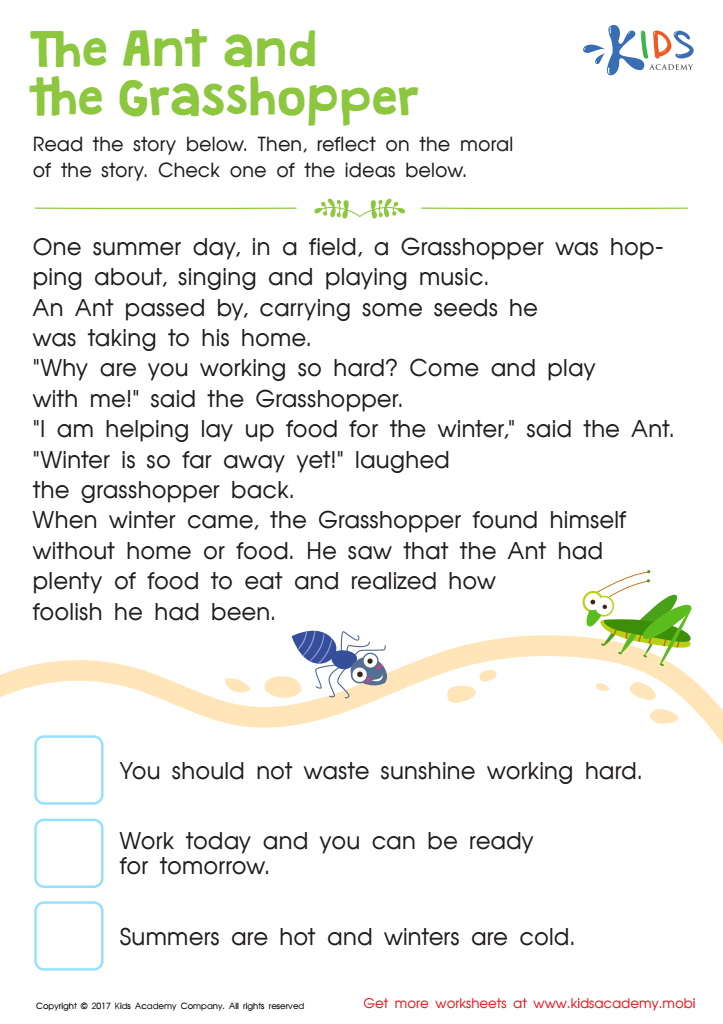
The Ant and The Grasshopper Printable
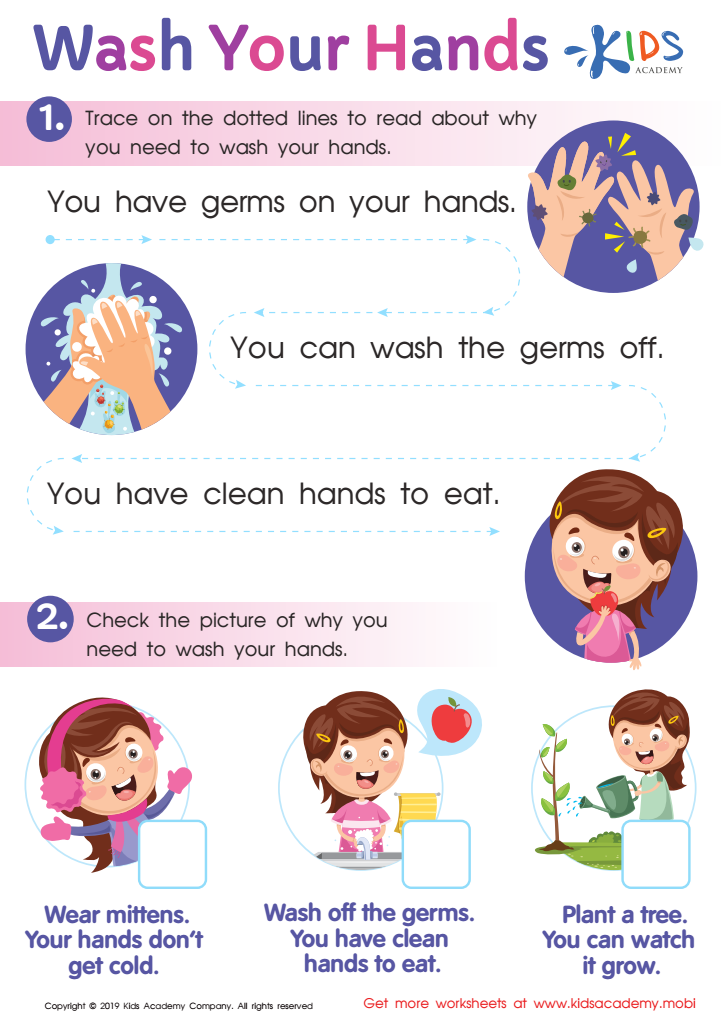
Wash Your Hands Worksheet
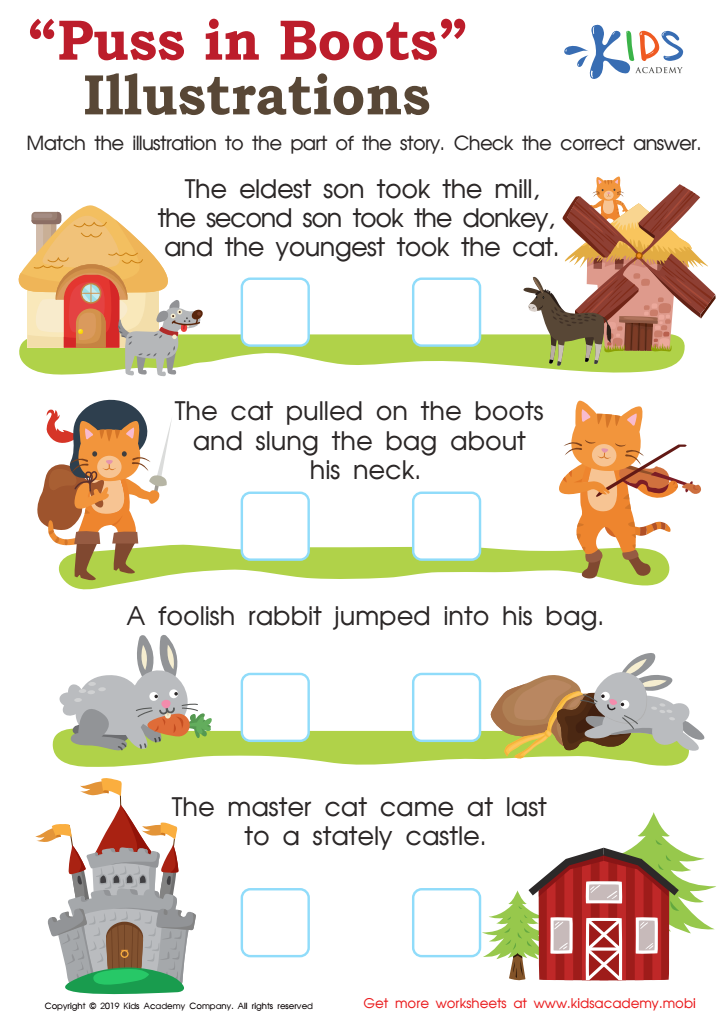
Puss in Boots Illustrations Worksheet








Visual interpretation is an essential skill for children aged 4-8, playing a crucial role in their overall literacy development. At this stage, kids are not just learning to read words; they are also acquiring the ability to interpret visual information, such as illustrations, graphs, and other visual aids. This skill enhances their understanding of texts and contributes to comprehension, making it easier to decipher story elements, emotions, and themes.
Parents and teachers should prioritize visual interpretation as it fosters critical thinking and imaginative engagement. Children who can connect visual cues to the narrative can better predict outcomes, draw inferences, and relate to the content on a deeper level. This skill also supports academic achievement across subjects, as children use visual information in math, science, and social studies.
Moreover, fostering strong visual interpretation skills can boost a child's confidence and motivation. When they can effectively analyze visuals alongside words, children feel empowered in their learning process. By emphasizing activities that encourage these skills, such as storytelling with picture books or interactive learning games, educators and parents can create a rich literacy environment, paving the way for lifelong reading success and stronger analytical abilities.








