
Critical thinking development Normal Reading Comprehension Worksheets for Ages 4-8
3 filtered results
Difficulty Level
Grade
Age
-
From - To
Subject
Activity
Standards
Enhance your child's cognitive abilities with our Critical Thinking Development Normal Reading Comprehension Worksheets, designed for ages 4-8! These engaging, age-appropriate worksheets encourage young learners to think critically while improving their reading comprehension skills. Each worksheet features fun narratives and thought-provoking questions that stimulate curiosity and analytical thinking. Perfect for homeschooling or classroom use, our resources help children connect ideas, make inferences, and develop logical reasoning. Foster a love for learning by integrating critical thinking into daily reading activities. Explore our collection today and support your child's journey to becoming an insightful and confident reader!
Favorites
With answer key
Interactive
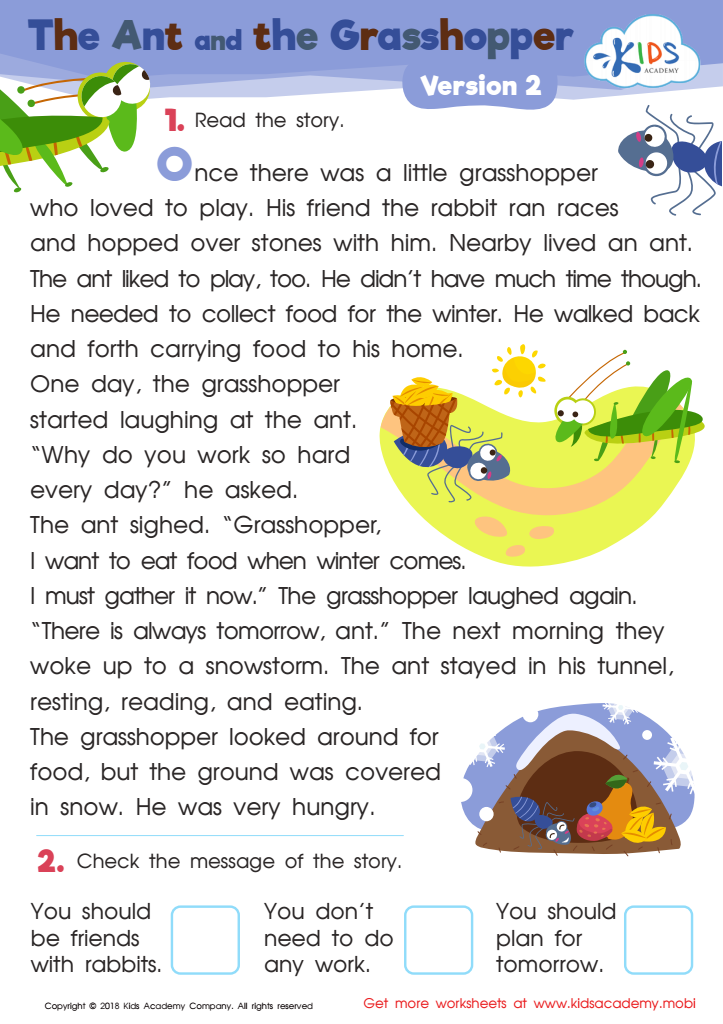
The Ant and The Grasshopper Version 2 Worksheet
Story time is a great way to bond with kids and share a fun story. The Ant and the Grasshopper is a classic with a lesson for everyone. Listen together and then ask your students what the message of the story was. Prompt them with choices from the worksheet and see which one they select. It's a great way to increase their vocabulary and help them learn important lessons.
 Assign to My Students
The Ant and The Grasshopper Version 2 Worksheet
Worksheet
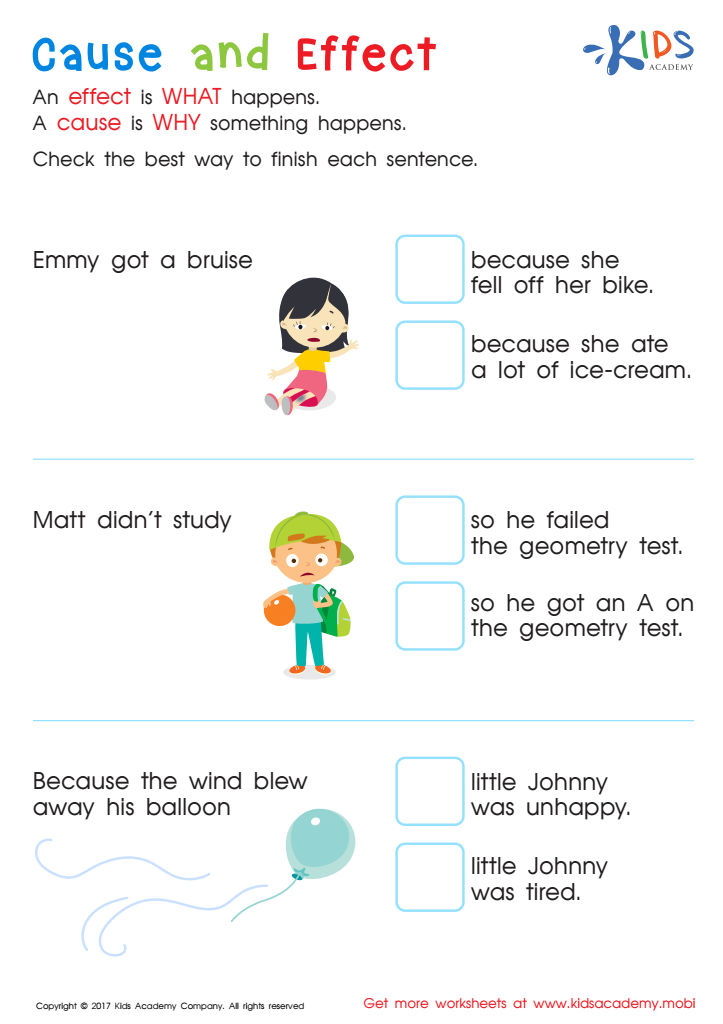
Cause and Effect Worksheet
Improve your child's reading comprehension and critical analysis skills with this cause and effect worksheet PDF! Have your child use the examples to create their own story, strengthening their understanding of the concept.
Cause and Effect Worksheet
Worksheet
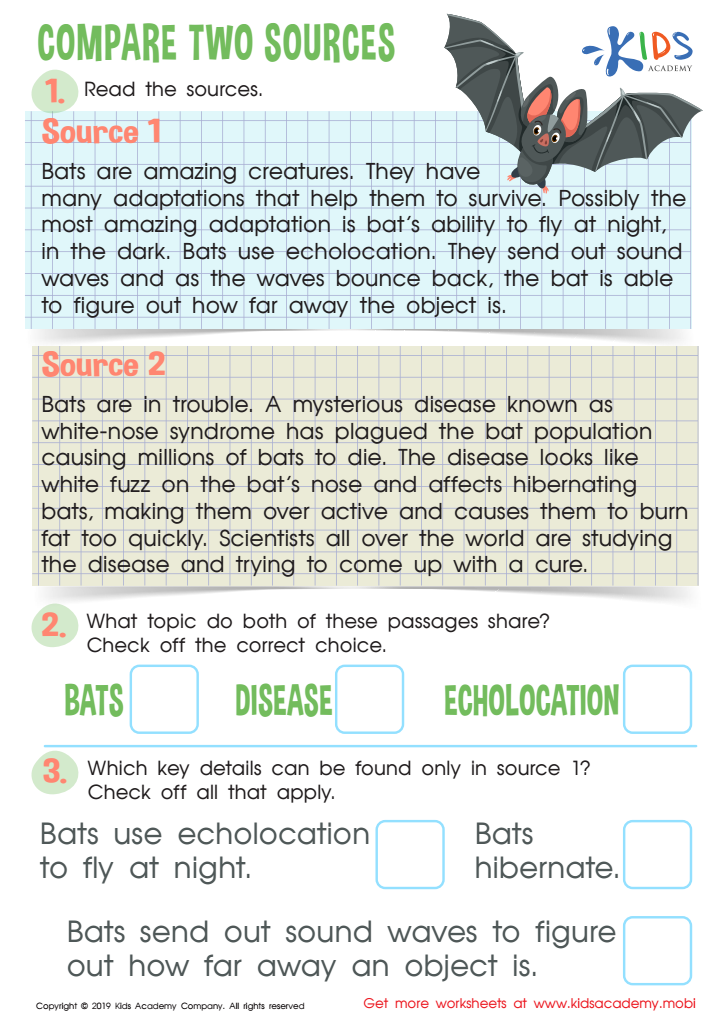
Compare Two Sources Worksheet
Reading exposes us to new words, spelling, and info about different topics. Kids can practice their reading skills, and learn about bats, with this worksheet. Read the two sources in the picture, then help your kids answer the questions at the bottom.
Compare Two Sources Worksheet
Worksheet
Join Kids Academy for Free
Who is primarily going to use this learning content?








Critical thinking development and normal reading comprehension are essential components of a child's cognitive growth, especially for those aged 4 to 8. During these formative years, children are developing foundational skills that will impact their future academic success and social interactions.
Parents and teachers should care about nurturing critical thinking skills, as they enable children to analyze information, make informed decisions, and solve problems creatively. These skills foster independence and confidence as they commence their educational journey. Through engaging discussions and question-driven activities, children learn to evaluate different perspectives and articulate their thoughts effectively.
Simultaneously, normal reading comprehension is crucial for academic achievement. At this age, children begin to make sense of texts, a skill that supports learning across various subjects. Strong reading comprehension fosters a love for literature and enhances vocabulary, which in turn enriches critical thinking abilities.
By prioritizing both critical thinking and reading comprehension, parents and teachers lay the groundwork for lifelong learning. They equip children not only with the ability to understand and process information but also with the capacity to question, reflect, and deeply engage with the world around them. This holistic approach prepares young learners for successful futures in an increasingly complex society.








