Critical thinking skills Normal Reading Comprehension Worksheets for Ages 4-8
4 filtered results
-
From - To
Enhance your child's reading comprehension and critical thinking skills with our specialized worksheets designed for ages 4-8. Our engaging activities promote deeper understanding of texts while encouraging young learners to analyze, infer, and synthesize information. Each worksheet includes age-appropriate questions and scenarios that stimulate curiosity and foster independent thinking. Ideal for home or classroom use, these printable resources help young readers develop essential skills in a fun and interactive way. Support your child's educational journey and lay a strong foundation for literacy and critical analysis—encourage exploration and creativity through our "Critical Thinking Skills Normal Reading Comprehension Worksheets" today!
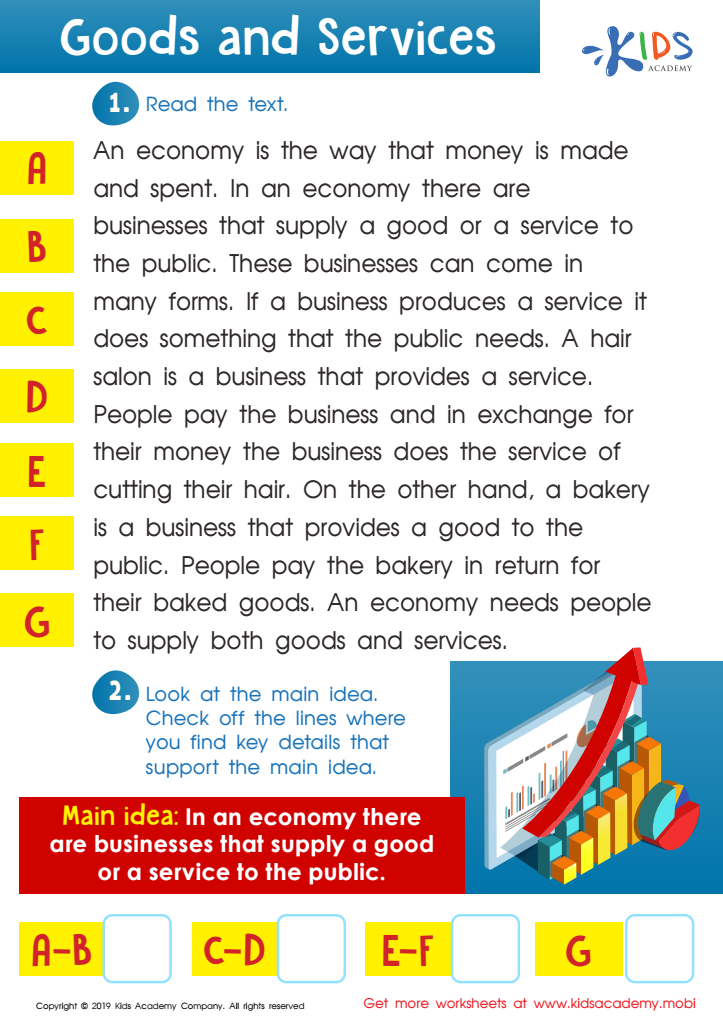
Goods and Services Worksheet
 Assign to My Students
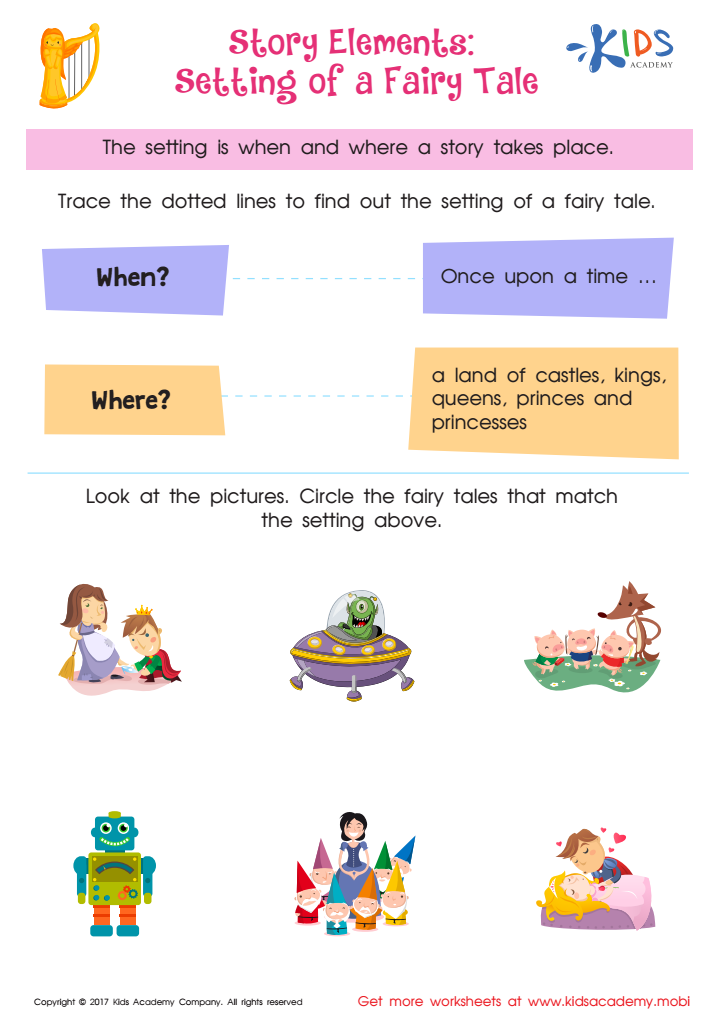
Story Elements: Setting of a Fairy Tale Printable
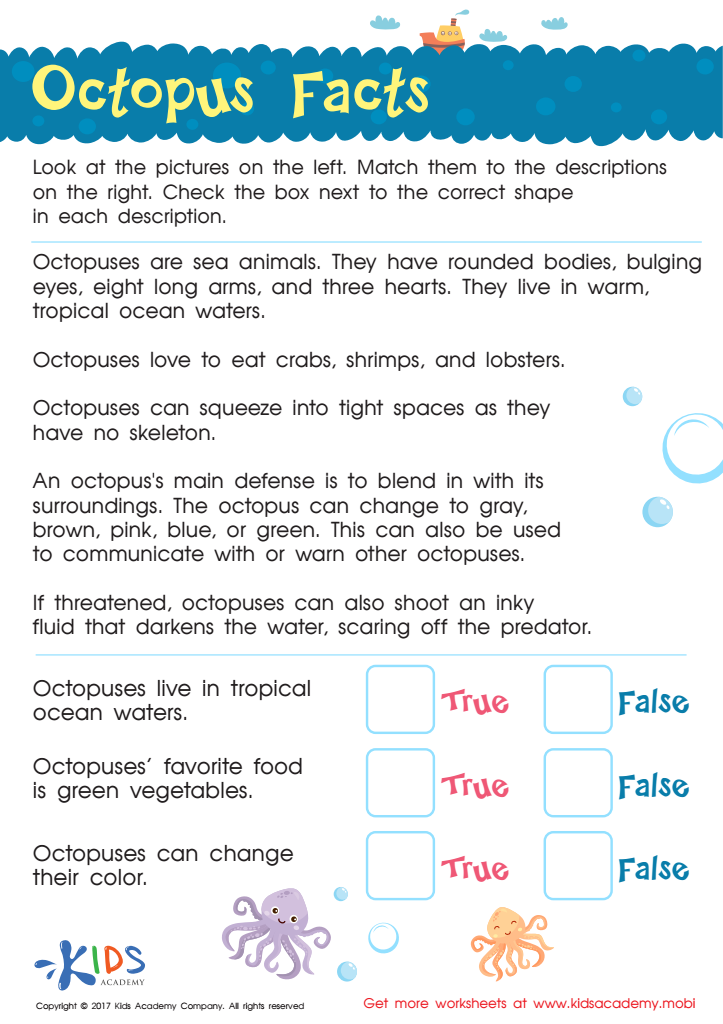
Octopus Facts Worksheet For Kids
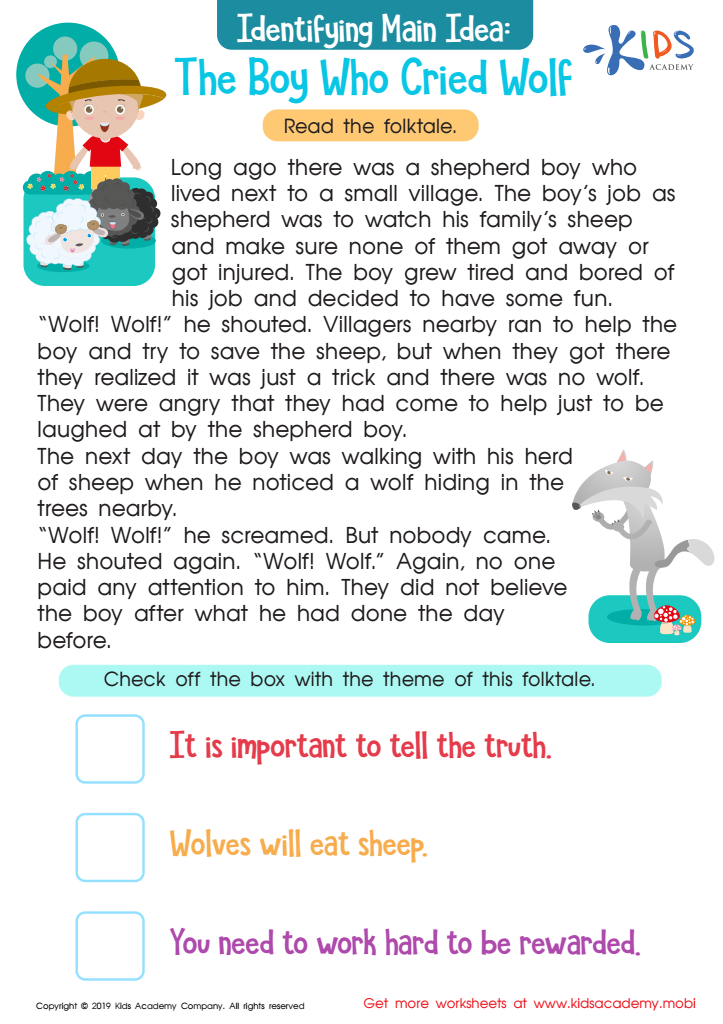
The Boy Who Cried Wolf Part 2 Worksheet








Parents and teachers should prioritize critical thinking skills alongside reading comprehension for children aged 4-8 because these skills are foundational to a child's overall development and learning. Critical thinking enables children to analyze, evaluate, and synthesize information, allowing them to move beyond memorization and deeper into understanding. Young learners equipped with these skills are better prepared to navigate complex problems, make informed decisions, and develop resilience in the face of challenges.
Moreover, strong reading comprehension fosters critical thinking by encouraging children to engage with texts meaningfully. When children can comprehend what they read, they can question authors’ intentions, form their own opinions, and connect stories to their own experiences. This engagement not only boosts their academic success but also nurtures their creativity and curiosity about the world around them.
Additionally, teaching critical thinking skills encourages collaboration and discourse among peers, promoting social skills and emotional intelligence. These competencies are essential not only for academic achievement but also for personal and professional success in the future. Ultimately, by emphasizing these skills in early education, parents and teachers lay the groundwork for lifelong learners who are capable of thoughtful participation in society.








