Analytical skills Normal Reading Fiction Worksheets for Ages 4-8
5 filtered results
-
From - To
Enhance your child's analytical skills with our "Analytical Skills Normal Reading Fiction Worksheets" designed for ages 4-8. These engaging worksheets combine fun fiction stories with thought-provoking questions that stimulate critical thinking and comprehension. Kids will explore characters, plot developments, and themes, fostering an environment of inquiry and discussion. Tailored to meet developmental milestones, these worksheets not only cultivate a love for reading but also empower young learners to analyze information effectively. Ideal for classroom settings or home learning, our resources make reading a delightful and educational experience. Start nurturing your child’s analytical abilities today with our carefully crafted worksheets!
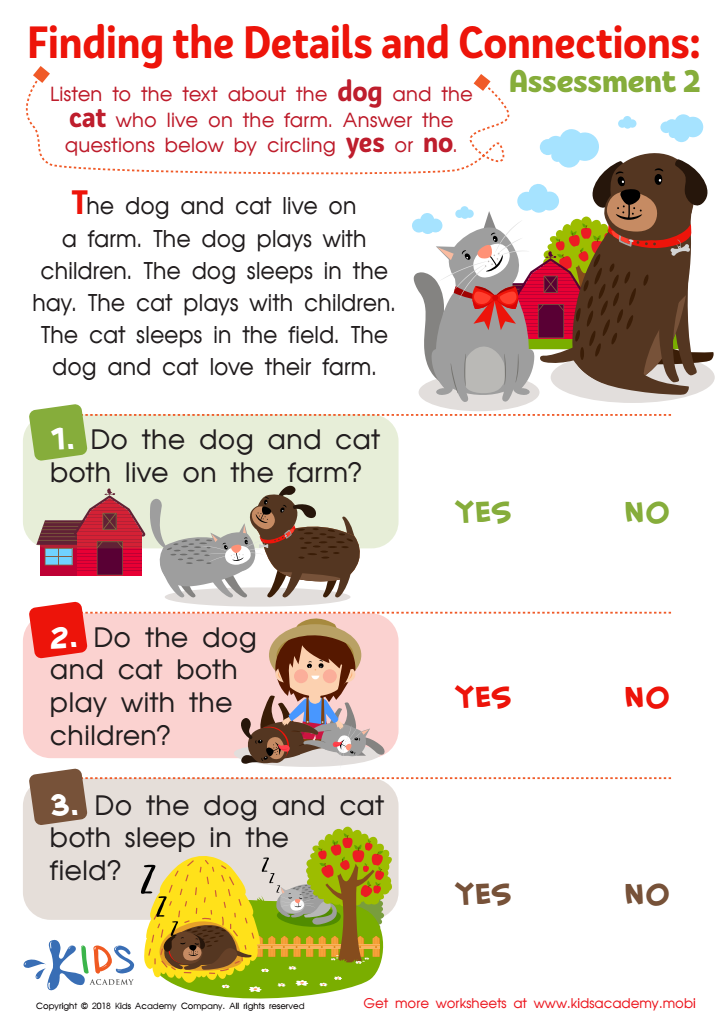
Finding the Details and Connections: Assessment 2 Worksheet
 Assign to My Students
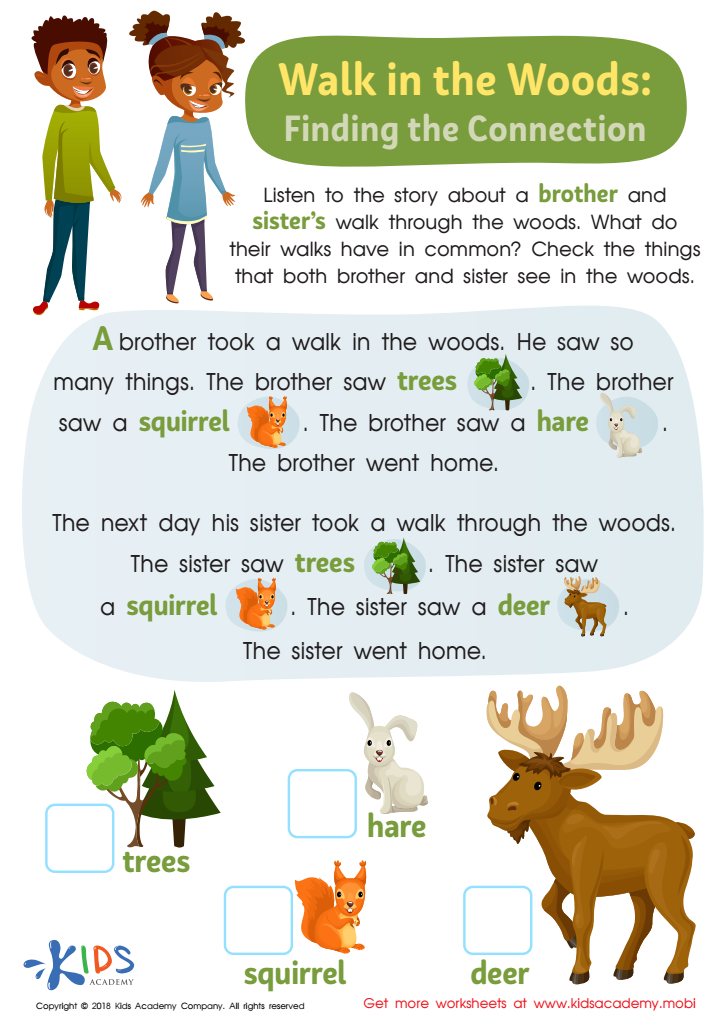
Walk In the Woods: Finding Connections Worksheet
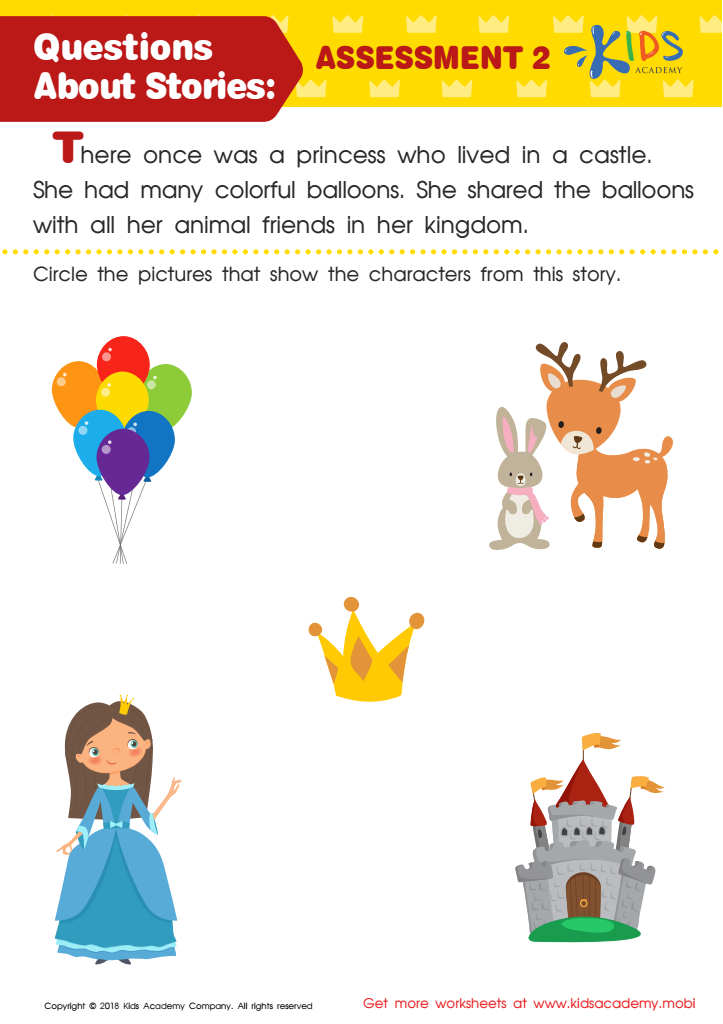
Questions About Stories: Assessment 2 Worksheet
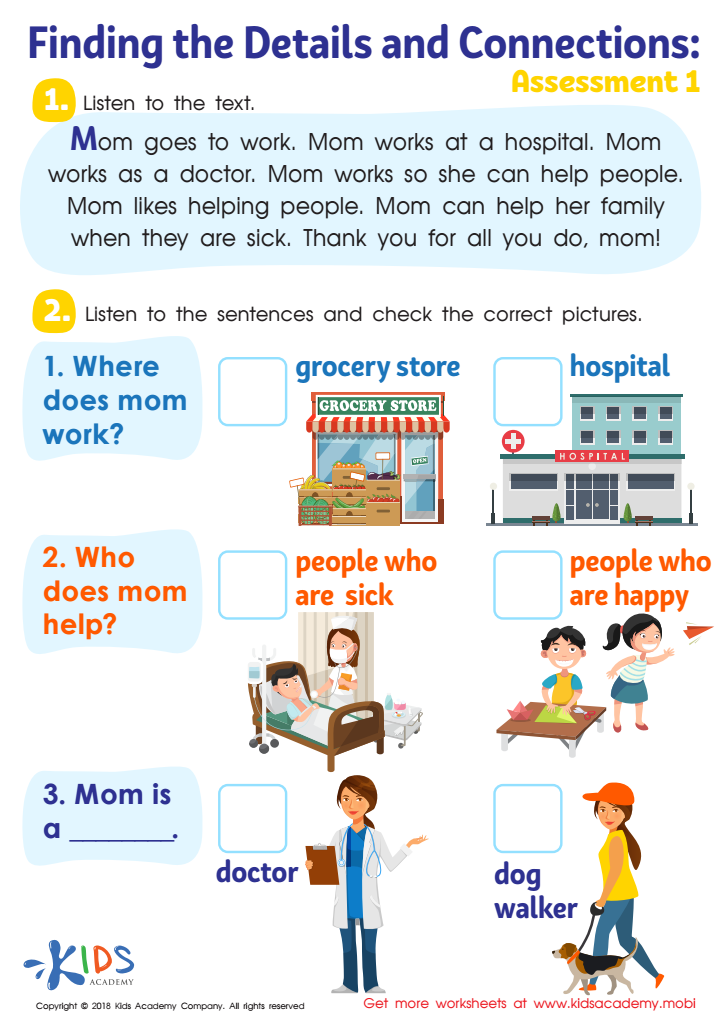
Finding the Details and Connections: Assessment 1 Worksheet
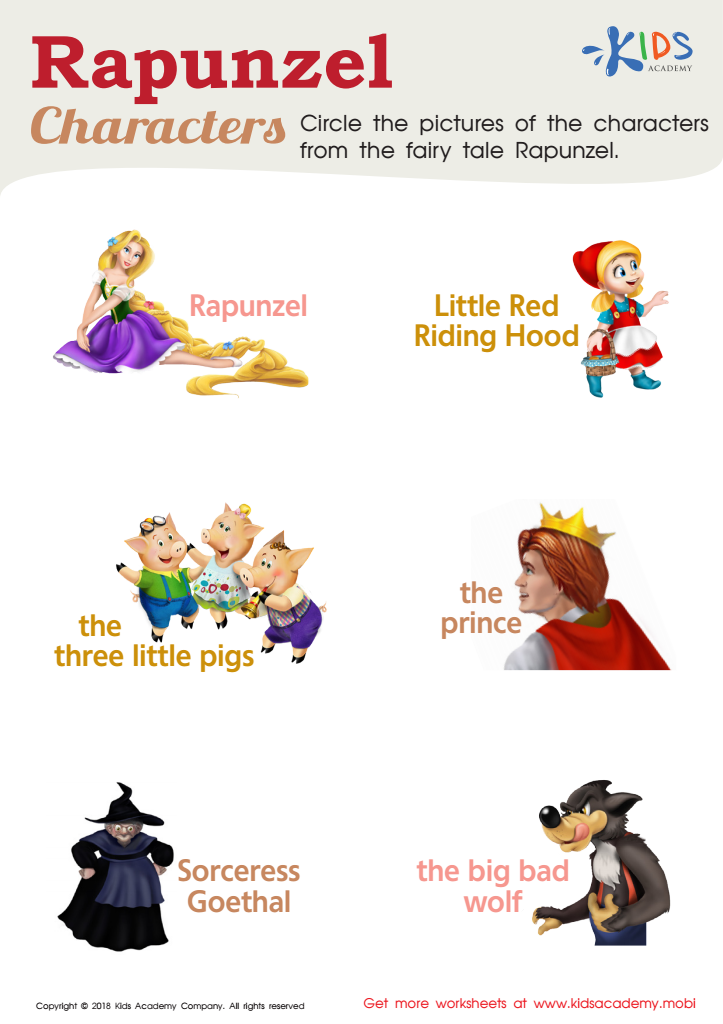
Rapunzel Characters Worksheet








Parents and teachers should recognize the value of developing analytical skills in children aged 4 to 8 through reading fiction. At this age, children are naturally curious and begin to engage with stories, which presents a prime opportunity to enhance their critical thinking abilities. Analytical skills, such as identifying main ideas, making inferences, and predicting outcomes, are crucial as they form the foundation for future learning.
Reading fiction encourages imagination and creativity while prompting children to think deeply about characters’ motivations, settings, and plots. Teachers can introduce questions before, during, and after reading to stimulate discussions, helping children develop reasoning skills and the ability to articulate their thoughts. For example, asking why a character made a particular decision can lead to understanding cause-and-effect relationships.
Moreover, fostering analytical skills through storytime creates a rich literacy experience that extends beyond the classroom. Children who learn to analyze and discuss stories are better equipped to tackle complex texts later in their academic journey, enhancing their overall comprehension. In essence, cultivating these skills early prepares children not only for reading but also for problem-solving in everyday situations, helping them become more effective learners and communicators in an increasingly complex world.







