
Vocabulary development Normal Reading Fiction Worksheets for Ages 4-8
5 filtered results
Difficulty Level
Grade
Age
-
From - To
Subject
Activity
Standards
Boost your child’s language skills with our Vocabulary Development Normal Reading Fiction Worksheets designed for kids ages 4-8. These engaging and educational worksheets from Kids Academy offer younger learners a fun way to expand their vocabulary while enjoying captivating fictional stories. Our specially crafted materials promote active learning through a variety of exciting activities, including word matching, sentence completion, and creative illustrations. Help your child build a strong vocabulary foundation and love for reading with these expertly designed worksheets. Ideal for homeschoolers, educators, and parents seeking additional practice, our worksheets make learning new words both enjoyable and effective.
Favorites
With answer key
Interactive
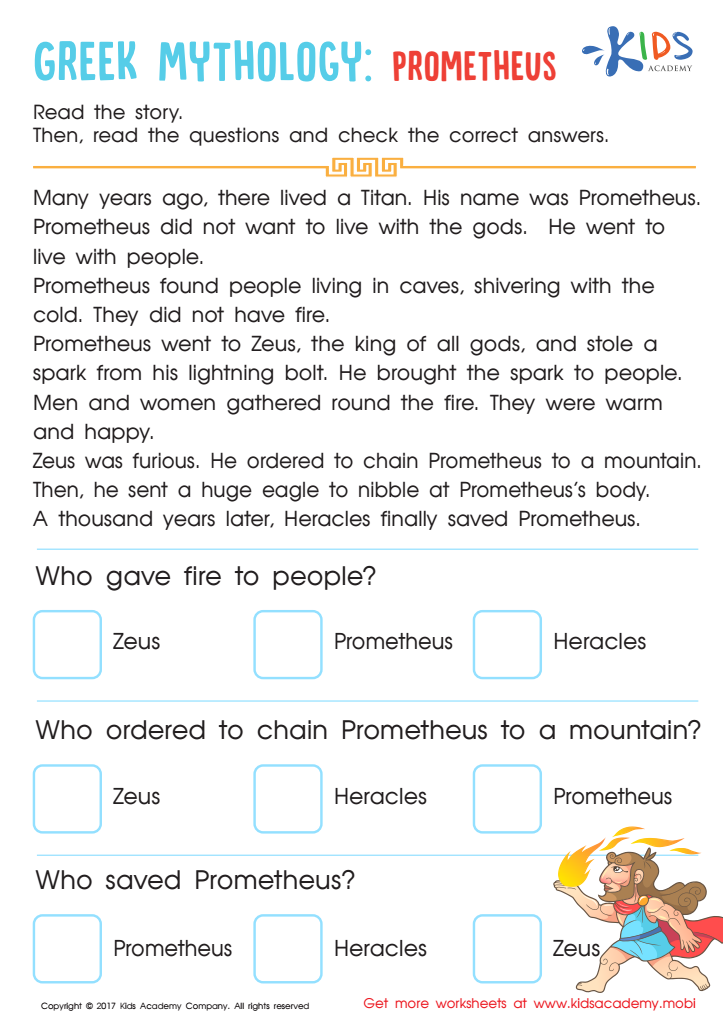
Prometheus Story Worksheet
Help kids improve reading comprehension with this Prometheus story worksheet! Learn about this classic mythological tale and break down the plot into understandable parts. By doing so, children will understand the story each step of the way.
 Assign to My Students
Prometheus Story Worksheet
Worksheet
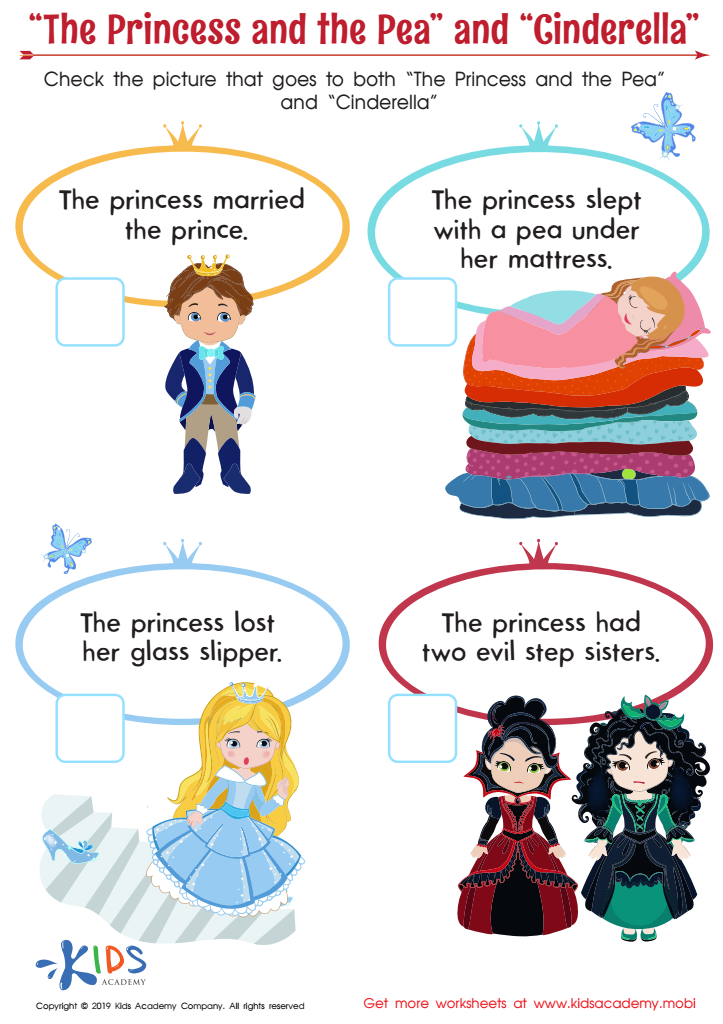
“The Princess and the Pea” and “Cinderella” Worksheet
Read "Cinderella" and "The Princess and the Pea" to your little ones. Ask them what their favorite parts were and what similarities they found in the princesses. This worksheet has four pictures of scenes from the stories. Ask your kids which picture goes with both tales.
“The Princess and the Pea” and “Cinderella” Worksheet
Worksheet
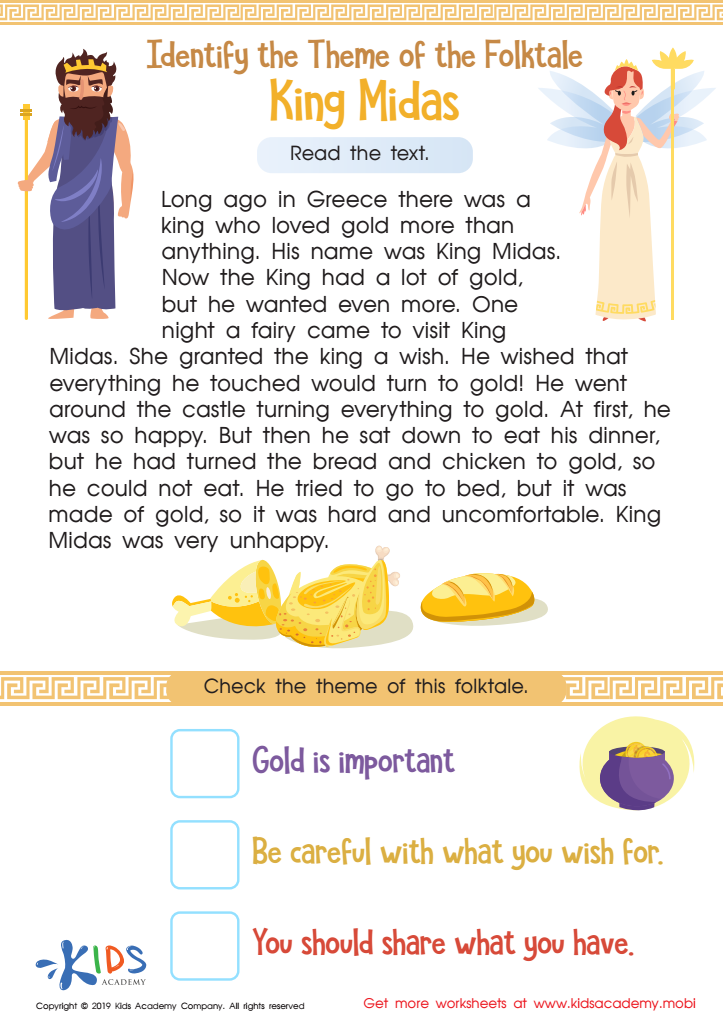
King Midas Worksheet
Read the ancient Greek history of King Midas to your kids. If they're into Greek gods and mythology, they'll be excited to complete the exercise. Read the text carefully, and if needed, twice. Help your kids locate the story's theme at the bottom of the page. 80 words.
King Midas Worksheet
Worksheet
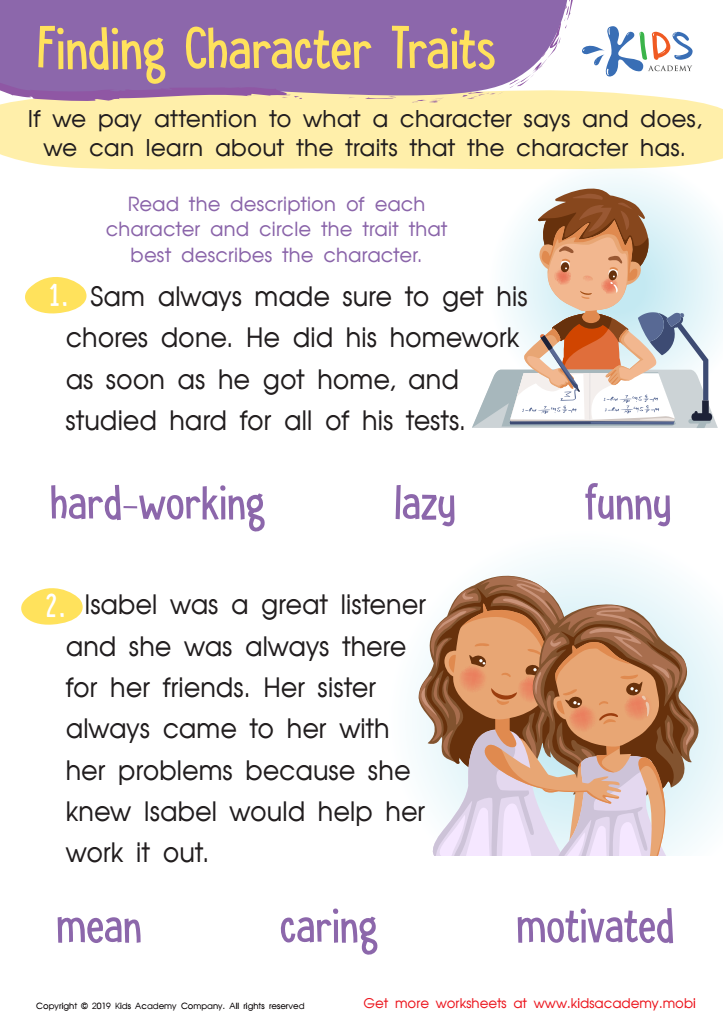
Finding Character Traits Worksheet
Before you start, make sure your kids know the difference between a character trait and a feeling. Traits are part of a character's entire personality and can be inferred from what they say and do in a story. Read the character descriptions on the worksheet and help your kids circle the best trait for each.
Finding Character Traits Worksheet
Worksheet
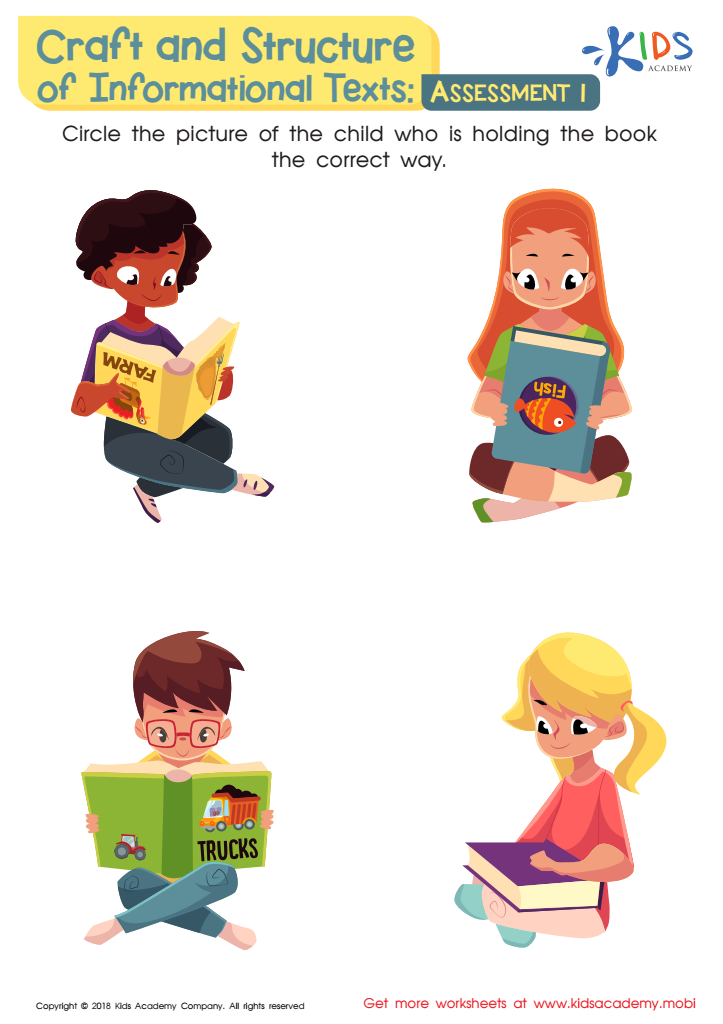
Craft and Structure of Informational Texts: Assessment 1 Worksheet
Young children need to know how to hold books correctly when they start reading. This assessment worksheet helps them show they know what to do. They'll look at the pictures and circle the child who is holding the book correctly. It's a great way to tell they are well on their way to becoming lifetime readers!
Craft and Structure of Informational Texts: Assessment 1 Worksheet
Worksheet
Join Kids Academy for Free
Who is primarily going to use this learning content?




.jpg)



Vocabulary development is crucial for young children aged 4-8 because it underpins their overall learning and cognitive growth. During these formative years, children are like sponges, rapidly absorbing new words and concepts. A broad and rich vocabulary enables children to express themselves more clearly and effectively, enhancing both their social interactions and academic performance.
Reading fiction plays a critical role in this process. Fiction exposes children to new words and phrases in engaging and meaningful contexts. Stories introduce young readers to diverse settings, characters, and situations, which helps to expand their understanding of the world. The narrative structure of fiction also assists children in grasping language patterns and usages, making it easier for them to remember and use new vocabulary.
For parents and teachers, prioritizing vocabulary development through reading can lead to long-term educational benefits. A strong vocabulary foundation is linked to improved comprehension skills, better writing abilities, and higher academic achievement across various subjects. Early vocabulary growth sets the stage for more complex language skills, fostering curiosity and a love for reading. Therefore, integrating vocabulary-enriching activities and reading fiction regularly into children’s routines is essential for their holistic development and future success.







