Reading practice Normal Reading Non-Fiction Worksheets for Ages 4-8
4 filtered results
-
From - To
Discover engaging Normal Reading Non-Fiction Worksheets for Ages 4-8 that make reading practice fun and educational. These teacher-designed, age-appropriate materials feature a variety of exciting topics to boost your child’s reading and comprehension skills. Each worksheet aims to develop important literacy abilities, from understanding new vocabulary to enhancing critical thinking through real-world information. Perfect for early readers, these resources help build a solid foundation in reading non-fiction, ensuring your child gains confidence and enjoys learning. Easily accessible and printable, they are an excellent addition to any early grade curriculum, at home or in the classroom. Explore now!
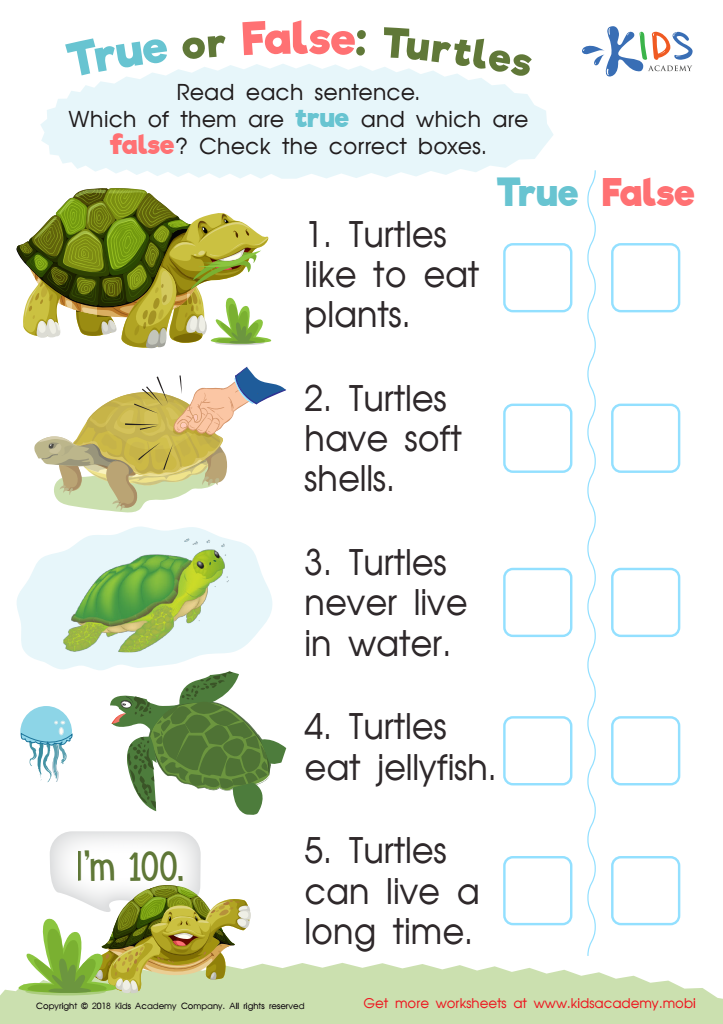
True or False: Turtles Worksheet
 Assign to My Students
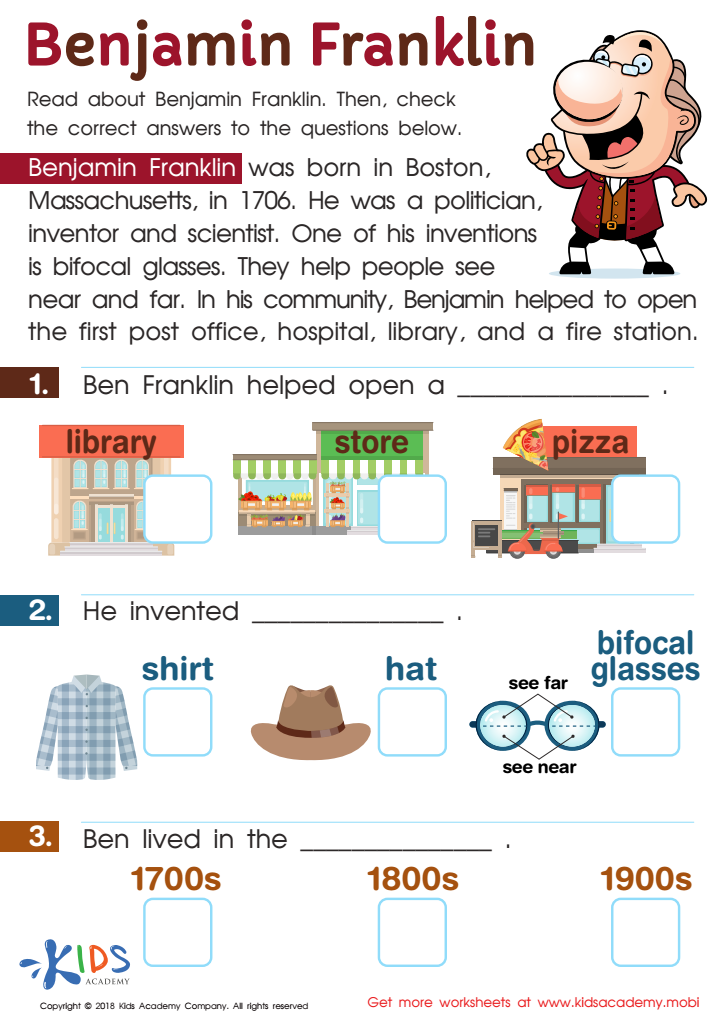
Benjamin Franklin Worksheet
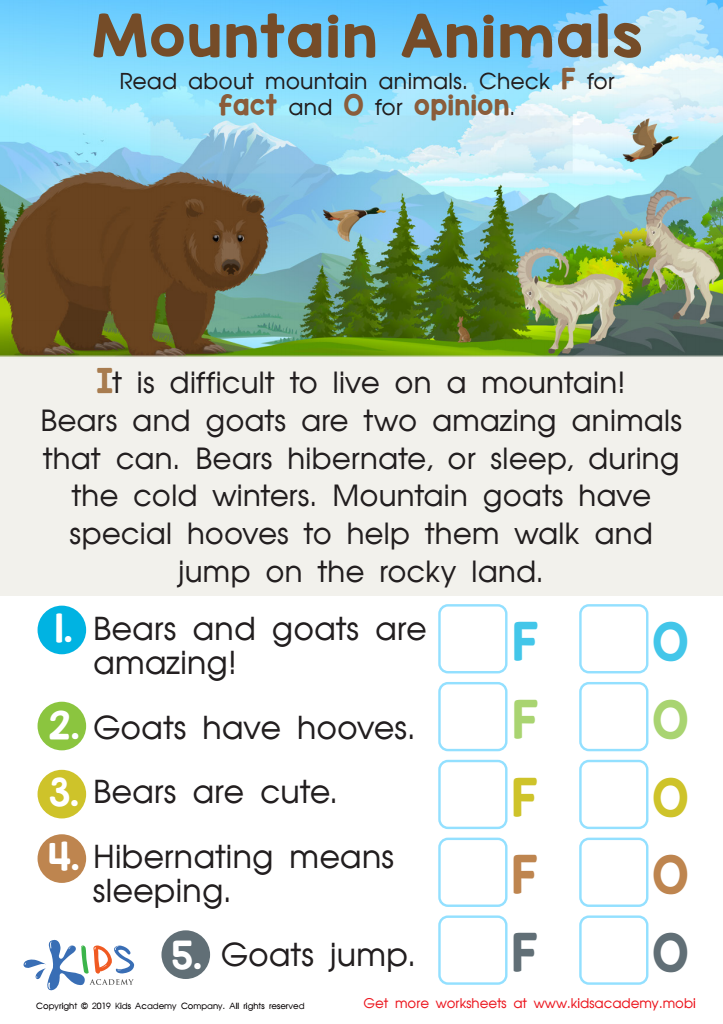
Mountain Animals Worksheet
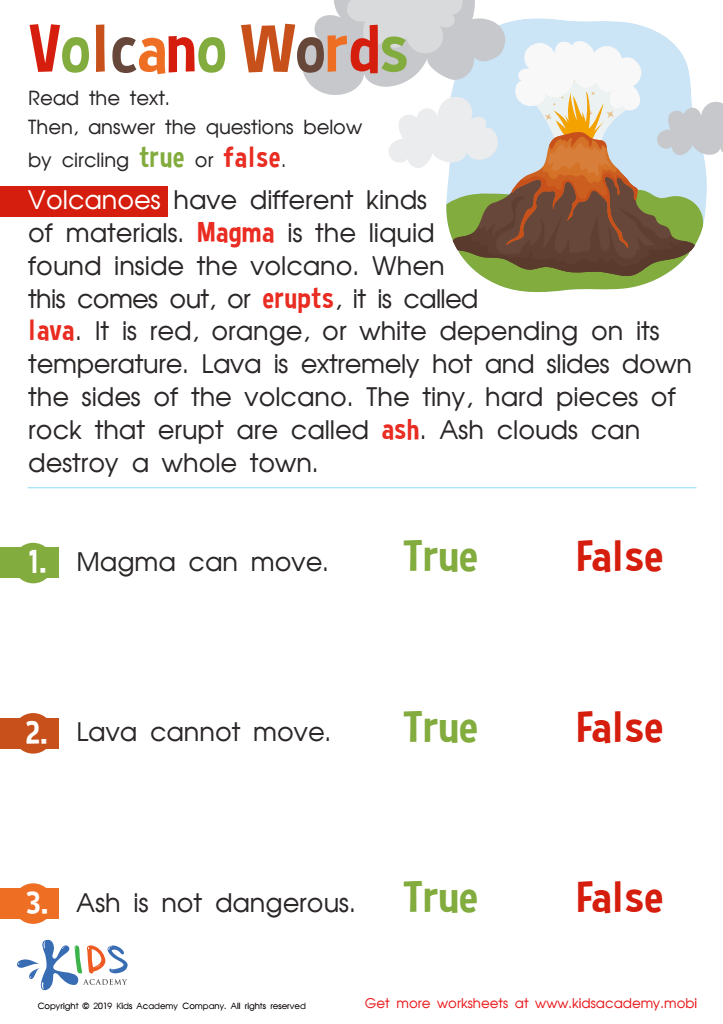
Volcano Words Worksheet








Reading practice, especially non-fiction, is crucial for children aged 4-8 for several reasons. At this early age, children's brains are rapidly developing, and reading non-fiction helps stimulate their thinking and understanding of the world. Unlike fiction, non-fiction exposes children to factual information, expanding their vocabulary and knowledge base. For example, books about animals, space, or geography introduce kids to new concepts and words they might not encounter in daily conversations or play.
Additionally, reading non-fiction helps children develop critical thinking and comprehension skills. They learn to distinguish between facts and opinions, understand different viewpoints, and identify key information—skills that are fundamentally important for academic success. Moreover, non-fiction reading materials often include text features like tables of contents, indexes, and glossaries, which teach children how to navigate and use these aids effectively.
Finally, regular reading practice fosters a lifelong love of learning. When children see reading as an enjoyable and enlightening activity, they are more likely to continue it as they grow older, facilitating continuous learning and curiosity. Parents and teachers who encourage reading non-fiction play a pivotal role in nurturing these skills and attitudes in children, setting them up for future academic and personal success.