Rhyming skills development Normal Rhyming Words Worksheets for Ages 4-8
3 filtered results
-
From - To
Enhance your child's language development with our Normal Rhyming Words Worksheets designed for ages 4-8! These engaging worksheets promote the essential skill of recognizing and producing rhyming words, making learning both fun and effective. By encouraging phonemic awareness, children will improve their reading, spelling, and vocabulary while enjoying interactive activities. Perfect for home or classroom use, our worksheets offer a variety of exercises that cater to different learning styles. Help your little ones build a strong foundation in literacy as they explore the joyful world of rhymes. Download our worksheets today and watch your child's confidence soar!
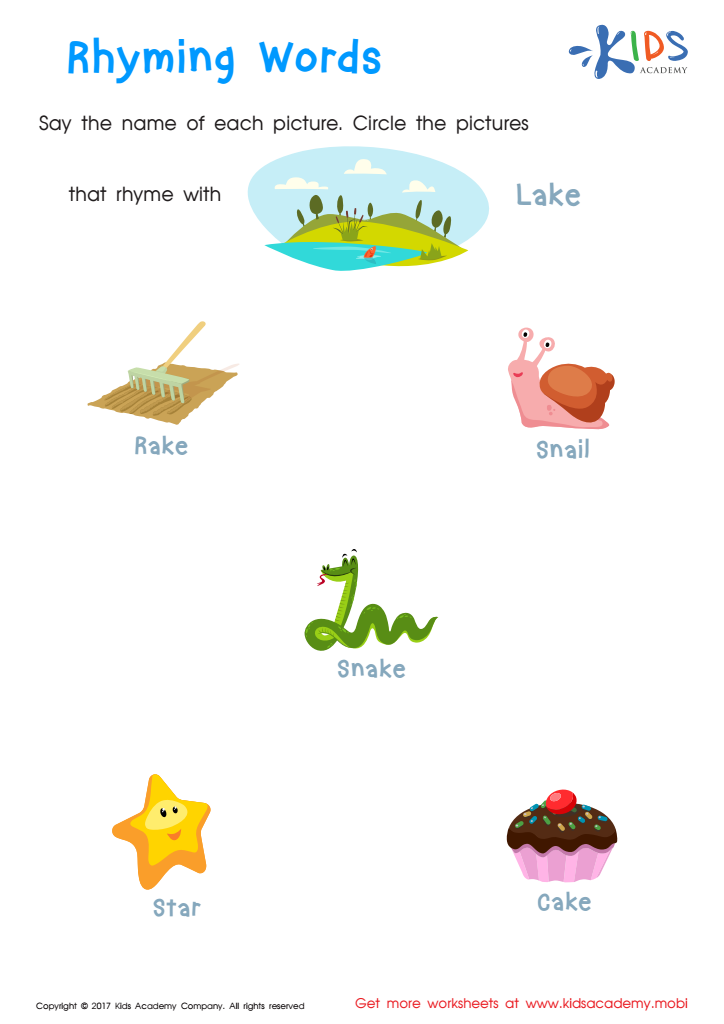
Rhyming Words Rhyming Worksheet
 Assign to My Students
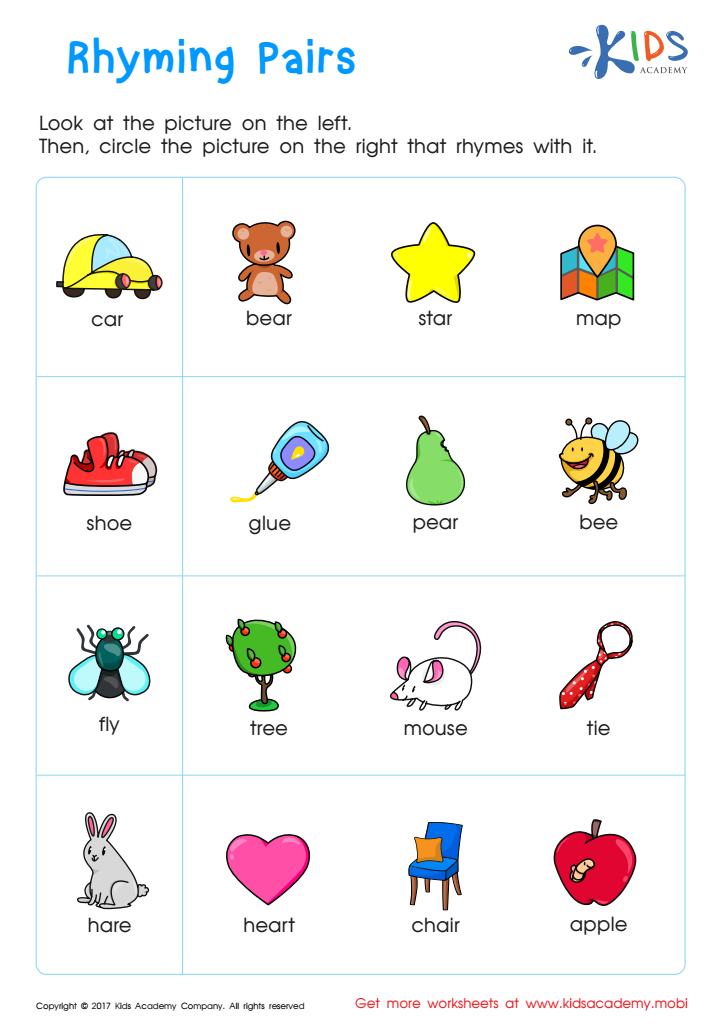
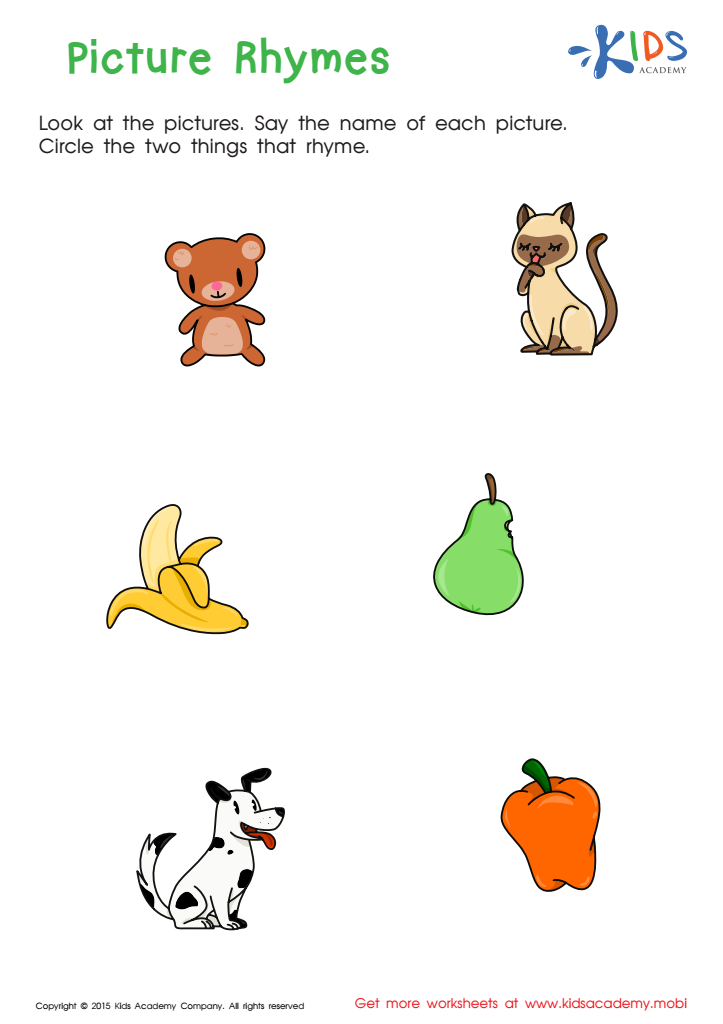
First Words: Picture Rhymes Worksheet







Rhyming skills are fundamental to early literacy and language development for children ages 4-8. Parents and teachers should prioritize these skills because they play a crucial role in enhancing phonemic awareness, which is the ability to recognize and manipulate sounds in words. This awareness is essential for learning to read, as it helps children decode unfamiliar words.
By engaging with rhyming words, children develop the ability to identify sounds, syllables, and the rhythm of language. Activities like reading rhyming books, singing songs, and playing word games encourage active listening and verbal experimentation, making learning both enjoyable and effective.
Furthermore, rhyming fosters cognitive skills such as memory and pattern recognition. Children learn to make connections between words and their meanings, expanding their vocabulary and comprehension. This lays the groundwork for more complex language structures as they grow.
Additionally, rhyming activities promote social interactions and cooperative play, reinforcing communication skills. By nurturing rhyming skills at an early age, parents and teachers instill a love of language and literacy that can cultivate a lifelong learning journey. In essence, emphasizing rhyming not only supports academic achievement but also enriches children's emotional and cognitive development.