Animal Classification Normal Animals Worksheets for Ages 4-8
6 filtered results
-
From - To
Discover our engaging Animal Classification Worksheets, perfect for kids aged 4-8! These fun and colorful resources help young learners explore the fascinating world of animals by categorizing them into groups like mammals, birds, reptiles, and more. Our worksheets encourage critical thinking, enhance observation skills, and promote understanding of animal characteristics and habitats. Designed for early grade teachers and parents, these printable activities make learning enjoyable and interactive. Stimulate your child's curiosity with hands-on exercises that foster a love for science and nature. Dive into the realm of animals and watch your child develop essential classification skills today!
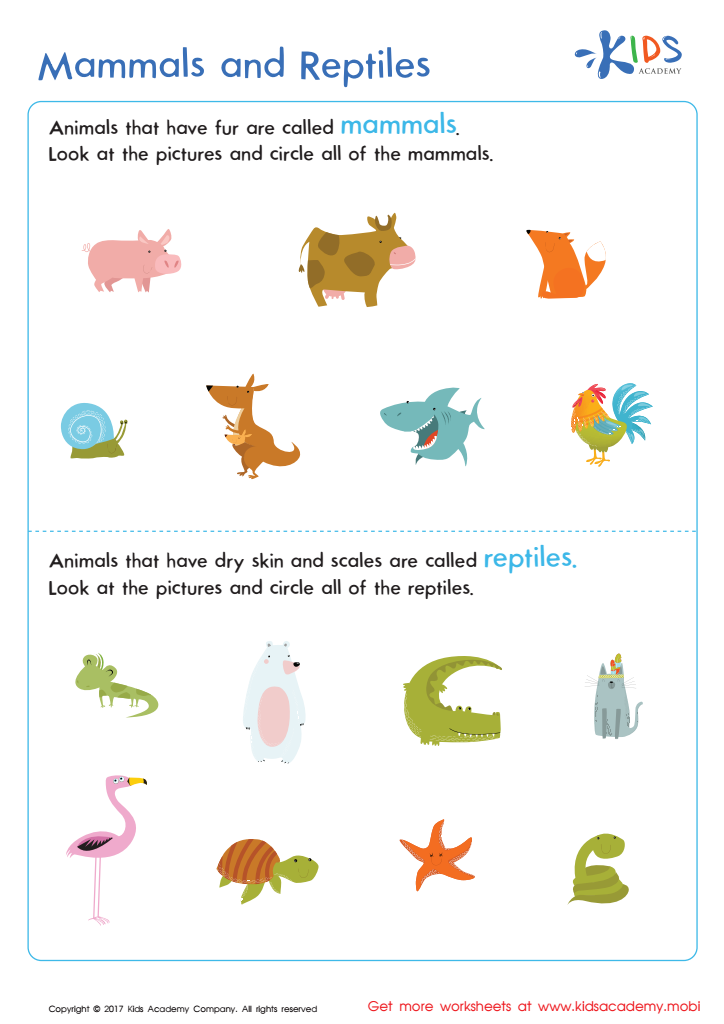
Mammals and Reptiles Worksheet
 Assign to My Students
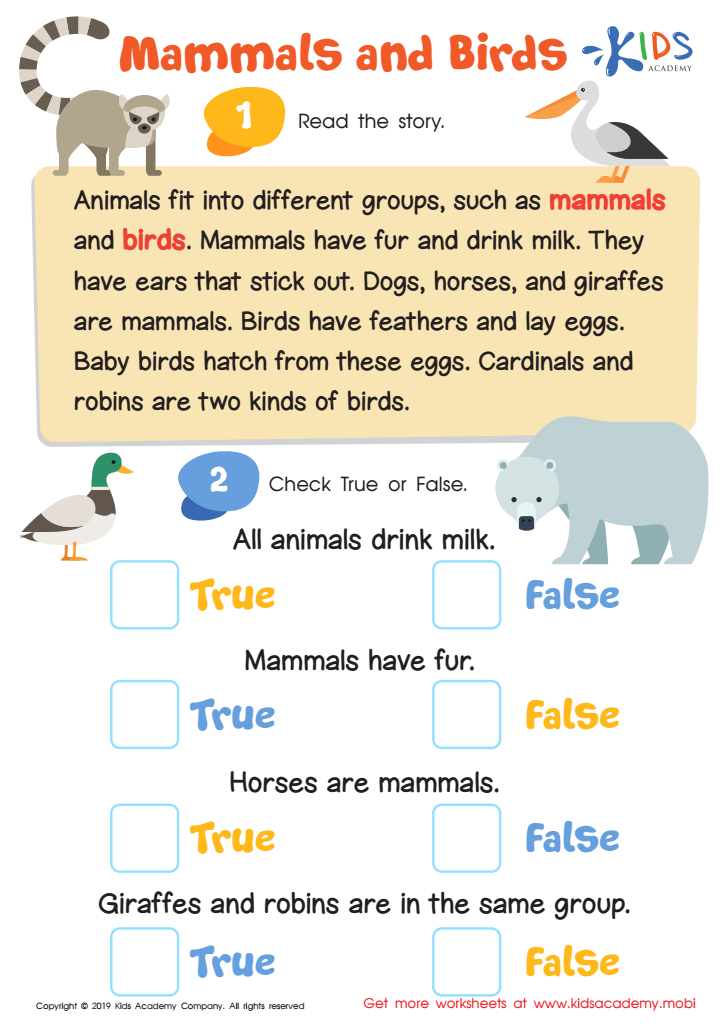
Mammals and Birds Worksheet
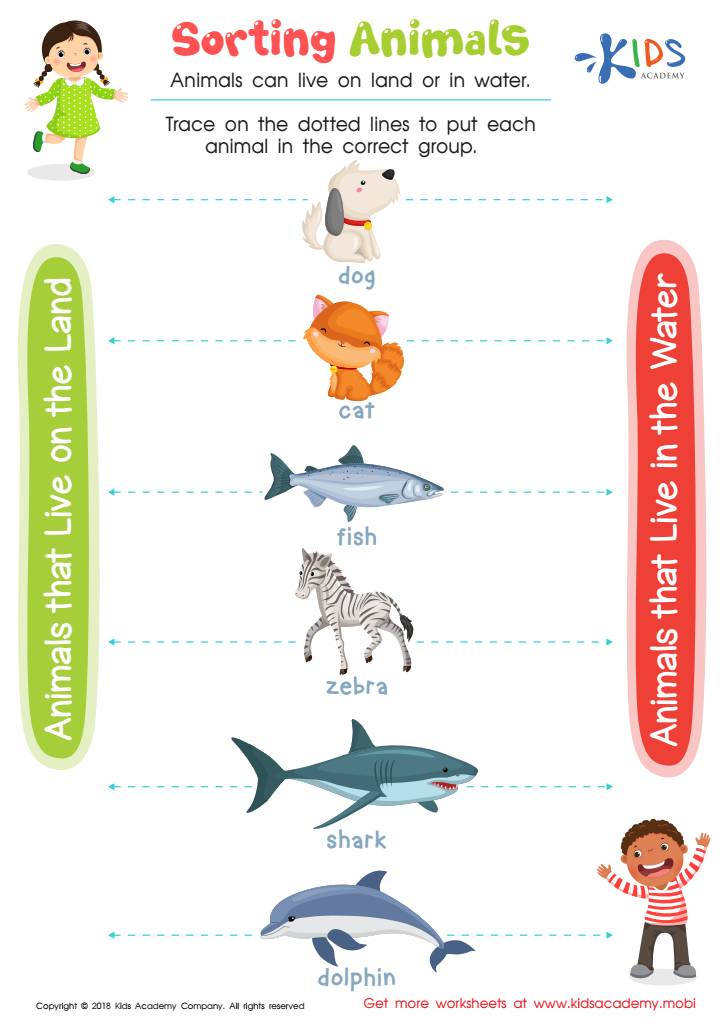
Sorting Animals Worksheet
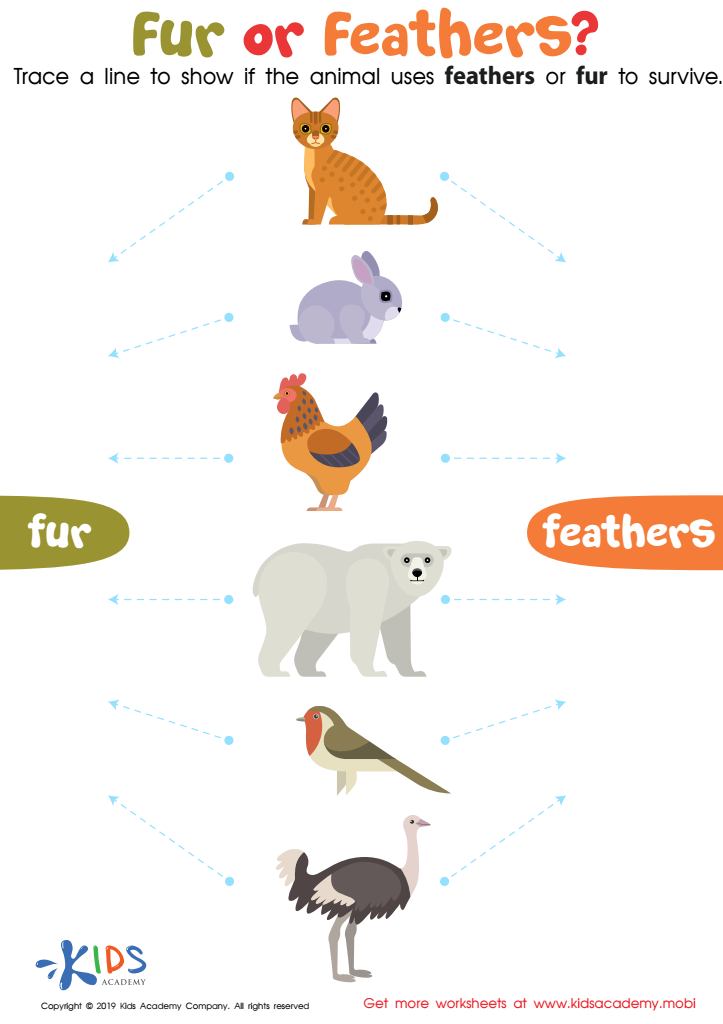
Fur or Feathers? Worksheet
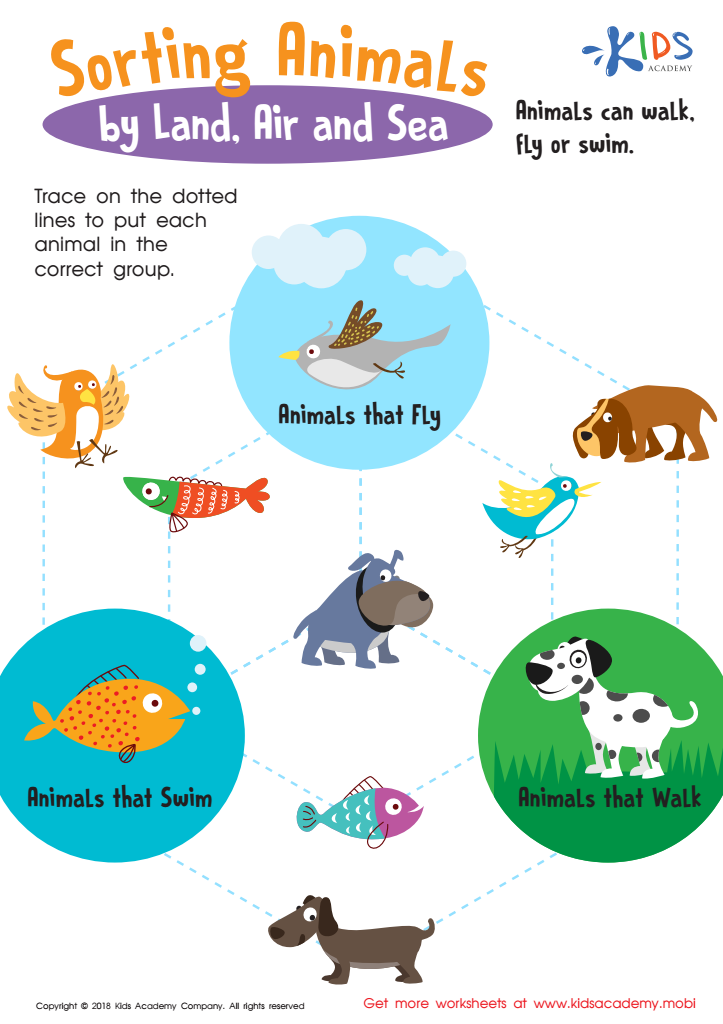
Sorting Animals by Land, Air and Sea Worksheet
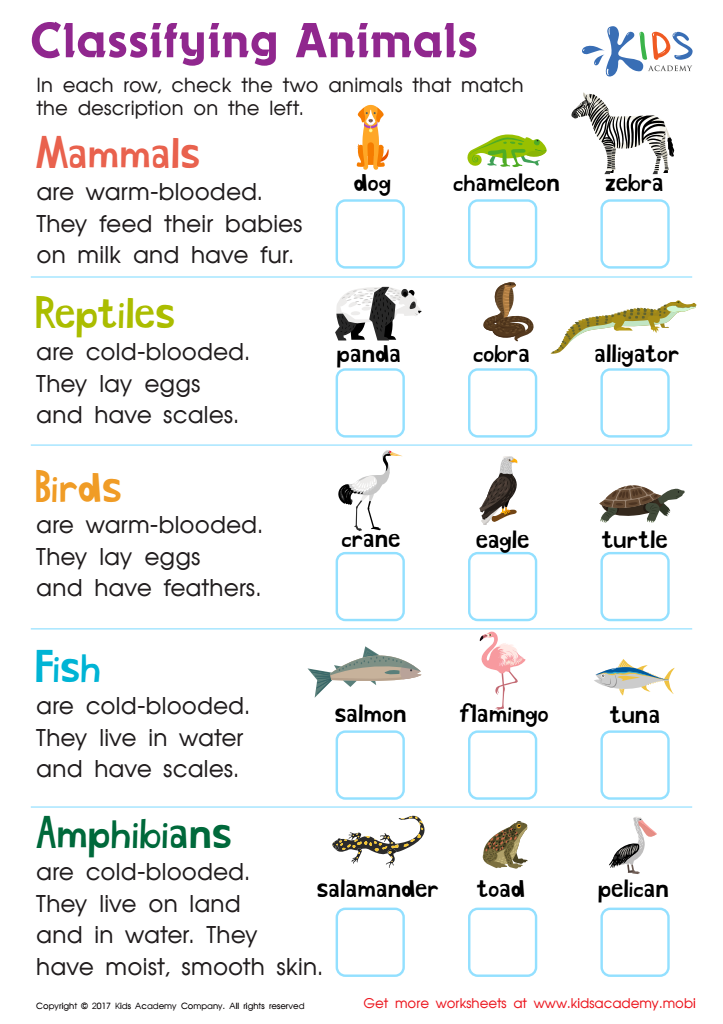
Classifying Animals Worksheet






Animal classification is essential for young learners aged 4-8 because it lays the groundwork for understanding the natural world. By introducing children to how animals are categorized—into groups like mammals, birds, reptiles, amphibians, and fish—they begin to understand the diversity and complexity of life around them. This knowledge fosters curiosity and encourages exploration, making learning dynamic and fun.
Moreover, understanding animal classification cultivates critical thinking skills. Children learn to observe and identify animal characteristics, promoting analytical skills as they categorize different species. It also helps them appreciate the unique traits and habitats of various animals, which can inspire a sense of empathy and respect for wildlife.
Additionally, teaching animal classification supports broader educational goals. It ties into subjects like science, language arts, and environmental education, making it a versatile topic. Lessons can incorporate hands-on activities like sorting animals, reading stories about different species, or exploring local habitats, engaging multiple learning styles.
Ultimately, by caring about animal classification, parents and teachers nurture children’s cognitive, emotional, and social development, fostering a generation that values nature, biodiversity, and environmental stewardship. This early foundation is crucial for future learning and understanding of wider ecological issues.








