Vocabulary Building Normal Animals Worksheets for Ages 4-8
4 filtered results
-
From - To
Boost your child’s vocabulary with our Vocabulary Building Worksheets focused on normal animals, designed specifically for ages 4-8! These engaging and educational worksheets feature colorful illustrations and relatable animal themes that captivate young learners. Each activity is crafted to enhance language skills, encouraging children to discover new words associated with various animals while developing their reading comprehension abilities. With fun exercises and clear instructions, your child will enjoy exploring and expanding their vocabulary in an interactive way. Perfect for home or classroom use, these worksheets are essential tools for fostering a love of learning in young minds. Start learning today!
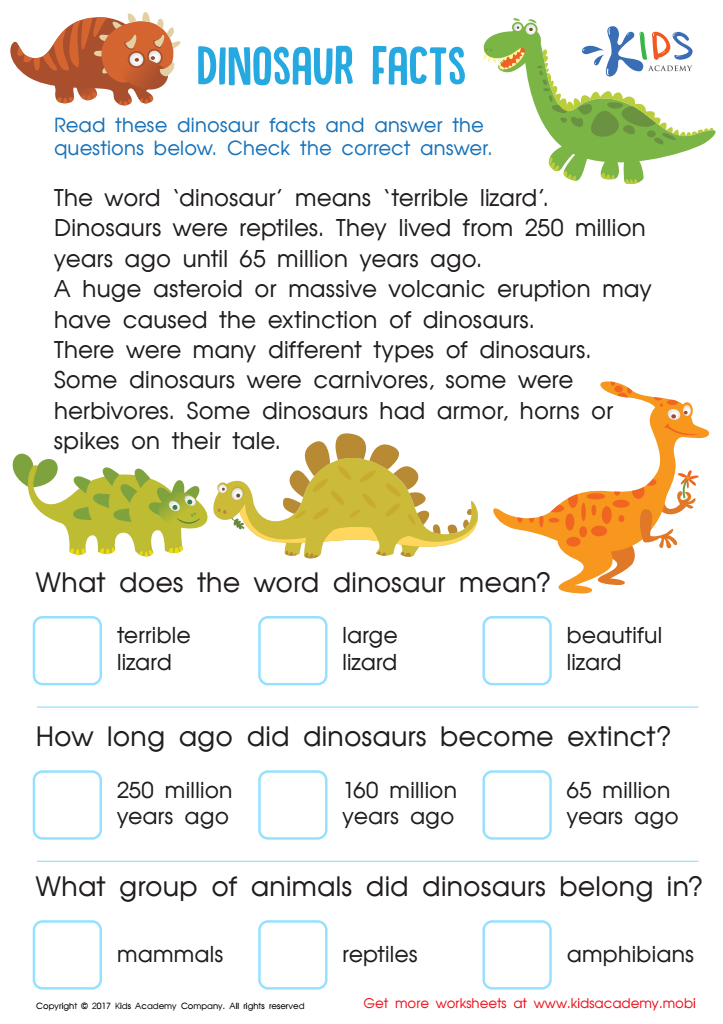
Dinosaur Facts Worksheet
 Assign to My Students
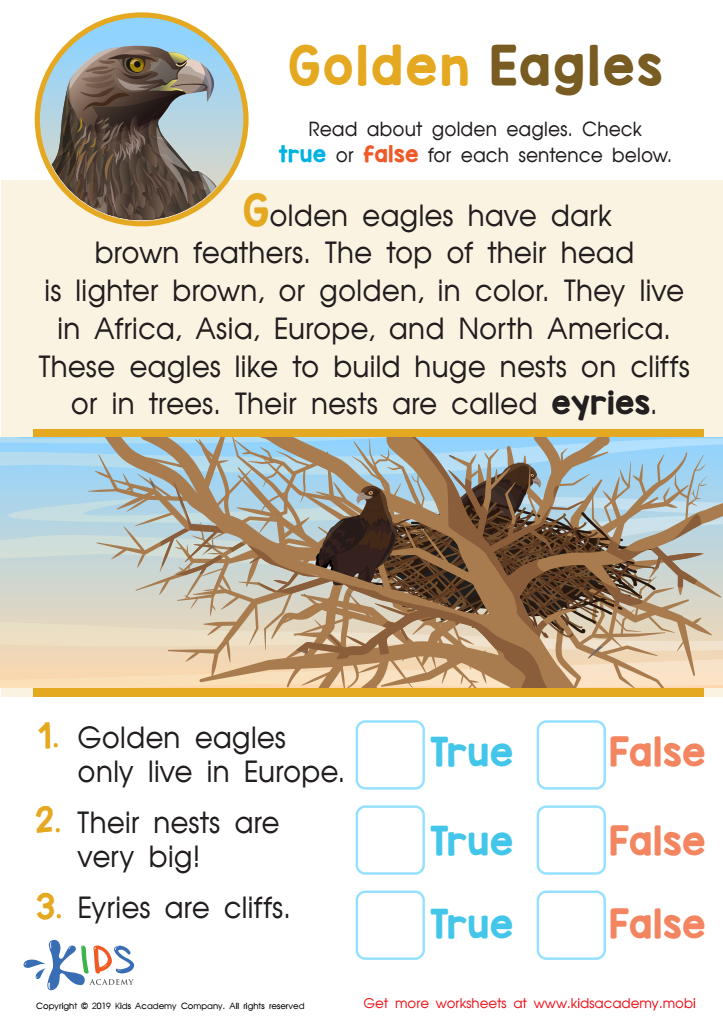
Golden Eagles Worksheet
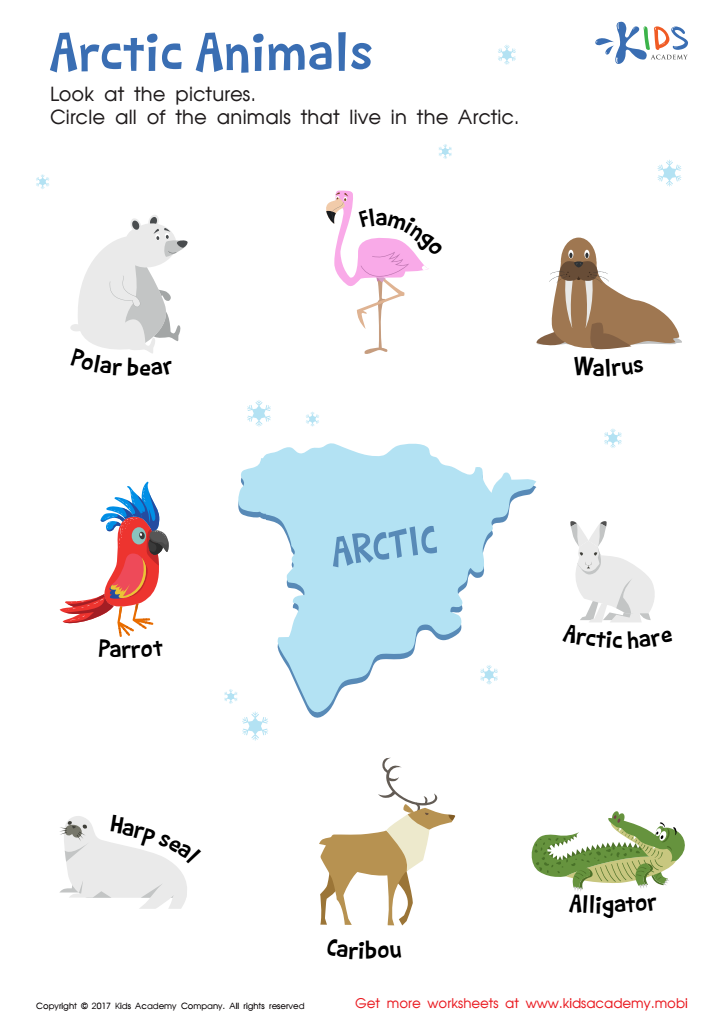
Arctic Animals Worksheet
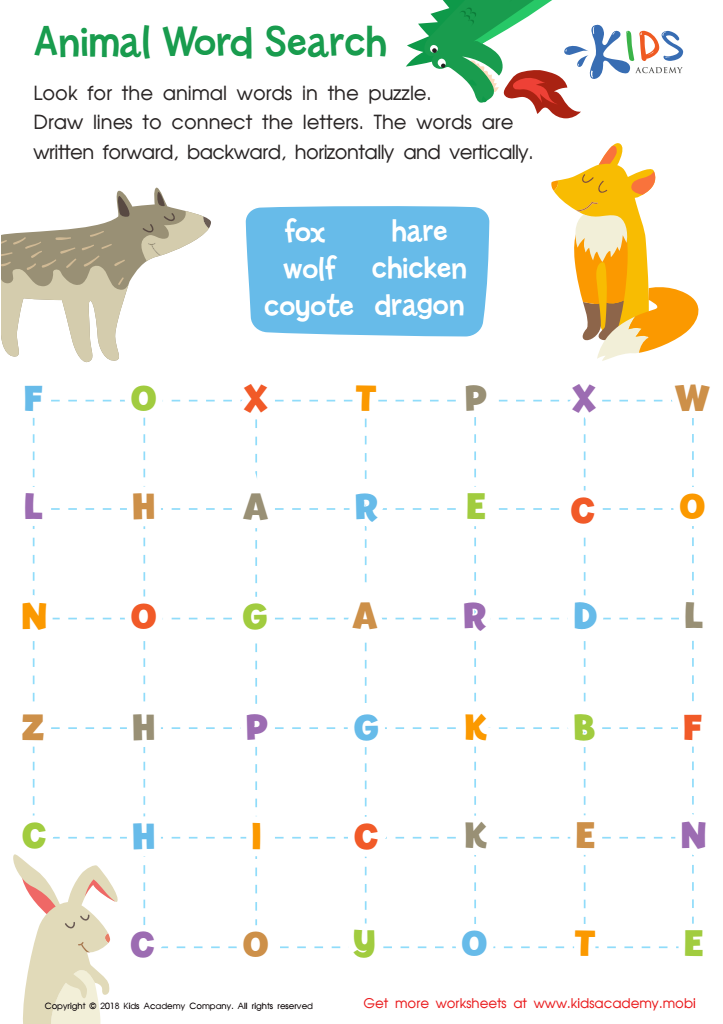
Animal Word Search Worksheet








Vocabulary building is essential for children ages 4-8, especially when it comes to understanding normal animals. At this developmental stage, children are naturally curious about the world around them, including the diverse animal kingdom. Introducing vocabulary related to animals not only enhances language skills but also enriches their cognitive and social development.
Children who learn specific terms related to animals, such as names, habitats, behaviors, and characteristics, are better equipped to engage in conversations, express their thoughts, and ask questions. This vocabulary acquisition lays a strong foundation for literacy skills while fostering a love for reading and learning.
Moreover, understanding vocabulary related to animals enhances children’s critical thinking and observational skills. As they learn about animals and their environments, kids can make connections to nature, science, and ecology, encouraging a sense of responsibility towards the environment and promoting empathetic behavior.
For parents and teachers, focusing on vocabulary building not only supports academic success but also nurtures creativity and imagination through storytelling and play. Investing time in learning about normal animals instills confidence, enhances self-expression, and encourages curiosity. Therefore, vocabulary building in this area should be a priority for caregivers and educators alike.








