Understanding magnetism Normal Science Worksheets for Ages 4-8
4 filtered results
-
From - To
Explore the captivating world of magnetism with our "Understanding Magnetism Normal Science Worksheets" tailored for young scientists aged 4-8. These engaging, printable worksheets provide a hands-on approach to learning the fundamental principles of magnetism. Children will discover how magnets attract and repel, identify magnetic and non-magnetic objects, and understand the various uses of magnets in everyday life. Designed to stimulate curiosity and foster a love for science, these worksheets combine fun activities with educational value. Perfect for both classroom and home environments, they are a fantastic resource to ignite a child's natural inclination towards exploration and discovery.
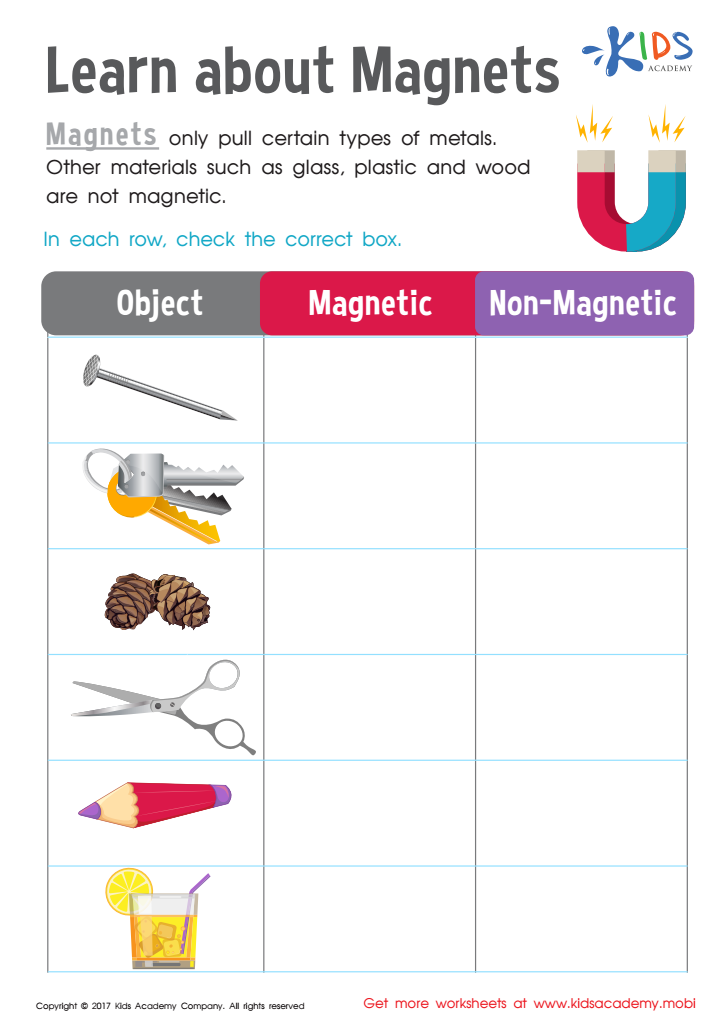
Magnetic Or Not Worksheet
 Assign to My Students
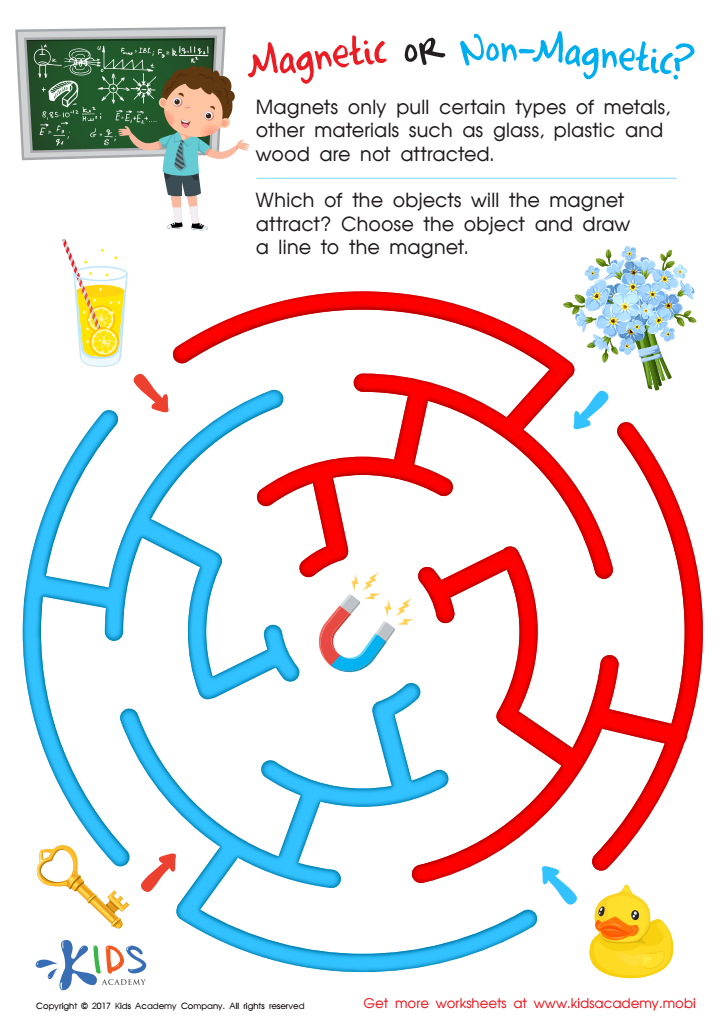
Magnetic or Non–Magnetic Worksheet
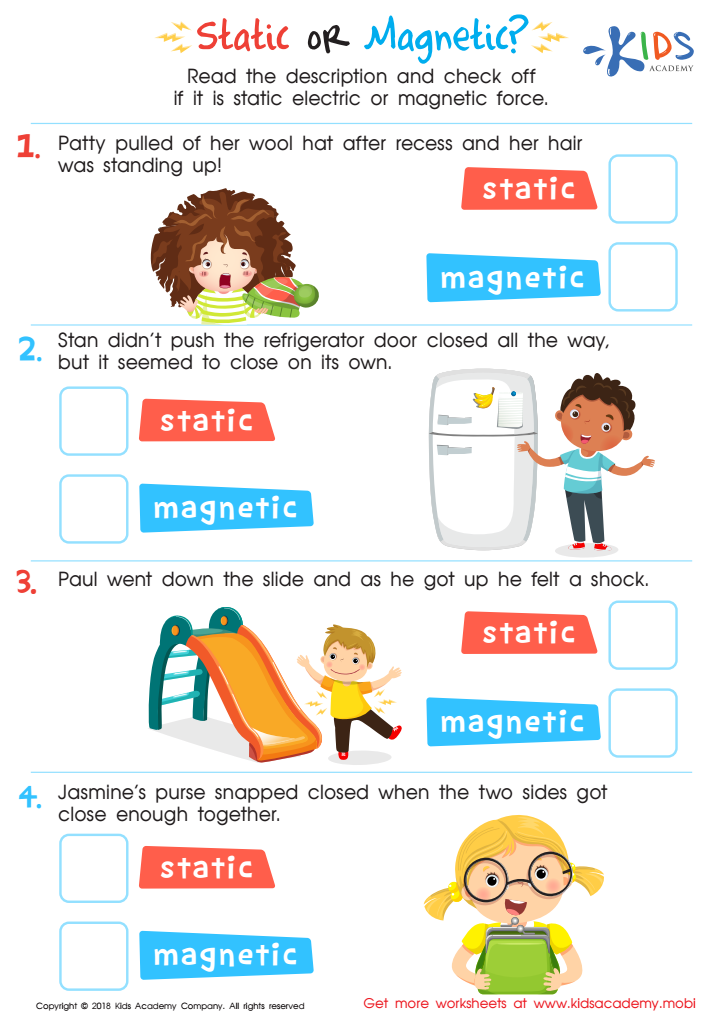
Static or Magnetic Printable Worksheet
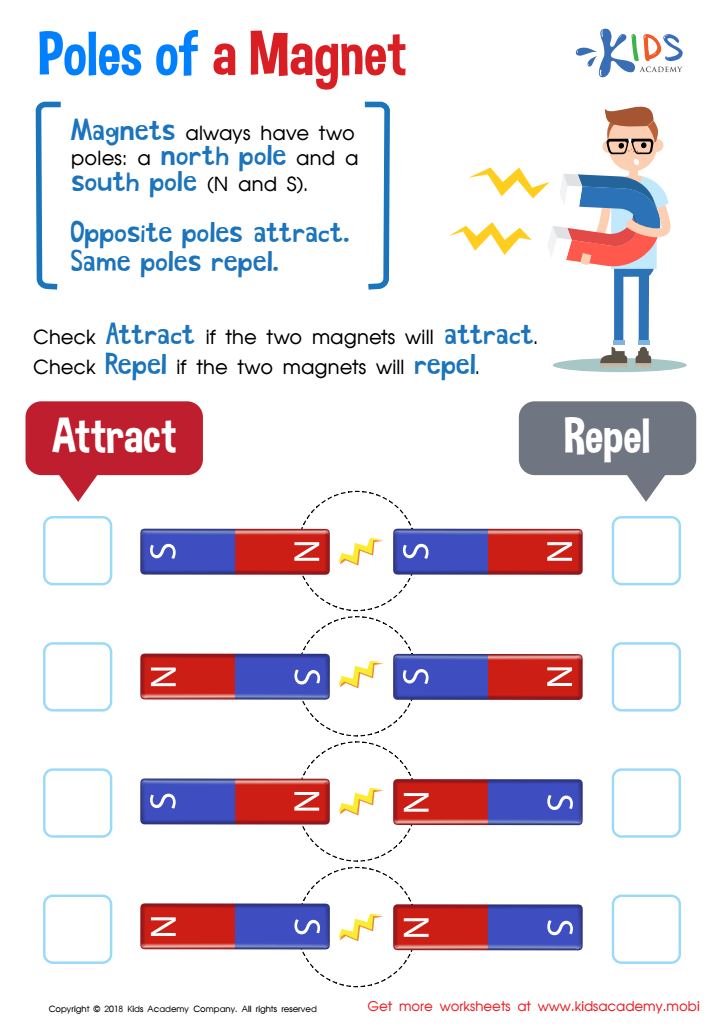
Magnet Poles Attract or Repel Worksheet








Understanding magnetism is an exciting and fundamental part of science education, especially for young children aged 4-8. Grappling with concepts like magnetism is not only essential for building a strong scientific foundation but also captivates children's curiosity and imagination.
First, learning about magnetism touches on key scientific principles that underpin more complex ideas later on. It's a gateway to understanding forces, fields, and polarity—all critical concepts in physics. By exploring how magnets attract and repel each other, children develop a practical understanding of force and motion.
Second, hands-on activities involving magnets foster critical thinking and problem-solving skills. Children naturally engage in simple experiments, making predictions, observing outcomes, and drawing conclusions. This experiential learning is crucial for cognitive development and encourages scientific inquiry from an early age.
Furthermore, magnetism can be demonstrated with everyday objects, making it highly accessible. Activities like picking up paperclips with a magnet or watching how magnets interact with various materials are not only educational but also very engaging.
Lastly, understanding magnetism can nurture a lifelong interest in science. Positive early experiences with simple scientific concepts can inspire children to pursue further education and careers in STEM fields.
Through playful exploration and guided instruction, parents and teachers can open up a world of discovery for young learners, laying a vital groundwork for future scientific learning.







