Understanding moon phases Normal Science Worksheets for Ages 4-8
3 filtered results
-
From - To
Discover our engaging "Understanding Moon Phases" science worksheets, designed specifically for kids ages 4-8. These printable activities make learning about lunar cycles fun and interactive. Each worksheet features attractive illustrations and simple explanations to help young learners grasp the different phases of the moon, enhancing their observational skills and scientific curiosity. Perfect for classroom use or at-home learning, our worksheets support foundational science education. Cultivate a love for astronomy and science with these tailored educational resources, ensuring a bright learning journey for every young astronomer. Explore today and watch your child's knowledge and interest in the celestial world grow!
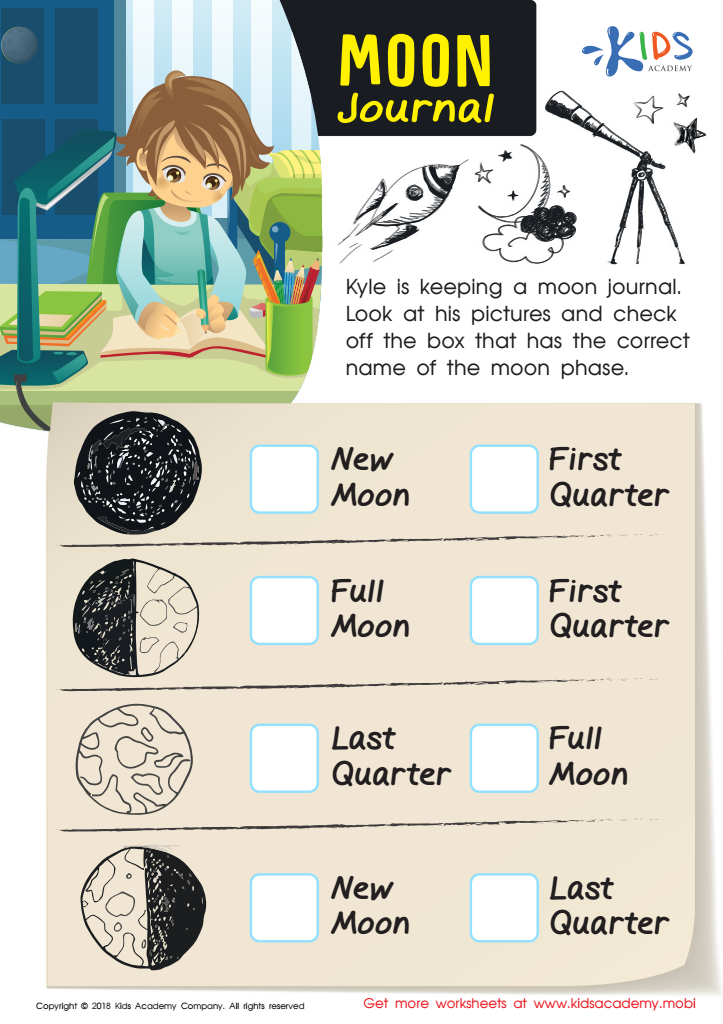
Moon Journal Worksheet
 Assign to My Students
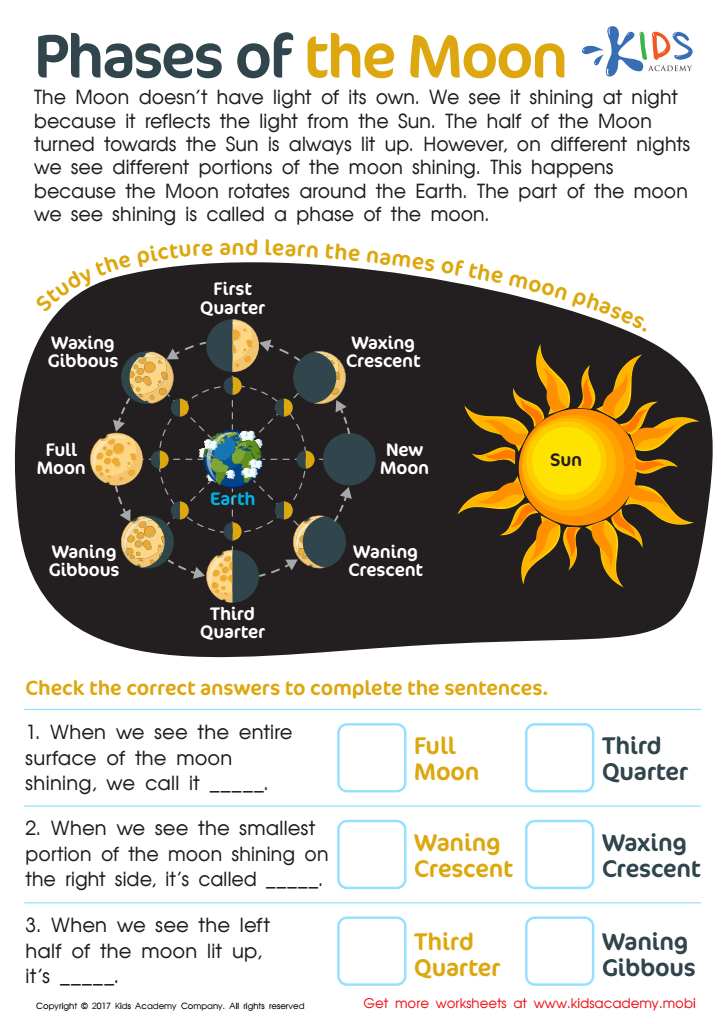
Phases of The Moon Worksheet
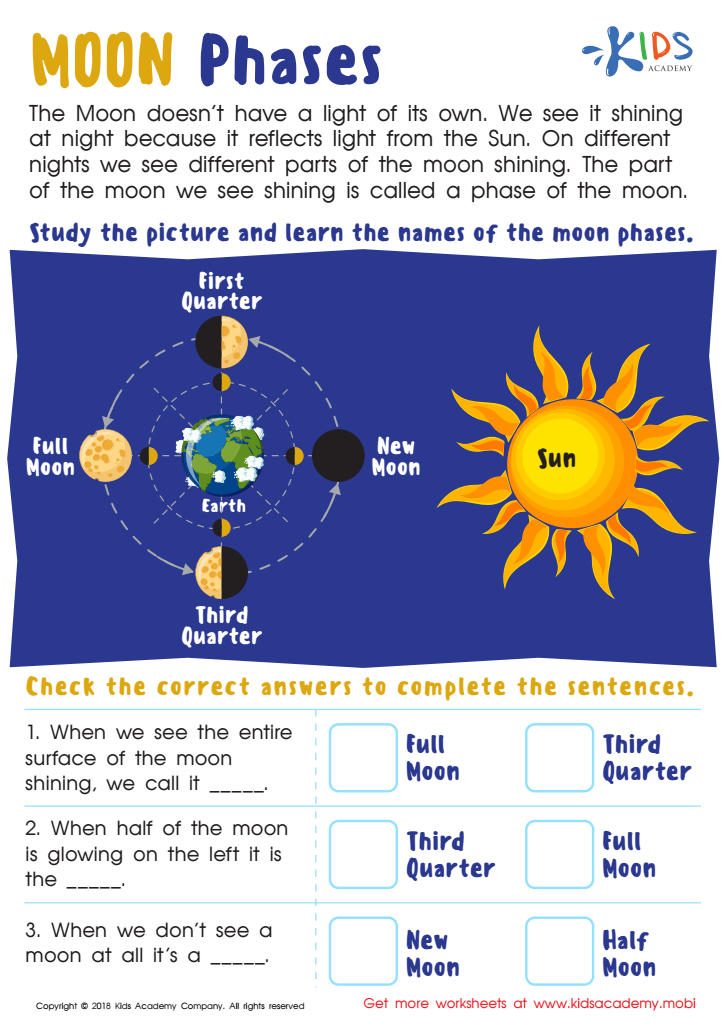
Moon Phases Worksheet






Understanding moon phases is an essential part of early science education and significant for both parents and teachers to emphasize for several reasons. First, it sparks curiosity and develops observational skills in young children. Observing the moon's changing shapes encourages kids to ask questions and notice details in the natural world, establishing a foundation for scientific thinking.
Second, learning about moon phases can be integrated into various subjects such as math, by charting the moon’s phases and counting days. It enhances their understanding of time, patterns, and sequences, building important cognitive skills.
Additionally, teaching this topic fosters a sense of wonder and connection with nature. It helps young children appreciate the environment, encouraging them to respect and care for it from an early age. The moon’s influence on tides and even some plants and animals introduces kids to larger environmental systems, making complex concepts more accessible.
Lastly, understanding moon phases can strengthen family and community bonds through shared activities like moon watching. It provides meaningful, low-cost ways for families to spend time together, nurturing relationships and creating lasting memories. For teachers, it is an engaging, hands-on way to adhere to curriculum standards while making learning fun and dynamic. Understanding moon phases, thus, is a small but impactful step in fostering lifelong learning and curiosity in young minds.







