
Weather Vocabulary Normal Science Worksheets for Ages 4-8
3 filtered results
Difficulty Level
Grade
Age
-
From - To
Subject
Activity
Standards
Introduce your young learners to the fascinating world of weather with our engaging "Weather Vocabulary Normal Science Worksheets for Ages 4-8." Designed specifically for early grade students, these worksheets help children explore and understand different weather conditions while building essential vocabulary. With colorful illustrations and age-appropriate activities, kids will learn words like sunny, rainy, windy, and snowy, making weather concepts both fun and educational. Perfect for classroom use or homeschooling, our worksheets support key learning skills and inspire curiosity about the natural world. Bring weather-related terms to life and make learning an adventure with Kids Academy!
Favorites
With answer key
Interactive
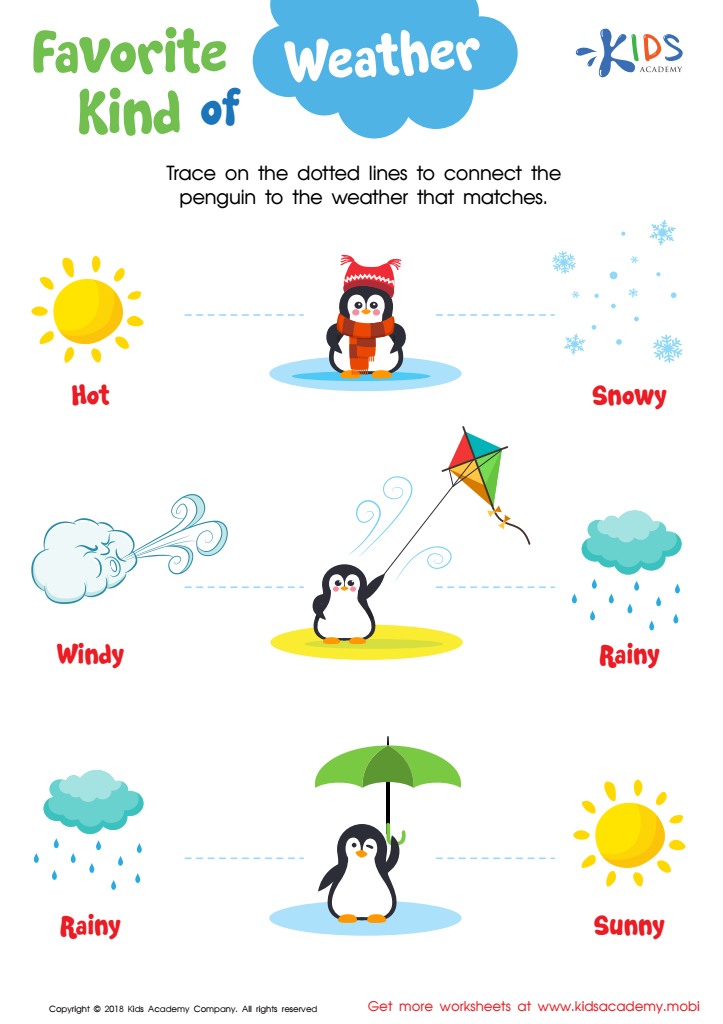
Favorite Kind of Weather Worksheet
!
Help your child understand weather and seasons with this fun worksheet featuring a cute penguin. They'll learn to recognize types of weather and associate them with seasons. To practice their fine motor skills, they'll trace lines to select the right seasons and weather. Kids will make a new friend while broadening their knowledge of nature.
Favorite Kind of Weather Worksheet
Worksheet
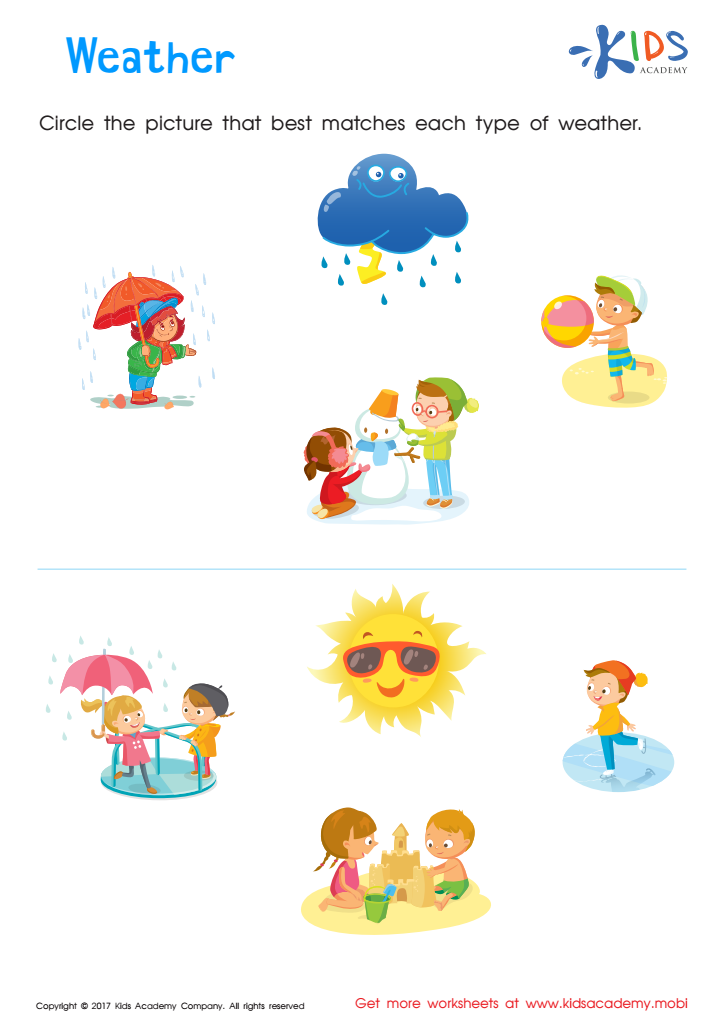
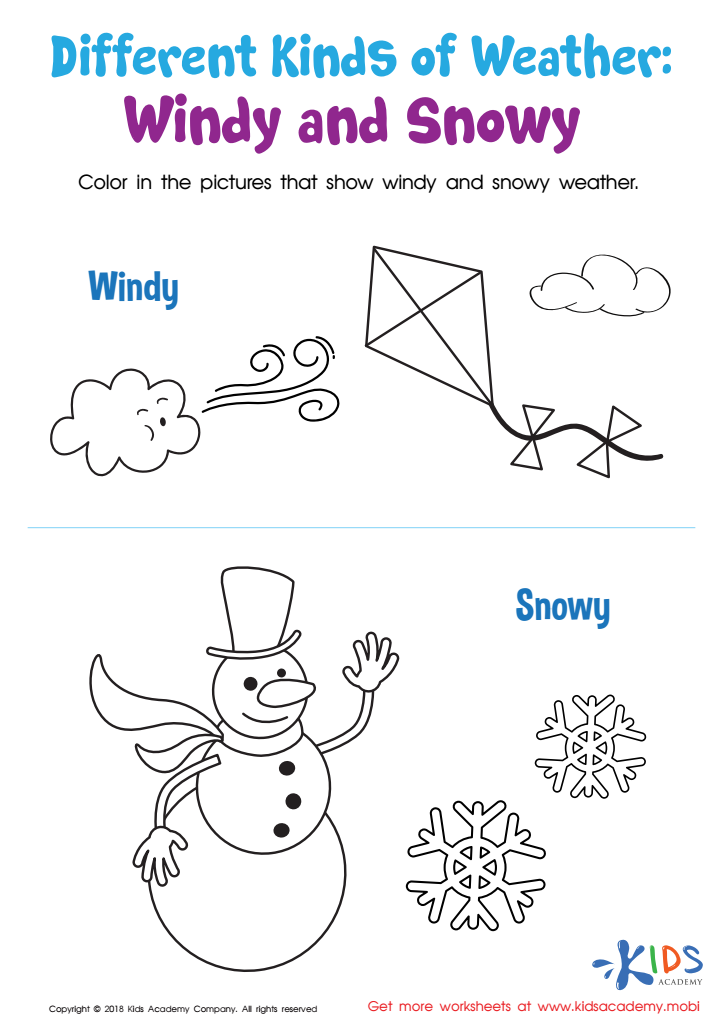
Different Kinds of Weather: Windy and Snowy Worksheet
Invite your little learner to practice their fine motor skills and learn about nature with this fun and charming PDF worksheet! Reinforce weather patterns and examine their environment as they color, giving them a foundation for understanding how weather affects them. No matter the weather, your learner will have a blast!
Download (PDF)
 Assign to My Students
Assign to My Students
Different Kinds of Weather: Windy and Snowy Worksheet
Worksheet
Join Kids Academy for Free
Who is primarily going to use this learning content?







Understanding weather vocabulary is essential for children aged 4-8, as it lays the groundwork for both their academic development and everyday understanding of the world. When children learn words like "sunny," "cloudy," "rainy," and "windy," they not only expand their vocabulary but also gain essential tools to communicate about daily experiences and observations.
For parents, this can mean more engaging and educational conversations with their kids. Discussing the weather can transform routine moments, like deciding what to wear or planning outdoor activities, into rich learning opportunities. By fostering curiosity and observational skills, parents can help their children make connections between what they see outside and what they learn in books or videos.
Teachers benefit as well because incorporating weather vocabulary into lessons can enhance science education starting from a young age. Fun activities like drawing weather charts, matching weather icons with descriptions, or singing weather-related songs can make learning interactive and memorable. Furthermore, understanding weather concepts can activate children's critical thinking skills. They start to recognize patterns, predict outcomes, and ask questions, all of which are foundational for scientific learning.
In summary, focusing on weather vocabulary enriches children's language skills, nurtures natural curiosity, and builds a solid foundation for future scientific understanding—all vital for holistic early development.







