Geography knowledge Normal Our Planet and Environment Worksheets for Ages 4-8
3 filtered results
-
From - To
Unlock the wonders of our world for young minds with our "Geography Knowledge: Our Planet and Environment Worksheets for Ages 4-8." These engaging and educational worksheets are designed to introduce children to the basics of geography and environmental science. Packed with colorful activities, children will explore continents, oceans, landforms, and various ecosystems. Perfect for early learners, these worksheets foster curiosity and a love for nature while aligning with developmental goals. Ideal for both classroom use and homeschooling, our resources provide a fun, hands-on approach to learning about our amazing planet.
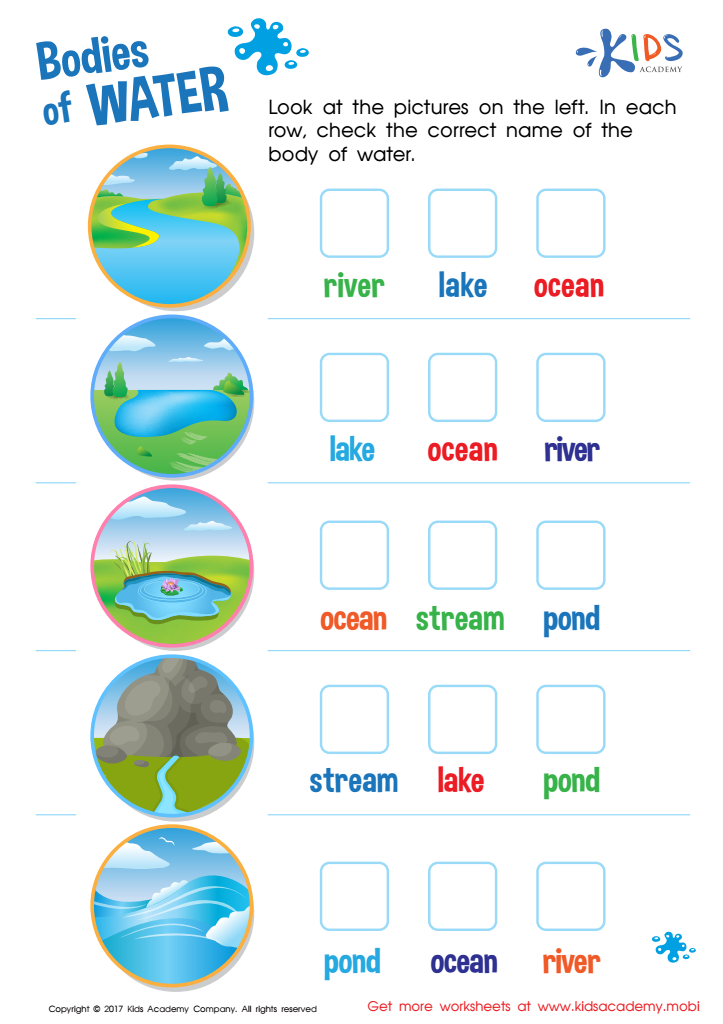
Bodies of Water Worksheet
 Assign to My Students
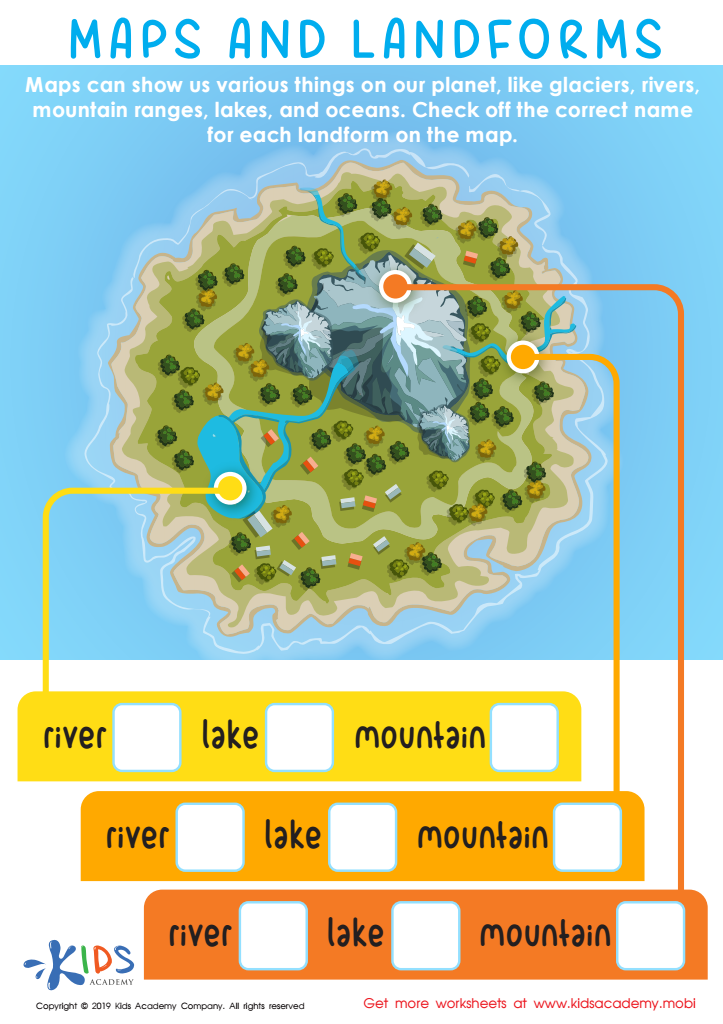
Maps and Landforms Worksheet
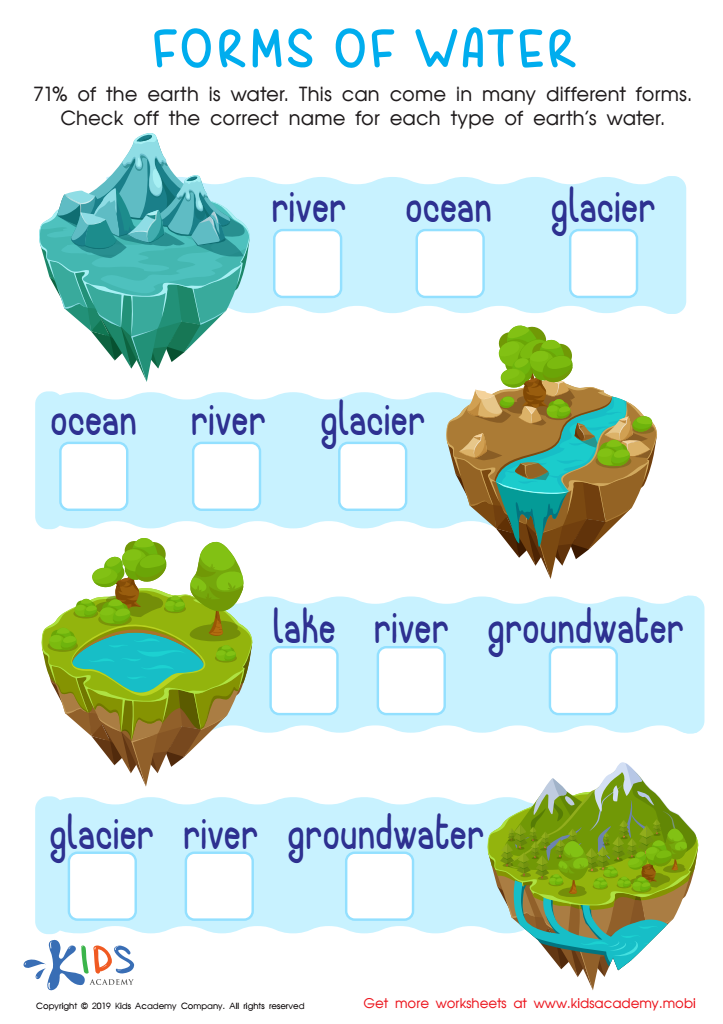
Forms of Water Worksheet




Understanding geography at a young age is important for several reasons. For one, it helps children develop spatial skills. By recognizing different countries, continents, and bodies of water, kids can better understand the relationship between locations. This builds a strong foundation for later mathematical and navigational skills.
Geography also broadens children’s worldviews. Learning about different places, peoples, and cultures helps develop empathy and curiosity, encouraging a sense of global citizenship. It teaches children that while we may live in different parts of the world, we share the same planet and face similar challenges.
Moreover, children who learn about geography will develop a better understanding of natural processes and the environment. They gain awareness of issues like climate change, conservation, and natural disasters. By understanding the planet, children can learn the importance of taking care of it.
Finally, incorporating geography into early education stimulates critical thinking. Kids ask questions and solve problems regarding why places are the way they are. This fosters inquisitiveness and analytical skills that are essential for lifelong learning.
Parents and teachers should care about geography knowledge because it is not just about memorizing maps. It's about instilling a sense of wonder, responsibility, and tools necessary for kids to thrive in an interconnected world.







