
Plant identification Normal Plants and Animals Worksheets for Ages 4-8
4 filtered results
Difficulty Level
Grade
Age
-
From - To
Subject
Activity
Standards
Discover the fascinating world of flora and fauna with our "Plant Identification: Normal Plants and Animals" worksheets, designed for children aged 4-8. These engaging and fun printables will help young learners identify common plants and animals, developing their observational skills and curiosity about nature. Each worksheet features vivid illustrations and simple activities, tailored to educate and entertain. Perfect for classrooms and home learning, our resources foster a love for the environment while building foundational science knowledge. Equip your child with the tools to explore their natural surroundings confidently with our expertly crafted plant and animal identification activities.
Favorites
With answer key
Interactive
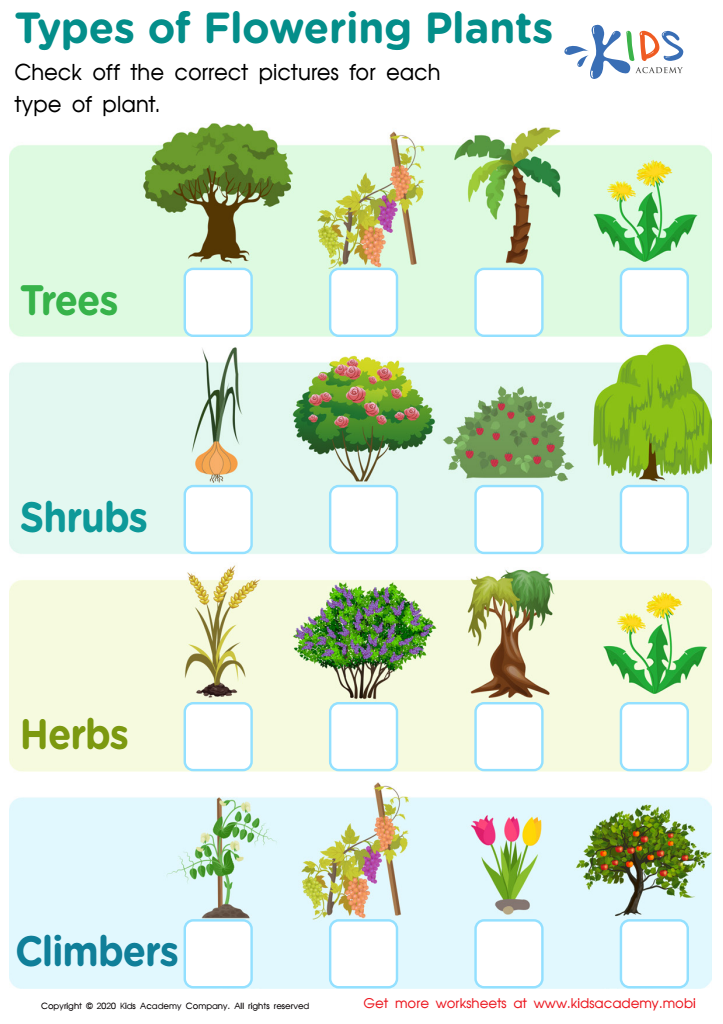
Types of Flowering Plants Worksheet
Help kids explore the variety of plants around them! Have them discover trees, shrubs, herbs, and vines with this fun science worksheet. Print it and let them match the plant pictures to their correct names. It's an exciting learning experience that'll let them check off the right images and explore the botanical world.
 Assign to My Students
Types of Flowering Plants Worksheet
Worksheet

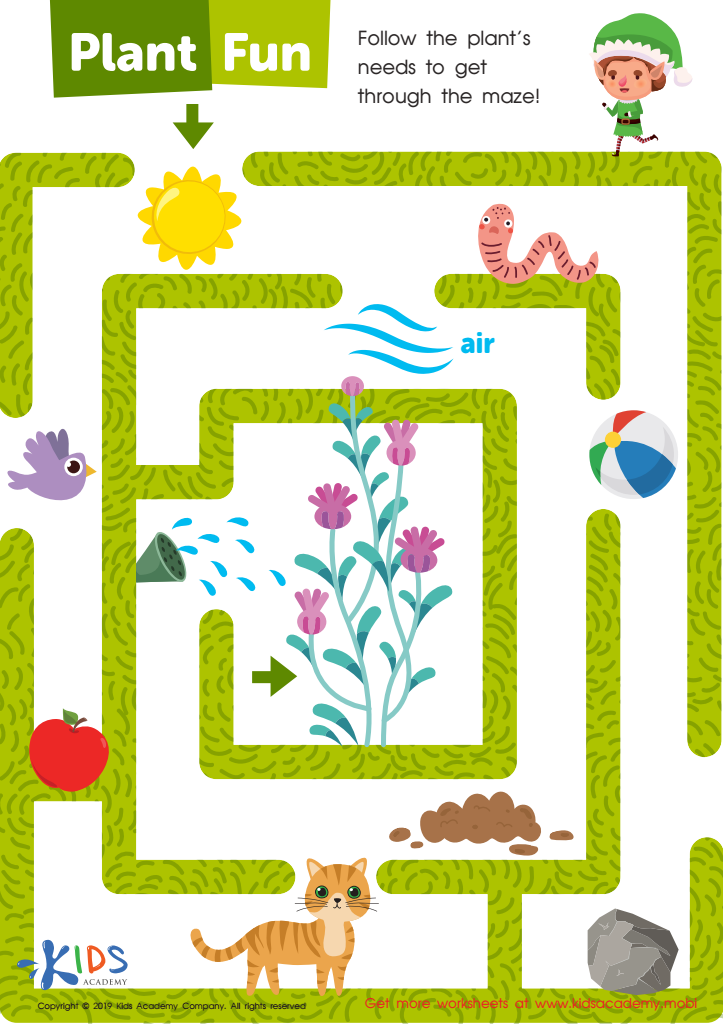
Plant Fun Worksheet
Engage your kid's mind by playing a learning maze! Ask them what plants do for us and what we need to do for the plants to help them grow. Then, help them find their way out of the maze while following the things that plants need.
Plant Fun Worksheet
Worksheet
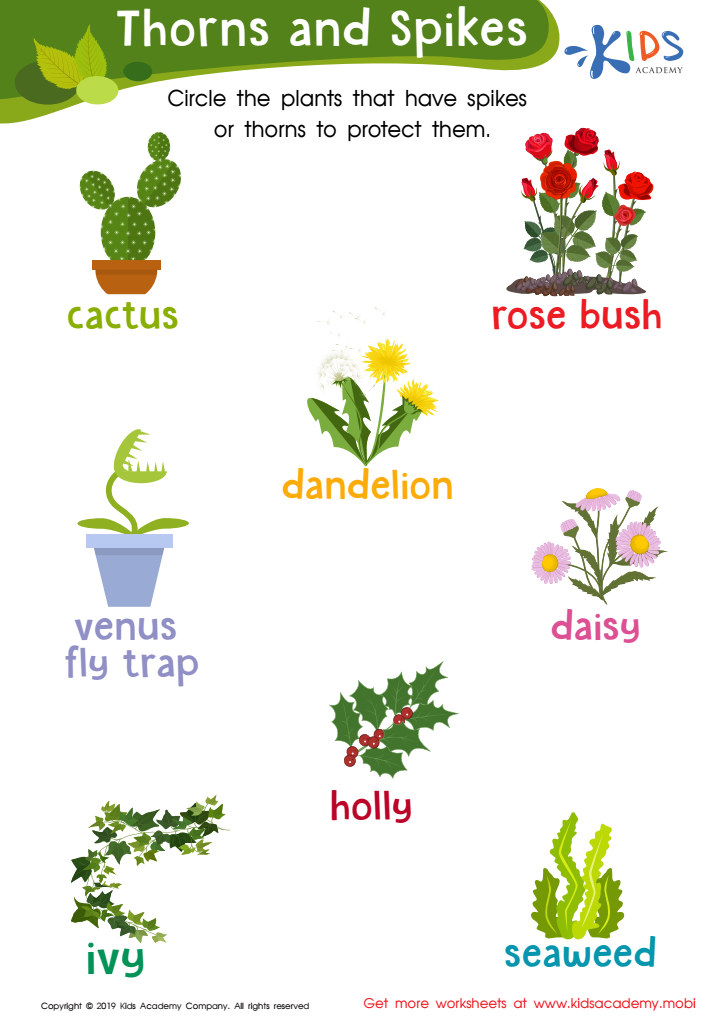
Thorns and Spikes Worksheet
Can your students name and identify the plants and flowers in this worksheet? Ask them to read out the names and circle the ones with spikes or thorns. Help them appreciate nature's beauty and understand how plants protect themselves.
Thorns and Spikes Worksheet
Worksheet
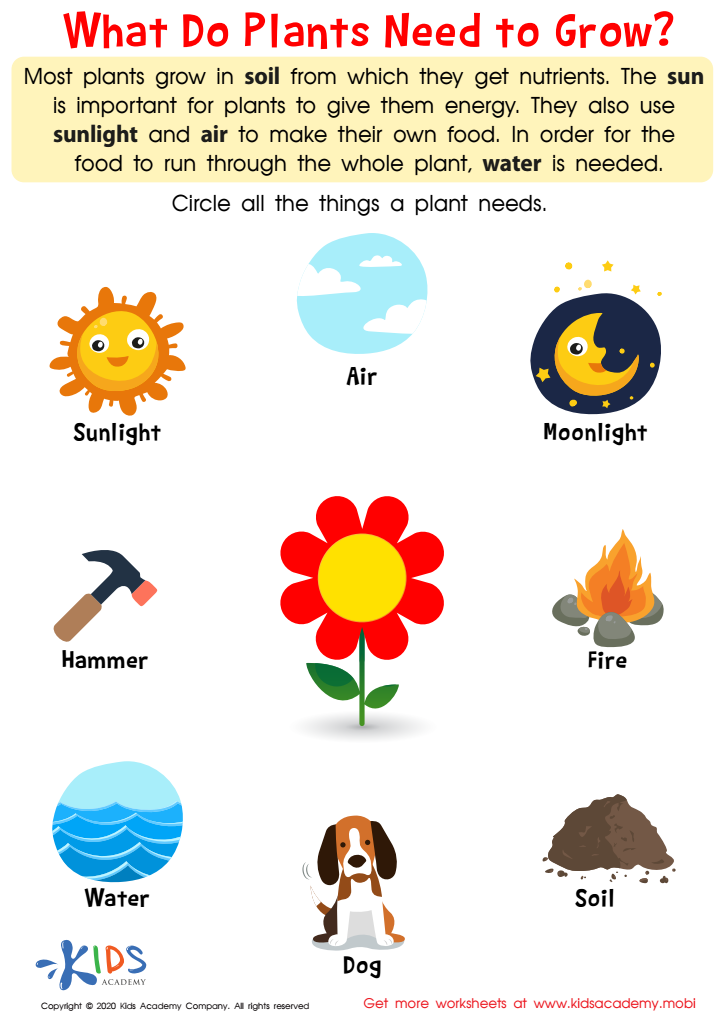
What Do Plants Need to Grow Worksheet
Help your child explore and discover the world of plants with this fun how do plants grow worksheet! They'll gain knowledge, sharpen problem solving skills, and build science foundations as they identify what plants need to grow. Afterward, plant a seed together and watch it sprout right before their eyes!
What Do Plants Need to Grow Worksheet
Worksheet
Join Kids Academy for Free
Who is primarily going to use this learning content?








Parents and teachers should care about teaching plant and animal identification to children ages 4-8 because it nurtures a lifelong appreciation for nature and fosters environmental stewardship. During these formative years, children's brains are highly receptive to new information, and introducing them to the natural world helps build their understanding of ecosystems and biodiversity.
Learning to identify "normal" plants and animals—those that children are likely to encounter in their everyday surroundings—instills a sense of familiarity and comfort with nature. This foundational knowledge encourages outdoor exploration and physical activity, which are vital for healthy development. Additionally, children who are able to recognize and name plants and animals are more likely to be curious and respectful towards them.
Understanding plant and animal identification also bolsters cognitive development. It enhances observational skills, attention to detail, and critical thinking. Engaging with nature can be a rich sensory experience, aiding in the development of sensory processing and fine motor skills as children touch, smell, and interact with various elements.
Moreover, early ecological education encourages responsible behavior towards the environment. It lays the groundwork for future learning and responsibility, ensuring that children grow up with a mentality geared towards sustainability and conservation. In a world facing significant environmental challenges, cultivating these values early on is indispensable.







