
Color Identification Normal Community Worksheets for Ages 4-8
3 filtered results
Difficulty Level
Grade
Age
-
From - To
Subject
Activity
Standards
Introducing our "Color Identification Normal Community Worksheets," designed specifically for children aged 4-8. These engaging worksheets provide a fun and interactive way for young learners to explore colors within their community. By incorporating relatable themes and vibrant visuals, children will easily identify primary and secondary colors while recognizing their significance in everyday life. Our materials promote cognitive development, fine motor skills, and critical thinking as kids connect colors to objects and experiences around them. Perfect for home or classroom use, these worksheets are an essential tool in fostering creativity and a deeper understanding of their colorful world. Download now!
Favorites
With answer key
Interactive
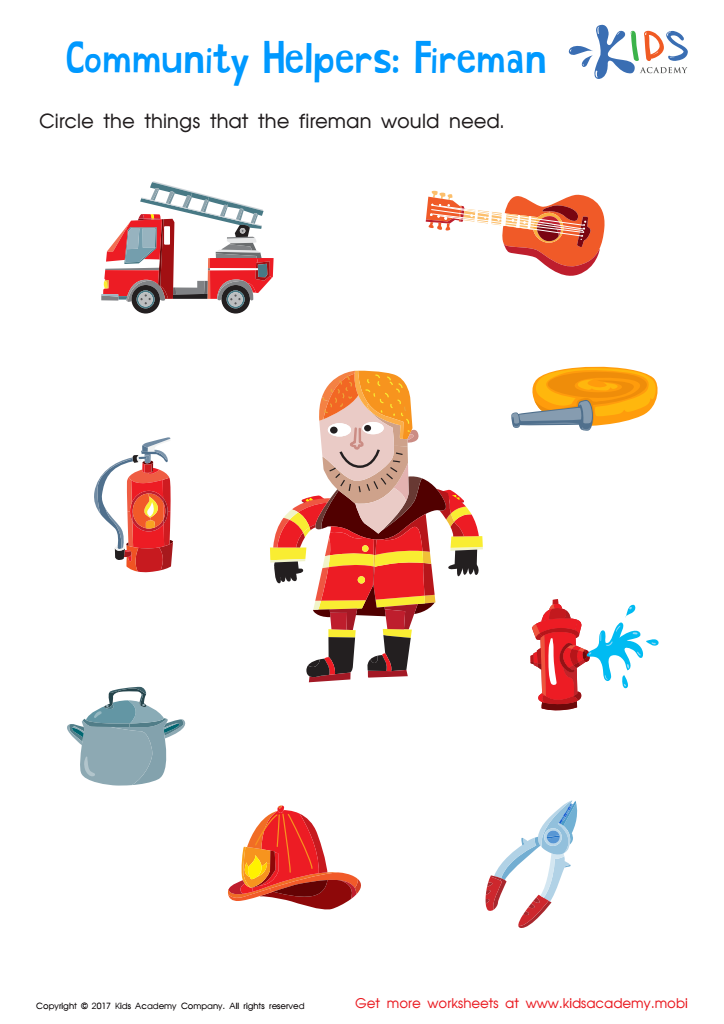
Fireman Worksheet
Kids love firemen and their big fire engines! Inspire your child to learn about their duties with this fun fireman worksheet. It'll help your child understand the role of firemen, as well as develop matching and problem solving skills. Get your kid started on understanding a key role in society and have fun too!
 Assign to My Students
Fireman Worksheet
Worksheet
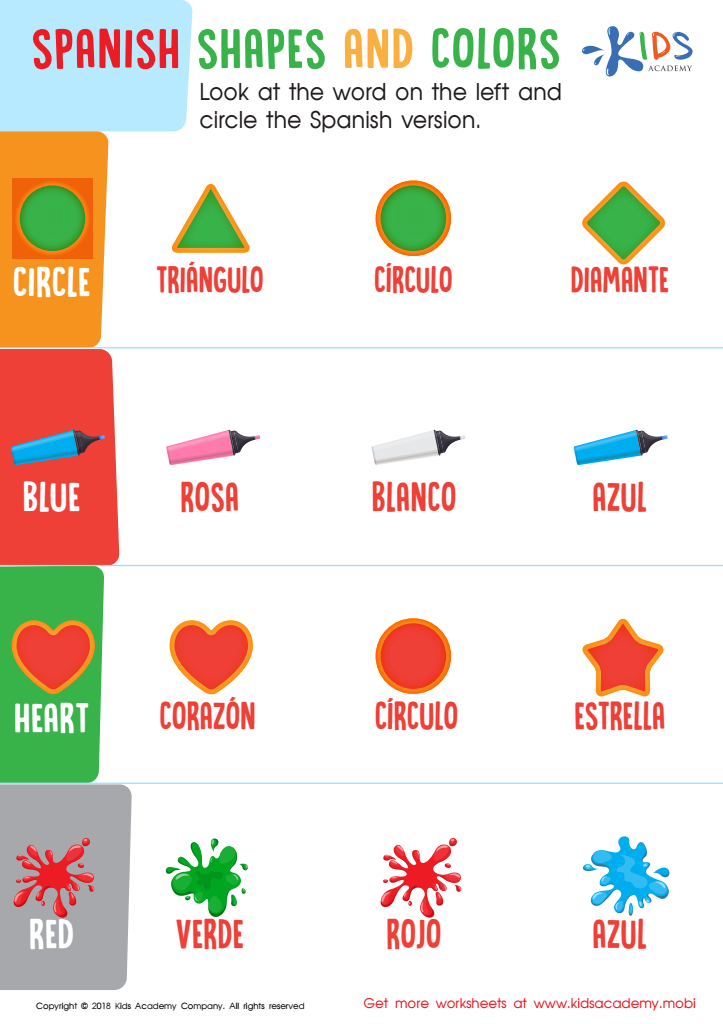
Spanish Shapes and Colors Worksheet
Encourage your children to learn another language from an early age. For example, Spanish - use a worksheet to help with the basics. Point to the English word and ask them to identify and circle the corresponding Spanish word on the right. This way, your kids will grow up with familiarity of the language.
Spanish Shapes and Colors Worksheet
Worksheet
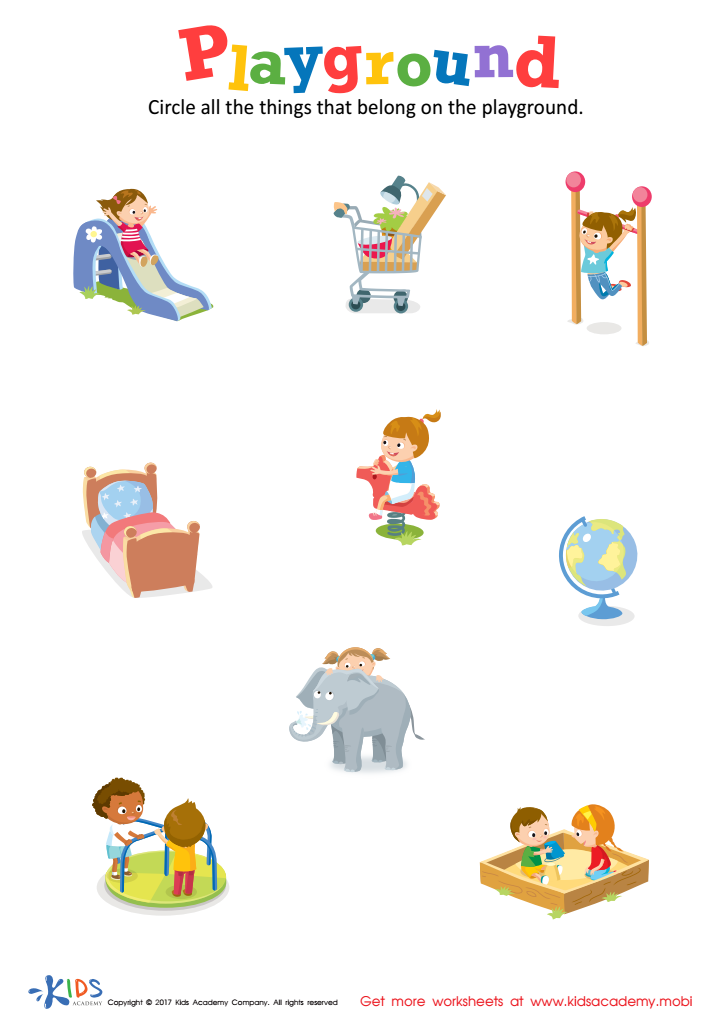
Playground Worksheet
Head to the park with this playground worksheet! It strengthens sorting and cognitive skills while encouraging problem solving. Plus, it's fun-filled and engaging! When finished, head out to the park to see what items your child finds in the playground!
Playground Worksheet
Worksheet
Join Kids Academy for Free
Who is primarily going to use this learning content?








Color identification is a crucial milestone in early childhood development, particularly for children aged 4 to 8. Parents and teachers should care about this skill because it forms the basis for various cognitive abilities, including language development, memory, and association. Mastery of color recognition aids in enhancing a child’s vocabulary, as they learn to describe their world using colorful descriptors. This foundational skill also supports creativity and self-expression in activities such as art and crafting, allowing children to explore and communicate their ideas effectively.
Additionally, understanding colors can improve a child's ability to categorize and organize information, which is essential for later learning in subjects such as math and science. Furthermore, learning about colors fosters social interaction and collaboration during group activities; children often engage in discussions about their favorite colors and incorporate them into cooperative play.
Beyond academic benefits, color identification contributes to sensory development, enriching a child's experience of the world around them. Cultural significance associated with colors can also be an avenue for lessons on diversity and inclusivity. Ultimately, supporting color recognition facilitates a child's overall growth and readiness for more complex concepts, making it a vital area of focus for parents and educators alike.








