Spatial awareness Normal Community Worksheets for Ages 4-8
3 filtered results
Difficulty Level
Grade
Age
-
From - To
Subject
Activity
Standards
Enhance your child's spatial awareness with our engaging Normal Community Worksheets, designed specifically for ages 4-8. These worksheets provide a fun and interactive way for young learners to explore their surroundings and understand spatial relationships within their community. Through a variety of activities, children will develop crucial skills such as directionality, shape recognition, and problem-solving. Our resources foster creativity while promoting cognitive and motor skills. Ideal for home or classroom use, these worksheets encourage children to connect with their environment, making learning both enjoyable and effective. Jumpstart your child's journey in spatial awareness today!
Favorites
With answer key
Interactive
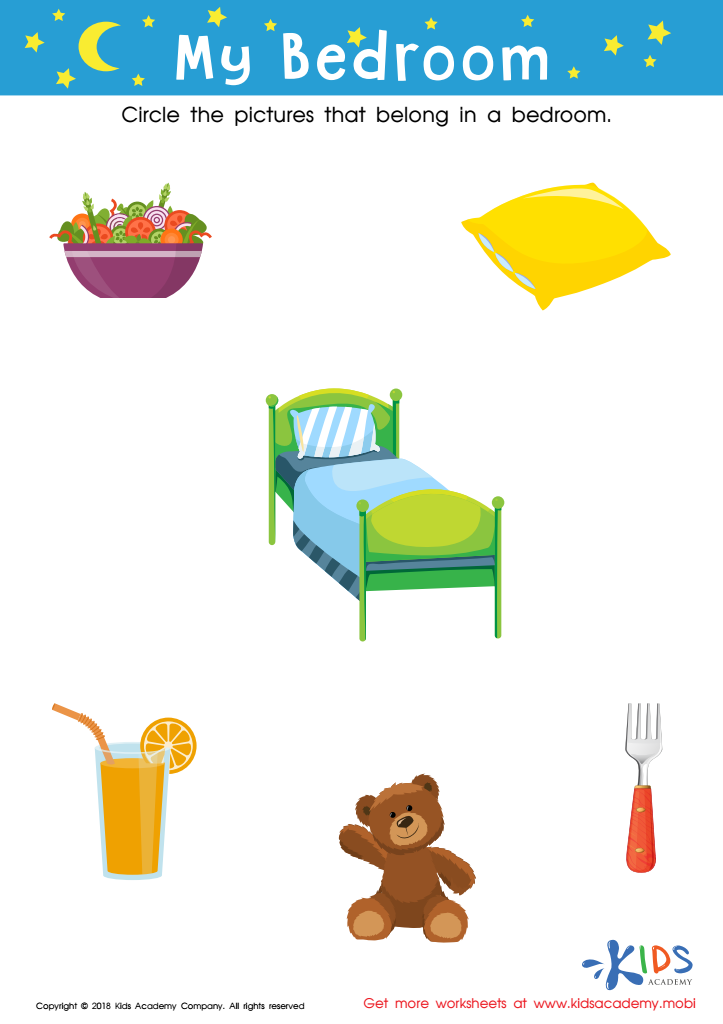
My Bedroom Worksheet
Your child's room is their special space, where only a few are allowed in. You may have let them choose some special decorations, like wall stickers and toys. This exercise will be easy for your child, as they know their bedroom well. Ask them to circle the pictures that belong in a bedroom.
 Assign to My Students
My Bedroom Worksheet
Worksheet
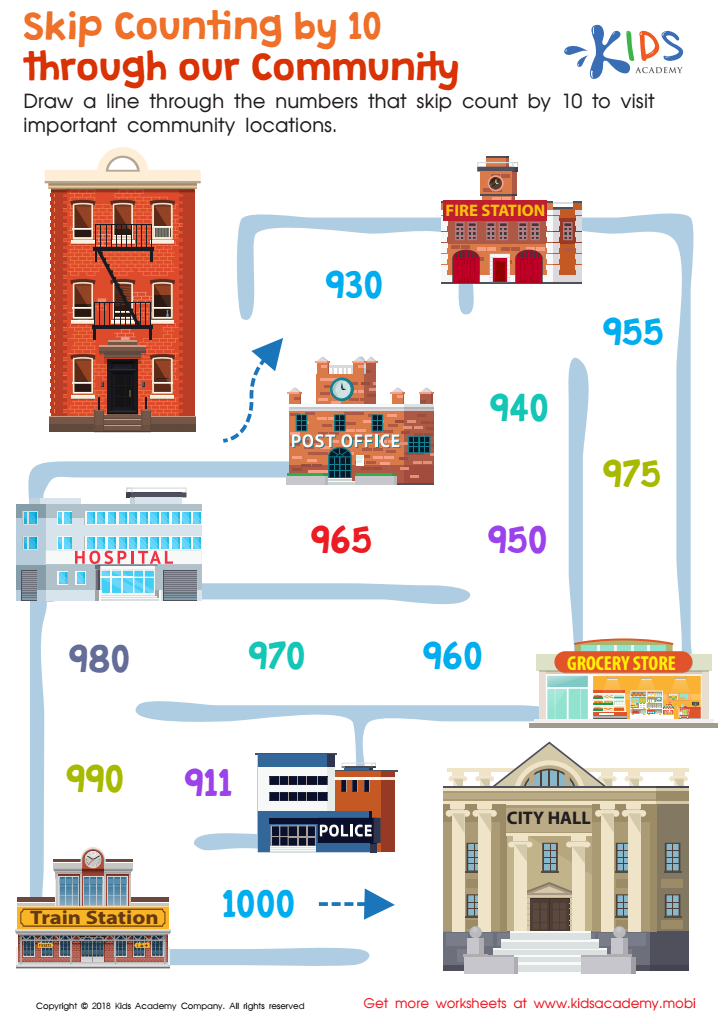
Skip Counting by 10 Through Our Community Worksheet
Our kids need to 'make a ten' and skip count by tens to boost their speed and accuracy in math. This cool, free worksheet takes them on a journey through their local community to practice counting by tens. They'll work on social studies and fine motor skills while having fun with the maze they get to count by tens in!
Skip Counting by 10 Through Our Community Worksheet
Worksheet
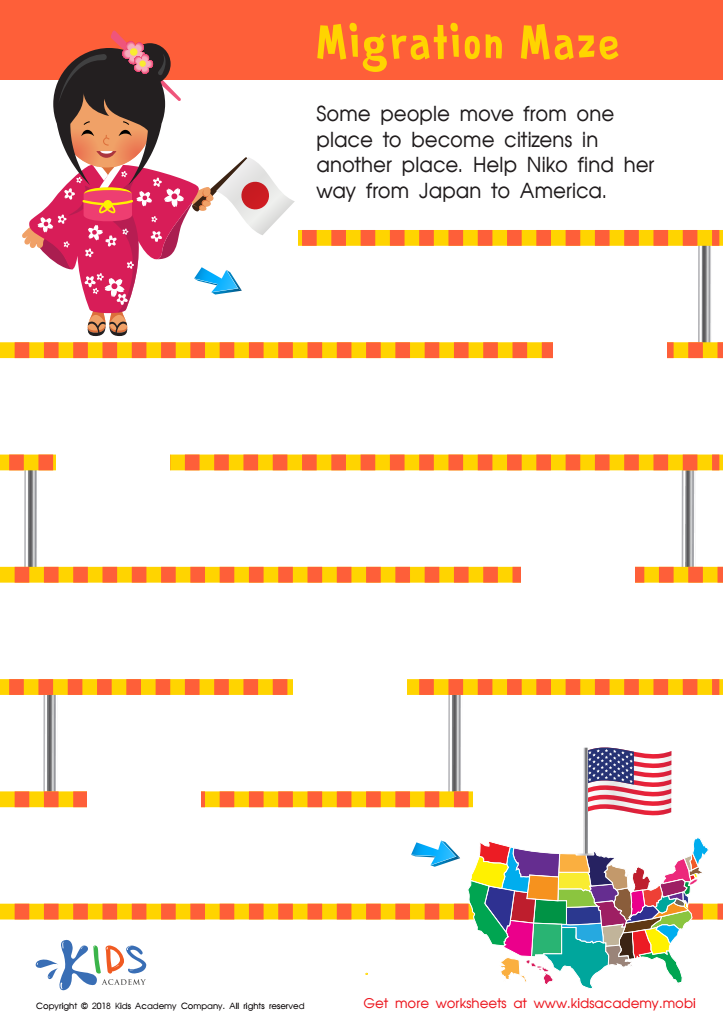
Migration Maze Worksheet
You are a citizen of your school, city and country. Many people migrate to become citizens of another place, like Niko in this worksheet. Ask your students to help her find her way from Japan to America.
Migration Maze Worksheet
Worksheet
Join Kids Academy for Free
Who is primarily going to use this learning content?







Spatial awareness, crucial for children's cognitive development, refers to how they perceive and understand the relationships between themselves and objects in their environment. For children aged 4-8, developing this skill is essential as it lays the foundation for crucial academic abilities, particularly in subjects like math, science, and geography.
Parents and teachers should prioritize spatial awareness because it enhances problem-solving skills and critical thinking. Activities that promote spatial awareness, such as puzzles, building blocks, and guided play, not only foster creativity but also improve motor skills, hand-eye coordination, and confidence.
Moreover, engaging in physical activities like climbing or navigating space helps children understand directional concepts, distance, and dimensions. These experiences can positively influence their ability to plan, organize, and execute tasks.
In a community-focused environment, fostering spatial awareness contributes to social development by encouraging collaboration during group activities. Engaging children in discussions about space and their surroundings cultivates communication skills and community awareness.
Investing time and resources into enhancing spatial awareness in early education equips children with vital life skills, preparing them for success in school and beyond. It promotes holistic development, ensuring they grow into well-rounded individuals ready to navigate the complexities of the world around them.