Geography skills Normal Social Studies Worksheets for Ages 4-8
3 filtered results
-
From - To
Explore our engaging Geography Skills Worksheets designed for children ages 4-8! These resources help young learners develop essential social studies skills, from understanding maps to recognizing landmarks and geographical features. Our worksheets are crafted to enhance your child’s knowledge of the world while making learning enjoyable and interactive. With vibrant illustrations and age-appropriate activities, kids will cultivate a curiosity about their surroundings and the concept of place. Ideal for both classroom settings and at-home learning, these worksheets promote foundational skills in geography, allowing children to confidently navigate their educational journey. Start exploring the world today!
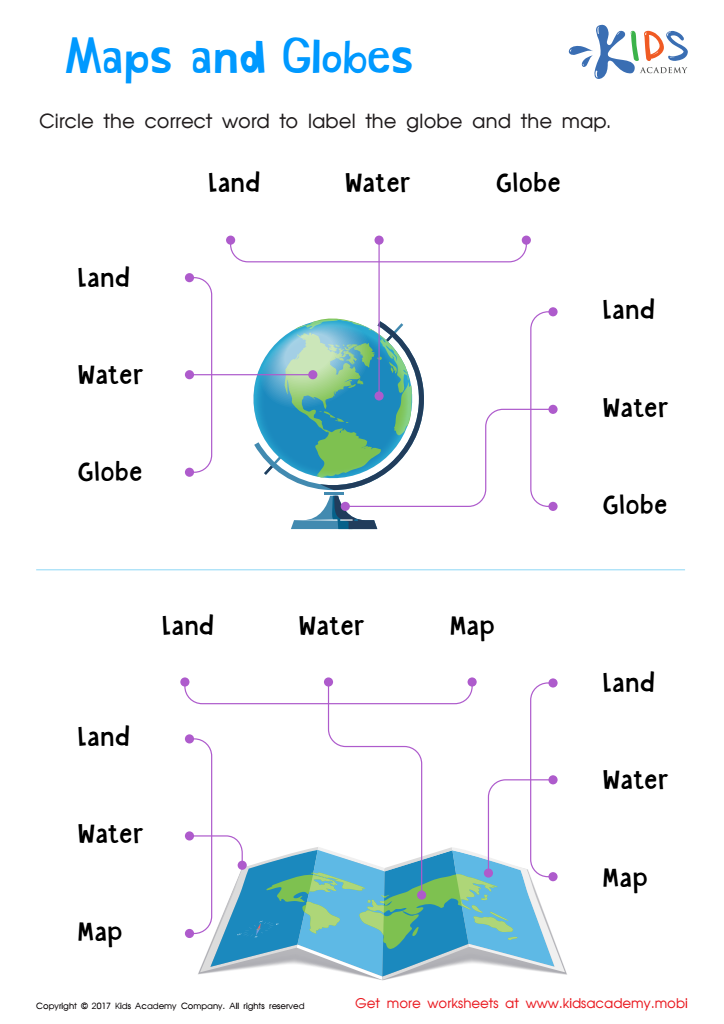
 Assign to My Students
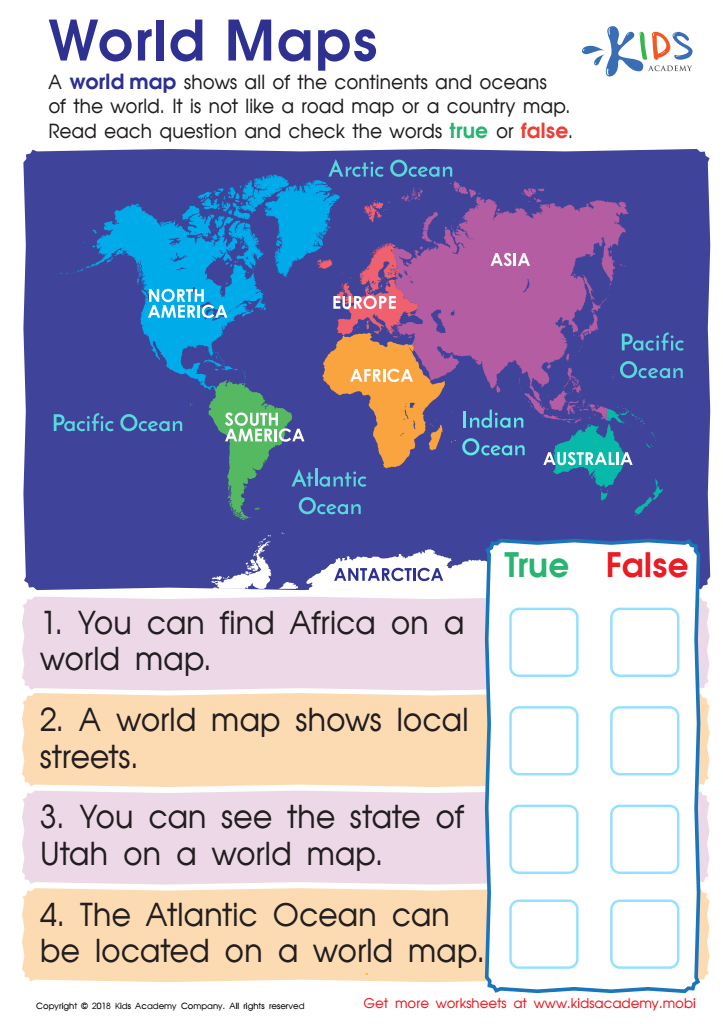
World Maps Worksheet
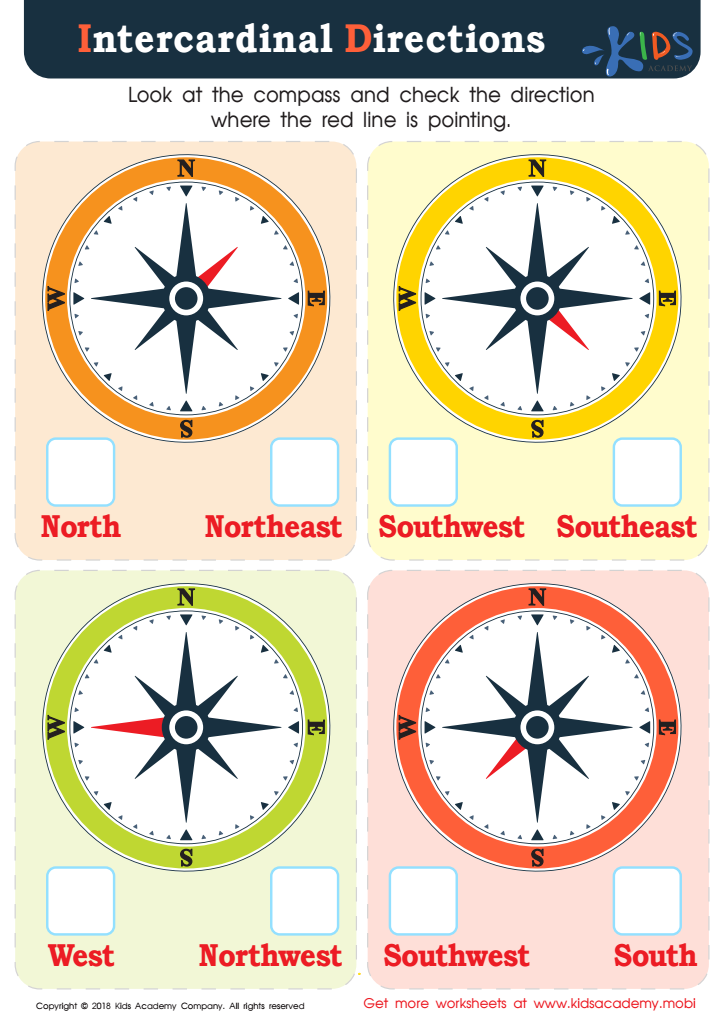
Intercardinal Directions Worksheet








Geography skills and social studies play a crucial role in a child's development, especially for ages 4-8. At this formative stage, children begin to develop a sense of identity, place, and understanding of the world around them. Geography teaches them about their local environment, countries, cultures, and the interconnectedness of human experiences. This not only fosters awareness and curiosity but also nurtures respect for diversity.
Moreover, geography and social studies encourage critical thinking and problem-solving skills. Children learn to interpret maps, understand spatial relationships, and recognize the impact of human activity on their surroundings. These skills are essential for navigating the complexities of the modern world.
Additionally, incorporating geography into early education fosters empathy and social responsibility. Children who understand various cultures and communities are more likely to appreciate differences and develop a sense of global citizenship. This preparation is vital in an increasingly interconnected world.
In summary, by prioritizing geography and social studies in early education, parents and teachers are equipping children with essential skills for life, promoting adaptability, and fostering a future generation that values understanding and collaboration. Investing in these subjects ultimately benefits both individual growth and the wider community.








