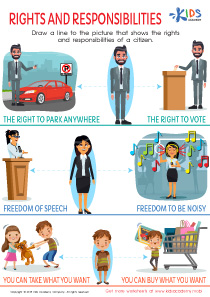
Spatial awareness Normal Social Studies Worksheets for Ages 4-8
6 filtered results
-
From - To
Enhance your child's spatial awareness with our engaging Social Studies worksheets designed for ages 4-8! These printable activities provide a fun and interactive way for young learners to develop crucial skills such as understanding distances, directions, and relationships between objects. Each worksheet is tailored to captivate and motivate young minds, fostering essential cognitive abilities while linking concepts to their social environment. Ideal for classroom settings or at-home practice, our resources promote hands-on learning and critical thinking. Explore the world around them and help your child build a strong foundation in spatial awareness with our carefully curated worksheets!
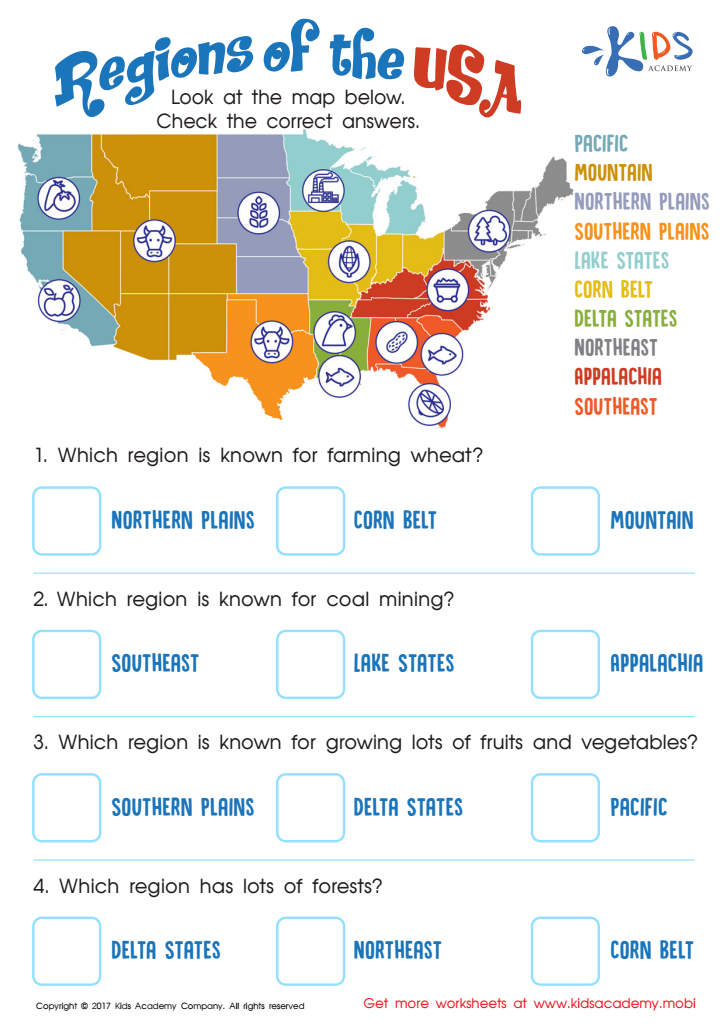
Regions of the USA Worksheet
 Assign to My Students
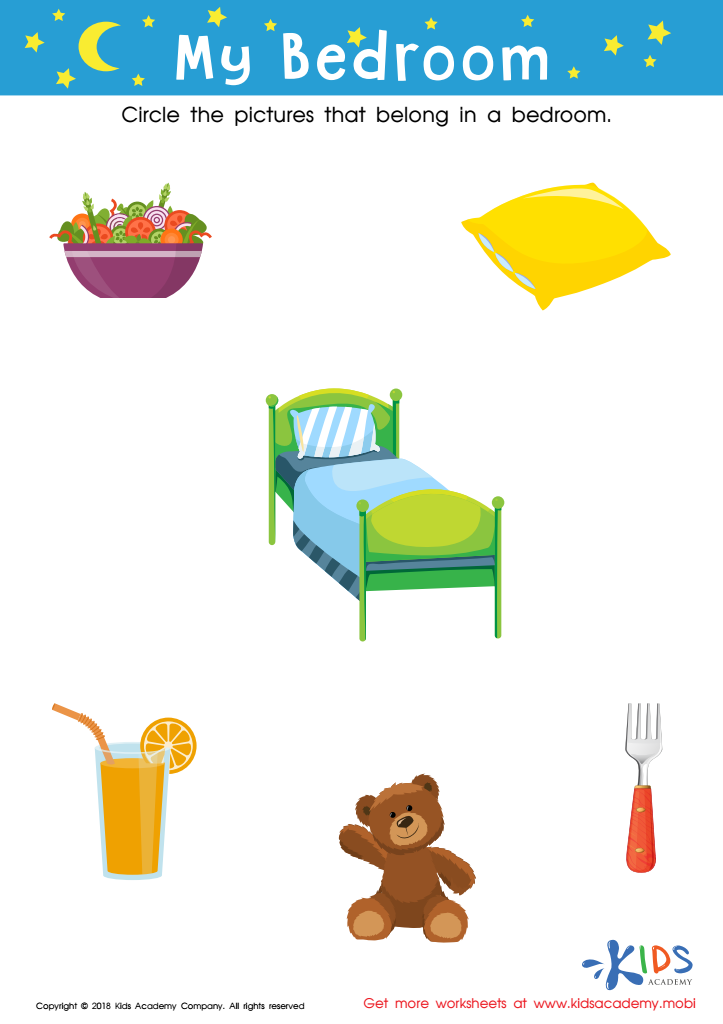
My Bedroom Worksheet
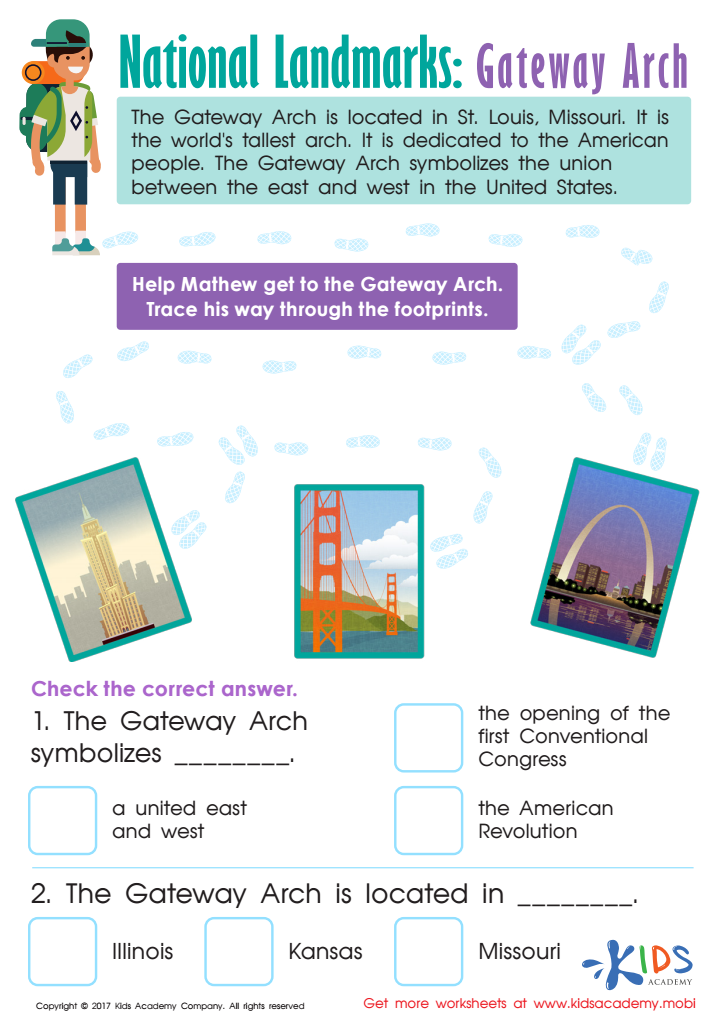
Gateway Arch Printable Worksheet
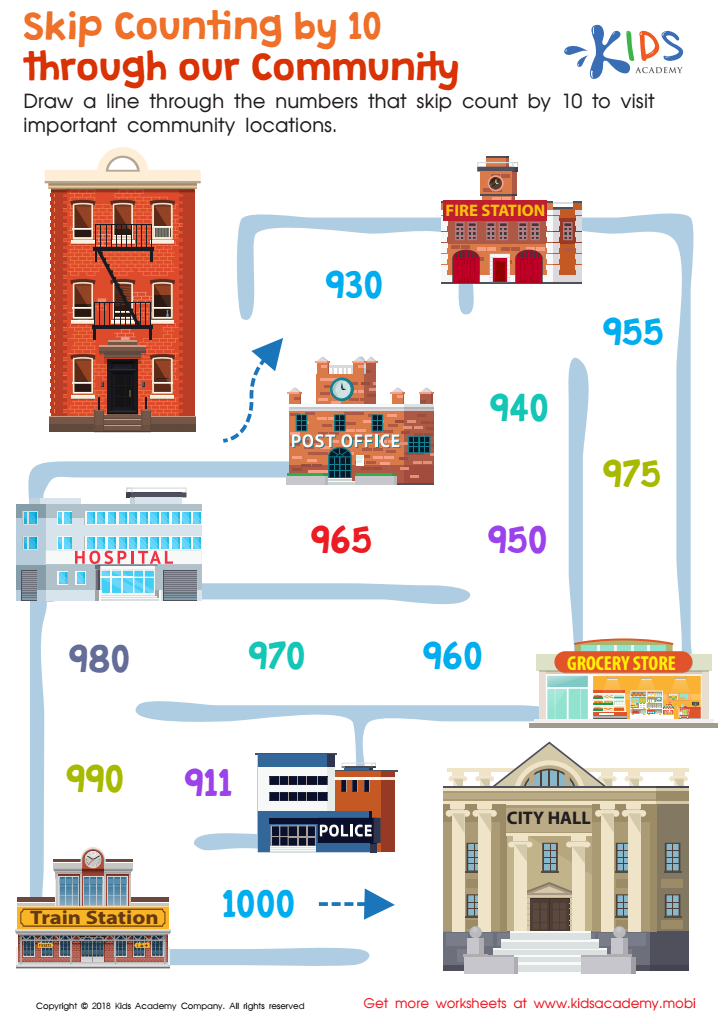
Skip Counting by 10 Through Our Community Worksheet
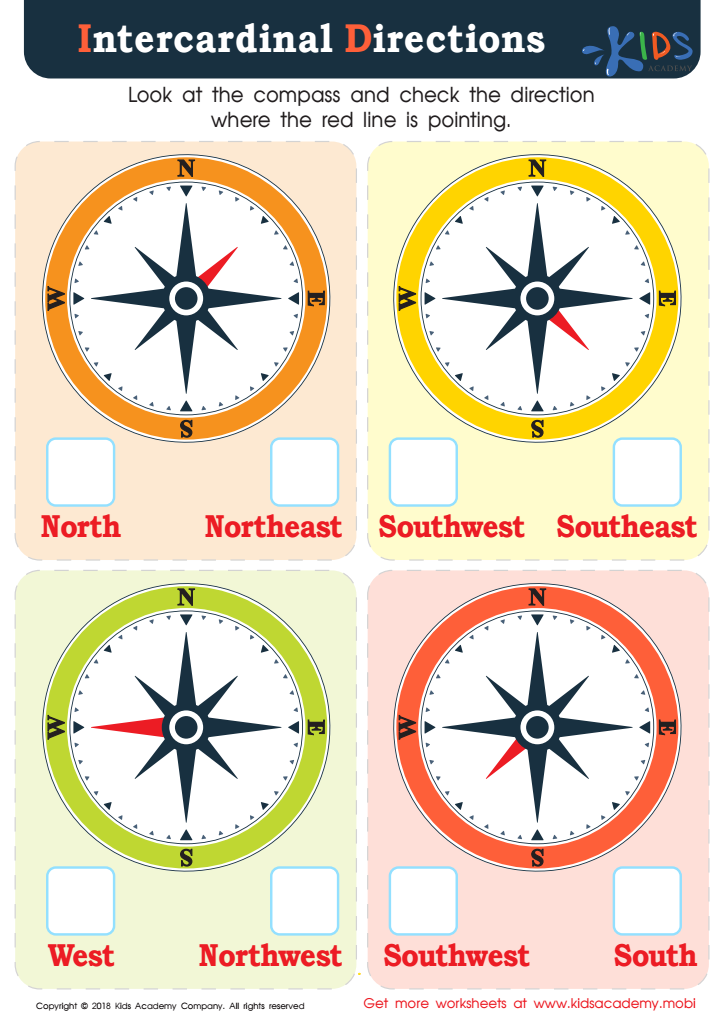
Intercardinal Directions Worksheet
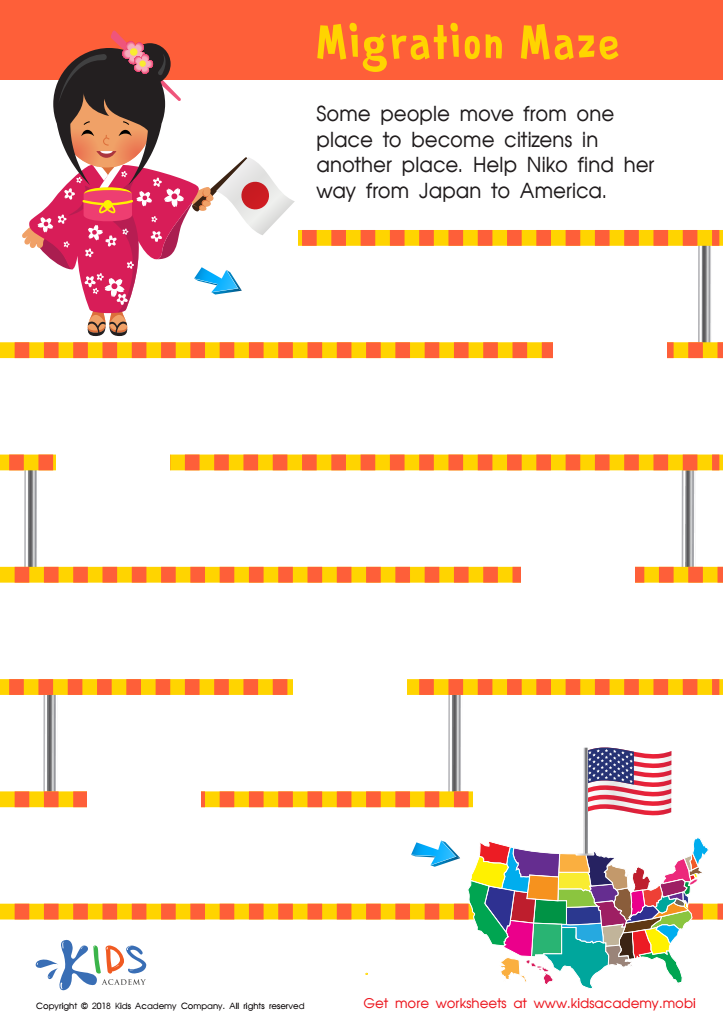
Migration Maze Worksheet








Spatial awareness is a critical developmental skill that significantly impacts a child's academic and social growth, particularly in ages 4-8. For parents and teachers, fostering spatial awareness is vital because it lays the groundwork for skills in mathematics, science, and everyday problem-solving. Children develop an understanding of spatial relationships through activities involving shapes, sizes, directions, and distances, which enhance their ability to visualize and manipulate objects in their minds.
Furthermore, spatial awareness enhances a child's social experiences. For instance, when children engage in group play, they navigate physical spaces and collaborate with peers, honing their communication and teamwork skills. Parents and teachers can integrate playful activities like blocks, puzzles, and outdoor games to bolster these skills.
Spatial awareness also supports reading and writing skills by helping children understand concepts like left-right orientation and letter formation. By prioritizing spatial awareness activities in the early grades, adults can provide a well-rounded foundation for children's overall cognitive development, enabling them to become more confident learners. Ultimately, investing in spatial awareness not only enriches a child’s educational experience but also shapes their social interactions, fostering independence and problem-solving capabilities that are crucial for their future.