Word identification Normal Grammar Worksheets for Ages 4-8
5 filtered results
-
From - To
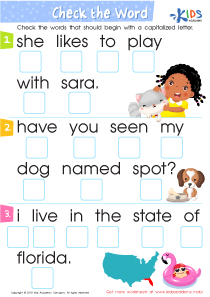
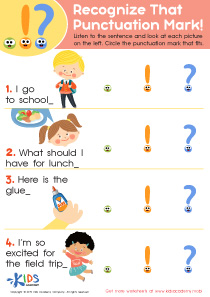
Enhance your child's reading and writing skills with our engaging Word Identification Normal Grammar Worksheets, designed for ages 4-8. These printable resources focus on essential word recognition techniques, helping young learners expand their vocabulary and enhance comprehension. Each worksheet offers fun exercises that make identifying words enjoyable and interactive, promoting a strong foundation in grammar. Perfect for both classroom use and at-home learning, our worksheets cater to different learning styles and pace, ensuring that every child can succeed. Discover the joy of learning as your child builds confidence in their language skills with our expertly crafted materials!
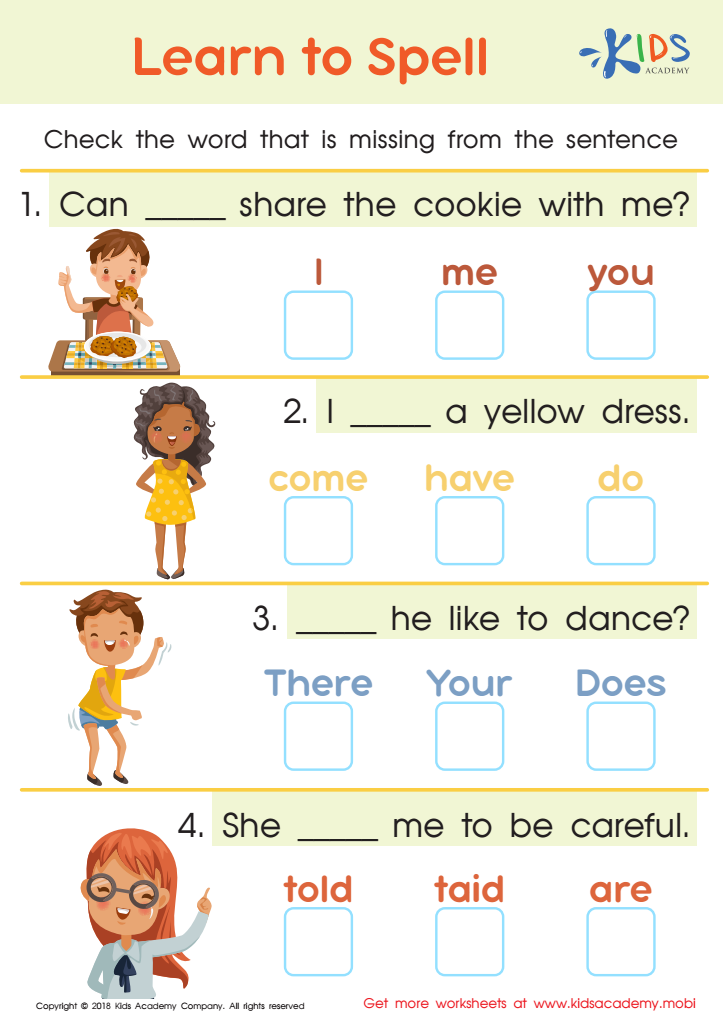
Learn to Spell Worksheet
 Assign to My Students
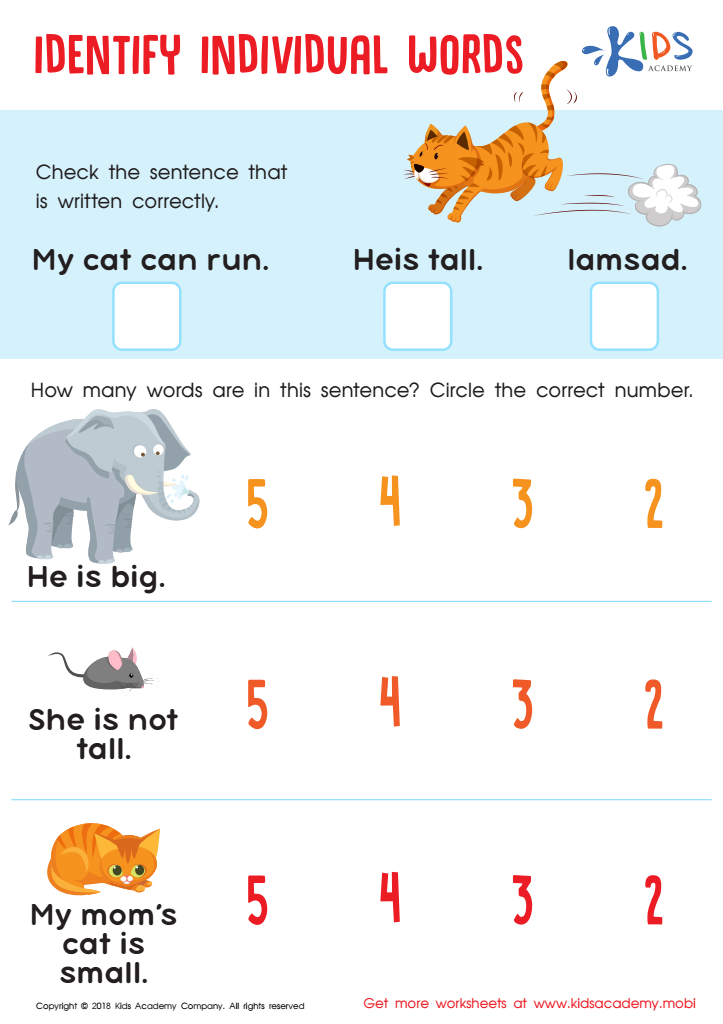
Identify Individual Words Worksheet
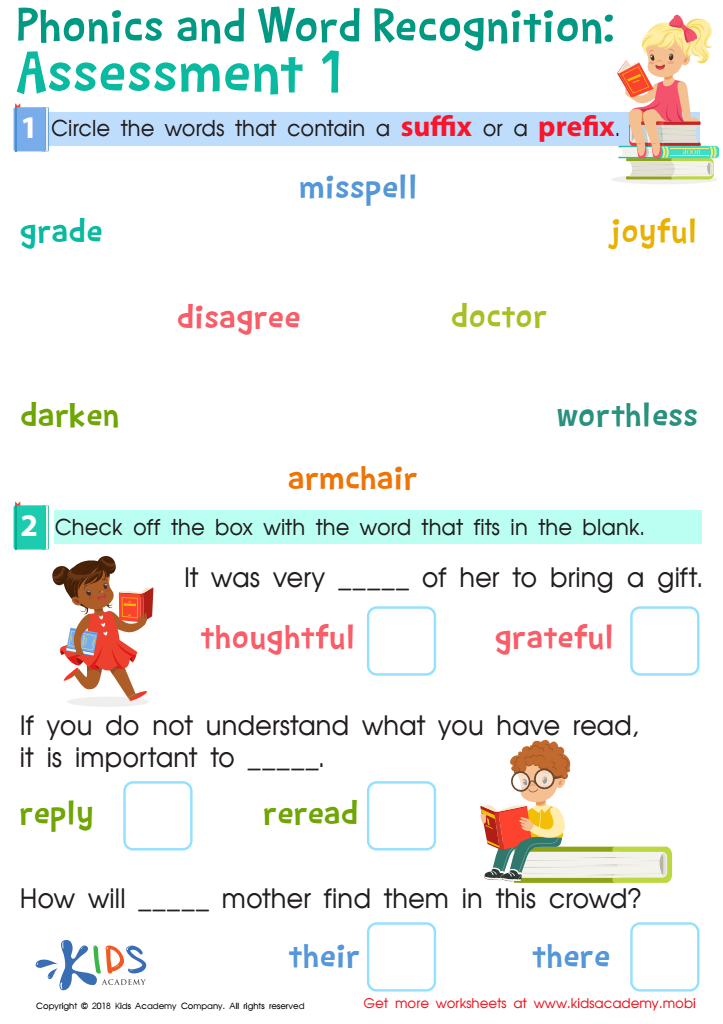
Phonics and Word Recognition: Assessment 1 Worksheet
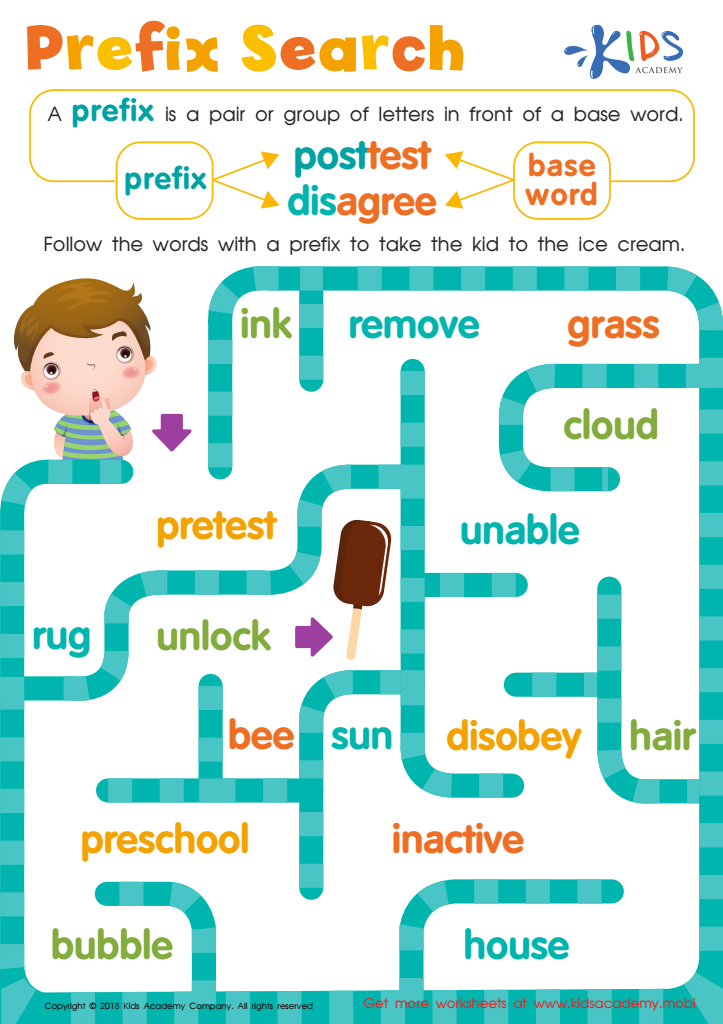
Reading: Prefix Search Worksheet
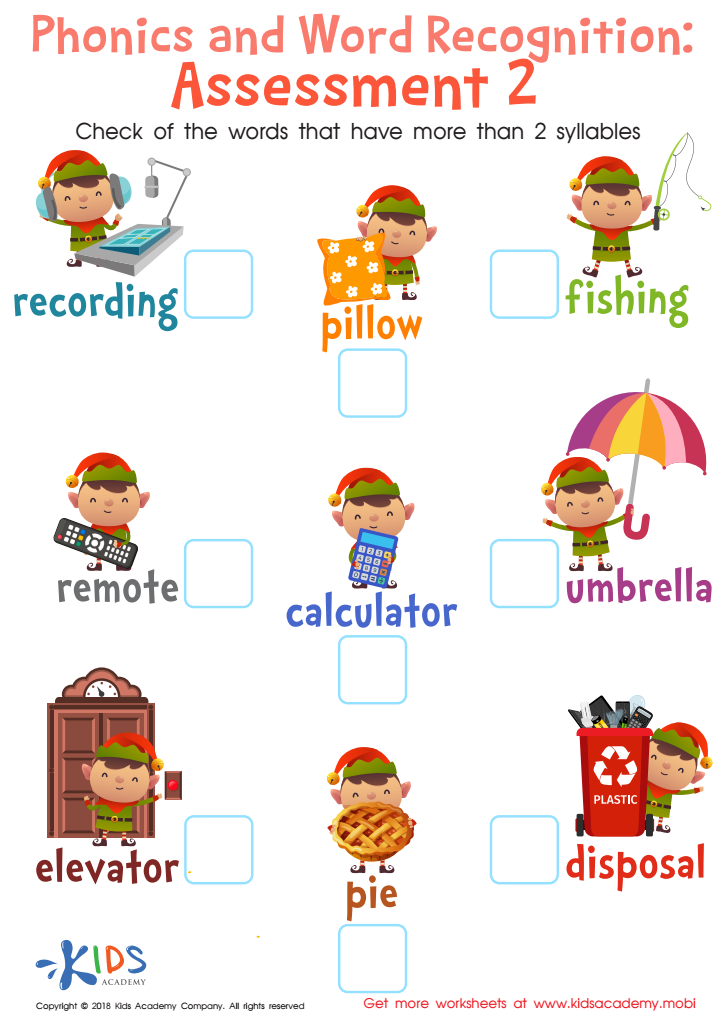
Phonics and Word Recognition: Assessment 2 Worksheet







.jpg)
Word identification Normal Grammar (WING) is a crucial component of early literacy development for children aged 4-8. This framework helps educators and parents understand how children recognize and process written language, establishing a foundation for effective reading and writing skills. Caring about WING is essential for several reasons.
Firstly, children within this age range are at a critical stage of linguistic development. By using a structured grammar approach, educators and parents can support the decoding and comprehension skills that contribute to fluent reading. This is vital not only for academic success but also for fostering a lifelong love for literature.
Furthermore, a strong grasp of word identification normal grammar aids in vocabulary expansion. As children learn to identify words and understand their structures, they can better manipulate language, which enhances their ability to express themselves effectively.
Lastly, understanding WING allows parents and teachers to identify children who may be struggling with reading early on. By addressing potential issues timely, targeted interventions can be implemented, ensuring that all children have the opportunity to thrive in their literacy journeys. Overall, WING serves as an essential tool for guiding and nurturing young learners as they embark on their educational path.