Understanding suffixes Normal Writing Worksheets for Ages 4-8
6 filtered results
-
From - To
Discover our "Understanding Suffixes" Normal Writing Worksheets, designed specifically for children aged 4-8. These engaging and interactive worksheets help young learners grasp the concept of suffixes, enhancing their reading and writing skills. With colorful illustrations and fun exercises, kids will enjoy identifying and applying various suffixes to expand their vocabulary and boost their literacy confidence. Perfect for home or classroom use, these worksheets provide a structured approach to mastering the nuances of language while fostering creativity and self-expression. Join us in making learning exciting with our carefully crafted resources that ensure a solid foundation in language arts for your little ones!
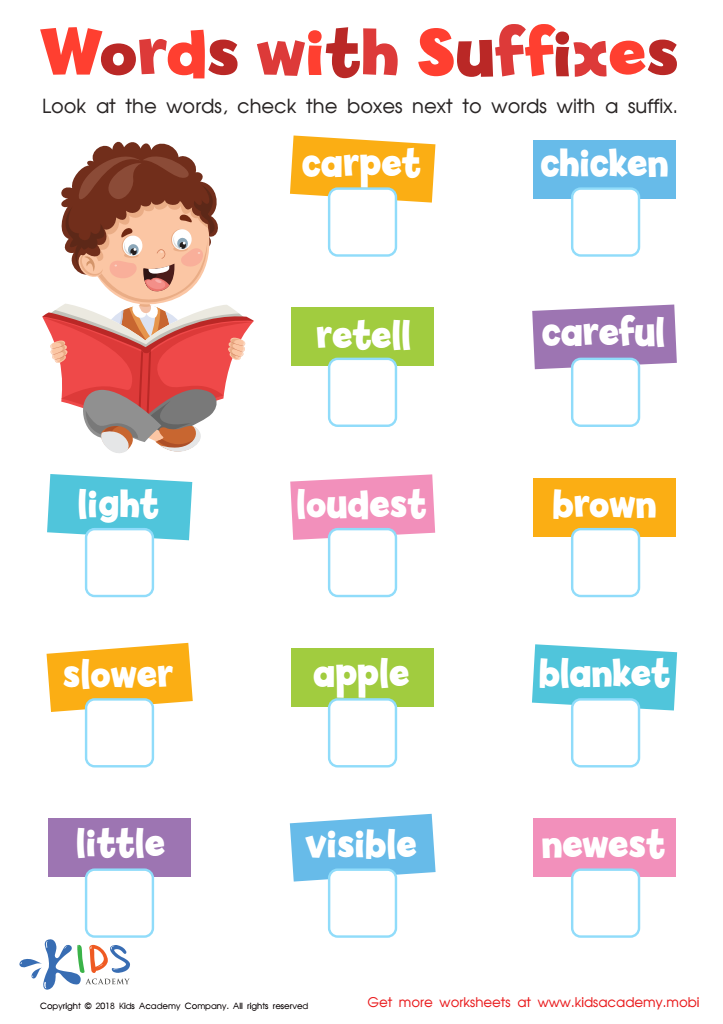
Reading: Words With Suffixes Worksheet
 Assign to My Students
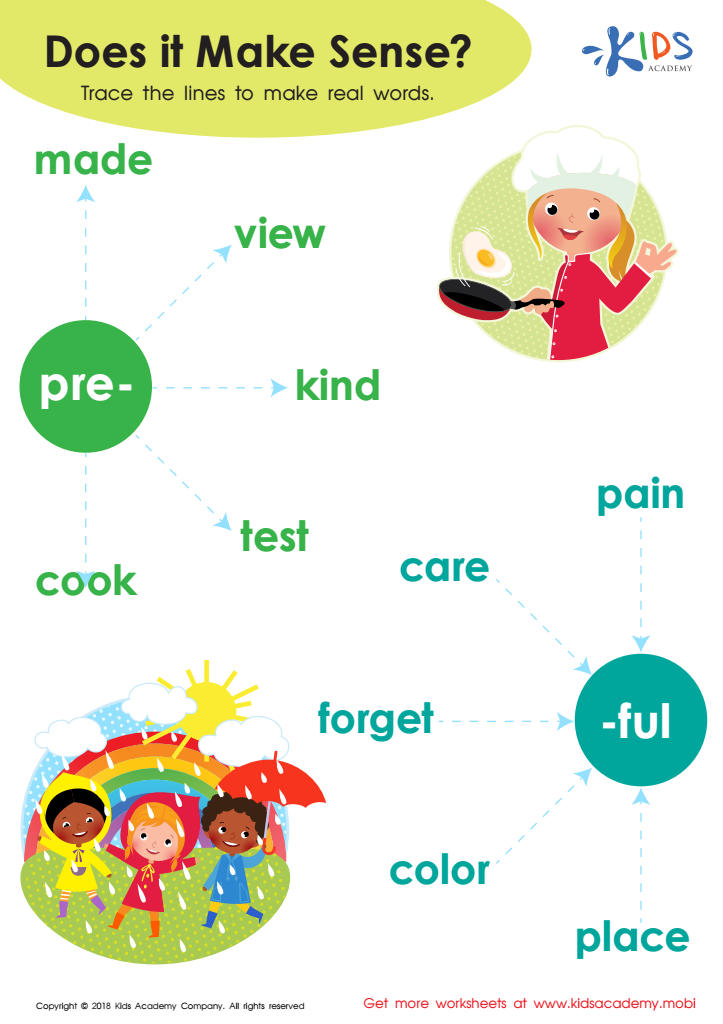
Prefix pre– and Suffix ful– Worksheet
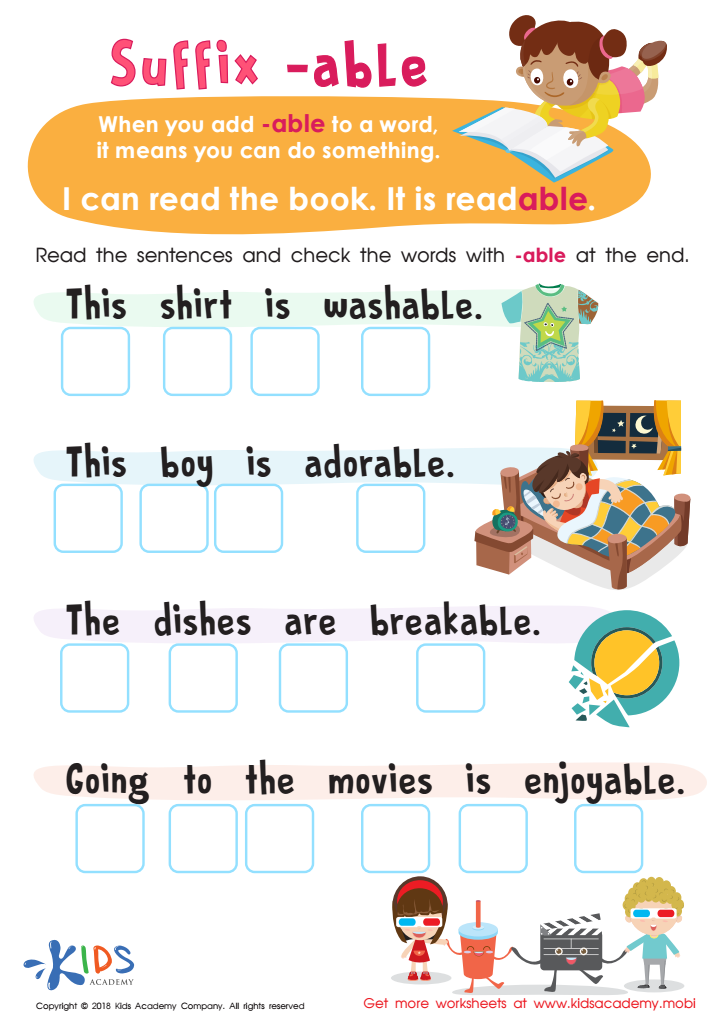
Suffix -Able Worksheet
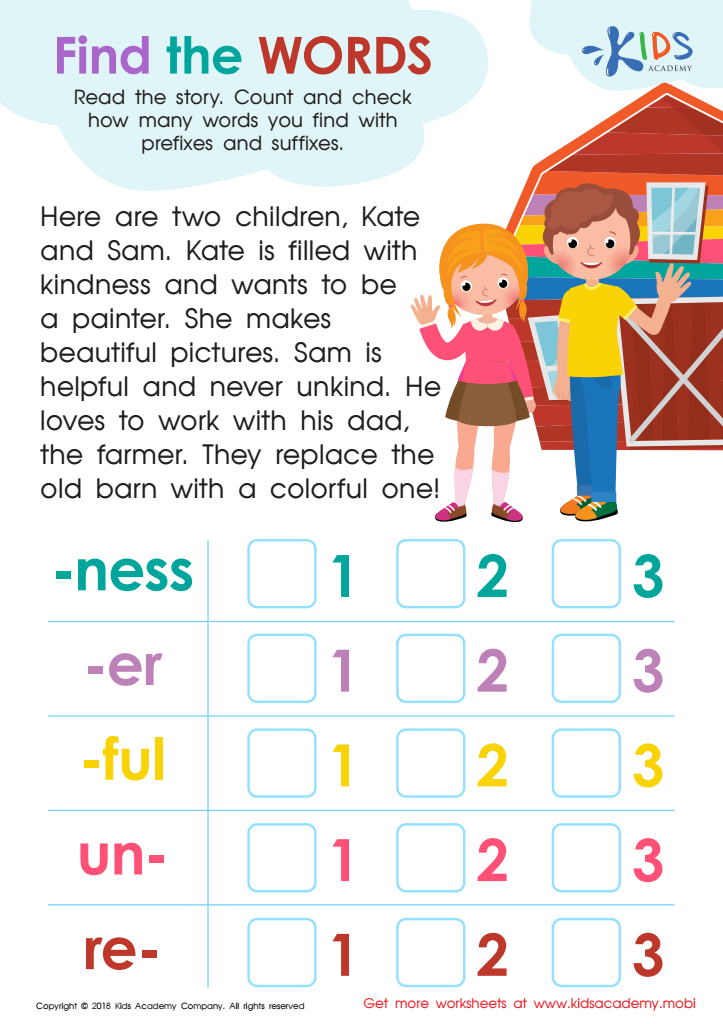
Prefix and Suffix Worksheet For Grade 3
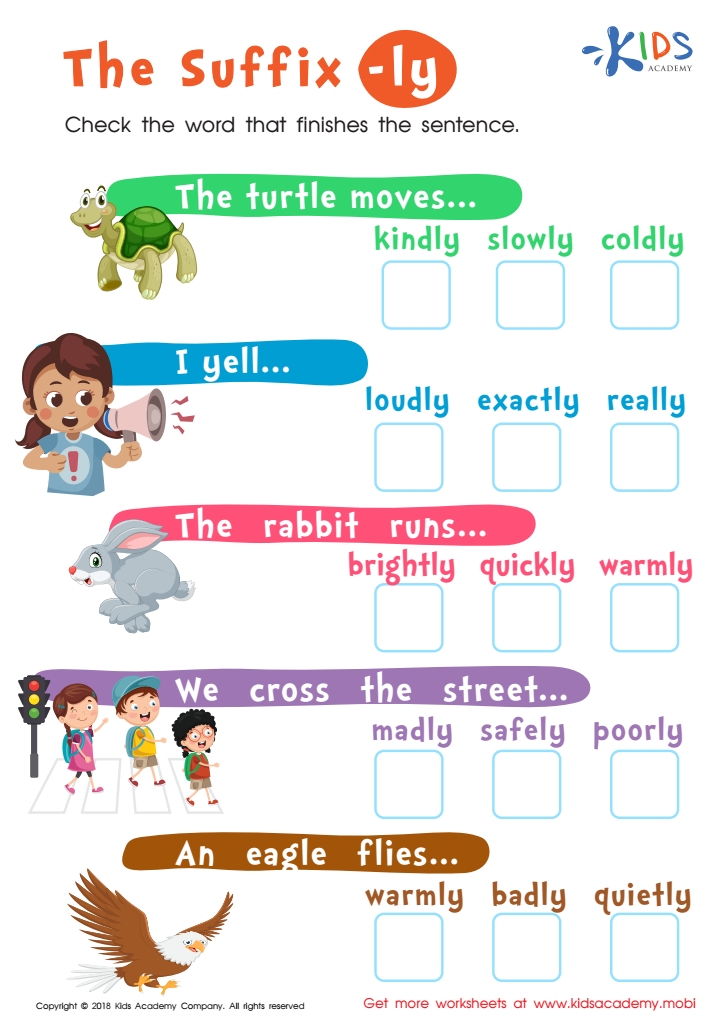
The Suffix -Ly Worksheet
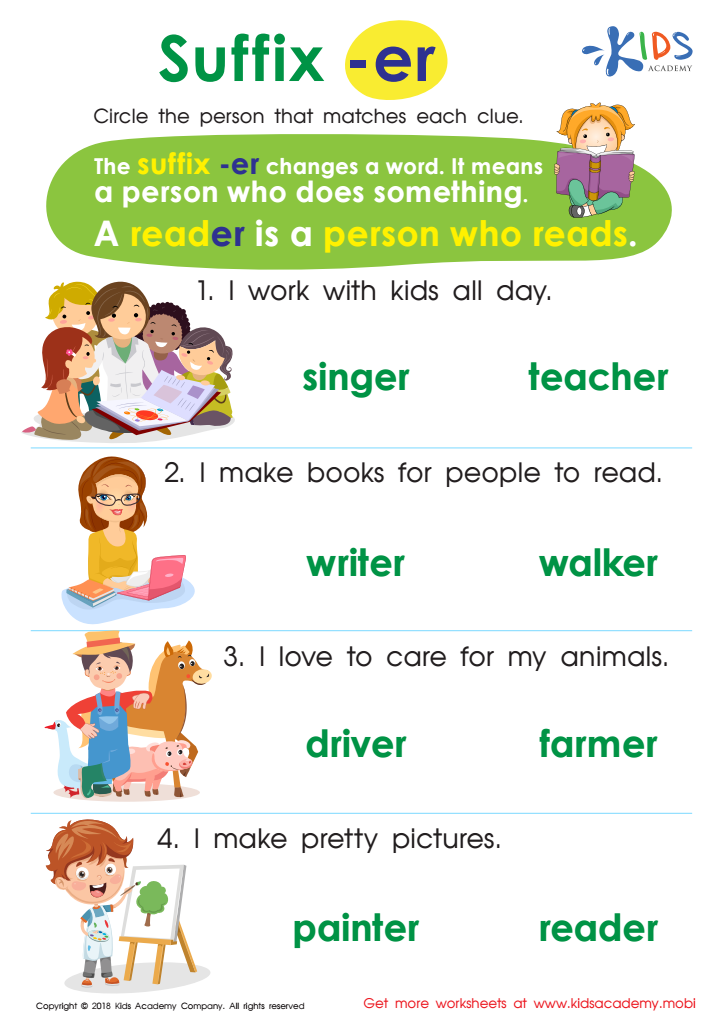
Suffix –er Printable Worksheet




.jpg)



Understanding suffixes is crucial for children ages 4-8 as it enhances language skills and promotes reading and writing proficiency. Suffixes are word endings that help form new words, changing their meanings and functions. When children recognize and understand suffixes, they can decode unfamiliar words more easily, boosting their reading comprehension. For example, knowing that "happily" comes from "happy" allows them to grasp its meaning without dictionary assistance.
Moreover, suffixes contribute to creativity in writing. Children learn how to expand their vocabulary by adding suffixes to root words, enabling them to express ideas more richly. For instance, transforming "play" into "playful" helps convey a deeper concept.
Parents and teachers play a pivotal role in fostering this understanding. By incorporating fun activities, like games or storybooks that emphasize suffixes, they can make learning interactive and engaging. This foundational knowledge not only supports literacy development but also builds confidence as children become more proficient in their communication skills.
Ultimately, mastering suffixes prepares young learners for more advanced language concepts, setting the stage for academic success in reading and writing throughout their educational journey. Investing time in this area is essential for fostering a love of language in children.