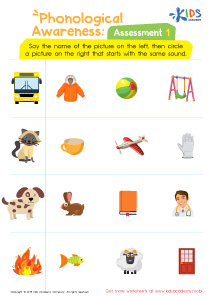
Sound recognition Normal Consonants Worksheets for Ages 4-9
3 filtered results
Difficulty Level
Grade
Age
-
From - To
Subject
Activity
Standards
Enhance your child's phonics skills with our "Sound Recognition Normal Consonants Worksheets for Ages 4-9." These engaging and educational printable worksheets help young learners distinguish and identify consonant sounds. With fun activities and colorful illustrations, children will enjoy practicing essential pre-reading and reading skills. Perfect for use at home or in the classroom, these worksheets provide a solid foundation in sound recognition, boosting your child's confidence in handling the English alphabet. Ideal for ages 4-9, our worksheets support effective learning through play, ensuring children remain motivated while mastering consonant sounds. Download now and start an exciting phonics journey!
Favorites
With answer key
Interactive
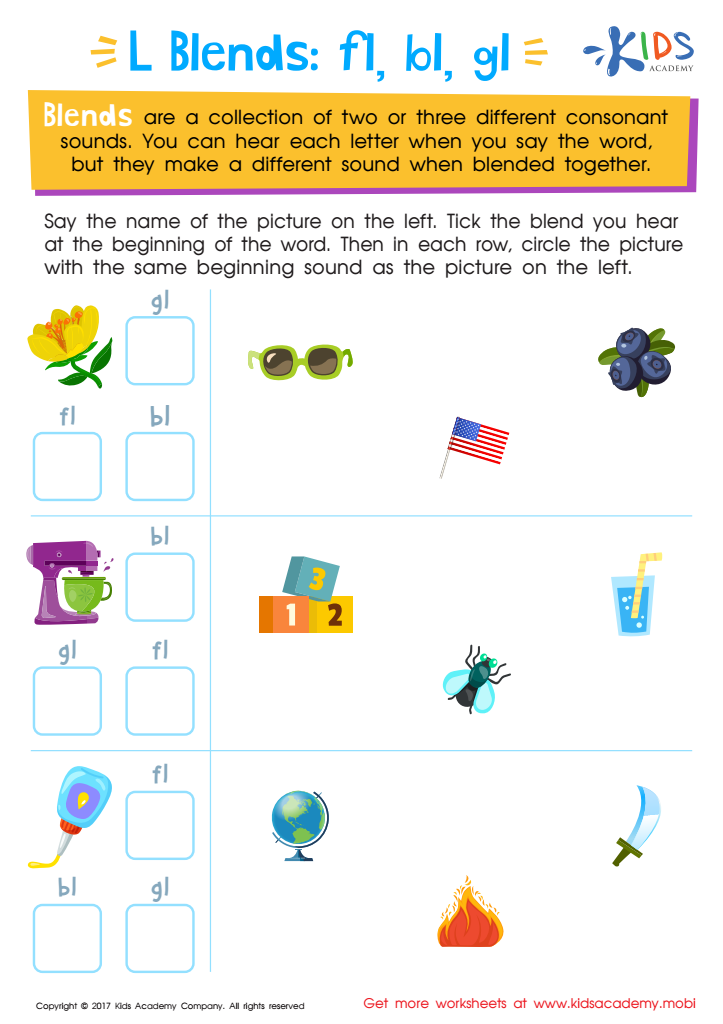
Blending Consonants: "Fl", "Bl" and "Gl" Printable
Help your child master consonant blends Fl, Bl, and Gl with this printable worksheet. Find words associated with the pictures and learn to better understand the difference between consonant blends. Vibrant images motivate and aid in learning. Download now for improved phonics success!
 Assign to My Students
Blending Consonants: "Fl", "Bl" and "Gl" Printable
Worksheet
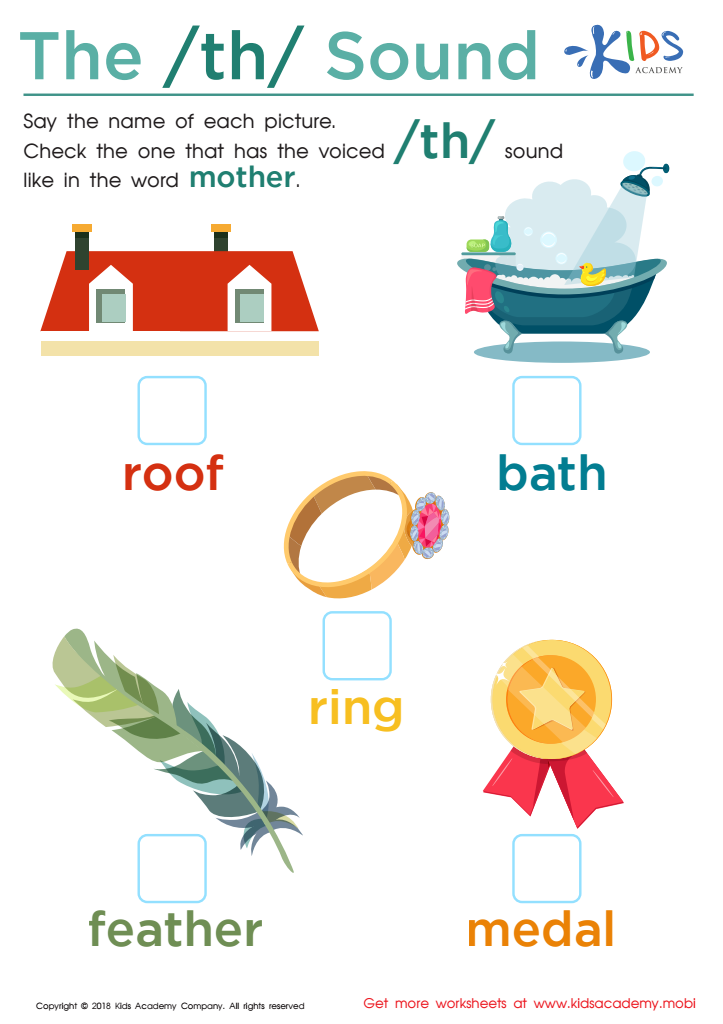
The /th/ Sound Worksheet
Confuse your students no more: have them use this worksheet to understand the /th/ sound and its two variants. With pictures, ask them to say the name of each one. Help them identify the voiced /th/ sound, like in 'mother', by having them say it aloud. Download the pdf to get started.
The /th/ Sound Worksheet
Worksheet
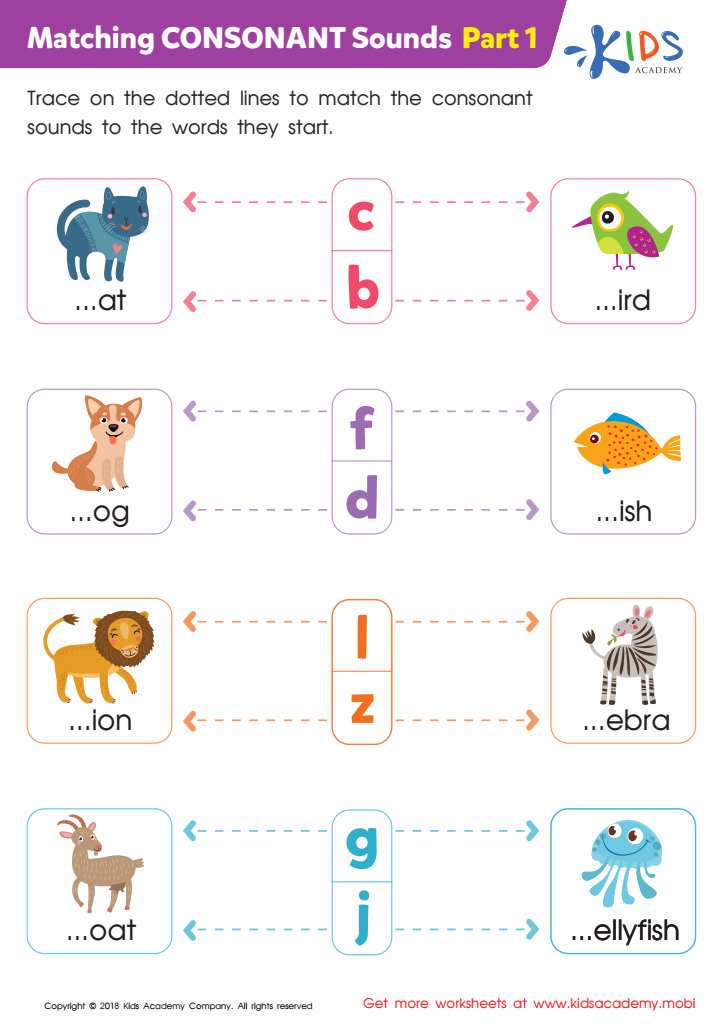
Matching Consonant Sounds: Part 1 Worksheet
Decide which letter matches each word and picture in this fun phonics worksheet. Slide your finger over each word, trying out each letter to check for matches. Once each pair is solved, trace the dotted lines with pencil to complete the printable. Who knew learning could be so enjoyable?
Matching Consonant Sounds: Part 1 Worksheet
Worksheet
Join Kids Academy for Free
Who is primarily going to use this learning content?



Sound recognition of normal consonants is crucial for children aged 4-9 as it forms the foundation for their language development, literacy skills, and overall academic success. During these formative years, children's brains are particularly receptive to learning sounds, and mastering consonant sounds helps them in decoding words, which is essential for reading. At this age, children are transitioning from just hearing and repeating words to understanding and using them confidently. Recognizing and differentiating consonant sounds boosts their phonemic awareness, allowing them to grasp the mechanics of speech and spelling.
For parents and teachers, investing time in teaching consonant sounds means they are equipping children with essential tools for future learning. Accurate sound recognition supports vocabulary expansion and correct pronunciation, which enhances communication skills. It also lays the groundwork for more complex language skills, such as fluency, reading comprehension, and writing competency.
Additionally, difficulties in sound recognition can signal potential learning or speech issues—early identification allows for timely intervention, ensuring children don’t fall behind their peers. Encouraging activities like singing, rhyming games, and interactive reading can make learning these sounds a fun and integral part of children's daily lives. Thus, focusing on sound recognition of consonants fosters a positive learning trajectory that benefits children far beyond their early academic years.