Lowercase letter writing Normal Alphabet Worksheets for Ages 4-9
3 filtered results
-
From - To
Discover our Lowercase Letter Writing Normal Alphabet Worksheets, designed for children ages 4-9. These engaging and educational resources help young learners master the fundamentals of writing lowercase letters with confidence. Each worksheet offers clear examples, guiding lines, and fun exercises to reinforce proper letter formation. Perfect for classroom use or at-home practice, our worksheets are an essential tool for building strong literacy foundations. Boost your child's reading and writing skills while making learning an enjoyable experience. Visit Kids Academy to download and print your worksheets today and support your child's writing journey!
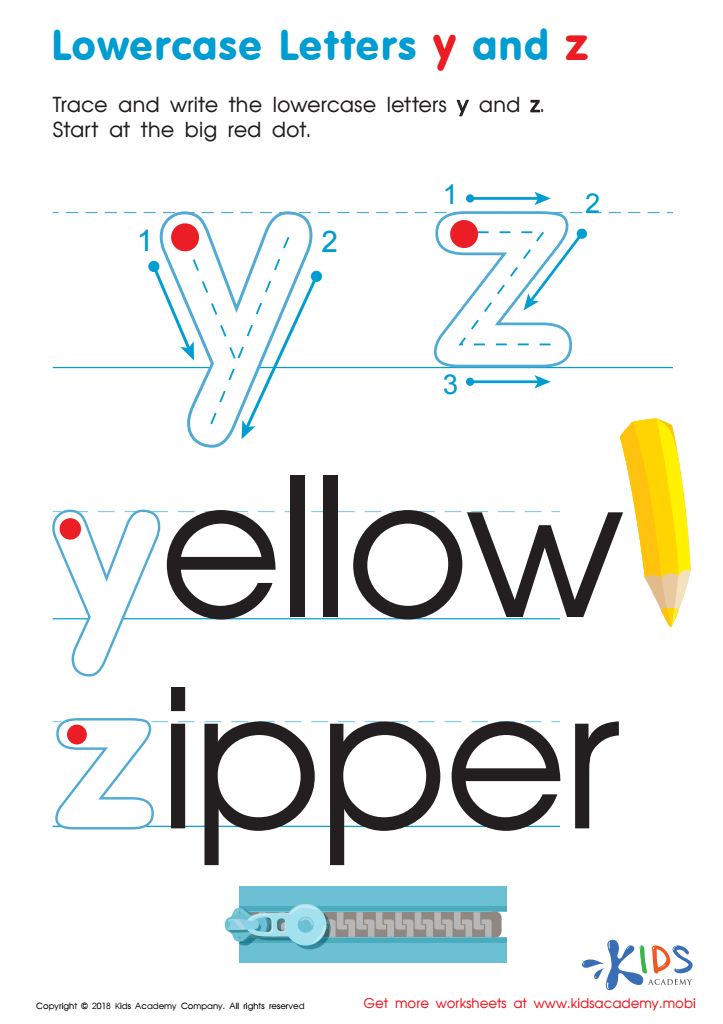
Lowercase Letters y z Worksheet
 Assign to My Students
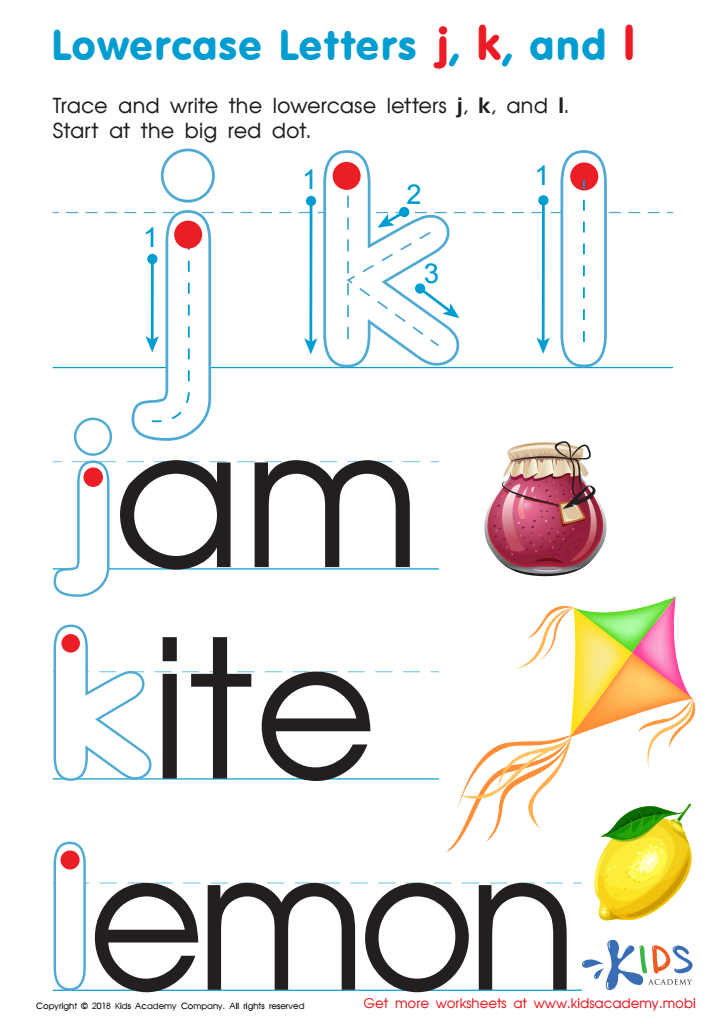
Lowercase Letters j k l Worksheet

Lowercase Letters m n o Worksheet








Parents and teachers should care about lowercase letter writing for children aged 4-9 because it plays a fundamental role in their early literacy development. At this age, children are in a critical period for learning to read and write. Lowercase letters are predominant in texts, so recognizing and writing them fluently is essential for effective reading and comprehension. Mastering lowercase letters also helps children in developing fine motor skills, hand-eye coordination, and dexterity, crucial for everyday tasks.
Moreover, learning lowercase letters alongside uppercase letters helps children understand letter case rules and aids in sentence structure comprehension. With a solid foundation in lowercase letter writing, children are better prepared to construct words and sentences, facilitating smoother transitions to higher literacy levels.
Additionally, literacy skills are interlinked with overall academic success. Confident readers and writers are more likely to excel across subjects, as they can easily understand and process written instructions and information. Emotional and social benefits also arise; proficient literacy supports self-confidence and effective communication with peers and adults.
Thus, focusing on lowercase letter writing in early education ensures comprehensive language development, promoting lasting academic and personal growth for young learners.







