Sound-letter association Normal Alphabet Worksheets for Ages 4-9
3 filtered results
-
From - To
Enhance your child's reading skills with our engaging Sound-Letter Association Normal Alphabet Worksheets, designed for ages 4-9. These worksheets provide a fun and interactive way for young learners to connect sounds with corresponding letters, reinforcing phonemic awareness essential for literacy development. Each worksheet features vibrant imagery and captivating activities that stimulate learning and keep children motivated. Ideal for both classroom use and homeschool settings, our resources are tailored to fit various learning styles. As kids explore each worksheet, they’ll build confidence in their ability to recognize letters and their sounds, paving the way for a successful reading journey. Start today!
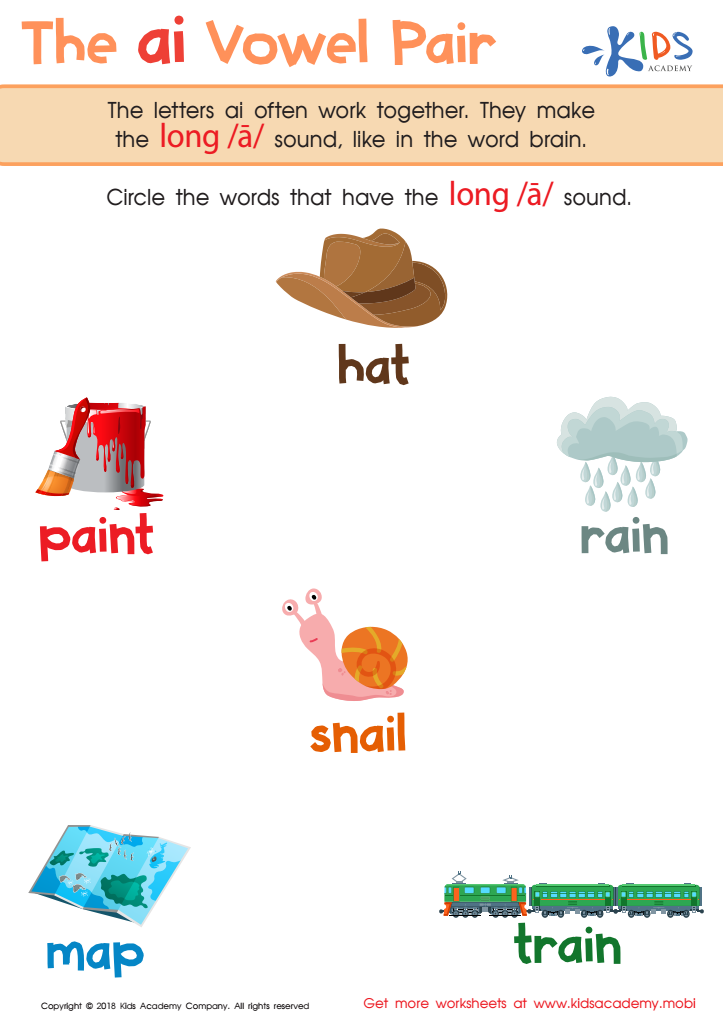
The AI Vowel Pair Worksheet
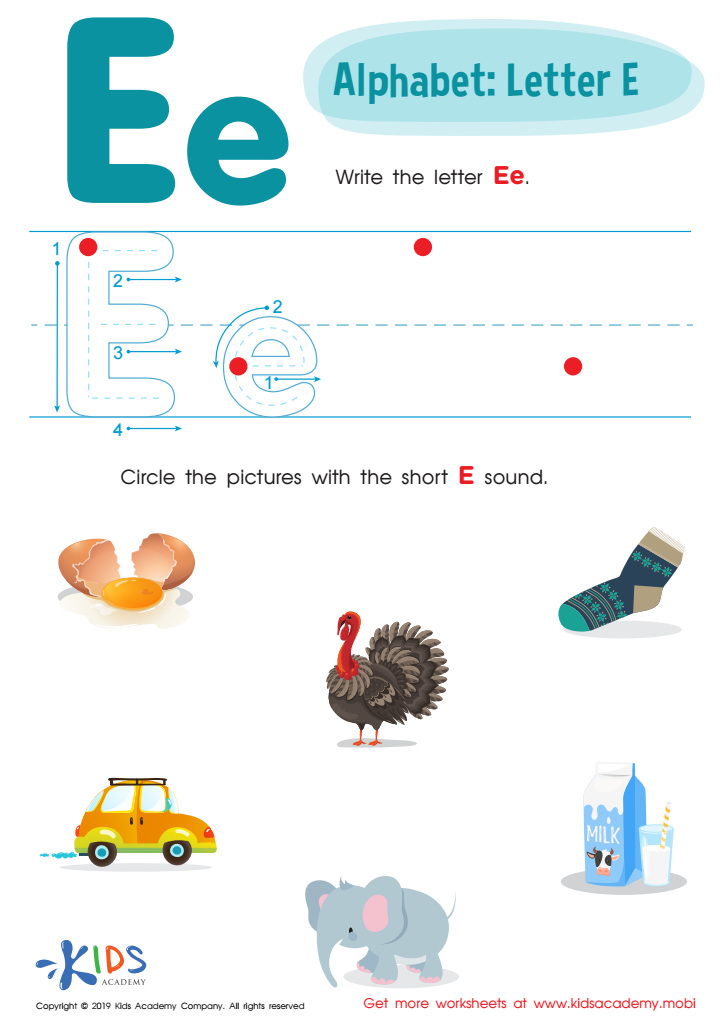
Letter E Tracing Worksheet
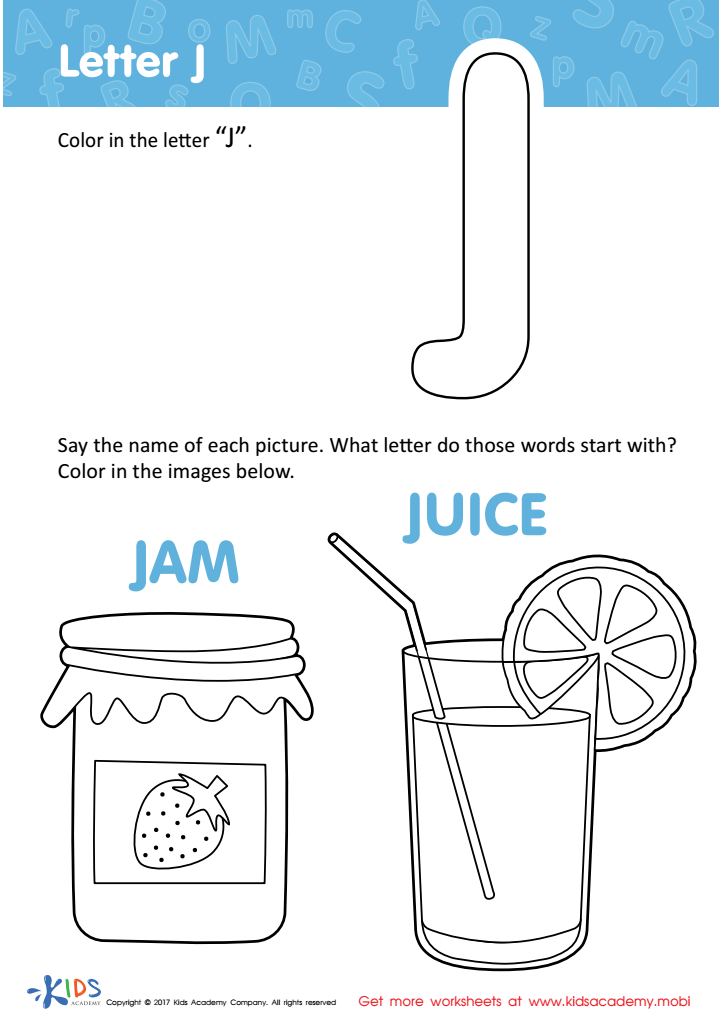
Letter J Coloring Sheet
 Assign to My Students








Sound-letter association, often referred to as phonemic awareness, is a foundational skill in early literacy development for children ages 4-9. Understanding the relationship between sounds and their corresponding letters is crucial for effective reading and writing. Parents and teachers should care about this skill because it sets the stage for a child's future academic success.
Firstly, sound-letter association fosters a child's ability to decode words. When children can recognize the sounds that letters make, they can blend these sounds together to read unfamiliar words, boosting their confidence and fluency. Moreover, this skill is directly linked to spelling; children who grasp sound-letter correspondence are better able to spell words independently.
Furthermore, early mastery of this skill encourages a love for reading, as children can access a broader range of texts. Engaging with stories becomes more enjoyable and effective, enriching vocabulary and comprehension.
Lastly, understanding sound-letter associations can identify early reading difficulties, allowing parents and teachers to intervene proactively. Investing time in this vital foundational skill not only equips children with the tools they need for academic achievement but also enhances their overall love for language and learning.







