Uppercase identification Normal Alphabet Worksheets for Ages 4-9
5 filtered results
-
From - To
Discover our engaging Uppercase Identification Normal Alphabet Worksheets, designed specifically for children ages 4 to 9. These printable resources enhance letter recognition skills by making learning fun and interactive. Each worksheet focuses on identifying uppercase letters through various activities, including tracing, matching, and letter games. Our worksheets are suitable for diverse learning environments, whether at home or in the classroom. They promote fine motor skills and bolster pride in letter mastery. Perfect for young learners, these resources help build a strong literacy foundation. Download now and inspire a love for learning as children embark on their alphabet adventure!
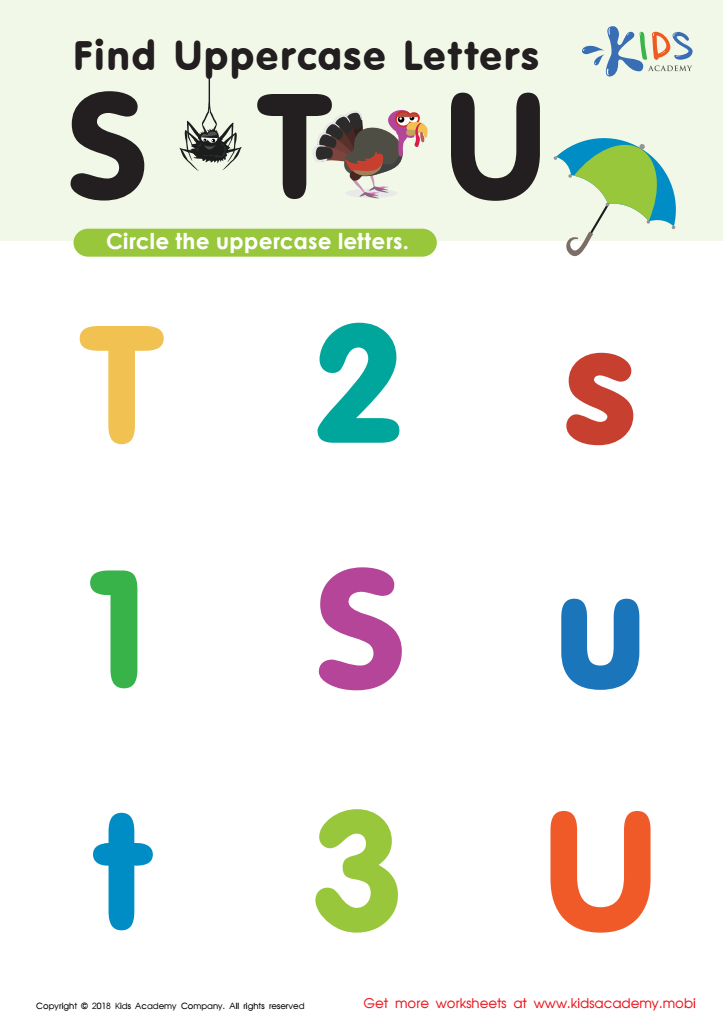
Find Uppercase Letters Worksheet
 Assign to My Students
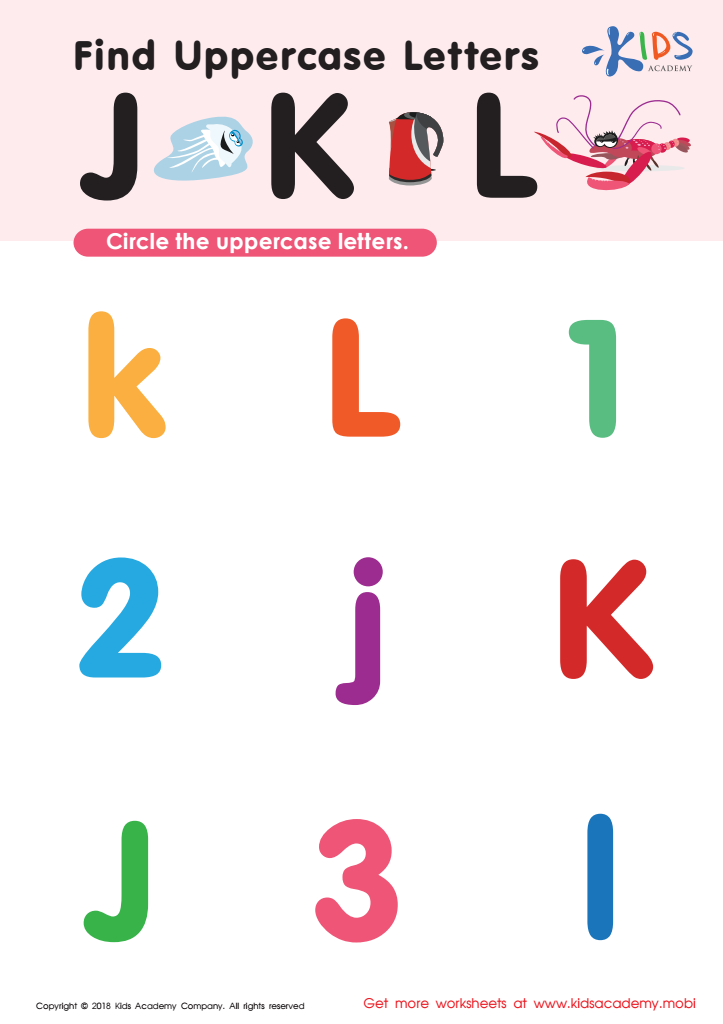
Find Uppercase Letters J, K, and L Worksheet
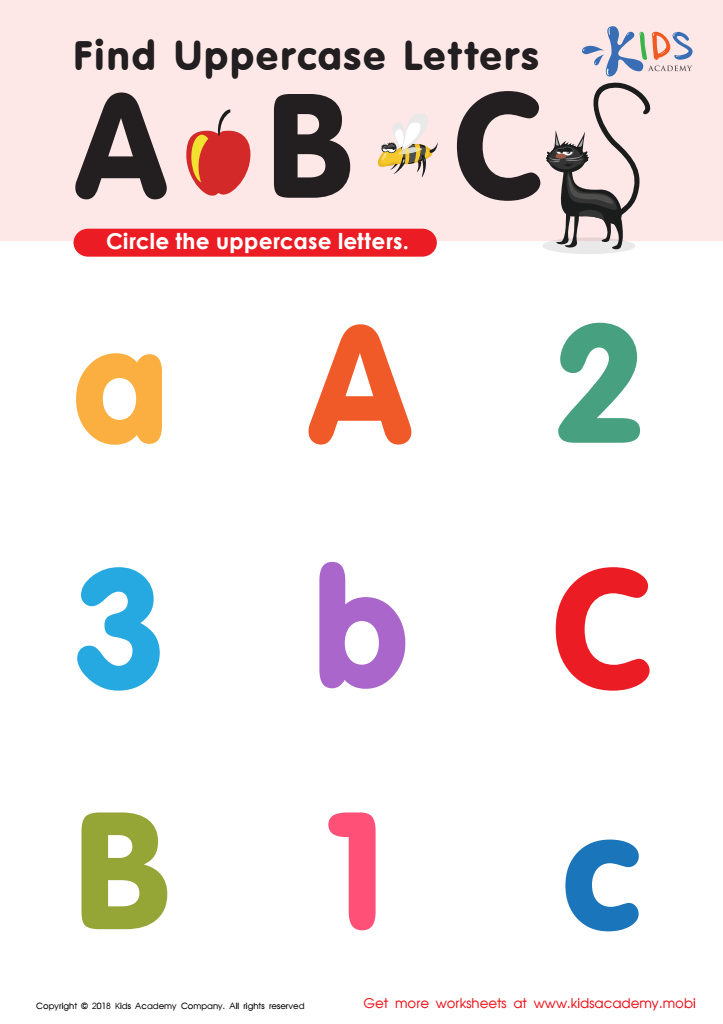
Find Uppercase Letters A, B, and C Worksheet
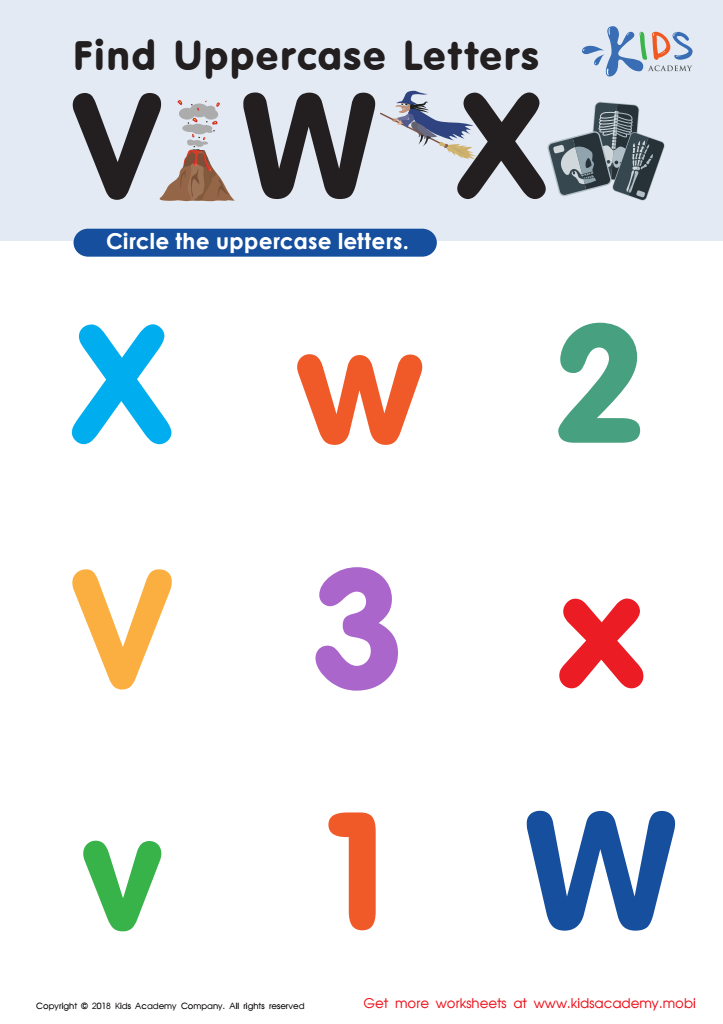
Find Uppercase Letters V, W, X Worksheet
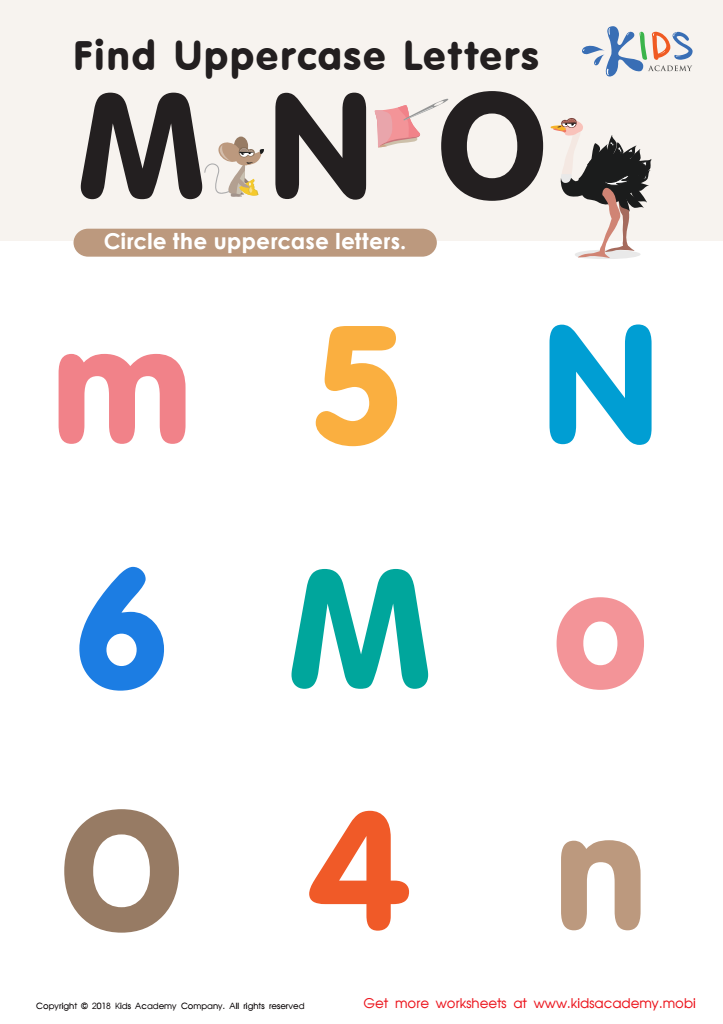
Find Uppercase Letters M, N, and O Worksheet







.jpg)
Parents and teachers play a pivotal role in fostering literacy development in children aged 4-9, where uppercase letter identification is a fundamental skill. Recognizing uppercase letters is essential as it forms the basis for reading and writing, facilitating children’s ability to decode words. Uppercase letters often signify the beginning of sentences and proper nouns, which are crucial in understanding grammar and context.
Fostering uppercase letter recognition in early education helps enhance children's overall cognitive development, including memory, attention, and visual discrimination skills. This foundational knowledge promotes reading fluency, allowing children to progress seamlessly into more complex texts.
Furthermore, involvement in letter identification helps teachers and parents assess each child's literacy skills and tailor their approach accordingly. When children master uppercase letters, they gain confidence, fostering a love for reading and learning. Engaging parents in this process, through playful activities or reading together, strengthens the school-home connection and emphasizes the importance of literacy in daily life.
In summary, nurturing uppercase letter identification in young children is crucial for their academic success and confidence, forming building blocks for their future educational journey. It’s a vital investment in their literacy and communication skills that pays dividends as they grow.







