Lowercase identification Normal Letter Recognition Worksheets for Ages 4-9
4 filtered results
-
From - To
Lowercase Identification Normal Letter Recognition Worksheets for Ages 4-9 are designed to enhance your child's early literacy skills. These engaging and interactive worksheets help children identify and recognize lowercase letters through fun activities. Perfect for young learners, they support alphabet mastery and improve reading readiness. Utilizing vibrant illustrations and effective exercises, these worksheets foster confidence in early readers. Ideal for both classroom and at-home learning, parents and teachers will find these resources invaluable for developing foundational language skills in children ages 4-9. Boost your child's letter recognition abilities with these expertly crafted worksheets from Kids Academy.
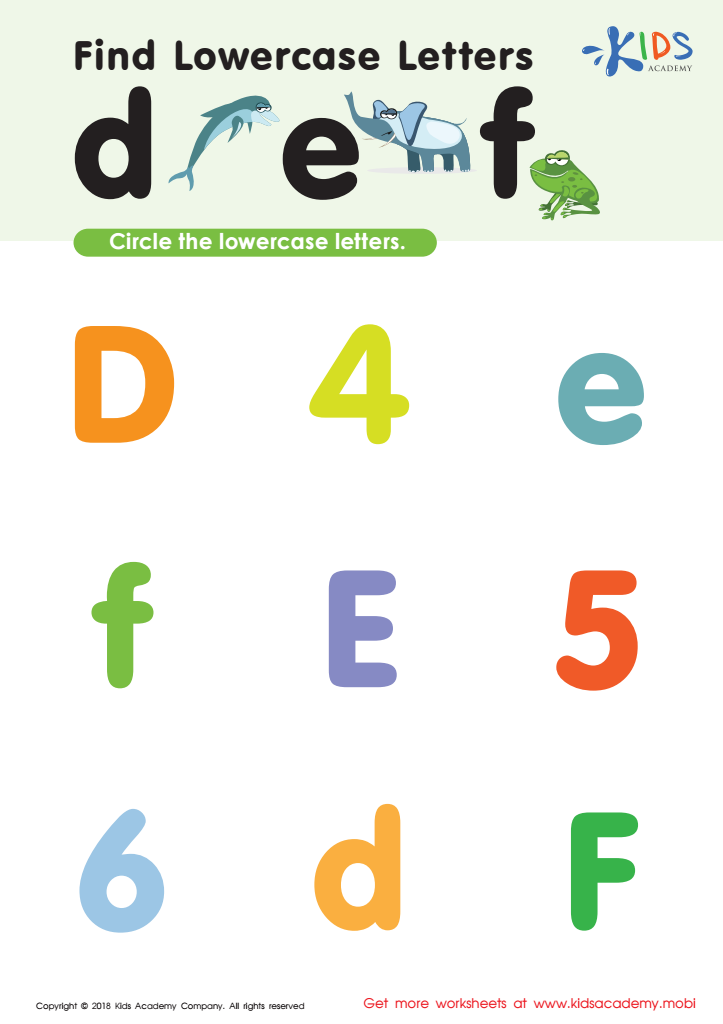
Find Lowercase Letters d e f Worksheet
 Assign to My Students
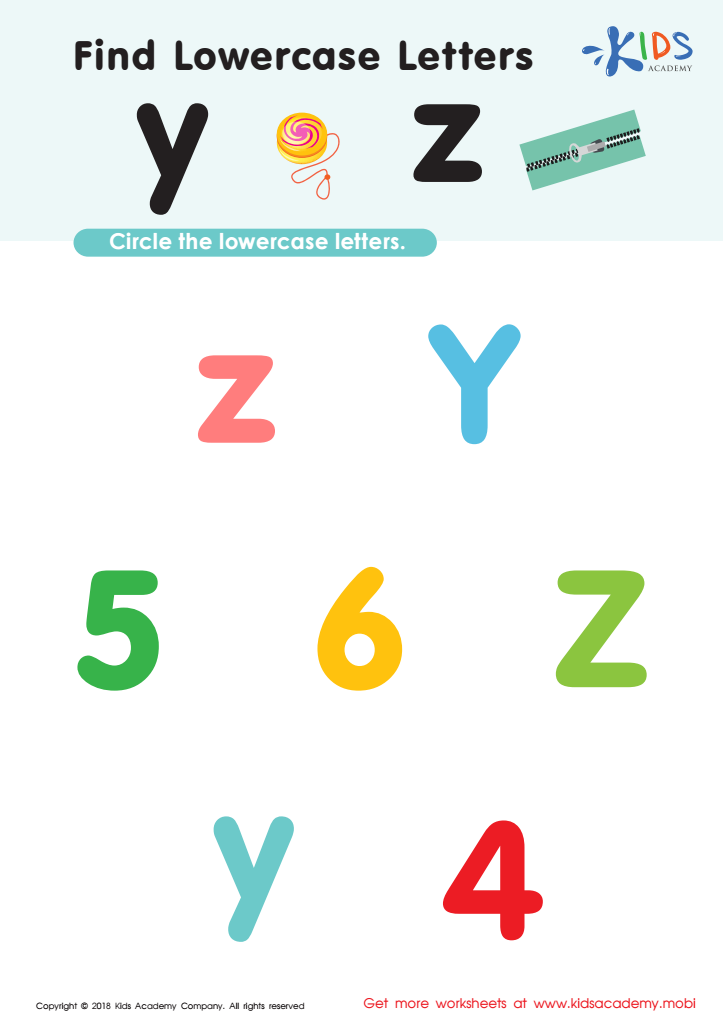
Find Lowercase Letters y z Worksheet

Find lowercase letters a b c Worksheet
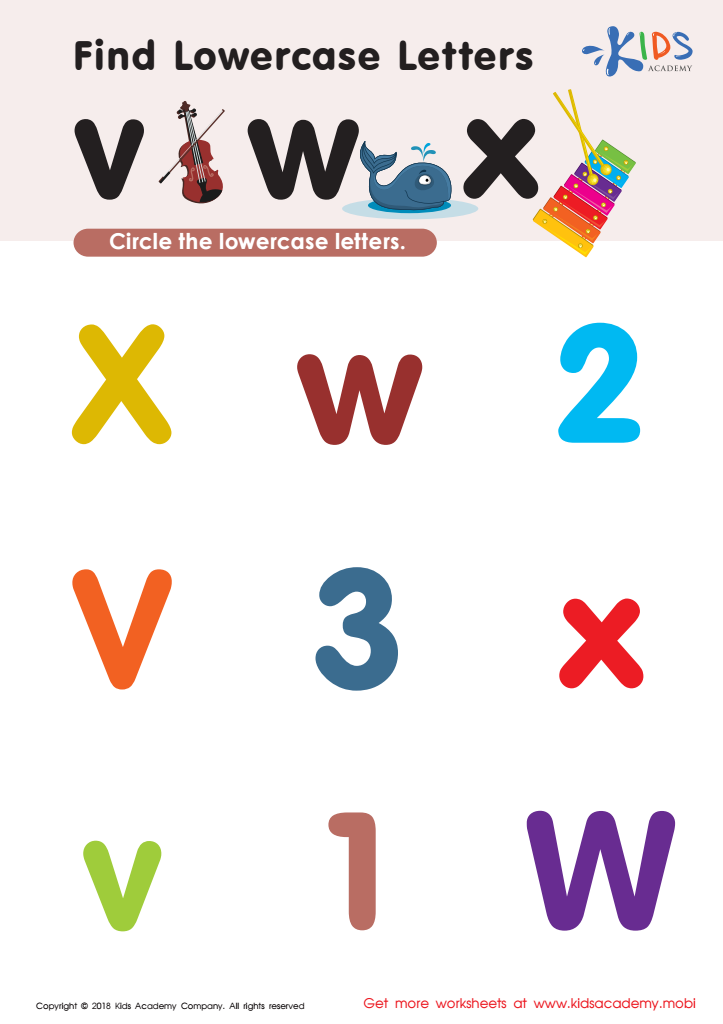
Find Lowercase Letters v w x Worksheet








Parents and teachers should prioritize lowercase identification and normal letter recognition for children aged 4-9 because these foundational skills are essential for literacy development. Recognizing both uppercase and lowercase letters accurately enhances a child's ability to read and write smoothly. During early childhood, the brain is particularly receptive to learning these core components of language, and mastering them early sets the stage for future academic success.
Lowercase letters are far more prevalent in written text than uppercase letters, making them crucial for reading fluency. If a child struggles with identifying lowercase letters, they are likely to encounter difficulties in reading sentences and paragraphs, which can hinder comprehension and enjoyment of reading.
Moreover, handwriting practices often begin with lowercase letters, meaning that familiarity with them can aid in developing fine motor skills and proper writing techniques. Early recognition also fosters confidence and reduces frustration, which can motivate children to engage more with reading and writing activities.
Strong letter recognition skills support phonemic awareness, a critical early reading skill. Children who excel at identifying letters are better prepared to connect those letters with their corresponding sounds, facilitating smoother transitions to decoding words and, ultimately, to full reading proficiency. Investing time in these fundamental skills during early childhood yields long-lasting educational benefits.








