Vocabulary development Normal Letter Sounds Worksheets for Ages 4-9
6 filtered results
-
From - To
Enhance your child's vocabulary with our engaging Normal Letter Sounds Worksheets, designed specifically for ages 4-9. These worksheets provide fun and interactive activities that focus on letter sounds, helping young learners build a strong foundation in phonics and language skills. Each activity encourages pronunciation, recognition, and understanding of letters, making learning enjoyable. Our carefully crafted content promotes vocabulary development while catering to various learning styles. Ideal for home or classroom use, these worksheets support early literacy by fostering a love for words and reading. Dive into a world of sound and language today, and watch your child flourish in their verbal skills!
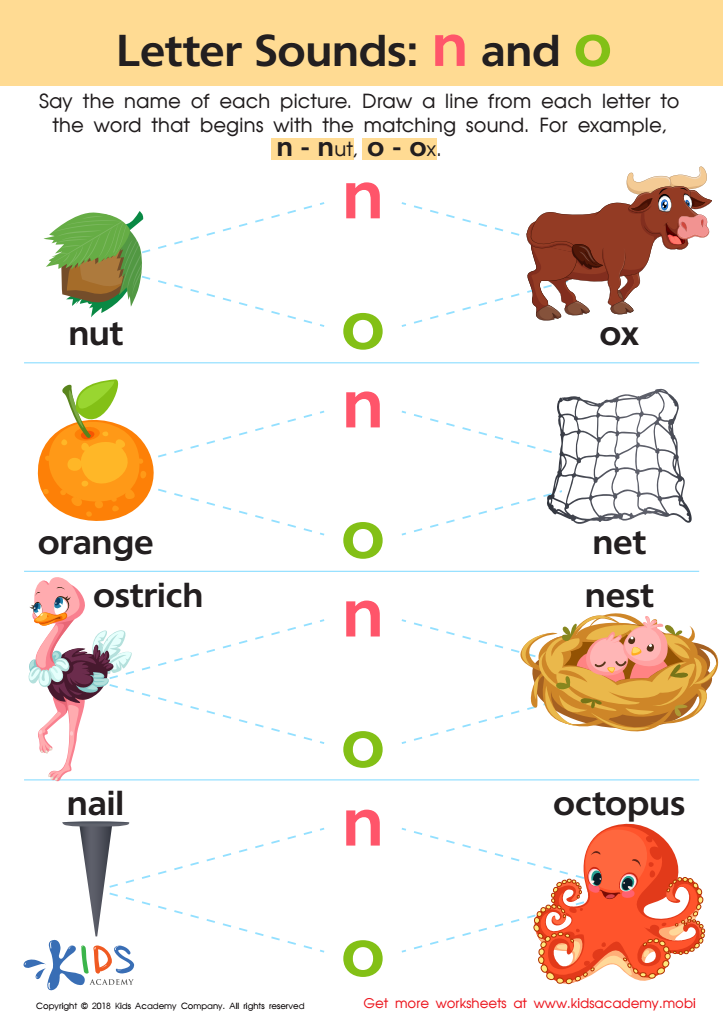
Letter N and O Sounds Worksheet
 Assign to My Students
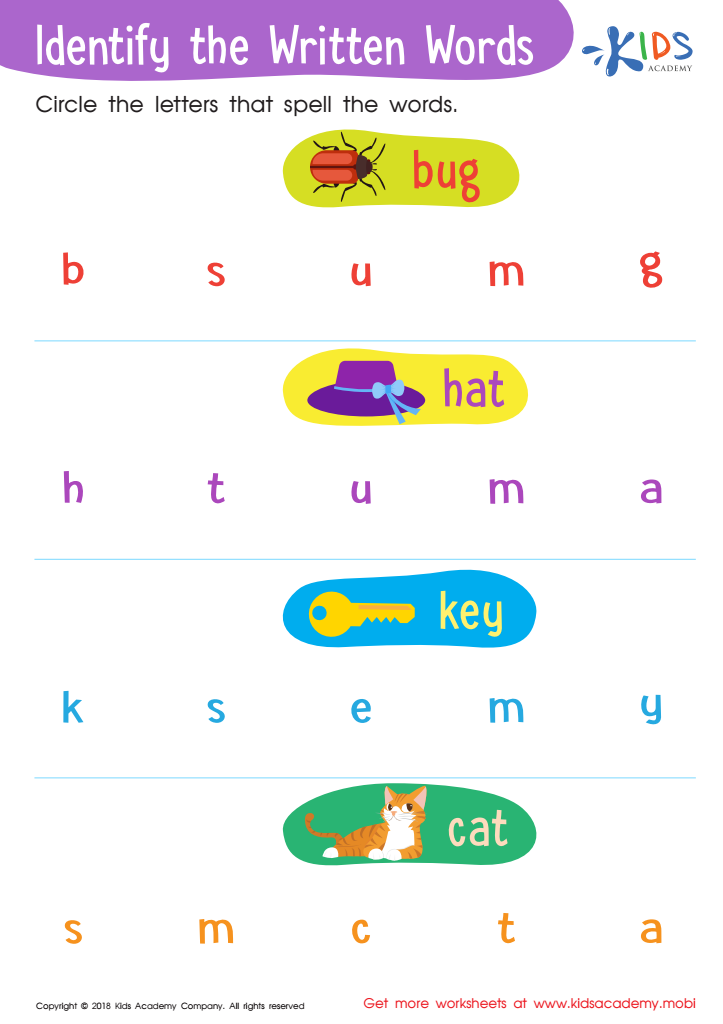
Identify the Written Words Worksheet
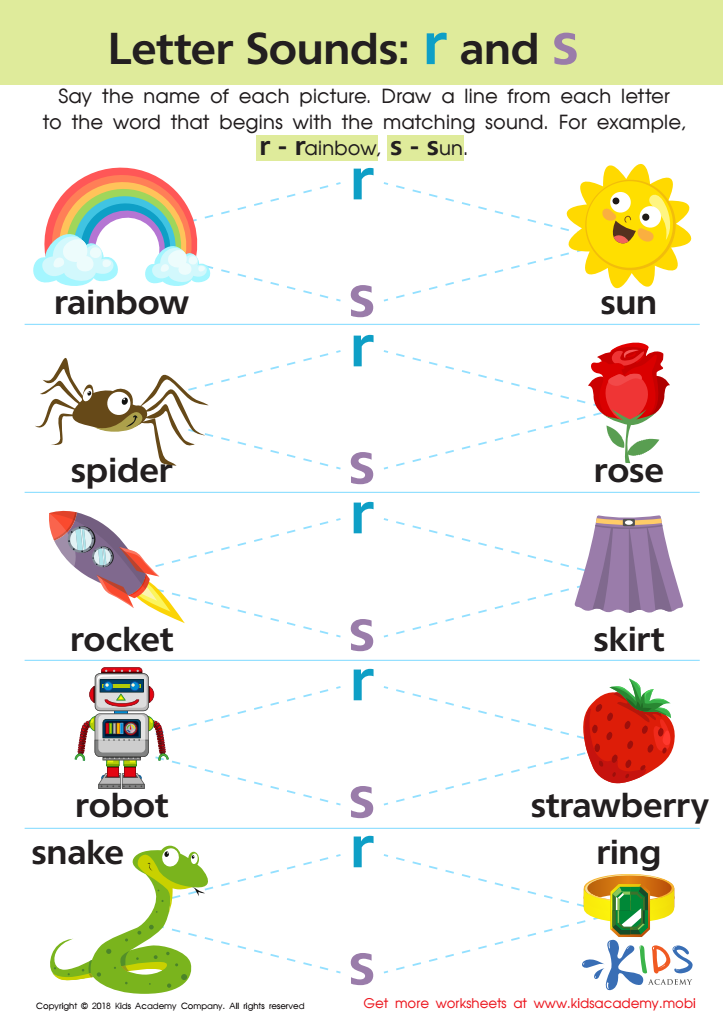
Letter R and S Sounds Worksheet
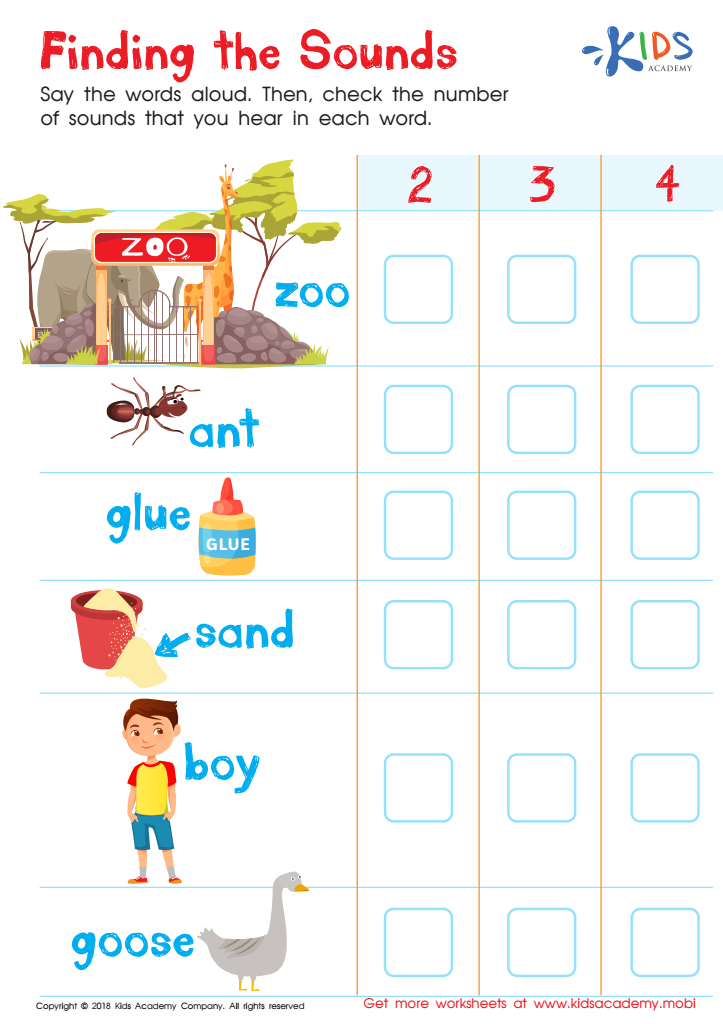
Finding the Sounds Worksheet
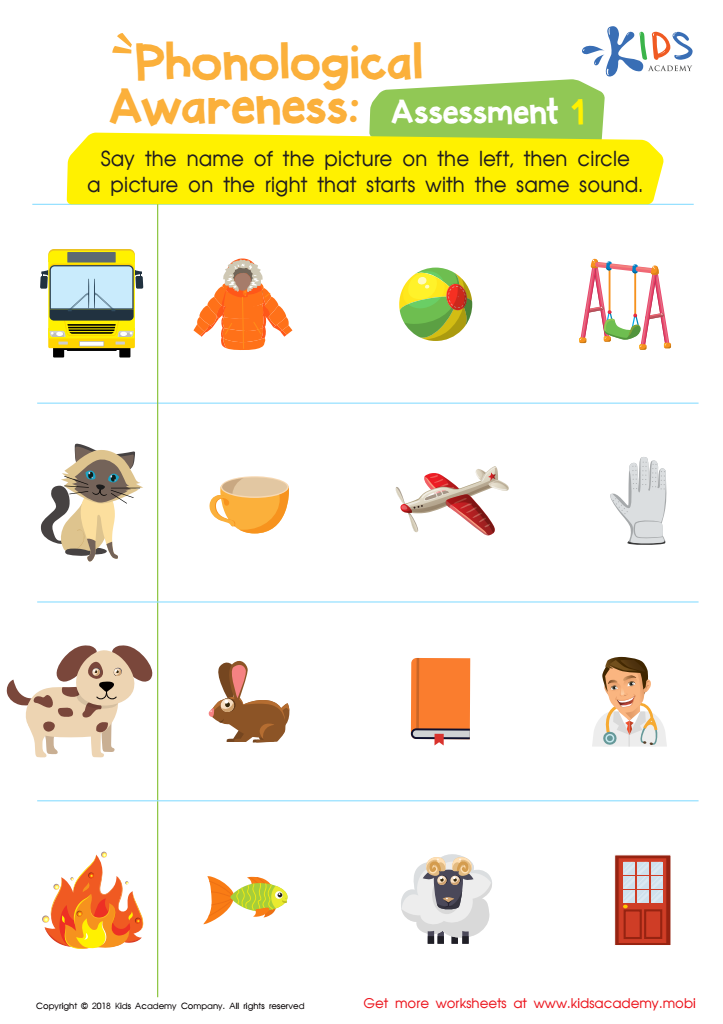
Phonological Awareness: Assessment 1 Worksheet
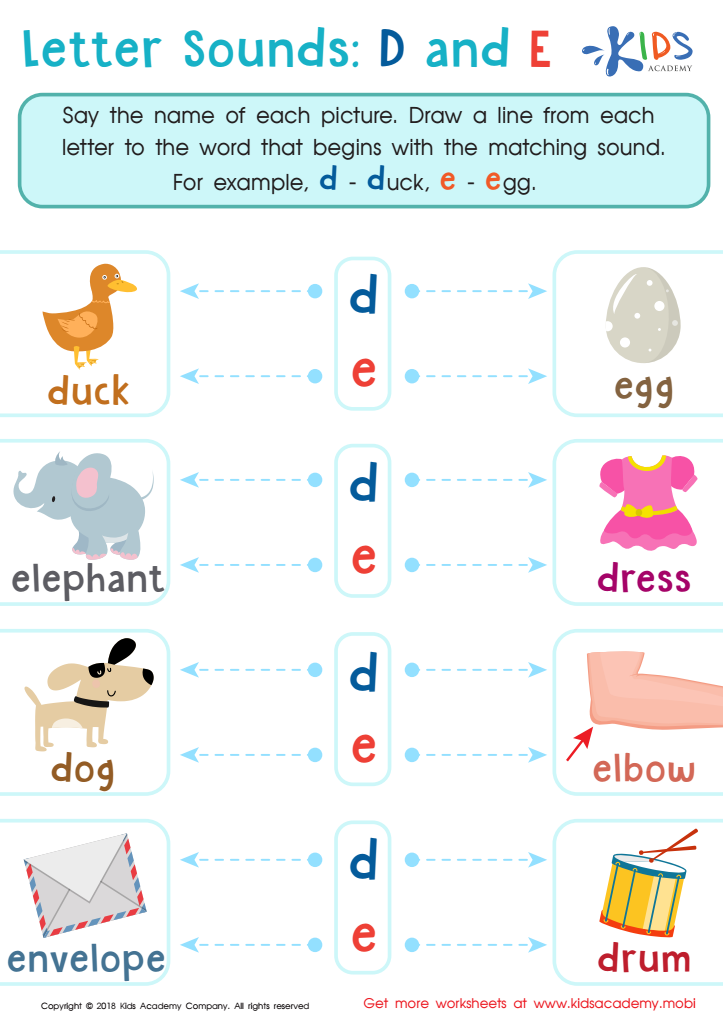
Letter D and E Sounds Worksheet








Vocabulary development is crucial for children aged 4-9, as it lays the foundation for their literacy and overall academic success. During these formative years, children are rapidly acquiring language skills and learning to express themselves. Exposure to a rich vocabulary helps them understand complex ideas and enhances their communication abilities, empowering them to articulate thoughts and feelings effectively.
Parents and teachers play vital roles in this developmental stage. By understanding and nurturing vocabulary growth, they create rich language environments that stimulate curiosity and discussion. Engaging in conversations, reading aloud, and encouraging word play help to reinforce normal letter sounds and increase vocabulary comprehension. This exposure not only broadens children’s linguistic capabilities but also fosters critical thinking skills, as they learn to associate words with meanings and contexts.
Furthermore, strong vocabulary skills are linked to improved academic performance across subjects. Children with robust vocabularies are better equipped to decode texts, comprehend what they read, and engage with different subjects. Ultimately, prioritizing vocabulary development ensures that children are not just prepared for standardized tests but are also equipped with the foundational communication skills necessary for lifelong learning and social interaction. Therefore, investment in vocabulary growth is essential for both parents and teachers.






