
Letter-sound correlation Normal Phonics Worksheets for Ages 4-9
3 filtered results
Difficulty Level
Grade
Age
-
From - To
Subject
Activity
Standards
Explore our engaging Normal Phonics Worksheets designed for children ages 4-9, focusing on letter-sound correlation to enhance early literacy skills. Our carefully crafted worksheets promote phonemic awareness by connecting letters to their corresponding sounds through fun activities. Each sheet encourages children to recognize, identify, and practice sounds associated with each letter, making learning enjoyable. Perfect for home or classroom use, these worksheets foster a solid foundation in reading and writing. Instill a love for learning as your child embarks on their phonics journey with vibrant illustrations and interactive exercises that cater to various learning styles. Dive into our resources and support your young learner today!
Favorites
With answer key
Interactive
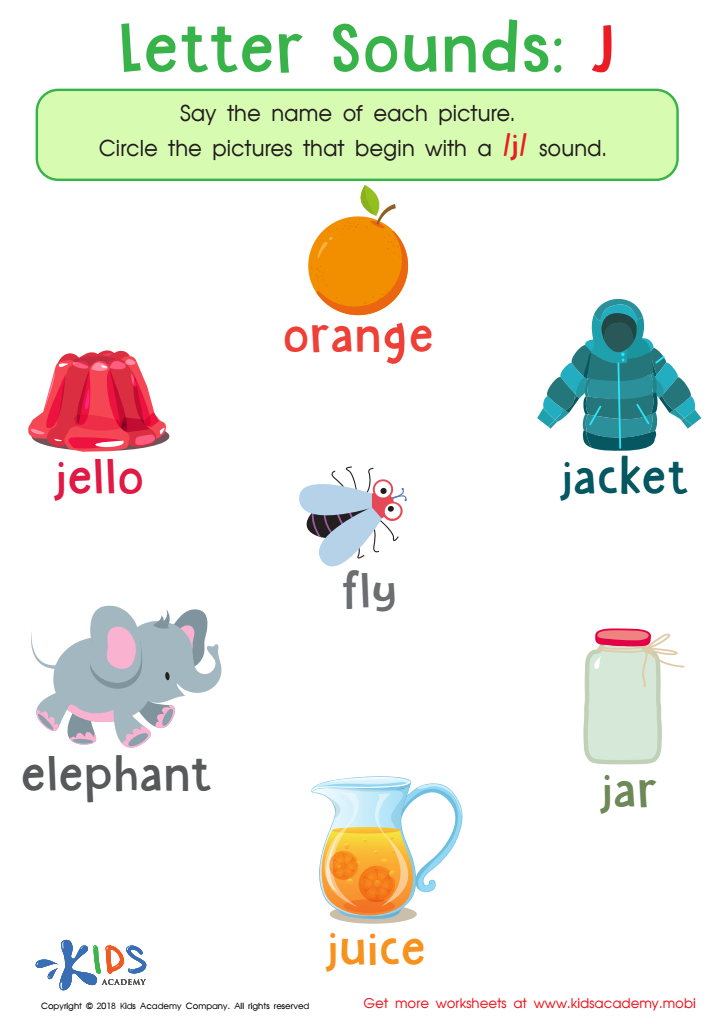
Letter Sounds: J Printable Worksheet
Preschoolers can learn to identify letter sounds by focusing on beginning sounds. This cute and colorful worksheet reviews the hard “j” sound. Kids can point it out by naming the words and circling only those starting with the “j” sound. Read the text out loud and listen closely!
 Assign to My Students
Letter Sounds: J Printable Worksheet
Worksheet
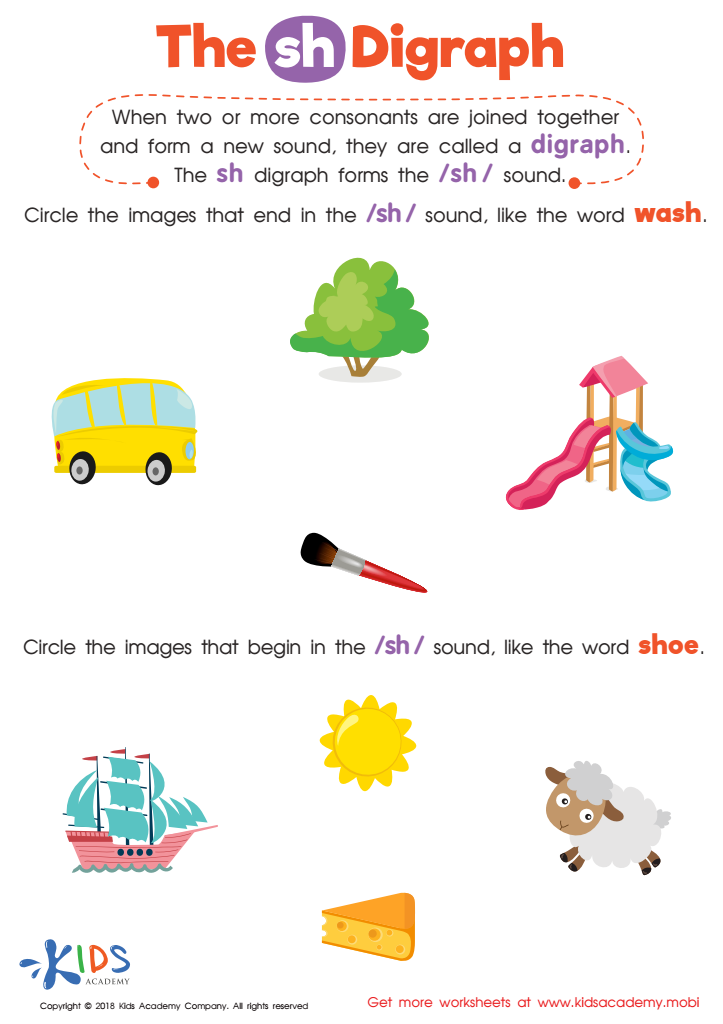
The SH Digraph Worksheet
There are many phonetic sounds, each with its own unique sound. When two or more consonants are combined to create a new sound, it's called a digraph. Example: the sh digraph creates the /sh/ sound. Have kids look at the pictures and say the words aloud. Help them circle the images ending with /sh/, like 'wash'.
The SH Digraph Worksheet
Worksheet
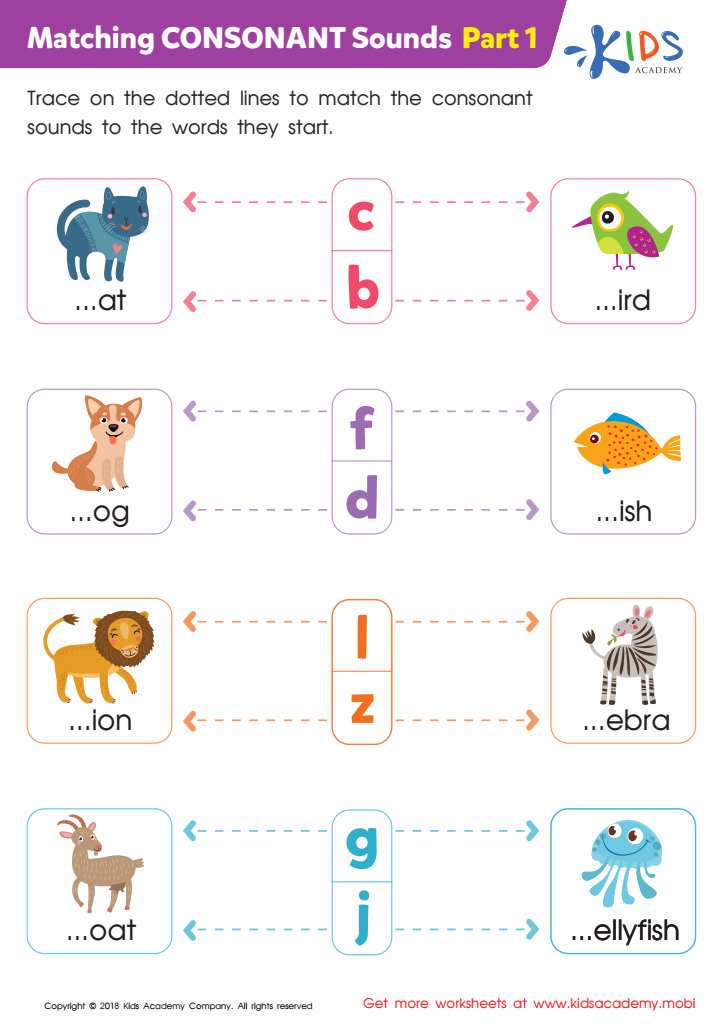
Matching Consonant Sounds: Part 1 Worksheet
Decide which letter matches each word and picture in this fun phonics worksheet. Slide your finger over each word, trying out each letter to check for matches. Once each pair is solved, trace the dotted lines with pencil to complete the printable. Who knew learning could be so enjoyable?
Matching Consonant Sounds: Part 1 Worksheet
Worksheet
Join Kids Academy for Free
Who is primarily going to use this learning content?








Parents and teachers should care about letter-sound correlation in phonics for children aged 4-9 because it serves as a foundation for literacy development. This crucial relationship between letters and their corresponding sounds helps young learners decode words, enhancing their reading skills. Understanding these correlations is essential for phonemic awareness, enabling children to segment and blend sounds, leading to improved reading fluency and comprehension.
Normal phonics instruction, focusing on systematic and explicit letter-sound relationships, provides children the tools to read unfamiliar words independently. This method supports cognitive development, as it encourages critical thinking and problem-solving skills. Additionally, early proficiency in reading promotes confidence, motivating children to engage with texts.
Involving parents in this process is vital since they can reinforce phonics at home, creating a supportive learning environment. Children often mimic their caregivers’ behaviors; thus, when parents show enthusiasm for reading and phonics, they inspire a similar passion in their children. Ultimately, a strong grasp of letter-sound correlation fosters a lifelong love for reading, ensuring that children are well-equipped for academic success and beyond, making it essential for both parents and teachers to prioritize phonics in early education.







